Автор | Odaily星球日报(@OdailyChina)
Автор | Дин Дан (@XiaMiPP)
В условиях сильной волатильности рынка и быстрого появления и исчезновения китайских мем-коинов, если и есть нарратив, который заслуживает нашего постоянного внимания, то приватность — определённо один из них.
От взлёта Zcash в 2025 году до обновления 8-летнего максимума Monero в 2026 году. Показатели активов, связанных с приватностью, уже не являются кратковременным возвращением настроений, а возвращаются в долгосрочную повестку криптоинфраструктуры.
В статье a16z «Тренды приватности на 2026 год», опубликованной в начале года, роль приватности на следующем этапе эволюции криптотехнологий была переосмыслена на многих уровнях: от децентрализованной коммуникации и контроля доступа к данным до методологии безопасной инженерии (рекомендуем прочитать «Zcash — это только начало, как a16z переопределяет нарратив приватности в 2026 году?»).
В этом контексте приватность больше не является просто инструментом «противодействия регулированию», а стала фундаментальной инфраструктурной возможностью, поддерживающей устойчивое функционирование криптосистем. В этом выпуске Odaily星球日报 систематически проанализированы различные активы, связанные с приватностью, давайте посмотрим, какие проекты действительно завоевали признание рынка в последнее время?
Monero (#15): Спустя 8 лет, возвращение приватностного фундаментализма
13 января цена Monero (XMR) достигла 650 долларов. С начала 2024 года её рост составил более 500%. Но что более символично, так это то, что впервые за 8 лет XMR эффективно преодолел исторический максимум бычьего цикла 2017 года.
В мире криптовалют Monero, возможно, является одним из наиболее последовательных и устойчивых проектов в плане приватности. С момента своего создания в 2014 году он придерживается концепции «приватность по умолчанию, обязательная приватность, отсутствие отслеживаемости» как основной философии дизайна.
В реализации Monero использует многоуровневые криптографические механизмы для системного устранения анализируемости в блокчейне. Кольцевые подписи (Ring Signatures) скрывают личность отправителя транзакции: реальные входы смешиваются с несколькими историческими «приманками» из блокчейна в «кольцо», и внешний наблюдатель может определить только, что «кто-то в кольце тратит средства», но не может сказать, кто именно; Стелс-адреса (Stealth Addresses) автоматически генерируют одноразовые адреса получения для каждой транзакции, и только получатель может идентифицировать этот доход с помощью ключа просмотра, разрывая постоянную связь между получателем и публичным адресом; а Конфиденциальные кольцевые транзакции (RingCT) дополнительно скрывают сумму транзакции, используя обязательства Педерсена (Pedersen Commitments) и технологию доказательств с нулевым разглашением Bulletproofs++, обеспечивая невидимость суммы при одновременной возможности проверки сетью отсутствия создания монет из воздуха или двойного расходования.
Наложение этих механизмов скрывает по умолчанию отправителя, получателя и сумму всех транзакций, во всей цепи нет прозрачных записей для отслеживания, что обеспечивает极高的 анонимность и взаимозаменяемость монет, намного превосходя монеты с опциональной приватностью.
Но, как говорится, «виновен владея сокровищем», такой радикальный дизайн также сделал Monero одним из самых недружелюбных проектов с точки зрения регуляторов. Под постоянным давлением соответствия требованиям, к 2024 году основные биржи, такие как Binance и OKX, последовательно удалили все спотовые торговые пары с XMR, оставив только торговлю фьючерсами.
Zcash (#28): Сильные потрясения в управлении
Главным героем этой волны возвращения приватности стал Zcash, рекомендуем прочитать «Возрождение приватных монет: от кандидата на делистинг на Binance до 13-кратного роста, молниеносное возрождение ZEC».
Однако 8 января Джош Свайхарт, генеральный директор Electric Coin Company (ECC), команды разработчиков Zcash (ZEC), заявил в своем посте, что большинство членов совета директоров Bootstrap (некоммерческая организация, стоящая за ECC, которая поддерживает Zcash через управление ECC), в частности Zaki Manian, Christina Garman, Alan Fairless и Michelle Lai (комбинация ZCAM), явно отошли от миссии Zcash. В условиях решения ZCAM о конструктивном увольнении вся команда ECC выбрала коллективный уход. Стоит добавить, что с 2020 года, после того как большинство акционеров выбрали пожертвование акций, ECC постепенно переходила к некоммерческой структуре, а Bootstrap взяла на себя функции управления. После объявления новости цена ZEC упала ниже 362 долларов, снизившись более чем на 40%.
Bootstrap随后发布澄清声明,称纠纷源于在寻求外部投资时遭遇的法律限制,目前已就“外部投资与 Zashi 私有化的替代结构”展开讨论,并与法律顾问合作,确保所有路径符合美国非营利组织法律,同时不偏离 Zcash 的长期使命,也不损害更广泛的社区利益。Bootstrap随后 опубликовала заявление с разъяснениями, заявив, что спор возник из-за юридических ограничений, с которыми столкнулись при поиске внешних инвестиций, и в настоящее время ведутся дискуссии об «альтернативной структуре для внешних инвестиций и приватизации Zashi», а также ведется работа с юрисконсультами, чтобы гарантировать, что все пути соответствуют законодательству США о некоммерческих организациях, не отклоняясь от долгосрочной миссии Zcash и не нанося ущерба более широким интересам сообщества.
Однако это заявление не смогло немедленно изменить рыночные настроения.
Тем не менее, Фонд Zcash также заявил, что Zcash всегда был децентрализованным протоколом с открытым исходным кодом, и ни один отдельный участник, команда или организация не могут контролировать Zcash.
С самого начала проектирования Zcash поставил «устойчивость» в качестве одной из основных целей. Его кодовая база полностью открыта, правила консенсуса поддерживаются независимыми нодами по всему миру, а развитие экосистемы поддерживается множеством организаций и участников. Как хранитель протокола, миссия Фонда Zcash включает: обеспечение безопасности протокола, финансирование независимых исследований и инженерных практик, продвижение децентрализованного управления и защиту приватности как основного права человека.
Humanity (#215): Не приватная монета, а переосмысление «приватной идентичности»
В отличие от предыдущих проектов, Humanity Protocol (H) фокусируется не на «приватности средств», а пытается переосмыслить баланс между приватностью и доверием на уровне цифровой идентичности.
Humanity использует биометрическую идентификацию по ладони в сочетании с доказательствами с нулевым разглашением для проверки того, что пользователь является реальным человеком, не раскрывая при этом никаких личных данных, с целью создания децентрализованного уровня доверия, устойчивого к сибильским атакам. Проект был запущен в 2023 году, токен H был выпущен в июне 2025 года.
На уровне приложений Humanity объявила о партнерстве с Mastercard, чтобы объединить свои возможности открытых финансов с системой идентификации Human ID, позволяя пользователям получать доступ к реальным финансовым услугам, таким как кредиты и займы, без ущерба для приватности.
В июле 2025 года компания Prenetics, котирующаяся на NASDAQ, объявила о включении токена H в свой криптоактивный казначейство. Ранее компания приобрела 187 BTC на 20 миллионов долларов, став первым предприятием в сфере здравоохранения, создавшим биткойн-казначейство. Возможно, именно поэтому, в сочетании с действиями на уровне финансирования, цена токена H выросла с 0,026 доллара до 0,4 доллара, достигнув максимального роста в 14 раз, затем откатилась и прошла полный цикл обмена, и в настоящее время восстановилась до около 0,17 доллара.
По сравнению с другими проектами приватности, Humanity находится на более ранней стадии. Но выбранное им направление «приватной идентичности», очевидно, предлагает другой способ раскрытия нарратива приватности.
Railgun (#331): «Приватный слой кошелька» для DeFi
Railgun — это децентрализованный протокол приватности на основе доказательств с нулевым разглашением, работающий на Ethereum и нескольких совместимых с EVM цепях. Его основная цель — не просто анонимность переводов, а предоставление пользователям DeFi возможности компоновываемого приватного взаимодействия.
В отличие от миксеров, таких как Tornado Cash, Railgun больше похож на «приватный слой кошелька». Пользователи могут напрямую создавать приватные балансы внутри протокола, а затем приватно взаимодействовать с любым смарт-контрактом EVM. Весь процесс является некастодиальным, с открытым исходным кодом и не требует доверия третьей стороне. Он позволяет пользователям полностью скрывать адреса кошельков, суммы транзакций и детали стратегий при проведении операций, таких как торговля, кредитование, предоставление ликвидности или майнинг, без ущерба для децентрализованного характера DeFi.
Проект был запущен в 2021 году. После санкций против Tornado Cash, в 2024 году Railgun внедрил механизм «доказательства невиновности», чтобы снизить риск ошибочного признания незаконным инструментом, одновременно постепенно расширяясь на Layer2 для снижения стоимости использования.
Соучредитель Ethereum Виталик Бутерин является одним из ранних сторонников Railgun и неоднократно использовал этот протокол для пожертвований, чтобы избежать отслеживания в цепи.
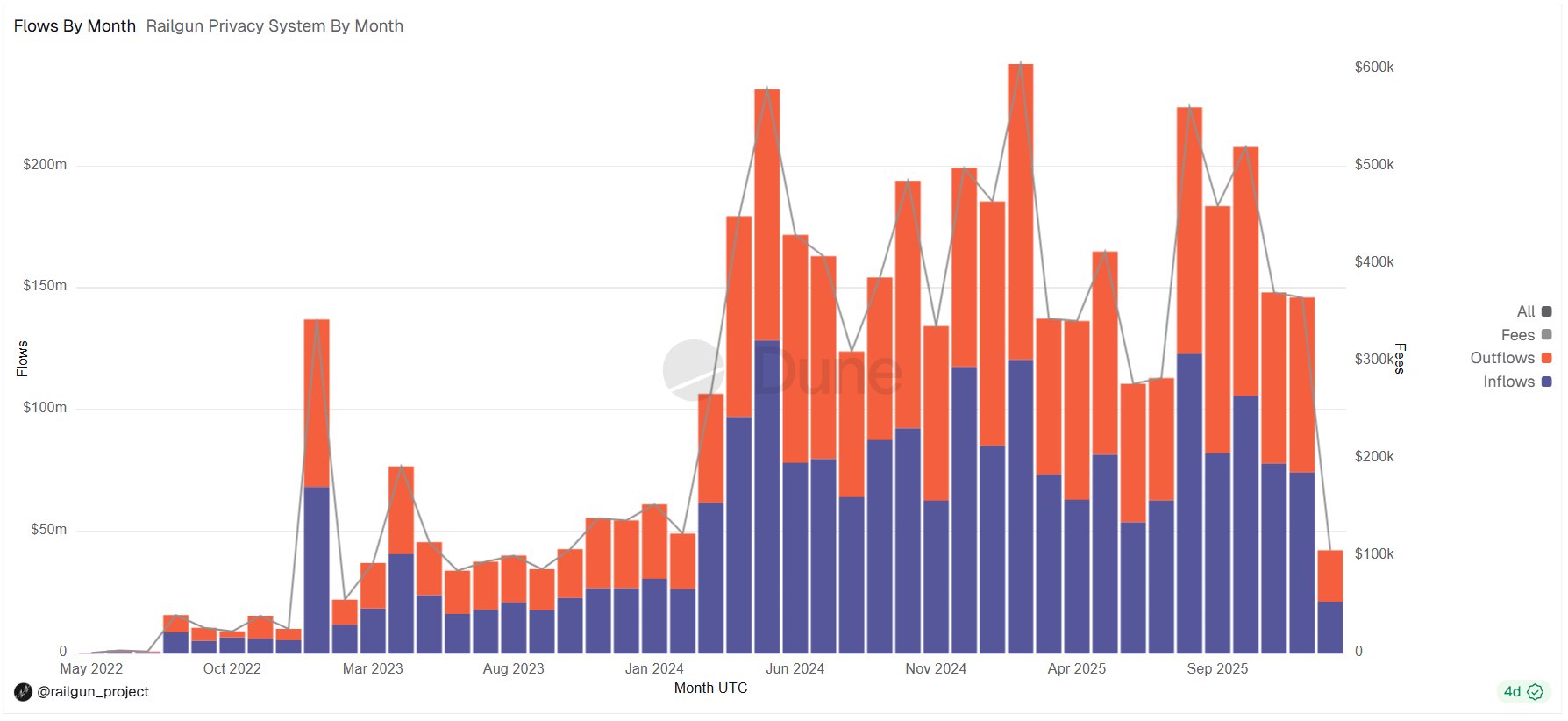
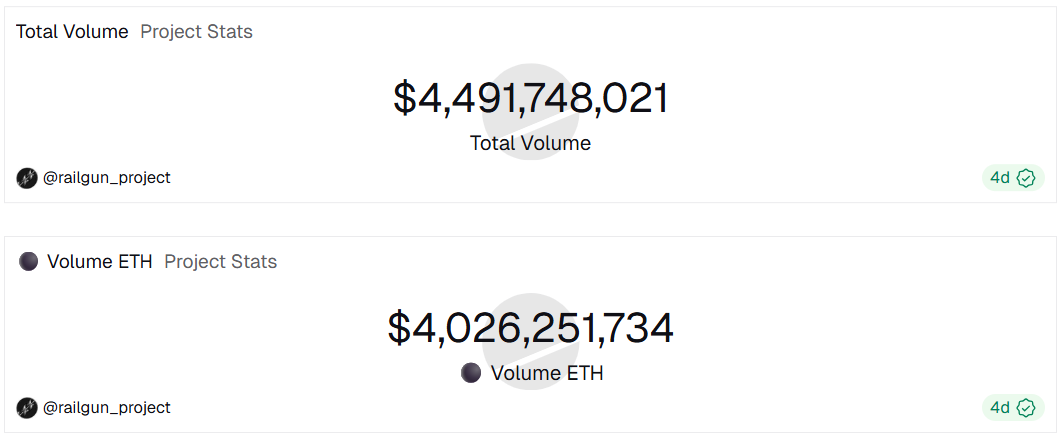
Данные Dune показывают, что с 2022 года использование средств Railgun остается активным, особенно после значительного снижения стоимости газа в Ethereum в 2024 году активность заметно возросла. На сегодняшний день совокупный объем транзакций составил 4,49 миллиарда долларов, из которых стоимость ETH составляет около 4,03 миллиарда долларов.
Pirate Chain (#488): Принятие «приватности» как единственной предпосылки, без компромиссов
Pirate Chain (ARRR) — это также проект криптовалюты,专注于 защитой приватности,旨在提供最匿名的数字货币。Проект был запущен в 2018 году, вдохновленный технологией zk-SNARKs от Zcash, но в отличие от опциональной приватности Zcash, Pirate Chain является обязательной на 100% приватной, формируя крупнейший в мире органический анонимный набор, предотвращая утечку информации через сетевую активность и поддерживая быструю проверку без раскрытия данных. В проекте не было ICO, предмайнинга, комиссий разработчиков, разработка и维护 в основном依赖于сообщества,его основные разработчики имеют опыт работы в различных экосистемах, включая Bitcoin, Zcash, Komodo и Monero, и таланты являются核心 проекта.
В механизме консенсуса Pirate Chain использует PoW Equihash и introduces Delayed Proof of Work (dPoW) в качестве дополнительного слоя безопасности. dPoW значительно увеличивает стоимость проведения атаки 51% путем нотариального заверения блоков во внешней цепи, что также является常见防御手段 для небольших PoW-сетей.
Стоит отметить, что после объявления Komodo о приобретении компанией Gleec в декабре 2025 года, на рынке могли возникнуть опасения по поводу зависимости Pirate Chain от инфраструктуры Komodo. В связи с этим, 7 января 2026 года проект announced, что dPoW был успешно перенесен с оригинального Komodo на Komodo Classic, механизм безопасности был无缝продолжен, и сеть начала работать независимо.
Tornado Cash (#769): После санкций продолжает работать
Tornado Cash (TORN) — это миксер-протокол, работающий на Ethereum, который использует технологию zk-SNARKs для разрыва прямой связи между транзакциями в цепи. Проще говоря, он использует метод «смешивания пулов средств», чтобы лишить ETH или токены ERC-20 возможности отслеживания между внесением и снятием.
Когда-то он также одним из звездных проектов на Ethereum. Но в 2022 году Министерство финансов США внесло смарт-контракты Tornado Cash непосредственно в санкционный список SDN (Specially Designated Nationals), что стало первым в истории случаем санкций против неизменяемых смарт-контрактов. Впоследствии разработчик Алексей Перцев был приговорен в Нидерландах, а Роман Шторм и Роман Семенов предстали перед судом в США. Под влиянием этого, governance-токен Tornado Cash, TORN, также был постепенно снят с listing на основных биржах.
Переломный момент наступил в конце 2024 года. Апелляционный суд пятого округа постановил, что OFAC превысил свои полномочия — неизменяемый код смарт-контракта не является «собственностью» и не может быть подвергнут санкциям, thus отменив санкционное решение в отношении самих контрактов.
Однако юридические споры на этом не закончились. В 2025 году Шторм был частично осужден по обвинению в «незаконном ведении бизнеса по передаче денежных средств», а присяжные не смогли прийти к единому мнению по обвинениям в отмывании денег и санкциях,相关 дела могут продолжиться в 2026 году.
Стоит отметить, что с момента запуска в 2019 году Tornado Cash一直работает в форме DAO, протокол полностью открыт, первоначальные разработчики давно потеряли контроль, и контракты не могут быть изменены после развертывания.
По данным крипто-регуляторной tech-компании Bitrace, в 2025 году на адреса Tornado Cash поступило 693,412 ETH на общую сумму约 2,5 миллиарда долларов; в долларовом выражении чистый приток за год составил约 1,4 миллиарда долларов, причем в основном в ETH. Это означает, что даже после санкций среди нативных пользователей криптовалют спрос на приватные переводы в Ethereum остается значительным.
Dusk Network (#781): Помещение приватности внутрь системы, а не противодействие ей
Если предыдущие проекты в основном выбирали дистанцирование от регулирования, то Dusk Network представляет другое направление в сфере приватности — попытку сосуществовать с框架соответствия на уровне протокола.
Dusk Network (DUSK) была основана в 2018 году, это протокол блокчейна Layer 1,专注于 защитой приватности и соответствием, созданный техническими экспертами Джеллом Полом и Эмануэле Франчиони, в основном ориентированный на финансовые приложения и токенизацию реальных активов (RWA). Его основная сеть была официально запущена в начале 2025 года, и в механизме консенсуса используется вариант Proof-of-Stake (PoS).
Техническое ядро Dusk заключается не в «полном сокрытии всего», а вращается вокруг «аудируемой приватности». Комбинируя доказательства с нулевым разглашением (ZK) и гомоморфное шифрование (HE), Dusk позволяет информации о транзакциях оставаться приватной по умолчанию, но при соблюдении требований или по закону обеспечивает аудит через selective раскрытие.
Именно поэтому Dusk с самого начала позиционировала себя как инфраструктура для соответствия финансовым требованиям, явно поддерживая MiCA, MiFID II, а также пилотный режим DLT ЕС. Такой дизайн означает, что он будет испытывать меньше давления и иметь больше пространства для выживания.
С точки зрения нарратива, Dusk стоит на двух основных направлениях, которые в настоящее время привлекают внимание рынка: приватность + RWA. По мере того как традиционные финансовые институты начинают изучать выпуск и расчет активов в цепи, «регулируемая приватность», вероятно, постепенно станет реальным спросом.
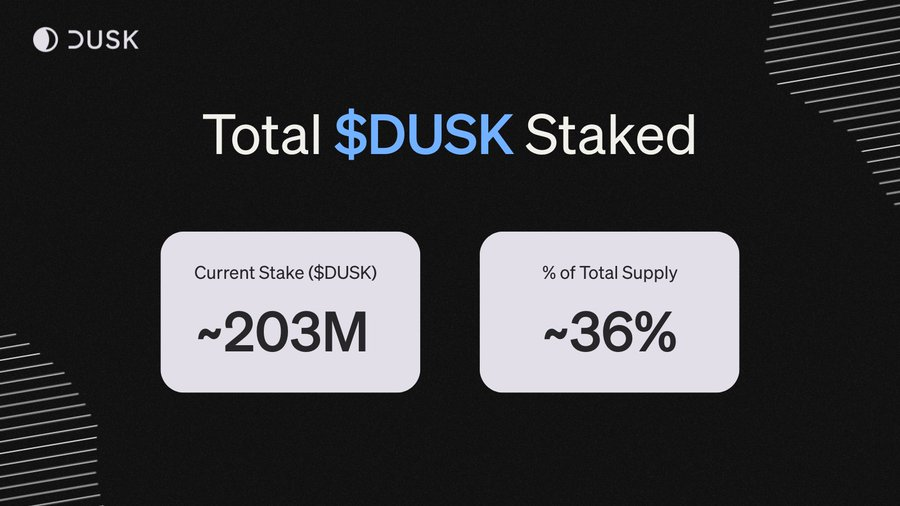
Последние данные, раскрытые Фондом Dusk 29 декабря, показывают, что в настоящее время застейкано более 200 миллионов DUSK, что составляет 36% от предложения. Это в определенной степени также отражает признание держателями монет его долгосрочного позиционирования.