Автор: Michael Nadeau, The Defi Report
Компиляция: Glendon, Techub News
В текущем рыночном цикле самыми яркими показателями отличились не традиционные токены, а крипто-акции. Среди них Robinhood продемонстрировал наиболее сильные результаты. Акции компании выросли в 17 раз менее чем за два года, превратив одну из наших самых contrarian-инвестиций (цена акций HOOD упала на 80% от цены IPO в 2022 году) в крупную победу для портфеля.
Мы впервые купили акции компании во время последнего медвежьего рынка (средняя цена покупки $21.49) и полностью закрыли позицию в октябре, в конечном итоге зафиксировав прибыль свыше 550%.
Сегодня, с продолжающимся улучшением динамики развития продукта и более диверсифицированной по сравнению с двумя годами ранее структурой выручки, Robinhood официально вернулся в «список наблюдения» (т.е. в наш список инвестиционных кандидатов, составленный во время медвежьего рынка).
Этот отчет, опубликованный сегодня, представляет собой всестороннее обновление, основанное на детальных данных, о фундаментальных показателях компании, оценке стоимости и ее амбициозных планах по глубокой экспансии в области криптовалют и прогнозных рынков.
Выручка и рост выручки
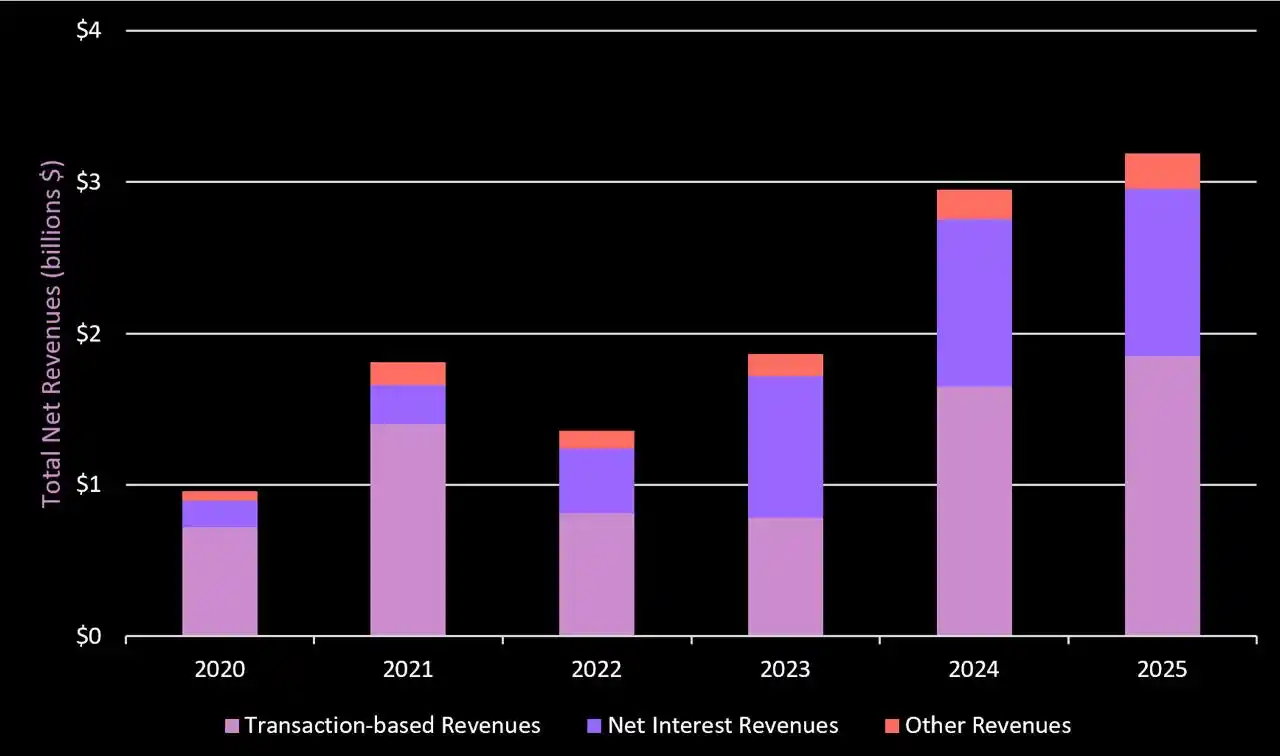
Источник данных: Yahoo Finance, Robinhood
Ожидается, что выручка Robinhood в 2024 году достигнет $2.95 млрд, что на 58% больше, чем в 2023 году. По состоянию на третий квартал этого года ее выручка уже достигла $3.19 млрд, превысив общую сумму за прошлый год.
За последние 12 месяцев выручка компании составила $4.2 млрд (рост на 31% в годовом исчислении).
Далее мы разберем источники выручки и динамику роста по бизнес-направлениям.
Детализация доходов
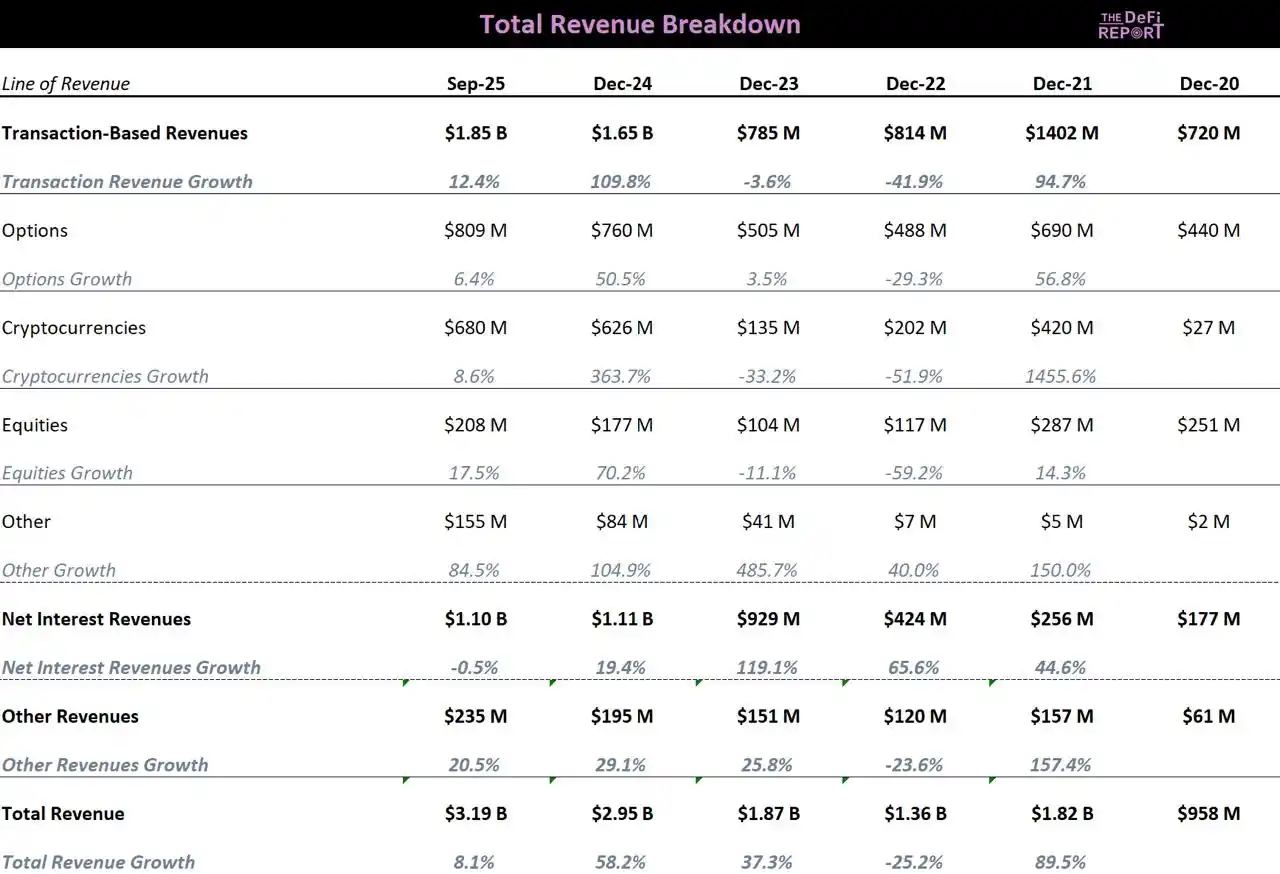
Источник данных: Robinhood 10 Q
Ключевые выводы
Совокупный годовой темп роста (CAGR) выручки Robinhood за последние пять лет составил 34%. В третьем квартале компания установила рекорд чистой прибыли в $565 млн (рост на 271% в годовом исчислении).
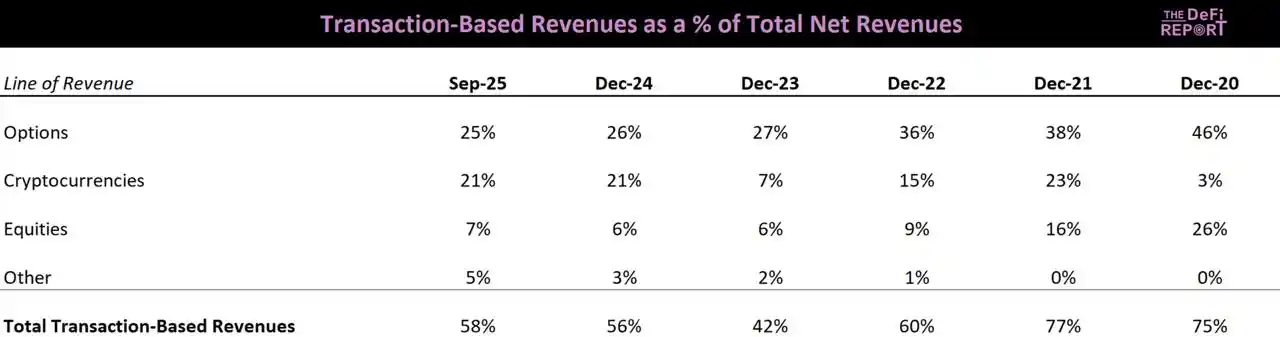
На криптовалютный бизнес приходится 21% общей выручки Robinhood с начала года (YTD) (без изменений по сравнению с прошлым годом).
С начала года доходы, основанные на транзакциях, составили $1.85 млрд (по сравнению с $1.65 млрд за аналогичный период 2024 года). В целом, доходы от транзакций составляют 58% общей выручки (снижение с 77% в 2021 году).
Это указывает на то, что: 1) доходы от транзакций растут (охватывая акции, опционы и криптовалюты); 2) Robinhood постоянно добавляет новые источники дохода.
Что это за новые источники? Прогнозные рынки (через Kalshi) достигли годовой выручки в $100 млн, что делает это направление самым быстрорастущим в истории компании.
У Robinhood Gold сейчас 3.9 млн платных пользователей (ежемесячная плата $5), что приносит годовой доход от подписок в $234 млн.
Комиссии за мгновенный вывод средств, fees фьючерсного рынка и своп-доходы (бизнес кредитных карт Robinhood) учитываются в «Прочих доходах».
Помимо доходов от транзакций и новых источников выручки, по состоянию на третий квартал Robinhood получила более $1.1 млрд чистого процентного дохода (35% от общей выручки).
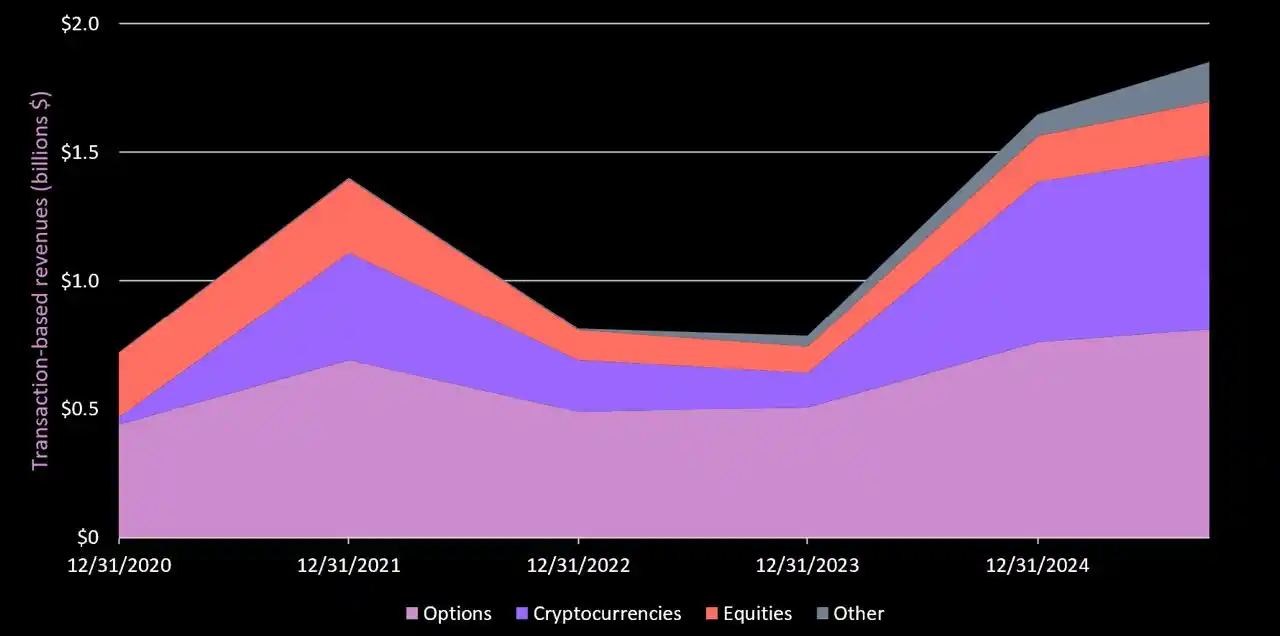
Доходы, основанные на транзакциях
Ключевые выводы
Опционы — это «дойная корова» Robinhood.
Криптовалютный бизнес занимает второе место, хотя на его долю приходится лишь 12% объема торгов акциями.
Это подчеркивает более оптимальную бизнес-модель, используемую Robinhood в сфере криптовалютных торгов.
На объем торгов акциями приходится 88% от общего объема торгов, но на доходы от торговли акциями — лишь 7%.
Фундаментальные показатели
Пользователи
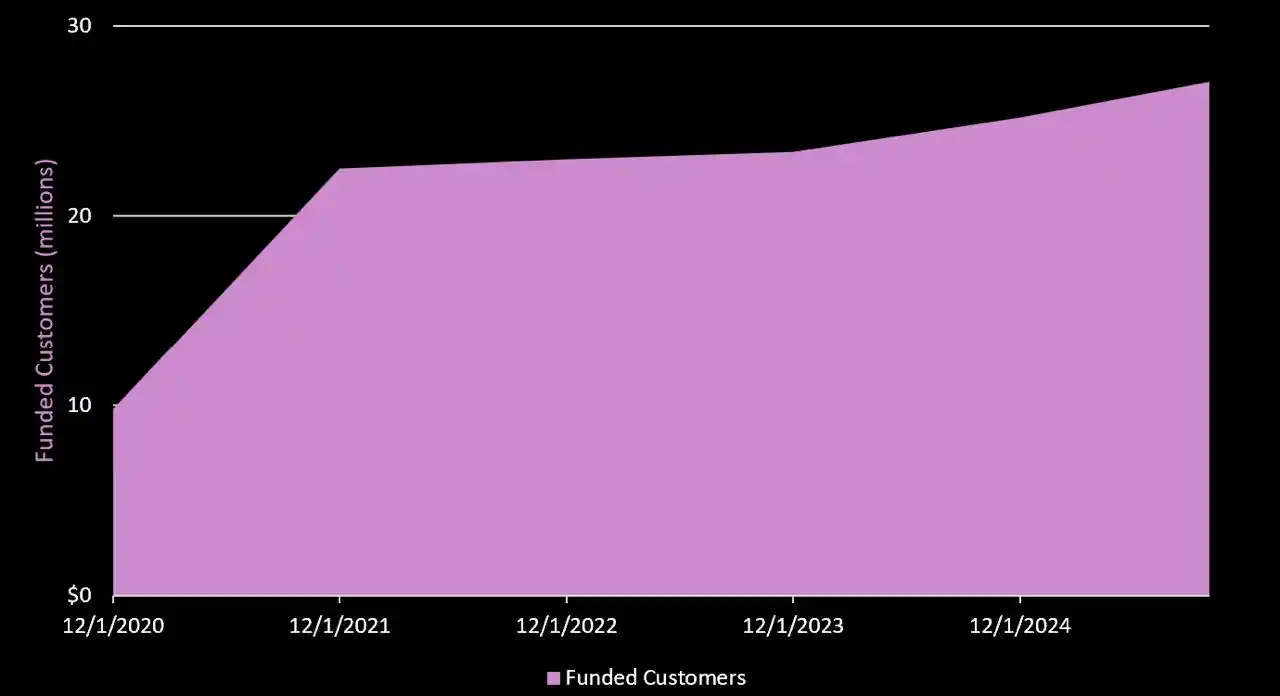
По состоянию на 30 сентября 2025 года у Robinhood было 27.1 млн платных пользователей. За последние пять лет рост пользовательской базы составил 22.6%, причем большая часть роста пришлась на 2020 год.
Сравнение оценок
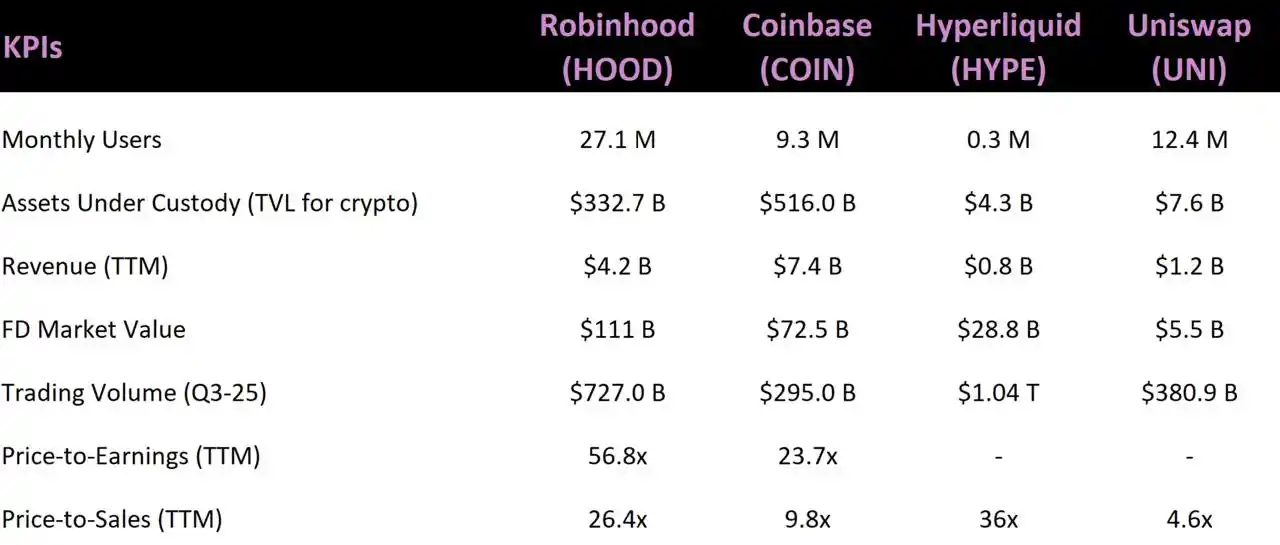
Некоторые мысли:
Сверхликвидноть (вредоносные трейдеры + спот-трейдинг) затмевает все платформы по объемам торгов, но приносит наименьший доход.
Uniswap сталкивается с наибольшими проблемами в монетизации пользователей, поскольку исторически 100% торговых сборов выплачивались поставщикам ликвидности (эта ситуация изменилась с недавним governance proposal).
Coinbase vs Robinhood
Пользовательская база Coinbase составляет лишь треть от базы Robinhood, но выручка почти в 2 раза выше. В то же время, по рыночной капитализации Coinbase торгуется на 53% дешевле Robinhood.
Почему?
Мы считаем, что рынок отдает предпочтение Robinhood по следующим причинам:
Диверсификация бизнеса, включая акции, опционы, прогнозные рынки и криптовалюты.
Рынок позиционирует Robinhood как «суперисп» для потребительского/розничного финансового сектора; в то время как Coinbase все еще воспринимается как «криптобиржа» (хотя ее бизнес гораздо шире).
Регуляторные разрешения: Robinhood зарегистрирована как брокер-дилер и регулируется FINRA и SEC. У Coinbase нет таких лицензий, что означает, что Coinbase не может предлагать акции, опционы, маржинальные займы и т.д.
У Robinhood более крупная и активная пользовательская база. Но с 2021 года рост пользовательской базы Coinbase испытывает трудности.
Кроме того, среди традиционных финансовых платформ, выручка Robinhood за последние двенадцать месяцев составляет 18% от выручки Charles Schwab. У Charles Schwab 38 млн активных счетов (у Robinhood — 27.1 млн).
Дорожная карта продукта (криптовалютное направление)
Краткая история развития криптовалютного бизнеса Robinhood.
2018
Robinhood официально запускает торговлю криптовалютами в некоторых штатах, изначально поддерживая Bitcoin и Ethereum.
2019
Robinhood получает лицензию BitLicense от штата Нью-Йорк, что позволяет ей предлагать услуги по торговле криптовалютами в Нью-Йорке.
2020
Объем криптовалютных торгов Robinhood значительно вырос. Это совпало с резким ростом пользовательской базы Robinhood — интерес розничных инвесторов к торговле акциями и криптовалютами вновь вспыхнул во время пандемии COVID-19, что способствовало расширению компании.
2021
Robinhood сообщает, что в первом квартале на криптовалютный бизнес пришлось 41% выручки, в основном благодаря торговле Dogecoin (25% от всей выручки). Позже в том же году Robinhood подала заявку на IPO, указав, что торговля криптовалютами является важной частью ее бизнеса.
2022
Robinhood анонсирует планы по запуску функции криптокошелька, позволяющей пользователям вносить и выводить криптоактивы.
2023
Robinhood объявляет о добавлении на свою платформу множества новых криптоактивов для торговли и планах выхода на рынок ЕС.
2024
Robinhood объявляет о партнерстве с Arbitrum (L2 Ethereum), позволяющем пользователям обменивать криптовалюты через децентрализованную биржу (DEX) Arbitrum. Затем команда Robinhood объявила об интеграции с MetaMask, позволяющей пользователям покупать криптовалюты через Robinhood и пополнять свои кошельки с помощью дебетовых карт, банковских переводов или средств на существующем счете Robinhood.
Команда затем запустила для европейских клиентов услуги стейкинга, а также API для торговли криптовалютами, предоставляющий доступ к рыночным данным и программным ордерам.
Приобретение глобальной криптобиржи Bitstamp с 4.4 млн пользователей и годовым доходом в $200 млн.
Была добавлена поддержка Base (L2 проект Coinbase).
Стать основным входом для розничных трейдеров в криптовалюты (больше активов, вход через кошелек, интеграционные услуги и низкие комиссии).
2025
Завершено полное интегрирование биржи Bitstamp;
Выпущена версия v2 криптокошелька Robinhood (межсетевые свопы, подключение к DeFi, функциональность Arbitrum, потенциальные обмены на Base и Solana, web3 wallet experience);
Ожидание одобрения услуг крипто-стейкинга в США;
Предоставление институциональных криптоуслуг через Bitstamp;
Анонсированы планы по построению L2 цепи на Arbitrum;
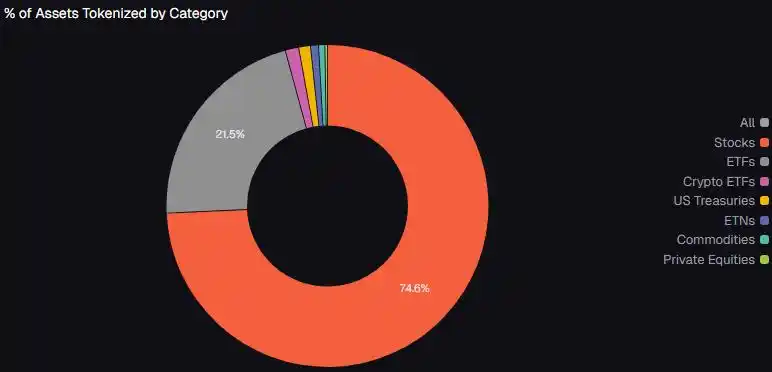
Анонсированы планы по токенизации публичного и частного акционерного капитала (круглосуточная торговля, мгновенный расчет, интеграция с DeFi, глобальный доступ для пользователей за пределами США, структура затрат ниже, чем у традиционных брокерских каналов).
Последний пункт знаменует начало полномасштабного вхождения Robinhood в сферу криптовалют, использующего свою инфраструктуру (Bitstamp, Robinhood Crypto, Arbitrum) и пользовательскую базу для работы в следующих областях:
- Регулируемая глобальная биржа
- Кастодиальные решения с интегрированным стейкингом
- Токенизация и интеграция с DeFi
- Кошельки и платежные услуги
- Каналы ввода/вывода средств
- В чем суть?
Robinhood создает полноценную платформу, охватывающую токенизацию, торговлю криптовалютами и финансовые услуги.
Будущая дорожная карта
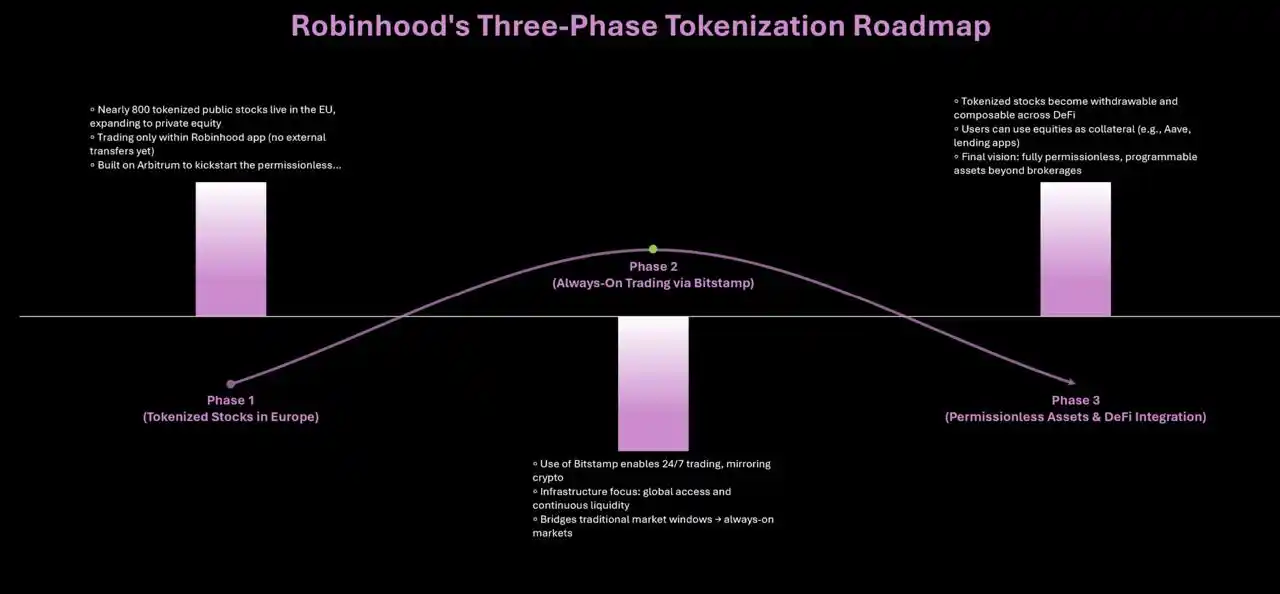
Фаза 1 (в процессе)
В ЕС в настоящее время насчитывается почти 800 токенизированных листинговых акций, и происходит расширение в сферу частного акционерного капитала.
Торговля осуществляется только через приложение Robinhood (без внешних переводов).
Построено на Arbitrum.
Фаза 2 (начало 2026)
Использование Bitstamp позволяет осуществлять круглосуточную торговлю, копируя модель криптовалютной торговли;
Обеспечивается глобальный доступ и постоянная ликвидность.
Фаза 3 (конец 2026?)
Токенизированные акции можно выводить и комбинировать на платформах DeFi;
Пользователи могут использовать токенизированный акционерный капитал в качестве залога в DeFi (например, в Aave);
Конечное видение: полностью беспермиссивные, программируемые активы, выходящие за рамки брокерских услуг.
Почему криптовалюты?
В отличие от бизнеса с акциями (где Robinhood сильно зависит от продажи потока ордеров), торговля криптовалютами использует совершенно другую модель монетизации и является более прибыльной. Поскольку на криптовалютном рынке нет NBBO (Национальный лучший бид/аск), Robinhood не нужно продавать поток ордеров маркет-мейкерам. Вместо этого она получает прибыль от спреда и доходов от маршрутизации, т.е. зарабатывает на разнице между ценой, которую она предлагает пользователям, и ценой, по которой она получает ликвидность (через внутреннего маркет-мейкера или Bitstamp).
Это означает, что Robinhood имеет больший контроль над экономикой сделок и может сохранять более высокую долю дохода от каждой криптовалютной сделки. Конечный результат — значительно более высокая рентабельность, более высокий средний доход на пользователя (ARPU) и лучший операционный рычаг.
Глобально доступный рынок: Криптовалютные торги работают круглосуточно без перерывов,跨越 различных юрисдикций и часовых поясов.
Стейкинг, токенизированные акции, свопы, комиссии кошелька, fees L2 и программный поток криптовалютных ордеров — все это может увеличить маржу и выручку.
Пользовательская база: Robinhood в основном обслуживает миллениалов и поколение Z, которые в ближайшие годы унаследуют богатство бэби-бумеров и все чаще倾向于 использовать криптовалютные нативные сервисы以及 превосходный мобильный опыт Robinhood.
Криптовалютная инфраструктура позволяет снизить затраты, создавать новые источники дохода и повышать операционный рычаг. По мере совершенствования инфраструктуры Robinhood имеет все шансы стать «входом» в DeFi, стейкинг, трейдинг, платежи и т.д.
Robinhood, будучи первопроходцем в криптопространстве, со своей огромной пользовательской базой, комплексным набором услуг и криптоинфраструктурой, создает защитный ров. Мы считаем, что традиционным платформам, таким как Charles Schwab, будет трудно конкурировать с ней по мере изменения демографии клиентов.
Риски
Конкуренция
В настоящее время все основные брокерские и торговые платформы предлагают услуги по торговле криптовалютами. Включая Charles Schwab, Fidelity, Interactive Brokers, Webull и E*Trade.
Все они хотят захватить высокие комиссии от криптовалютной торговли. Эта конкуренция, вероятно, будет сжимать прибыль Robinhood.
В то же время, Coinbase лидирует в области нативной криптоинфраструктуры и набора продуктов.
Риск исполнения
Команде предстоит выполнить сложную задачу по бесшовному объединению пользовательского опыта и мобильного приложения Robinhood с криптоплатформой. Это绝非易事.
Риск стратегии токенизации
Истинная ценность токенизации заключается в том, что реальные акции токенизируются.
Почему?
Это означает, что криптокошелек акционера (с пройденной KYC) станет официальным记录ом права собственности, то есть дивиденды будут выплачиваться напрямую на этот кошелек.
Сейчас Robinhood не有权 решать, какие акции можно токенизировать, а какие нет. Решение принимает эмитент (компания).
Есть ли у них сейчас стимул для токенизации?
Мы считаем, что это еще предстоит увидеть. Если бы могли, они бы захотели токенизировать:
Снижение затрат на выпуск
Расширение распределения
Улучшение ликвидности
Снижение трения при расчетах
Привлечение новой инвесторской базы в глобальном масштабе
В настоящее время этих преимуществ недостаточно, чтобы побудить крупные существующие компании к токенизации, особенно до появления новых нормативных актов.
Кроме того, нынешние акционеры не требуют токенизации, и мы считаем, что существующие традиционные поставщики услуг (такие как transfer agents, prime brokers, кастодианы, расчетные сети, маркет-мейкеры, фондовые администраторы/мидл-офисы) выступают против токенизации.
В чем суть?
У Robinhood есть сильный стимул продвигать токенизацию. Однако, они имеют ограниченный контроль над решением эмитентов о принятии токенизации. Мы считаем, что это займет больше времени, чем currently ожидает рынок.
Заключение
Совокупный годовой темп роста (CAGR) выручки Robinhood за последние пять лет составил 34%. В последние годы платформа добилась значительного прогресса по всем направлениям торгового бизнеса, а новые источники выручки, такие как Robinhood Gold, прогнозные рынки и ряд криптоуслуг (кошельки, стейкинг, переводы, экспансия в Европу, кобрендинговая криптокарта, Arbitrum Layer 2), предвещают светлое будущее.
Мы признаем ее руководящую команду: в прошлом они предоставляли出色的 пользовательский опыт и имеют видение «полного перехода к криптовалютам». С точки зрения личного опыта использования, процесс переноса активов удобен и эффективен. Стоит отметить, что Robinhood с помощью «денежного вознаграждения за перевод активов (2-4% от переводимой стоимости)» по сути发起 «вампирскую атаку» (Vampire Attack) на такие компании, как Charles Schwab, Fidelity, Coinbase. (Прим.: «Вампирская атака» — это конкурентная стратегия, при которой новый протокол привлекает ликвидность, пользователей и объем торгов от доминирующего существующего протокола, предлагая значительно более привлекательные стимулы (например, более высокую доходность или вознаграждение токенами).
В то же время, Robinhood бросает вызов Coinbase на рынке нативных криптосервисов и лидирует в стратегии токенизации. Таким образом, мы считаем, что Robinhood имеет потенциал стать ведущим финансовым институтом в будущем.
Однако, текущее значение P/E (цена/прибыль) Robinhood составляет 56. Наш анализ показывает, что ее криптовалютная выручка (в настоящее время составляющая 21% от общей выручки и являющаяся важным компонентом) может столкнуться с определенным давлением в краткосрочной перспективе, в то же время наблюдается тенденция к снижению аппетита к риску among розничных инвесторов.
Учитывая precedents падения выручки на 25% в 2022 году и отката акций на 80%, в условиях current избегания риска на рынке, мы ожидаем, что цена акций компании может испытать类似的 значительную коррекцию. Но, с другой стороны, это может предоставить отличную возможность для покупки долгосрочным инвесторам.