Автор: Deep Tide TechFlow
Вчерашние рыночные движения
Министр обороны США заявил о нанесении «максимально мощного» удара по Ирану
Согласно данным Jin10, министр обороны США Ллойд Остин заявил 10 октября, что американские военные нанесут «максимально мощный» удар по Ирану в ходе текущей военной операции. На пресс-конференции Остин сообщил: «Сегодня снова будет день самых интенсивных ударов по территории Ирана», — добавив, что военные задействуют наибольшее количество истребителей и бомбардировщиков за всю операцию и нанесут удары по иранским целям на основе «более точной и качественной, чем когда-либо» разведки. Остин также отметил, что за последние 24 часа количество запусков ракет Ираном достигло рекордно низкого уровня.
СМИ США: МЭА предложило крупнейший в истории выпуск нефти из резервов
Согласно The Wall Street Journal, осведомленные источники сообщают, что Международное энергетическое агентство (МЭА) предложило осуществить крупнейший в истории выпуск нефти из своих резервов для снижения взлетевших из-за войны между США/Израилем и Ираном цен на нефть. Чиновники заявили, что объем выпущенной нефти превысит 182 миллиона баррелей, которые страны-члены МЭА выбросили на рынок двумя партиями в 2022 году во время конфликта между Россией и Украиной. Предложение обсуждалось во вторник на экстренном совещании энергетических чиновников из 32 стран-членов МЭА. Ожидается, что страны примут решение по提案 в среду. Если возражений не последует, предложение будет принято; но даже одно возражение приведет к отсрочке плана. На фоне этих новостей цена на нефть WTI упала ниже $82 за баррель, снизившись на 5.20% за день.
Первая «Конференция Claw» пройдет 15 марта в Шанхае
Согласно сообщению Шанхайского экономического и информационного комитета, первая «Конференция Claw» (龙虾大会 - Lobster Conference, игра слов, предполагается что имелась в виду Claw Conference) состоится 15 марта 2026 года с 13:00 до 18:00 в пространстве Mospeed (模速空间) в районе Сюйхуэй, Шанхай. Мероприятие будет посвящено ИИ-агенту OpenClaw и включит объяснение концепции, демонстрации технологий, практические занятия и презентации результатов. Участники включают Chuangyang Technology, Baidu AI Cloud, Step星辰 и других. Цель мероприятия — позволить участникам с нуля создать свою собственную систему ИИ-агентов.
Компания Meta приобретает Moltbook, условия не разглашаются
Согласно AXIOS: Компания Meta приобретает Moltbook; условия сделки не разглашаются.
SolanaFloor приобретена Jito и возобновляет работу
Сервис новостей и информации об экосистеме Solana SolanaFloor объявил о приобретении компанией Jito и возобновлении работы при поддержке Фонда Jito, при этом сохраняя полную редакционную независимость. Впоследствии будет опубликована информация об редакционной структуре, коммерческих продуктах и обновлениях команды. Ранее SolanaFloor объявила о прекращении работы после кражи средств у материнской компании, исчерпав возможности продолжения операций.
Платформа токенизированных акций xStocks, связанная с Kraken, запускает программу очков, что может预示 выпуск токена экосистемы
Согласно CoinDesk, платформа токенизированных акций xStocks, связанная с Kraken, объявила о запуске программы вознаграждений xPoints для трейдеров, поставщиков ликвидности и разработчиков DeFi. Пользователи могут зарабатывать очки, торгуя токенизированными американскими акциями, предоставляя ликвидность или участвуя в DeFi-приложениях. На крипторынке программы очков часто рассматриваются как предвестник выпуска токенов, однако xStocks пока официально не анонсировала планы по токену.
Nasdaq сотрудничает с Seturion от Boerse Stuttgart для продвижения токенизированных расчетов в Европе
Согласно The Block, Nasdaq сотрудничает с платформой токенизированных расчетов Seturion, входящей в группу Boerse Stuttgart Group, с целью продвижения применения токенизации ценных бумаг в Европе.
Сотрудничество соединит европейские торговые площадки Nasdaq с блокчейн-платформой Seturion, поддерживая торговлю и расчеты токенизированными ценными бумагами. Первоначально сотрудничество будет сосредоточено на структурированных продуктах, с планами расширения на большее количество классов активов и участников рынка в будущем. Платформа Seturion поддерживает все классы активов across public and private blockchains.
Президент европейских рыночных услуг Nasdaq и руководитель направления цифровых активов Роланд Чай (Roland Chai) заявил, что токенизация предоставляет transformative возможность решить проблемы неэффективности в процессах расчетов и обработки ценных бумаг.
Национальный центр реагирования на интернет-инциденты Китая опубликовал предупреждение о рисках безопасности приложения OpenClaw
Национальный центр реагирования на интернет-инциденты Китая (CNCERT) опубликовал предупреждение о рисках безопасности приложения OpenClaw. Ранее из-за неправильной установки и использования агента OpenClaw уже возникли серьезные риски безопасности. Рекомендуется相关 организациям и индивидуальным пользователям при развертывании и использовании OpenClaw принять следующие меры безопасности: 1. Усилить сетевой контроль, не exposing порты управления OpenClaw по умолчанию в публичной сети, осуществлять управление доступом к сервису через аутентификацию, контроль доступа и другие меры безопасности. Строго изолировать среду выполнения, использовать технологии контейнеризации для ограничения проблем с избыточными permissions OpenClaw; 2. Усилить управление учетными данными, избегать хранения ключей в открытом виде в переменных окружения; создать полный механизм аудита логов операций; 3. Строго управлять источниками плагинов, отключить функцию автоматического обновления, устанавливать расширения только из доверенных источников после проверки подписи. 4. Постоянно следить за исправлениями и обновлениями безопасности, своевременно обновлять версии и устанавливать security patches.
Nvidia планирует выпустить платформу ИИ-агентов с открытым исходным кодом NemoClaw
Согласно WIRED, Nvidia планирует выпустить платформу ИИ-агентов с открытым исходным кодом под названием NemoClaw. Платформа позволит компаниям-разработчикам корпоративного ПО развертывать ИИ-агентов для выполнения задач своими сотрудниками. По словам осведомленных источников, платформа не ограничивает использование чипов Nvidia.
Nvidia уже представила продукт таким компаниям, как Salesforce, Cisco, Google, Adobe и CrowdStrike, стремясь установить партнерские отношения. Платформа предоставит инструменты безопасности и конфиденциальности, партнеры могут получить бесплатный ранний доступ, contributing to the project.
Четвертый фонд роста Founders Fund Питера Тиля близок к завершению сбора $6 миллиардов
Согласно TechCrunch, венчурный фонд Founders Fund сооснователя PayPal Питера Тиля близок к завершению сбора средств для своего четвертого фонда роста Founders Fund Growth IV с общими обязательствами по капиталу в размере $6 миллиардов. По словам осведомленных источников, спрос со стороны внешних инвесторов превысил емкость фонда, причем около $1.5 миллиардов поступило от партнеров Founders Fund.
The Information: Tencent создает нового ИИ-агента для приложения WeChat
Согласно The Information: Tencent создает нового ИИ-агента для приложения WeChat.
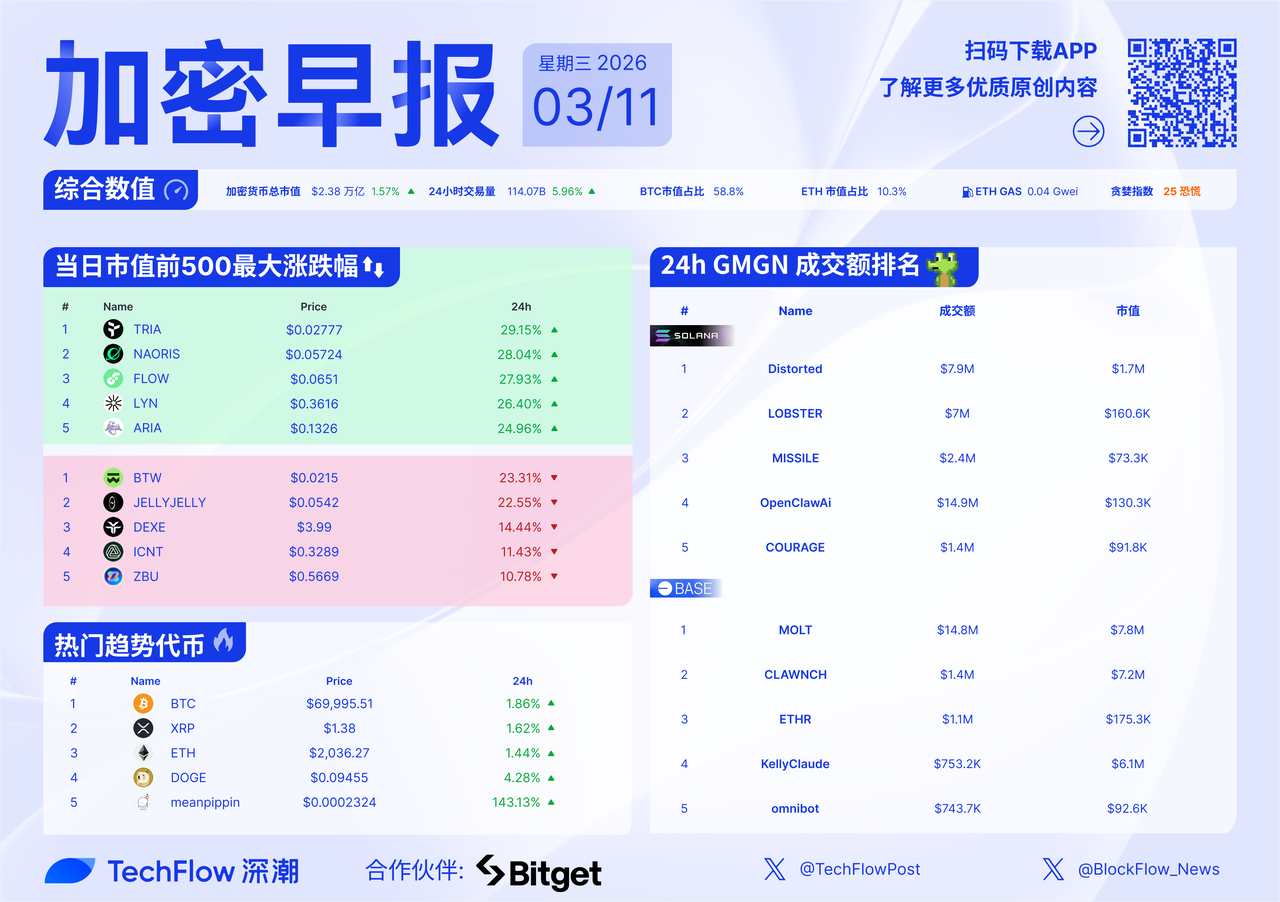
Рыночная динамика
Рекомендуемое чтение
Диалог с Марком Юско: Криптозима прошла половину пути? Биткоин станет нативной валютой эпохи ИИ
В статье подробно рассматриваются ценность Биткоина, волатильность его цены и потенциал в будущей финансовой системе. Путем сравнения Биткоина с золотом анализируются преимущества Биткоина как средства сбережения стоимости, а также обсуждается, почему ИИ-агенты выбирают Биткоин в качестве средства платежа. Кроме того, статья затрагивает риски централизации текущей финансовой системы и то, как Биткоин может应对 этим вызовам.
Обзор рынка на 10 марта: Самый безумный день в истории нефти, V-образное восстановление на американском фондовом рынке
В статье рассказывается о резком падении цен на нефть 10 марта, мощном отскоке американских акций и стабильных показателях криптовалютного рынка. Трамп намекнул на приближение конца войны, Ормузский пролив вновь открылся, настроения рынка сменились с панических на оптимистичные.
Бывший高管 Binance Labs: Под натиском ИИ и институтов криптоиндустрия сильно изменится через два года
В статье исследуется текущая трансформация криптоиндустрии, отмечается, что институциональный капитал и искусственный интеллект (ИИ) являются двумя основными структурными силами,推动ющими изменения в отрасли. По мнению автора, эпоха токен-спекуляций подходит к концу, будущими победителями станут лицензированные компании с реальным доходом и инфраструктурой, способные обслуживать ИИ-агентов. Стейблкоины и технология zero-knowledge proof считаются ядром будущего крипторынка.
Virtuals совместно с Ethereum Foundation выпускают ERC-8183: Доверительный ончейн-коммерческий протокол
В статье представлен стандарт ERC-8183, предложенный совместно Virtuals Protocol и командой dAI Ethereum Foundation, который aims установить набор доверительных ончейн-коммерческих протоколов для экономического взаимодействия между ИИ-агентами. В статье подробно обсуждаются принципы设计, основные функции, ключевые концепции и потенциальные сценарии применения стандарта, а также подчеркивается его симбиотическая связь со стандартом ERC-8004 (стандарт идентификации и репутации агентов). Благодаря ERC-8183 агенты могут осуществлять открытые, доверительные коммерческие сделки, способствуя развитию децентрализованной экономики ИИ.
IOSG: Панорама ончейн-доходности, от стейблкоинов с доходностью до эволюции криптокредитных продуктов
В статье глубоко исследуется тенденция входа криптоиндустрии в эпоху приложений, анализируется表现 продуктов ончейн-доходности на бычьем и медвежьем рынках, представлен рост стейблкоинов с доходностью и их влияние на рынок, а также risk stratification и будущие направления развития продуктов ончейн-доходности. Кроме того, в статье упоминаются модели ончейн-доходности от активов реального мира (RWA) и то, как институции получают ончейн-доходность через сквозные услуги и криптокредитные продукты.







