Crypto Lobby Group Sounds Alarm Over Senate’s Crypto Bill Threat

bitcoinistОпубликовано 2026-02-18Обновлено 2026-02-18

Введение

Coin Center warns that a revised version of the Blockchain Regulatory Certainty Act could redefine legal boundaries for crypto developers. The bill clarifies that individuals who write code or operate infrastructure without controlling users' funds should not be classified as money transmitters. Introduced by Senators Lummis and Wyden, the update aims to distinguish software development from financial services, preventing coders from being treated like bankers. Recent convictions, such as those linked to Tornado Cash and Samourai Wallet, highlight the legal risks developers face. Supporters argue clear rules are essential to retain talent in the U.S., while opponents fear potential loopholes for criminal activity. The Senate Banking Committee has yet to finalize the bill, balancing innovation against regulatory enforcement.

According to Coin Center, a fresh version of the Blockchain Regulatory Certainty Act is on the table and could redraw the lines between crypto, software work and criminal liability.

The bill aims to say, in plain terms, that people who write code or run infrastructure but do not control other people’s crypto funds shouldn’t be treated as money transmitters.

Who Gets Legal Cover

Senators Cynthia Lummis and Ron Wyden offered the updated language after the original measure was introduced by Tom Emmer in the House years ago.

Based on reports, the change is meant to draw a clearer line in federal law between creating tools and moving money. Supporters say that without clear rules, simple acts of coding could be treated like operating a bank.

Opponents worry about loopholes. Debates have already split lawmakers and tech teams in Washington.

High-Profile Convictions And Risk

Reports note several recent prosecutions that helped push this debate into view. The developer linked to Tornado Cash faces charges tied to money transmission. Two men tied to Samourai Wallet were also convicted on similar counts.

Roman Storm is awaiting sentencing. Keonne Rodriguez and Will Lonergan Hill received multi-year terms. These cases are short, sharp reminders that tools used by others can end up at the center of criminal probes.

That fact has pushed more than one developer to ask whether the US remains the easiest place to build.

BTCUSD now trading at $68,092. Chart: TradingView

What Could Change If Protections Weaken

According to Coin Center policy chief Jason Somensatto, diluting the bill would leave creators guessing where liability begins and ends.

In a letter to to the Senate Banking Committee, he argues that software authors deserve the same basic protections as other internet builders — hosting firms, browser teams, and email providers — who are not jailed when a bad actor misuses their products.
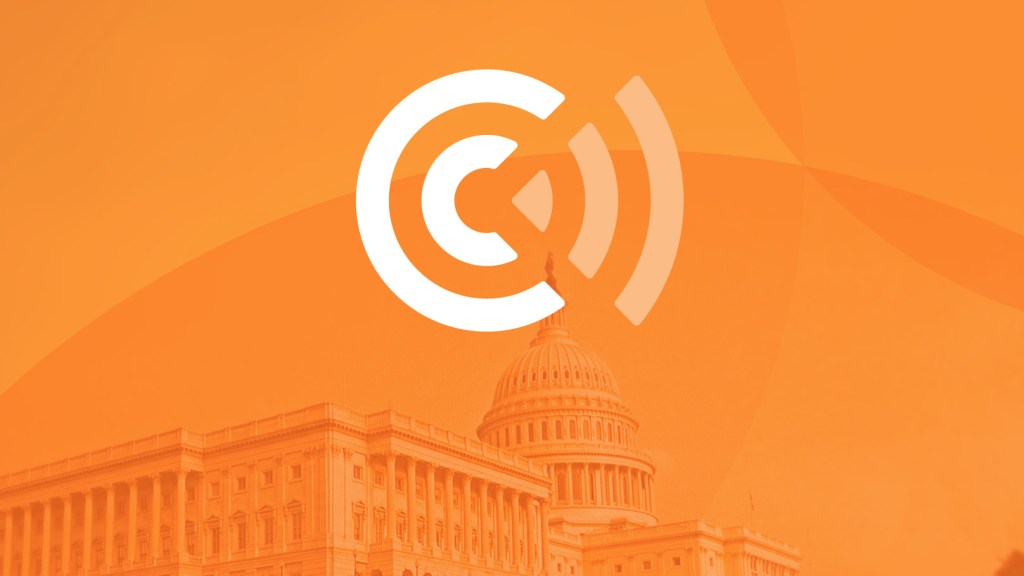
Image: Coin Center

The argument is framed around certainty: clear rules, advocates say, let people decide to stay and invest here rather than move projects offshore.

A Decision With Tradeoffs

Reports say the Senate Banking Committee has not yet marked up the bill. Lawmakers must weigh public-safety concerns against the goal of keeping promising technical work in the US.

Some legal experts want narrower safe harbors. Others want stronger guardrails so that criminal abuse can still be prosecuted.

Whichever path the committee picks will shape where developers choose to work, and how people build the next wave of crypto tools.

Featured image from Unsplash, chart from TradingView

Связанные с этим вопросы

QWhat is the main purpose of the Blockchain Regulatory Certainty Act as discussed in the article?

AThe bill aims to clearly state that people who write code or run infrastructure, but do not control other people's crypto funds, should not be treated as money transmitters under federal law.

QWhich two U.S. Senators offered the updated language for the crypto bill?

ASenators Cynthia Lummis and Ron Wyden offered the updated language for the bill.

QAccording to the article, what recent event helped push the debate over developer liability into view?

ASeveral recent prosecutions, including the developer linked to Tornado Cash and the two men tied to Samourai Wallet who were convicted on money transmission charges, helped push this debate into view.

QWhat is the primary concern expressed by Coin Center's policy chief if the bill's protections are weakened?

ACoin Center policy chief Jason Somensatto argues that diluting the bill would leave software creators guessing about where their liability begins and ends, depriving them of the same basic protections as other internet builders.

QWhat two competing interests must U.S. lawmakers weigh when considering this bill, according to the article?

ALawmakers must weigh public-safety concerns against the goal of keeping promising technical work and innovation within the United States.

Похожее

The Value Distribution of Stablecoins

**Summary: The Value Distribution of Stablecoins** The article argues that stablecoins are evolving from mere trading tools into broader channels for dollar access. It divides the stablecoin ecosystem into four layers to analyze how value is distributed: 1. **Issuance Layer:** Mints stablecoins, holds reserve assets, and captures the spread between reserve yield and user costs (e.g., Tether, Circle). This layer currently earns the largest profit margin. 2. **Infrastructure Layer:** Connects stablecoins to the traditional financial system, handling fiat on/off-ramps, banking integration, compliance (KYC/AML), and asset management (e.g., Bridge, BVNK). This is the "unglamorous" but critical work, building the essential bridges between crypto and real-world finance. 3. **Acquiring/Distribution Layer:** Integrates stablecoins into merchant systems, manages payment flows, and provides enterprise financial software (e.g., Stripe, Coinbase). They act as the access point for businesses. 4. **Application Layer:** The end-users and businesses that ultimately use stablecoins for payments, settlements, or as a store of value. They benefit from convenience but have little pricing power. The core thesis is that while the issuance layer currently dominates profits, the often-overlooked **infrastructure layer holds significant long-term potential**. The real challenge and barrier to mass adoption is not the on-chain transfer of stablecoins (which is simple), but the complex "last mile" integration into existing business workflows, banking systems, and regulatory frameworks across different countries. Companies in this layer are currently in a "land grab" phase, investing heavily to build networks, secure bank partnerships, and establish compliance pathways. While their position is currently pressured by the profitable issuers above and distribution platforms below, the article suggests that if stablecoins become a default financial rail for businesses, the infrastructure providers who have done the hard work of integration will ultimately gain strong pricing power and become entrenched, essential players.

marsbit6 ч. назад

The Value Distribution of Stablecoins

marsbit6 ч. назад

The Value Distribution of Stablecoins

The Value Distribution of Stablecoins The article argues that stablecoins are evolving from a mere trading tool into a broad "dollar channel." It analyzes the industry's value chain through four layers: 1. **Issuance Layer (e.g., Tether, Circle):** The top layer that mints stablecoins, holds reserve assets, and captures the thickest interest rate spread. 2. **Infrastructure Layer (e.g., Bridge, BVNK):** Connects stablecoins to the traditional financial system, handling critical but complex "dirty work" like fiat on/off-ramps, banking integration, compliance (KYC/AML), and cross-border settlement. 3. **Acquiring/Distribution Layer (e.g., Stripe, Coinbase):** Embeds stablecoins into merchant systems, manages payment flows, and integrates with enterprise software. 4. **Application Layer:** End-users and businesses that ultimately use stablecoins for payments, settlement, or storing value. The author posits that while the issuance layer currently captures the most profit, the most overlooked and potentially critical layer is infrastructure. The core challenge for stablecoin adoption isn't the on-chain transfer (which is simple), but bridging the gap between blockchain and the real-world financial system. This involves solving practical problems for businesses: fiat conversion, reconciliation, tax handling, and user onboarding. Infrastructure companies are currently in a difficult "land-grab" phase—building networks, securing banking relationships, and achieving compliance country-by-country. They face pressure from both the profitable issuance layer above and distribution platforms below. However, the author suggests this layer is building a crucial moat. Once stablecoins become a default business rail, the infrastructure players who have done the hard work of integration may gain significant, durable value and pricing power.

链捕手6 ч. назад

The Value Distribution of Stablecoins

链捕手6 ч. назад

Торговля

Спот
Фьючерсы

Популярные статьи

Как купить S

Добро пожаловать на HTX.com! Мы сделали приобретение Sonic (S) простым и удобным. Следуйте нашему пошаговому руководству и отправляйтесь в свое крипто-путешествие.Шаг 1: Создайте аккаунт на HTXИспользуйте свой адрес электронной почты или номер телефона, чтобы зарегистрироваться и бесплатно создать аккаунт на HTX. Пройдите удобную регистрацию и откройте для себя весь функционал.Создать аккаунтШаг 2: Перейдите в Купить криптовалюту и выберите свой способ оплатыКредитная/Дебетовая Карта: Используйте свою карту Visa или Mastercard для мгновенной покупки Sonic (S).Баланс: Используйте средства с баланса вашего аккаунта HTX для простой торговли.Третьи Лица: Мы добавили популярные способы оплаты, такие как Google Pay и Apple Pay, для повышения удобства.P2P: Торгуйте напрямую с другими пользователями на HTX.Внебиржевая Торговля (OTC): Мы предлагаем индивидуальные услуги и конкурентоспособные обменные курсы для трейдеров.Шаг 3: Хранение Sonic (S)После приобретения вами Sonic (S) храните их в своем аккаунте на HTX. В качестве альтернативы вы можете отправить их куда-либо с помощью перевода в блокчейне или использовать для торговли с другими криптовалютами.Шаг 4: Торговля Sonic (S)С легкостью торгуйте Sonic (S) на спотовом рынке HTX. Просто зайдите в свой аккаунт, выберите торговую пару, совершайте сделки и следите за ними в режиме реального времени. Мы предлагаем удобный интерфейс как для начинающих, так и для опытных трейдеров.

1.5k просмотров всегоОпубликовано 2025.01.15Обновлено 2026.06.02

Как купить S

Sonic: Обновления под руководством Андре Кронье – новая звезда Layer-1 на фоне спада рынка

Он решает проблемы масштабируемости, совместимости между блокчейнами и стимулов для разработчиков с помощью технологических инноваций.

2.3k просмотров всегоОпубликовано 2025.04.09Обновлено 2025.04.09

Sonic: Обновления под руководством Андре Кронье – новая звезда Layer-1 на фоне спада рынка

HTX Learn: Пройдите обучение по "Sonic" и разделите 1000 USDT

HTX Learn — ваш проводник в мир перспективных проектов, и мы запускаем специальное мероприятие "Учитесь и Зарабатывайте", посвящённое этим проектам. Наше новое направление .

1.8k просмотров всегоОпубликовано 2025.04.10Обновлено 2025.04.10

HTX Learn: Пройдите обучение по "Sonic" и разделите 1000 USDT

Обсуждения

Добро пожаловать в Сообщество HTX. Здесь вы сможете быть в курсе последних новостей о развитии платформы и получить доступ к профессиональной аналитической информации о рынке. Мнения пользователей о цене на S (S) представлены ниже.

活动图片