Crypto ATM Giant Bitcoin Depot Warns Of Possible Collapse

bitcoinistОпубликовано 2026-05-16Обновлено 2026-05-16

Введение

Crypto ATM operator Bitcoin Depot has warned of potential collapse in an SEC filing, citing "substantial doubt" about its ability to continue. The company faces a severe crisis driven by a sharp $80 million revenue drop in Q1 2026, a $9.5 million net loss, and over $20 million in legal judgments. Intensifying regulatory pressure is a key factor, including a proposed nationwide ban on crypto ATMs in Canada and multiple lawsuits from U.S. states like Massachusetts and Iowa. These actions, alongside enhanced compliance controls, have drastically reduced customer transaction volume. The company's stock (BTM) plummeted over 40% in five days. In a leadership change, former MoneyGram CEO Alex Holmes replaced Scott Buchanan in March, bringing compliance expertise to navigate the challenging legal and regulatory landscape. The future of the business remains highly uncertain.

Bitcoin Depot had roughly 220 machines running in Canada when the Canadian government released its Spring Economic Update in April, proposing a nationwide ban on crypto ATMs to combat scammers and money launderers. The timing could not have been worse for the company.

A Company Running Out Of Room

The Atlanta-based crypto kiosk operator disclosed in a Form 10-Q filing with the US Securities and Exchange Commission on Tuesday that management has “substantial doubt” about whether the business can keep running.

Chief financial officer David Gray cited more than $20 million in legal judgments accrued in the fourth quarter of 2025, alongside a wave of lawsuits from state regulators and a sharp drop in transaction volume.

Revenue fell by $80 million in the first quarter of 2026 compared to the same period a year earlier. The company also posted a net loss of $9.5 million over those three months.

Officials pointed to tightening regulations and enhanced compliance controls as the main reasons customers are using the machines less.
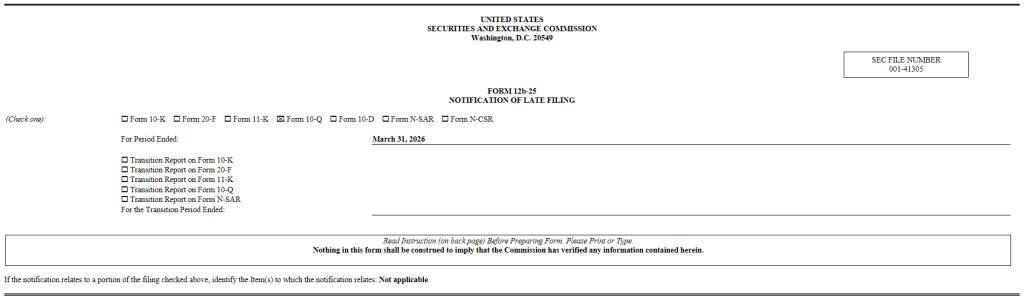
Source: SEC

States Are Closing The Door

The legal pressure started before the Canadian proposal. In January, Bitcoin Depot paid close to $2 million to Maine’s Consumer Credit Protection Bureau to settle a complaint.

Massachusetts, Iowa, and other states have since filed their own actions against the company. Individual cities and towns have also moved to restrict or ban crypto kiosks, with local officials citing concerns about residents falling victim to scams.

BTCUSD currently trading at $78,103. Chart: TradingView

Shares of Bitcoin Depot, which trade on the Nasdaq under the ticker BTM, dropped more than 40% over five trading days, sliding from $5 to $2.90.

In March, the company replaced CEO Scott Buchanan, who had held the position for just three months, with Alex Holmes.

Holmes ran MoneyGram from 2016 to 2024 and is known for his background in regulatory compliance — a skill set Bitcoin Depot clearly needs right now.

Leadership Shift, Uncertain Road

The company’s SEC filing described the revenue decline as being driven by a combination of regulatory impacts and enhanced compliance controls.

Reports indicate Bitcoin Depot is trying to manage existing legal exposure while adapting to a market that looks very different than it did a year ago.

Whether the new leadership can stabilize the business remains to be seen. The machines are still running. The lawsuits are not stopping. And the regulatory walls are getting closer on both sides of the border.

Featured image from ICIJ, chart from TradingView

Связанные с этим вопросы

QWhat major event did the Canadian government announce in April that negatively impacted Bitcoin Depot?

AIn April, the Canadian government released its Spring Economic Update, proposing a nationwide ban on crypto ATMs to combat scammers and money launderers.

QAccording to its SEC filing, what are the main reasons cited for the decline in Bitcoin Depot's revenue?

AThe main reasons cited for the revenue decline are tightening regulations and enhanced compliance controls, which have led to customers using the machines less.

QWho is the new CEO of Bitcoin Depot as of March, and what is his relevant background?

AThe new CEO as of March is Alex Holmes, who previously ran MoneyGram from 2016 to 2024 and is known for his background in regulatory compliance.

QWhat significant financial challenges did Bitcoin Depot's CFO cite for the fourth quarter of 2025?

ACFO David Gray cited more than $20 million in legal judgments accrued in the fourth quarter of 2025, alongside a wave of lawsuits from state regulators and a sharp drop in transaction volume.

QHow did Bitcoin Depot's stock price (BTM) perform over five trading days following the news?

AShares of Bitcoin Depot (ticker BTM) dropped more than 40% over five trading days, sliding from $5 to $2.90.

Похожее

Who Funds the Agents?

**Summary: Who Funds AI Agents?** OpenAI recently shut down a feature allowing AI agents to shop for users, highlighting the challenge of creating a secure and regulated environment for agent-driven transactions. While payment infrastructure exists, a crucial governance layer—defining spending limits, fraud detection, tax handling, and return policies—is largely missing. The potential is enormous: AI agents already processed $73M across 176M transactions last year, with McKinsey forecasting this could grow to $3-5T in global consumer commerce by 2030. The core competition isn't just about processing payments, which can be very cheap (especially with crypto-based settlement), but about controlling the rules that govern agent spending. Key players like Stripe and Coinbase are racing to dominate this governance layer. Stripe's acquisition of wallet provider Privy allows it to set spending policies, identity checks, and human-in-the-loop approvals directly at the wallet level. Similarly, Coinbase's stack, including its x402 protocol and AgentKit, embeds governance rules. This vertical integration across settlement, wallet, and governance layers is becoming the dominant strategy. Control over the governance layer is where significant future value lies. If agents handle trillions in transactions, even a small fee for managing compliance, fraud prevention, and policy enforcement could generate billions in annual revenue. The companies that successfully integrate across the payment stack will capture value from idle agent balances, transaction fees, and governance services, positioning themselves as the foundational banks of the AI agent economy.

marsbit22 мин. назад

Who Funds the Agents?

marsbit22 мин. назад

A Nation Blocks Chips, a Giant Buys a Nuclear Power Plant: Why It's Time to Seriously Consider DeAI

**Title: Great Powers Blockade Chips, Giants Buy Nuclear Plants: Why It's Time to Seriously Consider DeAI** In May 2026, the US closed loopholes for Chinese firms to acquire advanced NVIDIA chips via overseas subsidiaries. That same month, Kenya halted a $1B geothermal data center project involving Microsoft, fearing its immense energy consumption. Meanwhile, Huawei announced mass production of its Ascend AI chip. These disparate events underscore a new reality: the competition for computing power ("compute") has escalated beyond the tech industry, becoming a geopolitical and infrastructural battleground. A new era of oligopoly is forming, with control over the AI stack—from GPU chips (NVIDIA) and cloud platforms (AWS, Azure, Google Cloud) to foundational models (OpenAI, Anthropic)—concentrating in a few Western "AI Octopus" corporations. This centralization creates systemic risks: pricing power and platform lock-in for users, infrastructure fragility, and a widening "compute divide" that threatens to marginalize nations without independent AI capacity. An "AI Iron Curtain" is deepening through export controls. In response, some nations like Saudi Arabia and the UAE are investing heavily to buy compute power, aiming to transition from oil to AI economies. The EU seeks to triple its compute capacity by 2030 to reduce dependency. However, the spending gap is vast, with four US tech giants alone planning ~$750B in AI capex for 2026. The race is increasingly constrained by energy, with AI tasks consuming up to 1000x more power than web searches, pushing firms to even acquire nuclear plants. This landscape is fueling interest in Decentralized AI (DeAI). It proposes a third way: using open protocols to coordinate a global network of idle GPUs, independent developers, and data centers, creating an AI infrastructure without a single controlling entity. Leveraging blockchain and cryptographic verification, DeAI aims to break market concentration, disperse energy demands, reduce geopolitical dependencies, and enhance transparency. While still nascent in performance and stability, DeAI's core promise is not immediate superiority but providing a crucial alternative architecture to resist monopoly, censorship, and centralized power. As specialized AI hardware costs fall and open-source models flourish, the window to build this foundation is open. The very existence of such competition serves as a vital check against the inevitable abuse of concentrated power.

marsbit1 ч. назад

A Nation Blocks Chips, a Giant Buys a Nuclear Power Plant: Why It's Time to Seriously Consider DeAI

marsbit1 ч. назад

Торговля

Спот
Фьючерсы

Популярные статьи

Как купить ATM

Добро пожаловать на HTX.com! Мы сделали приобретение Atletico De Madrid Fan Token (ATM) простым и удобным. Следуйте нашему пошаговому руководству и отправляйтесь в свое крипто-путешествие.Шаг 1: Создайте аккаунт на HTXИспользуйте свой адрес электронной почты или номер телефона, чтобы зарегистрироваться и бесплатно создать аккаунт на HTX. Пройдите удобную регистрацию и откройте для себя весь функционал.Создать аккаунтШаг 2: Перейдите в Купить криптовалюту и выберите свой способ оплатыКредитная/Дебетовая Карта: Используйте свою карту Visa или Mastercard для мгновенной покупки Atletico De Madrid Fan Token (ATM).Баланс: Используйте средства с баланса вашего аккаунта HTX для простой торговли.Третьи Лица: Мы добавили популярные способы оплаты, такие как Google Pay и Apple Pay, для повышения удобства.P2P: Торгуйте напрямую с другими пользователями на HTX.Внебиржевая Торговля (OTC): Мы предлагаем индивидуальные услуги и конкурентоспособные обменные курсы для трейдеров.Шаг 3: Хранение Atletico De Madrid Fan Token (ATM)После приобретения вами Atletico De Madrid Fan Token (ATM) храните их в своем аккаунте на HTX. В качестве альтернативы вы можете отправить их куда-либо с помощью перевода в блокчейне или использовать для торговли с другими криптовалютами.Шаг 4: Торговля Atletico De Madrid Fan Token (ATM)С легкостью торгуйте Atletico De Madrid Fan Token (ATM) на спотовом рынке HTX. Просто зайдите в свой аккаунт, выберите торговую пару, совершайте сделки и следите за ними в режиме реального времени. Мы предлагаем удобный интерфейс как для начинающих, так и для опытных трейдеров.

399 просмотров всегоОпубликовано 2024.04.25Обновлено 2026.06.02

Как купить ATM

Обсуждения

Добро пожаловать в Сообщество HTX. Здесь вы сможете быть в курсе последних новостей о развитии платформы и получить доступ к профессиональной аналитической информации о рынке. Мнения пользователей о цене на ATM (ATM) представлены ниже.

活动图片