CLARITY Act Could Clear This Year, Solana Policy Institute Says—But 4 Demands Remain To Be Met

bitcoinistОпубликовано 2026-06-10Обновлено 2026-06-10

Введение

Kristin Smith, President of the Solana Policy Institute and CEO of the Blockchain Association, urged the U.S. Senate to pass the CLARITY Act, emphasizing four specific priorities must be met first. The legislation aims to provide legal clarity for public blockchain operations, focusing on protecting open-source developers and infrastructure providers who do not custody assets or control transactions. Smith argued that strong developer protections, including the key Blockchain Regulatory Certainty Act (BRCA), enhance enforcement by clearly distinguishing between different market participants, allowing authorities to target bad actors more effectively. She warned that weakening these protections could undermine the act's goal of giving builders confidence to operate in the U.S. Smith's position is to protect developers, target bad actors, preserve open-source innovation, and maintain U.S. leadership in crypto.

Kristin Smith, President of the Solana Policy Institute and CEO at the Blockchain Association, urged the US Senate to pass the anticipated CLARITY Act on Tuesday, while emphasizing four specific priorities she said must be addressed before the bill receives a full vote.

Protect Developers, Target Bad Actors

Speaking on social media site X (formerly Twitter), Smith framed the legislation as a chance to strengthen legal clarity around how public blockchains operate—particularly for the developers and infrastructure providers who build and maintain the open-source systems.

In a letter published on Tuesday, signed by more than 60 leading CEOs and founders, the industry calls on the Senate to move forward with the CLARITY Act while preserving what Smith described as robust developer protections.

According to Smith, Protecting developers sits at the center of Solana Institute’s mission. She said public blockchains depend on open-source contributors who write, maintain, and improve the code that runs them.

Because these engineers typically publish software that can be downloaded and used by anyone, she argued that they do not directly hold money, do not have the ability to freeze accounts, and do not move funds.

Smith also argued that strong developer protections do not weaken enforcement. Instead, she said that through the potential passage of the CLARITY Act, they could make enforcement more effective by creating clearer lines between different participants in the market.

When the law clearly distinguishes between intermediaries that custody assets or control transactions, bad actors, regulators, and prosecutors can focus their attention on the parties she described as actually responsible for illicit conduct—such as those custodying funds, operating platforms, or facilitating wrongdoing.

CLARITY Act With BRCA Intact

In her message, Smith pointed specifically to the Blockchain Regulatory Certainty Act (BRCA) as a key element of that approach. Smith said the BRCA provides legal certainty for noncontrolling software developers and infrastructure providers who do not custodian assets or control user transactions.

Smith also referenced a separate letter released by the Blockchain Association, saying that last week, 160 former national security, intelligence, and law enforcement professionals made a similar argument: that “clarity is an enforcement advantage.”

In her account, clearer rules help keep legitimate activity onshore and provide prosecutors with better tools to target bad actors, rather than creating uncertainty that discourages compliant development.

In Smith’s view, the core objective is not simply to pass a bill, but to ensure it leads to meaningful certainty for builders. She warned that if developer protections are weakened, the broader CLARITY Act could fall short of one of its most important goals—giving responsible builders confidence to work in the United States.

Smith concluded that the Senate should pass the CLARITY Act with the Blockchain Regulatory Certainty Act intact. She summarized her position as a straightforward set of goals: protect developers, target bad actors, preserve open-source innovation, and maintain US leadership in the crypto sector.

The daily chart shows the total crypto market cap at $2.12 trillion. Source: TOTAL on TradingView.com

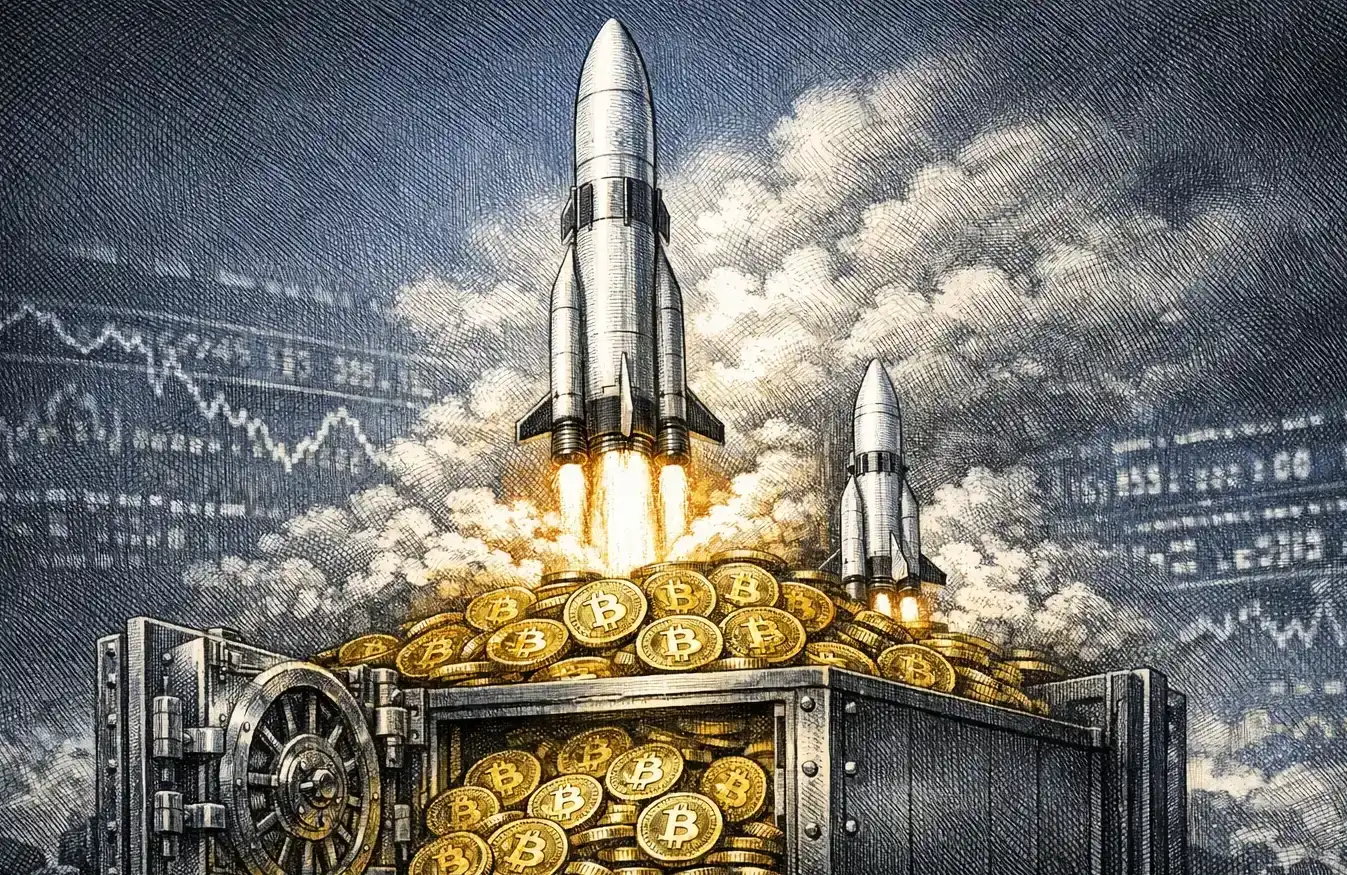
Featured image created with OpenArt; chart from TradingView.com

Связанные с этим вопросы

QWhat is the main purpose of the CLARITY Act according to Kristin Smith and the Solana Policy Institute?

AThe main purpose is to strengthen legal clarity around how public blockchains operate, specifically to protect developers and infrastructure providers, while making enforcement against bad actors more effective by clearly distinguishing between different market participants.

QWhat are the four specific priorities or demands that Kristin Smith emphasized must be addressed before the CLARITY Act receives a full vote?

AThe four priorities are: protect developers, target bad actors, preserve open-source innovation, and maintain US leadership in the crypto sector.

QWhy does Kristin Smith argue that strong developer protections do not weaken enforcement?

AShe argues that clearer legal lines between different participants, such as developers who don't custody assets and intermediaries who do, allow regulators and prosecutors to focus their attention on parties actually responsible for illicit conduct, thereby making enforcement more effective.

QWhat specific piece of legislation did Smith point to as a key element for providing legal certainty to developers?

AShe pointed to the Blockchain Regulatory Certainty Act (BRCA) as a key element that provides legal certainty for noncontrolling software developers and infrastructure providers who do not custodian assets or control user transactions.

QWhat warning did Smith give regarding the potential weakening of developer protections in the CLARITY Act?

AShe warned that if developer protections are weakened, the broader CLARITY Act could fail to achieve one of its most important goals: giving responsible builders the confidence to work in the United States.

Похожее

War Trade Unwinding | TradeXYZ Weekend Observations

Weekend markets saw a clear return of risk appetite. Major indices rose broadly, with significant gains in tech and precious metals, while energy sectors fell sharply on the "end of war" narrative. On June 14, oil prices initially rose on reports Iran had not yet finalized a memorandum of understanding. Later, YNET reported Trump might immediately lift the maritime blockade on Iran and the Strait of Hormuz. At 21:30, Trump confirmed on Truth Terminal that a deal with Iran was done, authorizing an immediate end to the US blockade and toll-free opening of the Strait. Iran's deputy foreign minister simultaneously announced an immediate and permanent halt to military actions on multiple fronts. Oil prices had already fallen to weekend boundaries, pre-pricing the news. The S&P 500 subsequently touched 7530. Markets will likely remain in a waiting period until the formal peace deal signing on June 19. At the moment of the deal announcement, gold jumped from ~4,221 to a high of 4,337, and silver from ~67.85 to 70.83, before stabilizing at higher levels. Individual stocks and ETFs like NBIS, RKLB, and LITE performed strongly. NBIS, added to the Nasdaq index, saw a target price increase due to strong AI cloud growth. RKLB, also added to the index, benefited from positive SpaceX valuation sentiment. LITE received a $1,130 target from JPMorgan. SPCX rose quickly after Musk tweeted SpaceX could potentially reach ~$1 trillion in revenue by 2030. In summary, the market shock from the multi-month war is beginning to dissipate. Israel's actions remain the key variable before the June 19 signing. Upcoming events like Fed Chair Warsh's debut and BoJ rate hike expectations will also significantly impact markets this week.

marsbit13 мин. назад

War Trade Unwinding | TradeXYZ Weekend Observations

marsbit13 мин. назад

Will the Next Crypto Bull Run Start with On-Chain Trading of SpaceX?

This article presents a scenario-based forecast for the crypto industry from 2026 to 2029, arguing that the next major cycle will be driven not by technological narratives but by legal access to real-world assets. The author predicts that by mid-2026, pre-IPO perpetual contracts for top private companies like SpaceX, OpenAI, and Anthropic on platforms like Hyperliquid will become the primary gateway for accessing quality assets, as most crypto-native tokens fail to capture real value. The much-hyped AI x Crypto intersection largely fails except for prediction markets, which thrive on betting on AI model supremacy. By 2027, public blockchain foundations are forced to choose between catering to retail speculation or building compliant infrastructure for institutions, with many opting for the latter. Growth in stablecoins and tokenized private credit/equity hits a "triple ceiling" due to regulatory and political uncertainty rather than market demand. The pivotal shift is forecast for 2028. A major liquidation event in pre-IPO perpetuals exposes the structural flaw of synthetic markets lacking a real underlying asset anchor. In response, regulatory changes finally allow the public solicitation of private securities resales to verified accredited investors. This creates a legitimate secondary market for real company equity, which then becomes the core asset class of the new bull market, relegating synthetic perps to a niche role. By 2029, the industry becomes "boring" but foundational. Tokens without claims on real cash flows or assets cease trading. Stablecoin growth is steady but politically capped. Crypto infrastructure fades from view as it gets absorbed into traditional finance backends. The article's central thesis is that the key bottleneck for crypto's next phase is legal and regulatory channels for real asset ownership, not technology.

marsbit1 ч. назад

Will the Next Crypto Bull Run Start with On-Chain Trading of SpaceX?

marsbit1 ч. назад

The Value Distribution of Stablecoins

**Summary: The Value Distribution of Stablecoins** The article argues that stablecoins are evolving from mere trading tools into broader channels for dollar access. It divides the stablecoin ecosystem into four layers to analyze how value is distributed: 1. **Issuance Layer:** Mints stablecoins, holds reserve assets, and captures the spread between reserve yield and user costs (e.g., Tether, Circle). This layer currently earns the largest profit margin. 2. **Infrastructure Layer:** Connects stablecoins to the traditional financial system, handling fiat on/off-ramps, banking integration, compliance (KYC/AML), and asset management (e.g., Bridge, BVNK). This is the "unglamorous" but critical work, building the essential bridges between crypto and real-world finance. 3. **Acquiring/Distribution Layer:** Integrates stablecoins into merchant systems, manages payment flows, and provides enterprise financial software (e.g., Stripe, Coinbase). They act as the access point for businesses. 4. **Application Layer:** The end-users and businesses that ultimately use stablecoins for payments, settlements, or as a store of value. They benefit from convenience but have little pricing power. The core thesis is that while the issuance layer currently dominates profits, the often-overlooked **infrastructure layer holds significant long-term potential**. The real challenge and barrier to mass adoption is not the on-chain transfer of stablecoins (which is simple), but the complex "last mile" integration into existing business workflows, banking systems, and regulatory frameworks across different countries. Companies in this layer are currently in a "land grab" phase, investing heavily to build networks, secure bank partnerships, and establish compliance pathways. While their position is currently pressured by the profitable issuers above and distribution platforms below, the article suggests that if stablecoins become a default financial rail for businesses, the infrastructure providers who have done the hard work of integration will ultimately gain strong pricing power and become entrenched, essential players.

marsbit8 ч. назад

The Value Distribution of Stablecoins

marsbit8 ч. назад

The Value Distribution of Stablecoins

The Value Distribution of Stablecoins The article argues that stablecoins are evolving from a mere trading tool into a broad "dollar channel." It analyzes the industry's value chain through four layers: 1. **Issuance Layer (e.g., Tether, Circle):** The top layer that mints stablecoins, holds reserve assets, and captures the thickest interest rate spread. 2. **Infrastructure Layer (e.g., Bridge, BVNK):** Connects stablecoins to the traditional financial system, handling critical but complex "dirty work" like fiat on/off-ramps, banking integration, compliance (KYC/AML), and cross-border settlement. 3. **Acquiring/Distribution Layer (e.g., Stripe, Coinbase):** Embeds stablecoins into merchant systems, manages payment flows, and integrates with enterprise software. 4. **Application Layer:** End-users and businesses that ultimately use stablecoins for payments, settlement, or storing value. The author posits that while the issuance layer currently captures the most profit, the most overlooked and potentially critical layer is infrastructure. The core challenge for stablecoin adoption isn't the on-chain transfer (which is simple), but bridging the gap between blockchain and the real-world financial system. This involves solving practical problems for businesses: fiat conversion, reconciliation, tax handling, and user onboarding. Infrastructure companies are currently in a difficult "land-grab" phase—building networks, securing banking relationships, and achieving compliance country-by-country. They face pressure from both the profitable issuance layer above and distribution platforms below. However, the author suggests this layer is building a crucial moat. Once stablecoins become a default business rail, the infrastructure players who have done the hard work of integration may gain significant, durable value and pricing power.

链捕手8 ч. назад

The Value Distribution of Stablecoins

链捕手8 ч. назад

Торговля

Спот
Фьючерсы

Популярные статьи

Как купить 4

Добро пожаловать на HTX.com! Мы сделали приобретение 4 (4) простым и удобным. Следуйте нашему пошаговому руководству и отправляйтесь в свое крипто-путешествие.Шаг 1: Создайте аккаунт на HTXИспользуйте свой адрес электронной почты или номер телефона, чтобы зарегистрироваться и бесплатно создать аккаунт на HTX. Пройдите удобную регистрацию и откройте для себя весь функционал.Создать аккаунтШаг 2: Перейдите в Купить криптовалюту и выберите свой способ оплатыКредитная/Дебетовая Карта: Используйте свою карту Visa или Mastercard для мгновенной покупки 4 (4).Баланс: Используйте средства с баланса вашего аккаунта HTX для простой торговли.Третьи Лица: Мы добавили популярные способы оплаты, такие как Google Pay и Apple Pay, для повышения удобства.P2P: Торгуйте напрямую с другими пользователями на HTX.Внебиржевая Торговля (OTC): Мы предлагаем индивидуальные услуги и конкурентоспособные обменные курсы для трейдеров.Шаг 3: Хранение 4 (4)После приобретения вами 4 (4) храните их в своем аккаунте на HTX. В качестве альтернативы вы можете отправить их куда-либо с помощью перевода в блокчейне или использовать для торговли с другими криптовалютами.Шаг 4: Торговля 4 (4)С легкостью торгуйте 4 (4) на спотовом рынке HTX. Просто зайдите в свой аккаунт, выберите торговую пару, совершайте сделки и следите за ними в режиме реального времени. Мы предлагаем удобный интерфейс как для начинающих, так и для опытных трейдеров.

662 просмотров всегоОпубликовано 2025.10.20Обновлено 2026.06.02

Как купить 4

Неделя обучения по популярным токенам 4: В 2025 году экосистема TRON переживает взрывной рост, TRON укрепляет позиции лидера по переводу стейблкоинов

В 2025 году экосистема TRON быстро развивается, уделяя особое внимание взаимодействию, безопасности и практическому внедрению.

2.2k просмотров всегоОпубликовано 2025.12.30Обновлено 2025.12.30

Неделя обучения по популярным токенам 4: В 2025 году экосистема TRON переживает взрывной рост, TRON укрепляет позиции лидера по переводу стейблкоинов

Обсуждения

Добро пожаловать в Сообщество HTX. Здесь вы сможете быть в курсе последних новостей о развитии платформы и получить доступ к профессиональной аналитической информации о рынке. Мнения пользователей о цене на 4 (4) представлены ниже.

活动图片