China Turns To Interest Rates To Kick-Start Digital Yuan Adoption

bitcoinistОпубликовано 2025-12-30Обновлено 2025-12-30

Введение

China will allow commercial banks to pay interest on digital yuan (e-CNY) wallet balances starting January 1, 2026, shifting the digital currency from a cash-like instrument to a deposit-like asset. The People’s Bank of China (PBOC) introduced the new framework, which brings e-CNY under deposit insurance protection and requires non-bank payment providers to hold full reserves. By November 2025, e-CNY recorded 3.48 billion transactions totaling ¥16.7 trillion ($2.37 trillion). The move may influence where consumers and businesses store funds, as interest-bearing e-CNY becomes more attractive. Banks may face higher operational costs but could benefit from reduced nonbank platform deposits. The policy also strengthens cross-border testing and regulatory oversight.

According to reports, China will let commercial banks pay interest on balances held in digital yuan wallets starting January first, 2026.

The People’s Bank of China has laid out a new framework that moves the e-CNY from a cash-like tool to something closer to a bank deposit. Lu Lei of the PBOC is named in official notices about the change.

Banks To Pay Interest On e-CNY

Based on reports, holders of merchant or personal digital wallets will earn interest calculated by the banks that run those wallets.

The move requires banks to treat digital yuan holdings more like deposits, and it brings those balances under China’s deposit insurance protections. Reports say non-bank payment firms that operate wallets must keep 100% reserves for the e-CNY they manage.

Adoption Numbers And Rules

According to official figures cited in media coverage, by November 2025 there were about 3.48 billion e-CNY transactions with a combined value near ¥16.7 trillion — roughly $2.37 trillion.

The new policy links interest payments to existing deposit rate arrangements, which means interest rates on e-CNY will be set in line with how banks price other deposit accounts.

Observers have pointed out that the change could shift where consumers keep money, since insured, interest-bearing e-CNY becomes more attractive for storing funds.
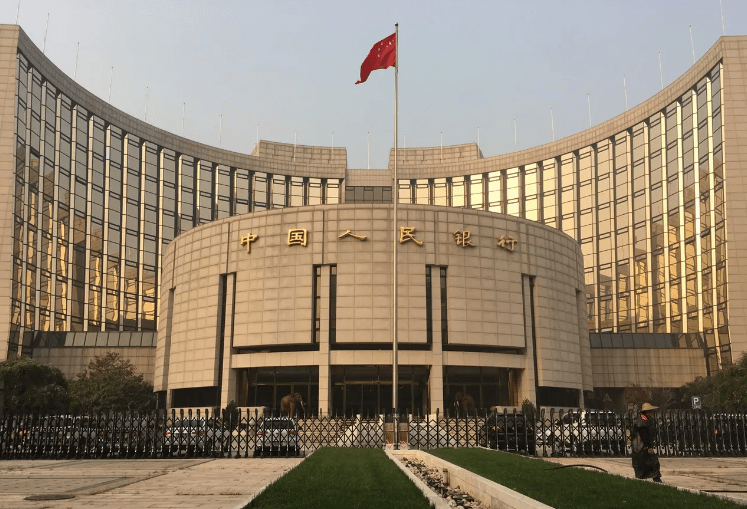
The People's Bank of China. Image: Fintech Futures

Reports have disclosed that digital yuan wallets will be subject to rules similar to those for regular bank accounts. Deposit insurance will apply, and reserve and reporting requirements will be tightened for third-party payment providers.

The PBOC framework also sets clearer rules for cross-border testing that was already under way with partners such as Singapore, Thailand, Hong Kong, the UAE and Saudi Arabia.

Banking And Policy Impact

Banks will need to adapt systems for interest calculation and for clearing e-CNY transactions at scale, which could increase operational costs in the short term. That said, some costs may be offset if more money flows into e-CNY wallets and fewer funds stay in nonbank payment platforms.

Total crypto market cap currently at $2.95 trillion. Chart: TradingView

Monetary authorities will watch how these flows interact with the broader money supply and lending operations, because shifts in where deposits sit can affect credit channels.

For everyday users, the most direct change is that holding e-CNY could earn interest and enjoy the same insurance protection as deposits. For businesses, payment settlement may become cheaper or faster depending on how banks price services.

Reports suggest regulators aim to keep the system safe by demanding full reserves from third-party operators and clearer oversight by banks.

Based on reports and official statements, the change takes effect on January 1, 2026, and it marks a major step in China’s long running e-CNY program. Regulators, banks and users will all be watching how interest rules are applied and whether the shift leads to wider use of the digital currency.

Featured image from Unsplash, chart from TradingView

Связанные с этим вопросы

QWhen will commercial banks start paying interest on digital yuan wallet balances in China?

AJanuary 1, 2026.

QWhat is the People's Bank of China (PBOC) transforming the e-CNY into with this new framework?

AIt is moving the e-CNY from a cash-like tool to something closer to a bank deposit.

QHow will the interest on e-CNY wallets be calculated and set?

AInterest will be calculated by the banks that run the wallets and will be set in line with how banks price other deposit accounts.

QWhat protection will digital yuan wallet balances receive under the new policy?

AThey will be brought under China’s deposit insurance protections.

QWhat are the operational implications for banks due to this new policy?

ABanks will need to adapt systems for interest calculation and clearing e-CNY transactions at scale, which could increase operational costs in the short term.

Похожее

Jensen Huang's CMU Speech: In the AI Era, Don't Just Watch, Build

Jensen Huang, CEO of NVIDIA and a first-generation immigrant, delivered the commencement address to Carnegie Mellon University's class of 2026. He shared his personal journey from a humble background to founding NVIDIA, emphasizing resilience, learning from failure, and the responsibility that comes with leadership. Huang framed the present moment as the dawn of the AI revolution, a shift he believes is more profound than previous computing waves. He described AI as fundamentally resetting computing—moving from human-written software to machines that understand, reason, and use tools. This will create a new industry for generating intelligence and transform every sector. While acknowledging AI's potential to automate tasks and displace some jobs, Huang distinguished between the *tasks* of a job and its core *purpose*. He argued AI will augment human capability, not replace humans. The real risk, he stated, is not AI itself, but people being left behind by those who effectively use AI. He presented AI as a generational opportunity for massive infrastructure investment—in chip factories, data centers, energy grids, and advanced manufacturing—that could re-industrialize nations like the U.S. and bridge the digital divide by making computing and intelligent tools accessible to all. Huang called for a balanced approach: advancing AI safely and responsibly, establishing prudent policies, ensuring broad access, and encouraging universal participation. He urged the graduates not to fear the future but to engage with optimism and ambition, reminding them of CMU's motto, "My heart is in the work." His core message was clear: this is their moment to actively build and shape the AI-powered future, not merely observe it.

marsbit56 мин. назад

Jensen Huang's CMU Speech: In the AI Era, Don't Just Watch, Build

marsbit56 мин. назад

The Era Has Arrived Where Human Writers Must Prove They Are Not Machines

The article describes an era where AI-generated content is flooding the market, forcing human authors to prove they are not machines. It begins with the example of dozens of AI-written, error-ridden biographies of Henry Kissinger appearing on Amazon within hours of his death, a pattern repeated for other deceased celebrities and even living experts who find fraudulent books under their names. This spam content has exploded, with monthly new book releases on platforms like Amazon reaching 300,000 by late 2025. The issue spans genres, from suspiciously high proportions of AI-written teen romance and self-help books to dangerous, AI-generated foraging guides containing lethal advice. The platforms' automated review systems, designed to catch plagiarism and banned words, are ill-equipped to detect AI-generated text that avoids these pitfalls while being nonsensical or fraudulent. The problem has infiltrated traditional publishing. A major publisher, Hachette, had to recall a bestselling horror novel after AI detection tools suggested 78% of its content was machine-generated. An acclaimed European philosophy book was later revealed to be entirely written by AI under a fake author persona. In response, authors are fighting back. At the 2026 London Book Fair, 10,000 writers published a blank book titled "Don't Steal This Book" containing only their signatures—using emptiness as a protest weapon in an age of AI overproduction. Initiatives like the "Human Author Certification" program have emerged, ironically placing the burden on humans to prove their work is not machine-made. The article warns of a vicious cycle: AI-generated low-quality books pollute the data used to train future AI models, leading to "model collapse" and an ever-worsening flood of digital waste, eroding trust in publishing and devaluing human creativity.

marsbit1 ч. назад

The Era Has Arrived Where Human Writers Must Prove They Are Not Machines

marsbit1 ч. назад

Торговля

Спот
Фьючерсы
活动图片