Indepth Research

Provide in-depth research reports and independent analysis, leveraging data, technology, and economic insights to deliver a comprehensive examination of the blockchain ecosystem, project potential, and market trends.

IOSG|Decentralized AI: Ethereum's Next Decade Bet

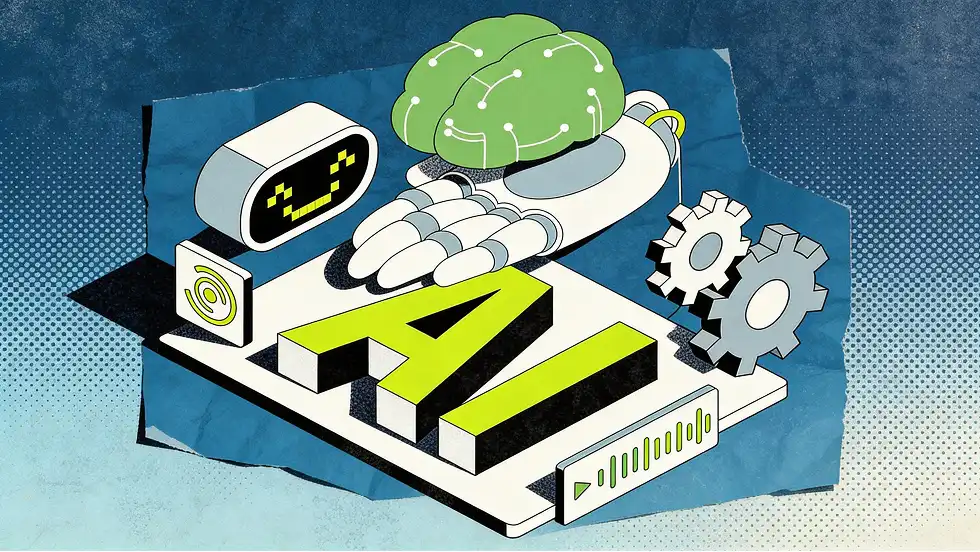
A Glimpse into Decentralized AI: Ethereum's Next Decade Bet In a future scenario, AI assistants could autonomously handle complex tasks like booking flights by coordinating with specialized AI agents. However, a critical challenge emerges: how can AI determine which other agents to trust? Current AI agents operate in isolated ecosystems (e.g., OpenAI, Google), unable to communicate or verify each other’s reliability—a "trust crisis" akin to early fragmented email systems. While protocols like Google’s A2A (Agent-to-Agent) and Anthropic’s MCP (Model Context Protocol) enable AI-to-AI communication, they lack a trust mechanism. ERC-8004 proposes a solution by leveraging Ethereum to provide AI agents with: 1. **Identity**: A unique, verifiable on-chain ID (as an NFT) to prevent forgery. 2. **Reputation**: A transparent, immutable rating system (like Uber or Taobao reviews) recorded on-chain. 3. **Validation**: For high-risk tasks, third-party verification via cryptographic proofs or trusted execution environments. Ethereum’s neutrality is key: it offers a decentralized, tamper-proof foundation for AI identity and reputation, avoiding reliance on any single corporation. The Ethereum Foundation’s dedicated dAI (Decentralized AI) team aims to position Ethereum as the settlement and coordination layer for the AI economy, marking a strategic shift from DeFi/NFTs to "on-chain intelligence." The ecosystem is already advancing, with 1,100+ developers, 70+ demos, and integrations like Taiko L2 and x402 (a payment protocol by Coinbase/Cloudflare). Combined, ERC-8004 and x402 could enable a closed-loop economy where AI agents autonomously complete tasks and receive payments. In the long term, this could allow users to hire AI agents effortlessly, monetize their own agents, and enjoy interoperable AI assistants beyond walled gardens. While success isn’t guaranteed, ERC-8004 represents a pivotal narrative shift for Ethereum—potentially becoming the "TCP/IP" for decentralized AI.

marsbit01/19 13:59

IOSG|Decentralized AI: Ethereum's Next Decade Bet

marsbit01/19 13:59

2025 Crypto Buyback Revelation: When a $138 Million Buy Order Can't Save an 80% Plunge

"2025 Crypto Buyback Report: A $1.38B Buyback Fails to Prevent an 80% Crash" The year 2025 witnessed an "industrial revolution" in crypto fiscal discipline, with on-chain protocols spending over $1.4 billion on token buybacks. This strategy, driven by mature DeFi business models and favorable US regulatory shifts, aimed to reshape tokenomics. However, the outcomes were starkly polarized. Hyperliquid emerged as the dominant success story, allocating over $640 million (nearly 46% of the total market) to buybacks, which fueled a 4x price surge. Its key was a high "Net Flow Efficiency Ratio" (NFER > 3.0), where buyback volume drastically exceeded token unlock sell pressure, creating net deflation. In contrast, major failures demonstrated that buyback size alone is meaningless against structural inflation. Despite a massive $138 million buyback, Pump.fun's token price crashed 80% as the mechanism served as exit liquidity for concentrated whales without lock-ups. Jupiter spent $70 million but faced an overwhelming $1.2 billion in annual unlocks (NFER of 0.06), making its efforts futile. The analysis introduces NFER as the critical metric: Buybacks only positively impact price when the annualized buyback volume surpasses the value of annual unlocks and emissions (NFER > 1.0). Otherwise, they are ineffective or even counterproductive. By early 2026, a strategic pivot occurred. Projects like Helium and Jupiter halted buybacks, recognizing that capital was better spent on user acquisition, subsidies, and building network effects—akin to "growth stocks." Mature protocols with established cash flows, like Optimism, began adopting buybacks to transition from speculation to value. The conclusion is clear: Financial engineering cannot overcome structural inflation. The new paradigm rewards protocols that use cash flow to build real economic moats and achieve genuine net deflation. Investors must now scrutinize NFER, holder structure, and the source of buyback funds.

marsbit01/19 08:37

2025 Crypto Buyback Revelation: When a $138 Million Buy Order Can't Save an 80% Plunge

marsbit01/19 08:37

Coinbase: The Evolution from a Fringe Project to Global Financial Infrastructure

Coinbase's journey from a 2012 Y Combinator project to a global crypto financial infrastructure is a story of contrarian strategy, internal turmoil, and aggressive political maneuvering. Its early success stemmed from a focus on compliance and trust in a rebellious industry, securing banking relationships and state licenses to become a safe haven after the Mt. Gox collapse. Internally, the company faced crises, including a 2020 "apolitical" cultural purge where 5% of employees left, and serious racial discrimination allegations. It also navigated the first crypto insider trading case, which became a legal prelude to SEC challenges. Facing regulatory pressure, Coinbase fought back legally and politically. It spent over $119 million in the 2024 election cycle, successfully ousting crypto-skeptic Senator Sherrod Brown, and shifted Washington's stance on crypto. Financially, Coinbase transformed its business model. While 96% of its revenue came from trading fees in 2020, by 2025, nearly half is from stablecoin services (USDC), staking, and ETF custody—where it holds an 85% market share of Bitcoin ETF assets. Looking ahead, Coinbase is expanding into Web3 with its Base blockchain (adopting a no-token strategy) and aims to become an "Everything Exchange," offering stocks and commodities. However, its dominance creates systemic risks, as its concentration of ETF custody assets makes it a potential single point of failure.

marsbit01/19 06:20

Coinbase: The Evolution from a Fringe Project to Global Financial Infrastructure

marsbit01/19 06:20

Outsmarting Algorithmic Manipulation on Twitter: How to Grow Your Account with Dignity?

This article analyzes the significant decline in engagement and reach experienced by many Twitter (X) content creators, attributing it to two major platform changes. First, the platform has weakened the "Following" tab, defaulting users to the algorithmic "For You" feed. Second, it has shifted from a chronological timeline to algorithmically recommended content, heavily influenced by its AI model, Grok. This results in a polarized content performance: deep, analytical posts receive minimal views and zero interaction, while sensationalist, controversial, or low-quality content (e.g., clickbait, politics, or adult material) often goes viral. The author argues this strategy, designed to increase ad revenue by keeping users in a recommendation loop, ultimately degrades the platform's community and commercial value. It incentivizes "farming" engagement through divisive or shallow content, driving away high-quality vertical creators who are increasingly migrating to platforms like Substack. The piece concludes with a three-part strategy for creators: 1) adapt by mixing deep content with high-engagement hooks and subscribing to Premium for better reach, 2) build direct audience connections through newsletters or private groups, and 3) wait for potential platform improvements. The core message is a call to maintain integrity while navigating the algorithmic challenges.

marsbit01/19 05:41

Outsmarting Algorithmic Manipulation on Twitter: How to Grow Your Account with Dignity?

marsbit01/19 05:41

活动图片