Regulatory Policy

Focuses on global regulatory developments, policy changes, and compliance requirements. It provides in-depth analysis of government regulations and their impact on the cryptocurrency and blockchain industries, helping businesses and investors proactively manage policy-related risks.

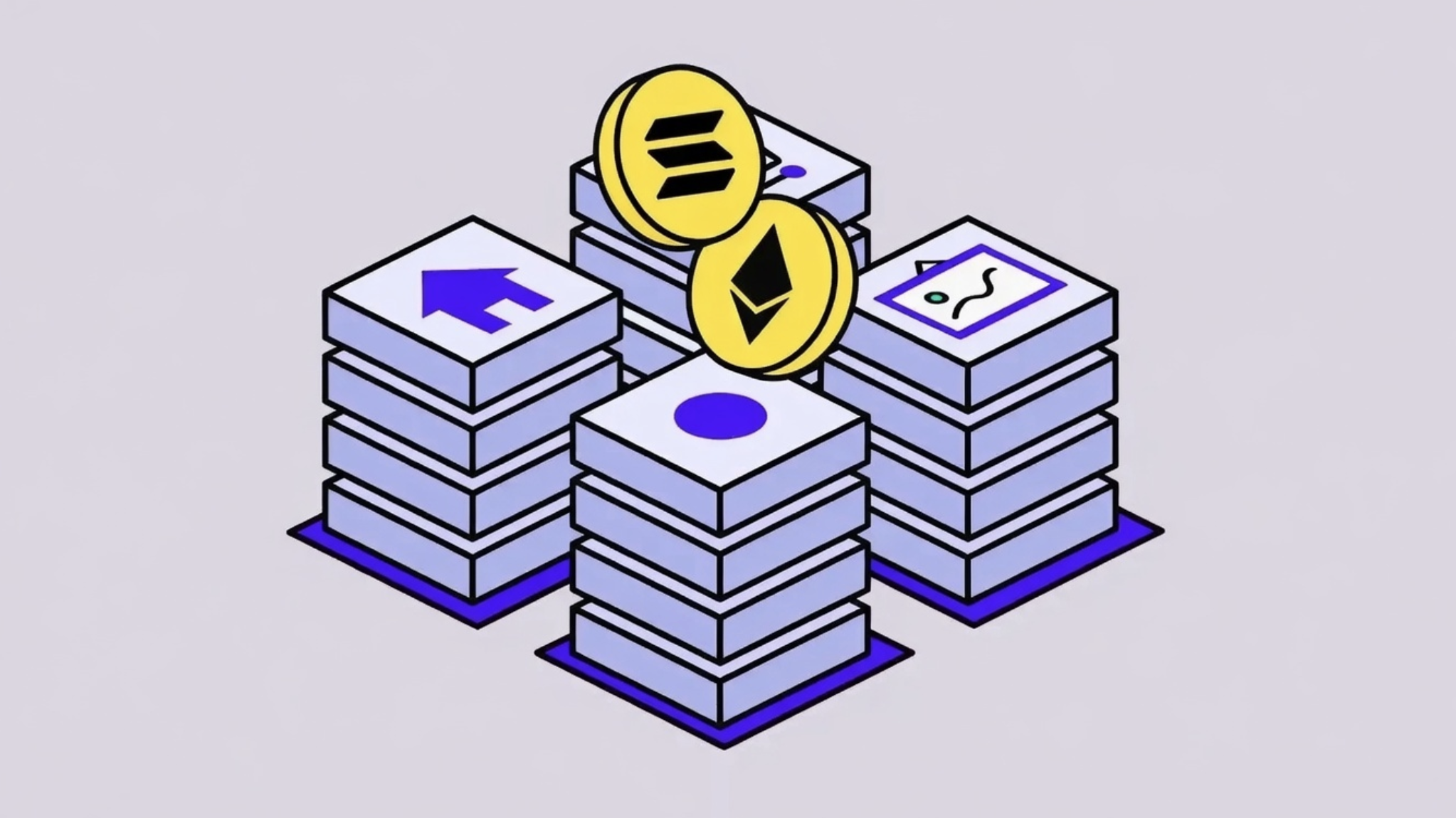
After Mainland's Document No. 42 Sets the Tone, What is the Best RWA Token Standard?

The People's Bank of China, along with eight other departments, issued Document No. 42 (2026), which formally recognizes Real World Asset tokenization (RWA) as a legitimate business model and outlines a compliance pathway. The document defines RWA as using encryption and distributed ledger technology to convert ownership or profit rights of assets into tokens or token-like equity or debt instruments. The article analyzes existing global RWA token standards and applications, arguing that the ideal standard should prioritize practical application and user experience over designing a perfect, all-encompassing specification upfront. It reviews several models: - **HK's ABT (2022):** An early framework highlighting benefits like fragmentation, liquidity, and transparency. - **ERC-3525 & ERC-3475:** Standards for bonds and contracts criticized for being overly complex and lacking adoption due to poor compatibility. - **Aave's aToken:** A highly successful model using a "Scaled Balance" mechanism where interest accrues and is realized during transactions, minimizing project overhead. - **Lido's stETH:** A "Rebase" model that automatically adjusts token balances daily to reflect staking rewards, offering a seamless user experience. - **Ondo & xStock (Stocks):** These platforms use a "Rebase" mechanism on Solana (via token2022 standard) where a "multiplier" adjusts to handle corporate actions like stock splits or dividends. The conclusion is that China's regulatory clarity is a positive step, but success hinges on building solutions that leverage blockchain's strengths—24/7 global liquidity, transparency, and automation—to solve real user needs, much like the successful native models (aToken, stETH) did. The true value of RWA lies in filling market gaps and enabling new forms of value discovery, not just in tokenization itself.

marsbit02/09 03:29

After Mainland's Document No. 42 Sets the Tone, What is the Best RWA Token Standard?

marsbit02/09 03:29

Epic Blunder: South Korean Exchange "Slip-up" Sends Out $44 Billion in Error

In a major operational error, South Korean cryptocurrency exchange Bithumb mistakenly distributed Bitcoin worth over $44 billion to users, causing a sharp drop in the platform’s Bitcoin price and triggering a regulatory review. The incident occurred when Bithumb intended to issue a promotional cash payment of 2,000 won (approx. $1.4) per user. Due to a system error, 695 users each received at least 2,000 Bitcoin instead. The exchange restricted trading and withdrawals within 35 minutes and has since recovered 99.7% of the wrongly distributed Bitcoin. As a result, Bitcoin prices on Bithumb temporarily plunged by 17% before partially recovering. South Korea’s Financial Services Commission described the incident as exposing "the vulnerability and risks of virtual assets" and announced plans to examine internal controls and operations at Bithumb and other exchanges. If violations are found, on-site inspections will follow. Bithumb attributed the mistake to an internal operational error and emphasized that it was not caused by external hacking or security breaches. Approximately 0.3% of the Bitcoin, worth around $132 million, remains unrecovered. The error occurred when the system incorrectly substituted "Bitcoin" for "Korean won," amplifying the reward amount by billions of times. As South Korea’s second-largest crypto exchange, Bithumb’s incident may lead to stricter industry-wide risk management and technical reliability standards.

华尔街日报02/08 00:59

Epic Blunder: South Korean Exchange "Slip-up" Sends Out $44 Billion in Error

华尔街日报02/08 00:59

活动图片