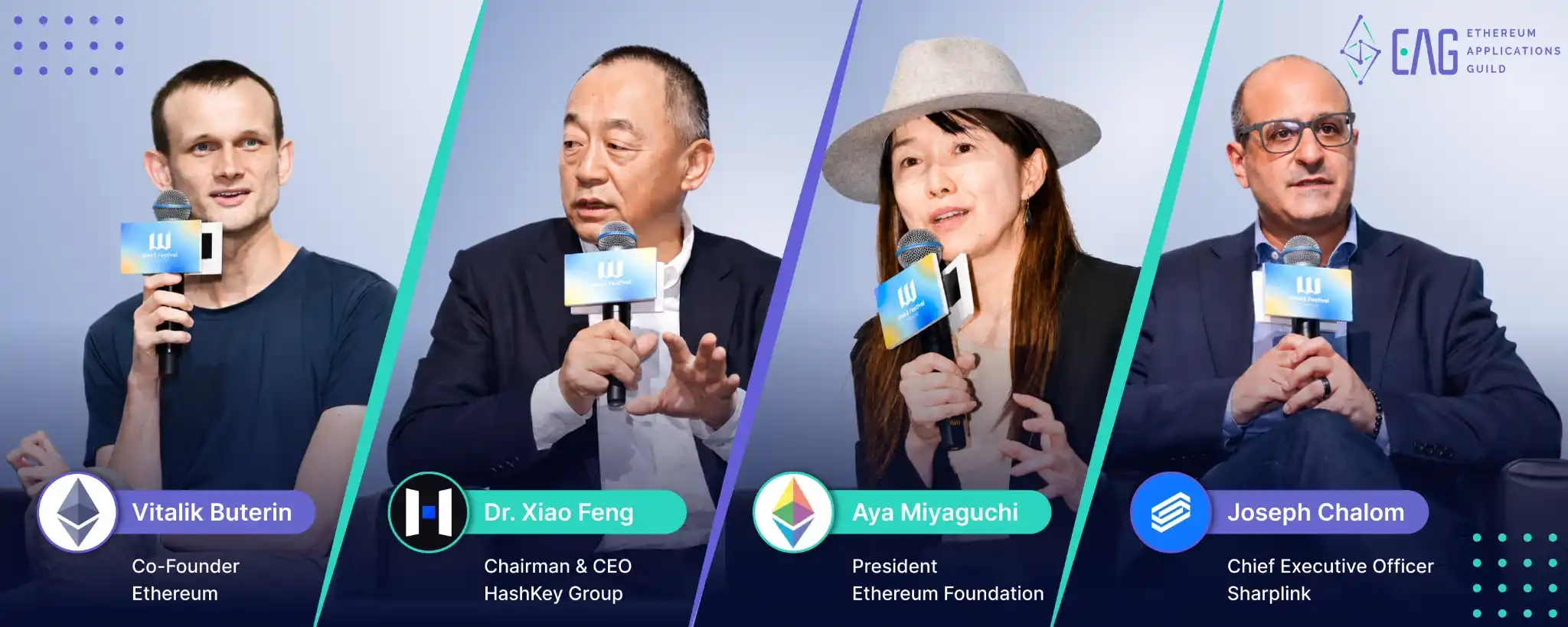
Диалог с Виталиком, Сяо Фэном, Аей Миягути и Джозефом Шаломом: от 'Принципа вычитания' до экономики агентов
Разговор Виталика Бутерина, Сяо Фэна, Аи Миягучи и Джозефа Шалома: от «принципа вычитания» к экономике агентов.
22 апреля на главной сцене Гонконгского фестиваля Web3 прошёл «Саммит приложений Ethereum», организованный Ethereum Applications Guild (EAG). Участники обсудили будущее экосистемы Ethereum, смещение фокуса с базовой инфраструктуры на уровень приложений и ключевые вызовы.
**Виталик Бутерин** выделил необходимость «полного стека открытой безопасности», включая безопасность на уровне аппаратного обеспечения. Он подчеркнул важность упрощения взаимодействия с Ethereum для обычных пользователей, где ИИ и интерфейсы на естественном языке станут ключевыми. Бутерин отметил, что конкурентоспособность Ethereum основана на безопасности, децентрализации и доверии, а также обсудил потенциал интеграции блокчейна с конфиденциальными вычислениями (FHE, ZK) и ИИ для таких сфер, как медицина.
**Сяо Фэн** согласился, что массовое внедрение требует упрощения пользовательского опыта, аналогичного эволюции от командной строки к мобильным приложениям. Он отметил, что ИИ может автоматизировать взаимодействие с цепочкой, скрывая сложность от пользователей.
**Ая Миягучи**, председатель Фонда Ethereum, объяснила «принцип вычитания» в мандате фонда: EF уменьшает прямое участие в областях, где сообщество или рынок стали зрелыми, выполняя поддерживающую роль «садовника» в экосистеме. Она подчеркнула, что реальные приложения строятся на основных ценностях Ethereum: безопасность, устойчивость к цензуре и приватность.
**Джозеф Шалом** (SharpLink) заявил, что Ethereum представляет будущую архитектуру мировых финансовых рынков, а Гонконг является идеальным хабом. Он указал на ключевое отличие «производительности» Ethereum от Bitcoin — возможность стейкинга и получения дохода, что привлекает институции. Шалом также описал будущее «экономики агентов» (к 2027 году), где автономные ИИ-агенты будут управлять финансами через кошельки Web3.
Саммит обозначил переход Ethereum к фазе реальных приложений. Запуск EAG призван стимулировать глобальное сотрудничество разработчиков для дальнейшего роста экосистемы.
marsbit05/12 09:45