Industry News

Tracks company news, strategic changes, funding activities, and personnel adjustments across the blockchain and crypto industries, delivering a full-spectrum industry overview for our users.

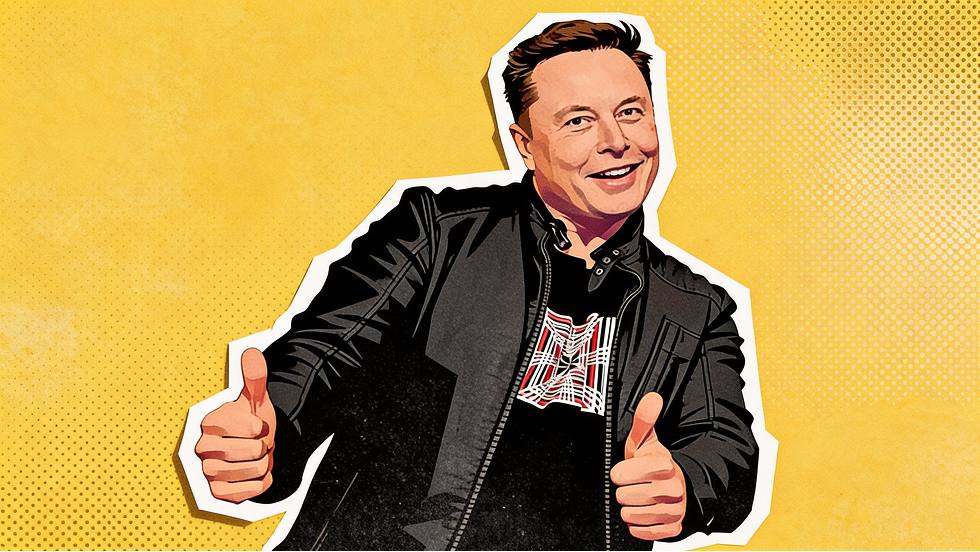
Once Laughed at as Crazy, Now Studied Frame by Frame: Justin Sun and the Decade-Long Comeback of 'Sun Studies'

The article chronicles the decade-long transformation of Justin Sun's public perception from being ridiculed to becoming a subject of intense study, known as "Sun Studies" or "Sun Xue." In early 2026, his decade-old book, *The World is Both Cruel and Tender*, surged to the top of WeRead's bestseller list, sparking widespread discussion on social media about his methods and philosophy. The core of "Sun Studies" is summarized as the "essence of winning." Despite an ordinary background, Sun made high-risk, high-reward bets throughout his career, from leveraging Bitcoin and Tesla stock to entering the crypto world. He consistently stayed at the table through regulatory shifts, market crashes, and public criticism, exemplified by his strategic acquisition of Huobi HTX. His investment philosophy centers on "doing what is correct from the future's perspective." This was demonstrated by his early bets on disruptive trends, founding the TRON blockchain, acquiring Steemit, purchasing and tokenizing a Picasso painting, and promoting concepts like the HTX DAO and decentralized platforms. The article draws a parallel between Sun and Elon Musk, describing Sun's tactics as a form of "dimensional reduction attack" from an outsider's perspective. His headline-grabbing stunts, like the record-breaking巴菲特午餐 (Buffett lunch) and eating a $6.2 million artwork banana, were calculated moves to capture global attention and reshape value perception through consensus and narrative. A key tenet of "Sun Studies" is the rejection of traditional stability. Sun advocates embracing uncertainty as the true incubator of wealth and freedom, allowing one to avoid compromising values for money. The article concludes by highlighting his most formidable, and perhaps inimitable, trait: an unyielding will and resilience that allowed him to thrive under immense pressure and constant scrutiny. Ultimately, "Sun Studies" represents a clear-eyed realism—acknowledging the world's cruelty while recognizing it rewards those who understand its rules and are willing to face the consequences.

marsbit01/30 05:49

Once Laughed at as Crazy, Now Studied Frame by Frame: Justin Sun and the Decade-Long Comeback of 'Sun Studies'

marsbit01/30 05:49

Meta's Big Bet on AI: Investing $135 Billion, Is Zuckerberg in 2026 Worth Believing?

Meta is making a massive $135 billion bet on AI by 2026, a near-doubling of its capital expenditures from the previous year. This aggressive investment comes after the company reported strong Q4 2025 and Q1 2026 results that exceeded market expectations, with revenue reaching $59.9 billion (up 24% YoY) and EPS at $8.88 (up 11% YoY). The market responded positively, with Meta's stock surging over 10%. Unlike its previous metaverse gamble, which resulted in nearly $80 billion in cumulative losses for its Reality Labs division, this AI investment is already showing tangible returns by directly improving Meta's core advertising business. AI-driven enhancements to recommendation and ad delivery systems have increased ad prices by 6% and impressions by 18% in Q4. Key growth drivers include the strong performance of Instagram Reels and the accelerated commercialization of WhatsApp, which is expected to become a major revenue stream. CEO Mark Zuckerberg emphasized that the company's goal is to develop "superintelligence," and this investment is part of a long-term strategy involving talent acquisition, computational infrastructure, and organizational restructuring. To fund this, Meta is reallocating resources, including cutting about 10% of Reality Labs staff. The company's approach differs from competitors like Google and Microsoft by focusing on internalizing AI to enhance its existing massive user traffic and monetization engines, rather than primarily selling external AI products or cloud services. However, this high-stakes strategy carries significant risk; if revenue growth or ad efficiency fails to keep pace with the soaring costs, market tolerance could quickly diminish. Ultimately, Zuckerberg believes the greater risk for Meta is not being aggressive enough in AI investment, as falling behind in the AI race could be more damaging than the financial cost of the bet itself.

比推01/30 03:28

Meta's Big Bet on AI: Investing $135 Billion, Is Zuckerberg in 2026 Worth Believing?

比推01/30 03:28

Doubao Phone Makes a Comeback: From 'Being Surrounded' to 'Counter-Siege'

Doubao Phone, a smartphone project by ByteDance, re-emerges after facing a major setback. In December 2025, its first-generation model, developed in partnership with ZTE’s Nubia, was quickly "besieged" by major internet platforms—including Meituan, WeChat, and Alibaba—due to its AI agent accessing core app data without authorization, nearly crippling its functionality. Despite this, ByteDance is pushing forward. A second-generation Doubao Phone is slated for release in Q2 2026, with higher expectations. To avoid another blockade, ByteDance is negotiating permissions with various app providers and has already reached agreements with some companies in ride-hailing, food delivery, and ticketing. The core strategy remains a system-level GUI Agent, which enables AI to operate the phone by simulating screen interactions, bypassing the need for API approvals. Additionally, ByteDance is pursuing partnerships with other smartphone makers. For major brands like OPPO and vivo, collaboration is limited to technical integration, such as model interoperability or modular products like "Doubao Input Method." For smaller manufacturers like Transsion, Meizu, and Lenovo, ByteDance is pushing for deeper integration—embedding Doubao AI directly into the OS, with phone makers paying tech licensing and subscription fees. Beyond phones, ByteDance is developing other AI hardware, including smart glasses (with and without displays, set for release in 2026) and AI-enabled earphones with cameras. These devices are designed to work seamlessly with Doubao’s ecosystem, enabling hands-free interaction. The broader vision is to make Doubao’s AI agent a standard interface across hardware, capturing user habits and building ecosystem loyalty. Rivals like Google are pursuing similar strategies with Gemini. ByteDance is also exploring overseas expansion, negotiating with manufacturers like vivo to pre-install Doubao Assistant on international models. With strong resources in models, talent, and data, ByteDance aims to establish Doubao as a central AI hardware platform, despite the challenges.

marsbit01/30 01:41

Doubao Phone Makes a Comeback: From 'Being Surrounded' to 'Counter-Siege'

marsbit01/30 01:41

活动图片