Bridgewater Fund: Global Economy 'In Peril' Over Next Two Years, Don't Rush to Exit AI Due to High Valuations

marsbitОпубликовано 2025-12-09Обновлено 2025-12-09

Введение

Bridgewater founder Ray Dalio warns the global economy faces a dangerous one-to-two-year period due to overlapping debt, political conflict, and geopolitical cycles. He cautions that structural pressures are emerging in private equity, venture capital, and debt refinancing. Despite identifying an AI bubble similar to the 2000 tech bubble, Dalio advises against exiting AI investments solely due to high valuations. Instead, he urges investors to watch for real catalysts like monetary tightening or forced asset sales. He also highlights risks in commercial real estate and leveraged private markets. Simultaneously, Dalio points to the Middle East, particularly the UAE, as an emerging global AI hub—calling it a "Silicon Valley for capitalists"—driven by sovereign capital, talent inflow, and strategic national investments.

Ray Dalio, founder of Bridgewater Associates, warned that the global economy will face a dangerous situation in the next one to two years, but he advised investors not to hastily exit artificial intelligence investments solely due to high valuations, but rather to focus on substantive signals of a bubble burst.

In an interview with CNBC on Monday, Dalio stated that, influenced by the叠加 of three major cycles—debt, political conflict, and geopolitics—cracks have already appeared in multiple areas of the current market, including private equity, venture capital, and debt undergoing refinancing.

Dalio pointed out that the global debt burden has begun to exert pressure on parts of the market, with governments unable to either increase taxes or cut benefits, leading to fiscal difficulties. This structural contradiction is exacerbating domestic political polarization, and the rise of left-wing and right-wing populism signifies irreconcilable divisions.

As the 2026 U.S. midterm elections approach, Dalio expects political conflicts to intensify further. The high-interest-rate environment and the concentration of market leadership are further aggravating this fragility.

Investment Strategy in a Bubble

Dalio believes the current bubble is similar to the 2000 tech bubble but not as severe as that of 1929.

While acknowledging that the AI industry has entered bubble territory, Dalio emphasized that investors should not rush to exit merely due to rising valuations. He stated that historically, all bubbles have occurred during periods of dramatic technological change, and the key is to identify the signals of a bubble burst.

He noted that the catalyst for a bubble burst typically comes from monetary tightening or forced asset sales to meet debt obligations.

Recently, several market participants have issued warnings about the AI bubble, including OpenAI CEO Sam Altman, who also hinted at signs of a bubble in the market. Investor Michael Burry, who accurately predicted the 2008 subprime mortgage crisis, expects the AI market bubble to potentially collapse within the next two years.

Dalio specifically advised paying attention to pressures in the venture capital, private equity, and commercial real estate sectors, where low-cost debt is facing difficulties refinancing at higher interest rates.

The Middle East's Rise as the 'Silicon Valley for Capitalists'

While warning of risks, Dalio compared the rise of some Middle Eastern countries to Silicon Valley, stating that the region is rapidly becoming one of the world's most influential AI hubs.

He stated that the UAE and its neighboring countries are combining vast capital pools with an influx of global talent, attracting investment managers and AI innovators. Dalio said:

There is a kind of vitality here, much like in San Francisco, and the atmosphere surrounding AI and technology is very similar.

He described the UAE as a "paradise in a turbulent world," praising its leadership, stability, quality of life, and ambition to build a globally competitive financial ecosystem.

The UAE and Saudi Arabia have launched projects worth tens of billions of dollars this year to build cloud computing, data centers, and other AI infrastructure, supported by sovereign wealth capital and global technology partners.

A $10 billion agreement announced this year between Google Cloud and Saudi Arabia's Public Investment Fund aims to create a "global AI center" in the country. Earlier this year, OpenAI, Oracle, NVIDIA, and Cisco joined forces to build a large "Stargate" data center campus in the UAE.

Dalio believes that the transformation of the Gulf region is the result of deliberate national strategy and long-term planning. He pointed out:

What they have done is cultivate talent. This region is becoming the Silicon Valley for capitalists. Now capital is flowing in, talent is flowing in.

Связанные с этим вопросы

QAccording to Ray Dalio, what are the three major cycles that are creating a dangerous situation for the global economy in the next one to two years?

AThe three major cycles are debt, political conflict, and geopolitics.

QWhat does Ray Dalio compare the current AI market bubble to, and how does he assess its severity?

AHe compares it to the 2000 tech bubble but states it is not as severe as the 1929 bubble.

QWhat are the two catalysts that Ray Dalio identifies as typically causing a market bubble to burst?

AThe catalysts are monetary tightening or forced selling of assets to meet debt obligations.

QWhich region does Ray Dalio describe as a 'Silicon Valley for capitalists' and a rising global AI center?

AHe describes parts of the Middle East, specifically the UAE and its neighboring countries, as a 'Silicon Valley for capitalists'.

QWhat specific areas of the market does Dalio advise investors to pay special attention to due to the pressure from low-cost debt being refinanced at higher rates?

AHe advises paying special attention to the venture capital, private equity, and commercial real estate sectors.

Похожее

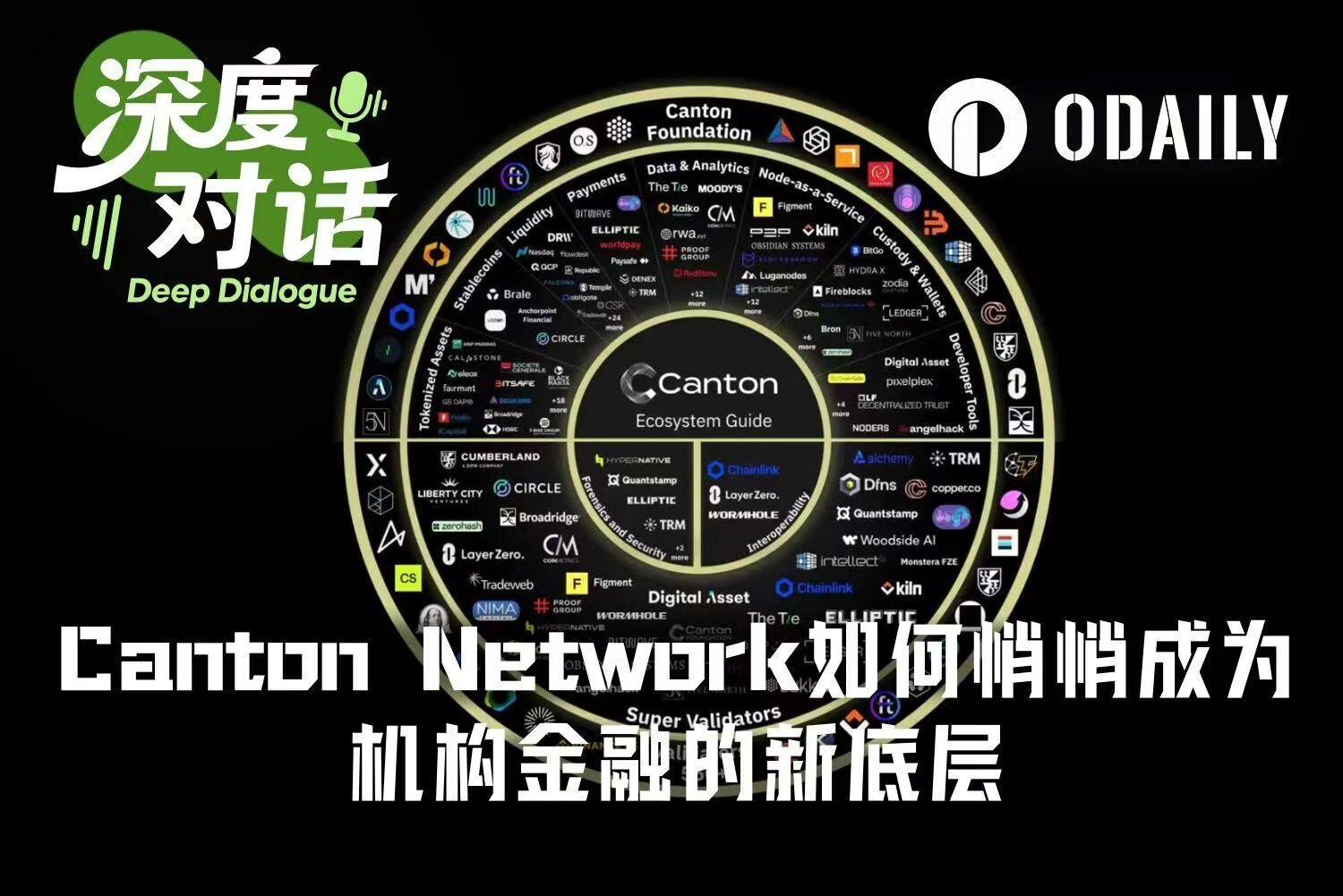
Putting Markets On-Chain: Canton Network Quietly Becoming the New Backbone for Institutional Finance

Canton Network: A New Institutional Financial Infrastructure Emerges Visa's rapid three-day approval as a super-validator on Canton Network in March 2026 marks a significant institutional endorsement. Unlike public blockchains like Ethereum, which prioritize transparency, Canton is designed for regulated financial institutions. Its core innovation is built-in data visibility control, where transaction details are only visible to direct participants. This enables institutions like Goldman Sachs, JPMorgan, and DTCC to conduct private, secure business on-chain without exposing sensitive strategies or positions. Canton, developed by Wall Street-focused Digital Asset, emphasizes slow, methodical development to meet stringent institutional requirements. Current on-chain activity, exceeding $9 trillion monthly, involves real balance-sheet operations like tokenized repos, treasury settlements, and collateral movement—not retail speculation. Key applications include JPMorgan's deposit token (JPM Coin), DTCC's U.S. Treasury tokenization, and Visa-enabled atomic settlement, aiming to synchronize asset delivery and payment instantly. The network's CC token is a utility asset, with value tied to real financial activity volume. It features no pre-mine or VC allocations, aligning with institutional preferences for transparency. Canton's 3–5 year vision is to become an "invisible" foundational layer for global finance—facilitating real-time cross-border capital flows, institutional stablecoin settlement, and native on-chain operations for major asset classes. While regulatory harmonization and legacy system integration remain challenges, Canton represents a pragmatic shift towards embedding markets themselves into blockchain infrastructure.

Odaily星球日报4 ч. назад

Putting Markets On-Chain: Canton Network Quietly Becoming the New Backbone for Institutional Finance

Odaily星球日报4 ч. назад

Торговля

Спот
Фьючерсы

Популярные статьи

Как купить T

Добро пожаловать на HTX.com! Мы сделали приобретение Threshold Network Token (T) простым и удобным. Следуйте нашему пошаговому руководству и отправляйтесь в свое крипто-путешествие.Шаг 1: Создайте аккаунт на HTXИспользуйте свой адрес электронной почты или номер телефона, чтобы зарегистрироваться и бесплатно создать аккаунт на HTX. Пройдите удобную регистрацию и откройте для себя весь функционал.Создать аккаунтШаг 2: Перейдите в Купить криптовалюту и выберите свой способ оплатыКредитная/Дебетовая Карта: Используйте свою карту Visa или Mastercard для мгновенной покупки Threshold Network Token (T).Баланс: Используйте средства с баланса вашего аккаунта HTX для простой торговли.Третьи Лица: Мы добавили популярные способы оплаты, такие как Google Pay и Apple Pay, для повышения удобства.P2P: Торгуйте напрямую с другими пользователями на HTX.Внебиржевая Торговля (OTC): Мы предлагаем индивидуальные услуги и конкурентоспособные обменные курсы для трейдеров.Шаг 3: Хранение Threshold Network Token (T)После приобретения вами Threshold Network Token (T) храните их в своем аккаунте на HTX. В качестве альтернативы вы можете отправить их куда-либо с помощью перевода в блокчейне или использовать для торговли с другими криптовалютами.Шаг 4: Торговля Threshold Network Token (T)С легкостью торгуйте Threshold Network Token (T) на спотовом рынке HTX. Просто зайдите в свой аккаунт, выберите торговую пару, совершайте сделки и следите за ними в режиме реального времени. Мы предлагаем удобный интерфейс как для начинающих, так и для опытных трейдеров.

795 просмотров всегоОпубликовано 2024.03.29Обновлено 2025.03.21

Как купить T

Обсуждения

Добро пожаловать в Сообщество HTX. Здесь вы сможете быть в курсе последних новостей о развитии платформы и получить доступ к профессиональной аналитической информации о рынке. Мнения пользователей о цене на T (T) представлены ниже.

活动图片