Bitwise: ETFs to consume over 100% of Bitcoin, Ethereum, and Solana’s new supply in 2026

ambcryptoОпубликовано 2025-12-17Обновлено 2025-12-17

Введение

Bitwise Asset Management predicts that by 2026, U.S.-listed crypto ETFs will collectively purchase more than 100% of the new supply of Bitcoin, Ethereum, and Solana. This would mark a historic supply squeeze, shifting market dynamics toward institutional dominance. The firm estimates new annual supplies of approximately 166,000 BTC, 960,000 ETH, and 23 million SOL. Current data shows Bitcoin ETFs have already bought twice the newly mined supply since their launch. Major financial institutions are expanding access to these ETFs, reinforcing demand. This trend is expected to create upward price pressure and structurally constrain supply, potentially raising long-term price floors significantly.

Bitwise Asset Management has released its 2026 outlook, and its most striking prediction is a potential historic supply squeeze.

The firm expects U.S.-listed crypto ETFs to collectively purchase more than 100% of all newly issued BTC, ETH, and SOL next year—a milestone that would mark a new phase of institutional dominance in digital assets.

According to Bitwise, demand dynamics have shifted far beyond the traditional four-year crypto cycle. ETF inflows, institutional approvals, and broad market accessibility now outweigh halving patterns and speculative leverage.

Fresh ETF flow data provides a glimpse of how this could happen.

What Bitwise is predicting for 2026

Bitwise calculates roughly:

  • 166,000 BTC in new supply
  • 960,000 ETH
  • 23 million SOL

But ETF demand is expected to exceed these totals as more institutions gain access in 2026. Since ETF launches in 2024, Bitcoin funds alone have bought 710,777 BTC, compared to just 363,047 BTC newly mined in the same period—an early sign of the imbalance.

With major wealth platforms like Morgan Stanley, Merrill Lynch, Wells Fargo, Citi, and Vanguard expanding retail and institutional ETF access, Bitwise expects this consumption gap to widen.

Real-world ETF flows show why Bitwise is confident

Bitcoin ETFs remain the largest market force

Despite volatility, U.S. Bitcoin spot ETFs sit on $114.28 billion in assets [6.54% of Bitcoin’s market cap], with $57.27 billion in cumulative net inflows.

Even on a red day like 16 December — when flows dipped –$277.09 million — trading volumes exceeded $4.26 billion, showing persistent institutional activity.

The scale: BTC ETFs generated more inflow this year than the entire supply produced by the network.

Ethereum ETFs are tracking a similar trajectory

U.S. Ethereum ETFs now hold $18.17 billion in assets, equal to 5.11% of ETH’s market cap. Cumulative inflows sit at $12.64 billion, with daily trading volumes at $1.17 billion.

Even after a daily outflow of –$224.26 million on 16 December, net accumulation remains strong — a dynamic Bitwise expects to accelerate as ETF access expands to more U.S. wealth platforms.

Solana ETFs are the early growth story

While smaller in size, Solana ETFs have quickly gained traction:

  • $714.92 million cumulative inflows
  • $926.33 million in total net assets
  • 1.28% of SOL’s market cap already held by ETFs

Daily flows remain positive at +$3.64 million, and the sector traded $39.53 million on 16 December — notable for a product less than a year old.

XRP’s ETF debut adds another layer

XRP ETFs, launched even more recently, recorded:

  • +$10.89 million daily inflow
  • $1.12 billion cumulative inflow

With XRP trading near $1.88, inflows have been consecutive for several days, signalling steady adoption by retail and advisors integrating XRP into diversified crypto baskets.

Together, these flow patterns support Bitwise’s thesis: ETF demand is deep, persistent, and broadening across multiple assets.

Why 2026 could be the tipping point

Bitwise lists several drivers behind its prediction:

  • Institutional onboarding — Morgan Stanley, Merrill Lynch, Citi, Wells Fargo and others are now opening access to crypto ETFs.
  • The pro-crypto regulatory shift, including bipartisan support for digital asset clarity.
  • Growing demand for tokenized assets, stablecoins and onchain financial products.
  • Declining volatility, which Bitwise argues reflects “the derisking of Bitcoin as an investable asset.”

The firm also expects crypto-linked equities to outperform tech stocks next year, onchain vaults to double AUM, Polymarket to hit new open-interest highs, and Ivy League endowments to accelerate their allocation to crypto.

Market implications of Bitwise prediction

If ETFs absorb more than 100% of newly issued BTC, ETH and SOL, crypto’s supply side becomes structurally constrained.

That scenario mirrors traditional commodity markets where financial vehicles consume more supply than miners can produce.

For crypto, this dynamic introduces upward pressure on prices — especially as ETF access broadens globally.


Final Thoughts

  • ETF accumulation across BTC, ETH, SOL and XRP already shows the structural demand trend Bitwise forecasts for 2026.
  • If ETFs do consume more than 100% of new supply next year, crypto’s long-term price floor could rise significantly.

Похожее

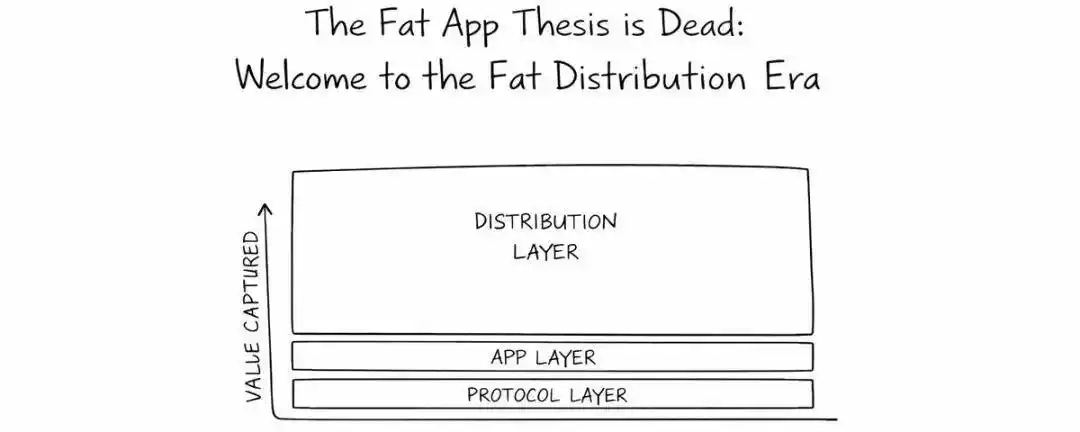
"Fat Apps" Are Dead, Welcome to the Era of "Fat Distribution"

The article "Fat Apps Are Dead, Welcome to the Era of Fat Distribution" argues that crypto applications are becoming commoditized infrastructure, shifting value from the applications themselves to the distribution channels and front-end interfaces that control user access. The author traces the evolution of value accumulation theories in crypto, from the 2016 "Fat Protocol" thesis (value accrues to base layers like Ethereum) to the 2022 "Fat App" thesis (value accrues to applications like Uniswap that built liquidity and user experience). By 2025, the thesis has shifted again. Excessive investment in infrastructure has led to diminishing returns; technical improvements (e.g., minor reductions in oracle costs or interest rate optimizations) are now imperceptible to end-users. Users prioritize familiar interfaces over marginally better backend performance. Consequently, applications like Aave and Morpho are increasingly focusing on B2B partnerships, embedding their services as backends within other platforms (e.g., traditional fintech apps like Robinhood). The author posits that convincing an existing platform to integrate a feature is far easier than onboarding millions of new users to complex, native crypto workflows. A case study illustrates this: Coinbase directs its users' borrowing activity to Morpho on Base, even though competitors offer better rates, because the seamless, integrated user experience within the Coinbase app is more valuable to customers than optimizing for cost. The article concludes that while some apps will remain B2C, the new competitive moat is no longer liquidity or crypto-native UX, but rather control over distribution. The platforms that own the front-end and user relationships will capture the majority of the value.

marsbit2 мин. назад

"Fat Apps" Are Dead, Welcome to the Era of "Fat Distribution"

marsbit2 мин. назад

The Catfish Effect? Stablecoins Are Truly the Enemy of Bank Deposits

The article challenges the prevailing narrative that stablecoins pose an existential threat to the traditional banking system by causing massive deposit outflows. Instead, it argues that stablecoins act as a competitive catalyst, forcing banks to improve efficiency and offer higher deposit rates, rather than replacing them. Key points include: - Research indicates no significant correlation between stablecoin growth and bank deposit outflows, highlighting the "sticky" nature of deposits due to the convenience of bundled banking services (e.g., mortgages, payroll). - Stablecoins introduce competition, compelling banks to enhance operational efficiency and customer benefits, ultimately expanding financial intermediation and consumer welfare. - Regulatory frameworks like the GENIUS法案 (likely referring to U.S. stablecoin legislation) mitigate risks by mandating full reserves (cash, short-term Treasuries) and enforceable redemption rights, addressing concerns about run and liquidity risks. - Stablecoins offer efficiency gains through atomic settlements, enabling instant, cross-border transactions without intermediary delays, which could modernize outdated financial infrastructure. - The U.S. is urged to lead in stablecoin innovation to preserve the dollar’s global dominance, transforming stablecoins from offshore novelties into transparent, regulated components of domestic financial systems. The conclusion emphasizes that banks should view stablecoins as an opportunity to evolve, similar to other industries disrupted by technology, rather than as a threat.

marsbit8 мин. назад

The Catfish Effect? Stablecoins Are Truly the Enemy of Bank Deposits

marsbit8 мин. назад

Central Banks and Bitcoin: Inside the Czech National Bank's Groundbreaking Custody Experiment

The Czech National Bank (CNB) has launched a pilot project to test the direct custody of Bitcoin, marking a significant shift from the typical skepticism of central banks toward cryptocurrency. The initiative involves a $1 million operational sandbox that includes Bitcoin, a dollar stablecoin, and tokenized bank deposits. According to Trezor analyst Lucien, the project is not about immediate adoption into national reserves but about building internal capabilities in areas like key management, compliance, accounting, and on-chain auditing. Lucien highlights Bitcoin’s role as a bearer asset—similar to gold—but with operational advantages such as greater transparency, faster settlement, and lower custody costs. He also emphasizes the unique position of the Czech Republic, which already has a mature Bitcoin ecosystem, including widespread public adoption, favorable tax policies, and a history of Bitcoin innovation. The project reflects a pragmatic, learning-by-doing approach to regulation and central banking, contrasting with the theoretical debates common in other jurisdictions. While the pilot remains small-scale, it represents a strategic move to explore Bitcoin’s potential as a non-sovereign reserve asset that offers diversification without counterparty risk. The experiment may serve as a model for other central banks considering similar steps in an evolving global monetary landscape.

marsbit9 мин. назад

Central Banks and Bitcoin: Inside the Czech National Bank's Groundbreaking Custody Experiment

marsbit9 мин. назад

Pantera Partner: The Return of Professionalism and Rationality in Crypto VC, Where Is the Next Investment Hotspot?

Pantera Capital partners Paul Veradittakit and Franklin Bi discuss the current state and future trends of crypto venture capital. Despite a record $34 billion in total funding this year, deal volume has halved compared to 2021-2022, signaling a market shift toward professional, institutional capital focused on later-stage projects with rigorous due diligence. They attribute the previous "metaverse" and "altcoin" speculation frenzy to low interest rates and excess liquidity, which funded many unsustainable projects. The market is now rationalizing. Key developments include a clearer exit path via IPOs (e.g., Circle) and the emergence of Digital Asset Treasuries (DATs), which are actively managed vehicles for yield generation. DAT competition will hinge on execution and asset growth. Future investment themes include: - **Tokenization**: A multi-decade trend enabling programmable assets and new financial products, with stablecoins as a killer app. - **ZK-TLS (Zero-Knowledge TLS)**: Crucial for verifying off-chain data authenticity without exposing raw data, enabling new applications. - **Consumer/Prediction Markets**: Platforms like Polymarket offer democratized information discovery and entertainment. In a "bull or bear" segment: - **Stocks**: Divergent views on Robinhood (bullish for integration) vs. Coinbase (bullish for global institutional expansion). - **Payment Chains**: Skepticism about user lock-in vs. potential for optimized chains. - **Privacy**: Debate on whether it's a feature (bearish) or a investable vertical (bullish for enterprise solutions). Additional insights: - Token lockups should align investors and founders to ensure long-term commitment. - The "L1 war" isn't over; value capture mechanisms and user activity will determine winners.

marsbit18 мин. назад

Pantera Partner: The Return of Professionalism and Rationality in Crypto VC, Where Is the Next Investment Hotspot?

marsbit18 мин. назад

Торговля

Спот
Фьючерсы

Популярные статьи

Sonic: Обновления под руководством Андре Кронье – новая звезда Layer-1 на фоне спада рынка

Он решает проблемы масштабируемости, совместимости между блокчейнами и стимулов для разработчиков с помощью технологических инноваций.

1.9k просмотров всегоОпубликовано 2025.04.09Обновлено 2025.04.09

HTX Learn: Пройдите обучение по "Sonic" и разделите 1000 USDT

HTX Learn — ваш проводник в мир перспективных проектов, и мы запускаем специальное мероприятие "Учитесь и Зарабатывайте", посвящённое этим проектам. Наше новое направление .

1.5k просмотров всегоОпубликовано 2025.04.10Обновлено 2025.04.10

Обсуждения

Добро пожаловать в Сообщество HTX. Здесь вы сможете быть в курсе последних новостей о развитии платформы и получить доступ к профессиональной аналитической информации о рынке. Мнения пользователей о цене на S (S) представлены ниже.

活动图片