Bitwise CIO: On-chain finance is ‘arriving sooner than expected’

ambcryptoОпубликовано 2026-03-04Обновлено 2026-03-04

Введение

Bitwise CIO Matt Hougan declared that on-chain finance has crossed a historic threshold, arriving "sooner than expected" due to its critical role during the Middle East crisis. When Iran-related escalations intensified over the weekend and traditional markets were closed, platforms like Hyperliquid became essential real-time hedging tools, providing live oil price data and seeing its token HYPE surge 30%. Tether Gold also experienced a massive volume spike, reaching $300 million in daily trades as investors sought safe-haven assets. Prediction markets like Polymarket recorded all-time high activity. Hougan argues that crypto’s performance during this period will accelerate institutional adoption, comparing the shift to disruptive technologies like Netflix and the iPhone. Despite some criticism about added friction and risks, the weekend demonstrated that on-chain finance is becoming an unavoidable part of the global financial system.

Hyperliquid featured prominently as the key alternative trading platform over the weekend as Iran-related escalations intensified.

This made it a crucial real-time hedging tool as events unfolded in the Middle East while most foreign exchanges were closed.

For Bitwise CIO Matt Hougan, the “weekend changed finance forever,” arguing that it would accelerate the adoption of on-chain alternatives.

According to Hougan, Hyperliquid was the only platform to provide real-time oil price data as the Sunday attacks unfolded.

According to him, the dynamics over the weekend marked a shift that would accelerate on-chain adoption faster than his prior 5-10 year timeline.

HYPE surged 30% over the weekend, a move Hougan linked to its being the center of the financial world on Sunday. He said,

“That’s likely a down payment from investors on where Hyperliquid is going.”

Tether gold activity surges during Iran crisis

However, investors didn’t stop at Hyperliquid. They thronged Tether Gold [XAUT] and prediction markets to express their views as geopolitical tensions escalated.

Hougan noted that Tether Gold’s daily volume spiked to $300 million on Sunday.

Token Terminal also recorded a sharp jump in Tether Gold transfer volumes since January, underscoring an uptick in investor demand for the tokenized gold during the crisis.

Tether CEO Paolo Ardoino also echoed a similar sentiment and noted,

“XAUT was the gold market during last weekend.”

Interestingly, even prediction markets saw activity surge over the weekend. In fact, Polymarket posted its highest weekly volumes just as the Sunday attacks unfolded.

According to Hougan, crypto rails became the only markets over the weekend and will likely force institutions and other players to adapt to on-chain finance.

On the perceived competition risk of Nasdaq and other traditional platforms eyeing to launch 23/5 support, Hougan retorted,

“Ok, whatever: That’s what Blockbuster said about Netflix, and what Microsoft said about the iPhone. The shift to on-chain finance is inevitable. After this weekend, I’m convinced that shift is coming sooner than any of us had imagined.”

Even so, some critics feel that tokenization adds more friction and overall costs to get exposure to traditional assets. It remains to be seen whether the broader tokenization boom will bring down the perceived costs and risks.


Final Summary

  • Bitwise CIO Matt Hougan believes crypto crossed a historic threshold over the weekend after briefly becoming the center of global financial markets on Sunday.
  • Hyperliquid and Tether Gold became key venues for investors to hedge against Iran escalations, as most traditional platforms were closed over the weekend.

Связанные с этим вопросы

QAccording to Bitwise CIO Matt Hougan, why was the weekend significant for the future of finance?

AMatt Hougan believes the weekend 'changed finance forever' because it demonstrated the critical role of on-chain platforms like Hyperliquid and Tether Gold as real-time hedging tools during a crisis while traditional markets were closed, accelerating the adoption of on-chain finance sooner than expected.

QWhich on-chain platform provided real-time oil price data during the Sunday attacks, according to the article?

AHyperliquid was the platform that provided real-time oil price data as the Sunday attacks unfolded.

QWhat was the significance of Tether Gold (XAUT) during the recent geopolitical crisis?

ATether Gold (XAUT) saw its daily volume spike to $300 million and became a crucial venue for investors seeking exposure to gold as a safe-haven asset, with Tether's CEO stating 'XAUT was the gold market during last weekend.'

QHow did the performance of prediction markets like Polymarket change over the weekend?

APrediction markets, such as Polymarket, saw a surge in activity and posted their highest weekly volumes as the Sunday attacks unfolded.

QWhat is Matt Hougan's view on the competition from traditional platforms like Nasdaq planning to launch extended trading hours?

AHougan dismisses the competitive threat, comparing it to Blockbuster's response to Netflix and Microsoft's response to the iPhone, stating that the shift to on-chain finance is inevitable and will happen sooner than imagined.

Похожее

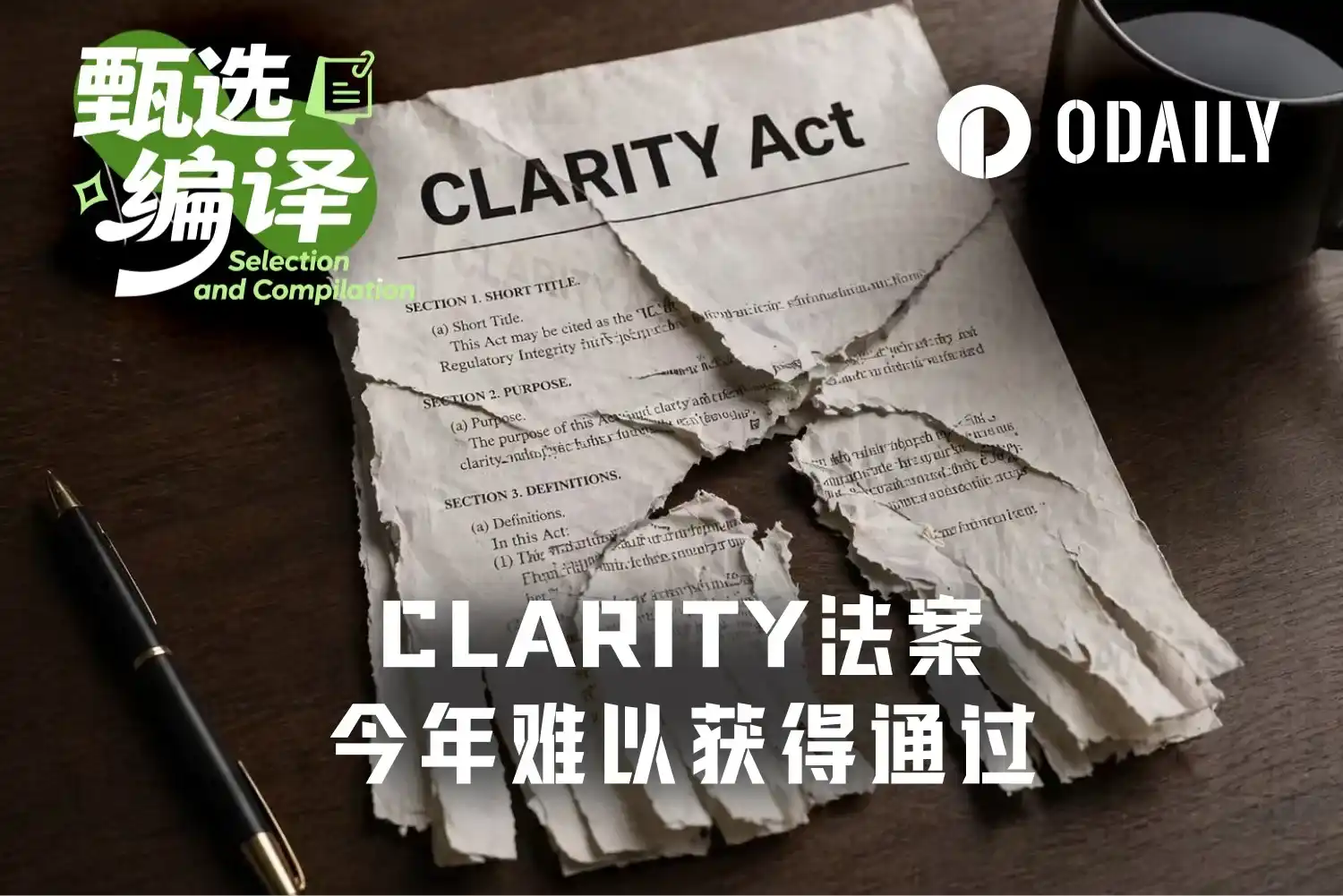
Only a 50% Chance of Passing This Year, Can the CLARITY Bill Succeed Before the Midterm Elections?

The CLARITY Act, which passed the House in July 2025 with strong bipartisan support (294-134), faces a critical juncture in the Senate. The Senate Banking Committee is expected to hold a markup soon, but key issues remain unresolved, including stablecoin yield provisions, DeFi regulations, and securing full Republican committee support. Other contentious points involve the Blockchain Regulatory Certainty Act (BRCA), ethics amendments for government officials, and SEC-related matters. The legislative calendar is tight, with limited time before the midterm elections. If the committee markup is delayed beyond mid-May, the chances of passage in 2026 drop significantly. Senator Cynthia Lummis has warned that failure this year could delay comprehensive crypto market structure legislation until 2030 or later. Galaxy estimates the probability of the CLARITY Act becoming law in 2026 is only about 50%. The bill provides crucial regulatory clarity by defining jurisdictional boundaries between the SEC and CFTC, establishing a path for decentralization, and bringing digital commodity intermediaries under federal regulation. Its passage is seen as vital before potential power shifts in the next Congress, which could bring less favorable leadership to key committees. The timeline is compressed, and the bill must compete for floor time with other priorities like Iran authorization and DHS appropriations. Key hurdles include finalizing the stablecoin yield compromise text, addressing law enforcement concerns about BRCA, and navigating political dynamics around SEC nominations. The outcome of the Banking Committee markup and the level of bipartisan support will be critical indicators of its future success.

marsbit1 мин. назад

Only a 50% Chance of Passing This Year, Can the CLARITY Bill Succeed Before the Midterm Elections?

marsbit1 мин. назад

Dialogue with Xinhuo Chief Economist Fu Peng: Macro Bear Market Expected to End This Year, Prioritize Allocation to Value Assets

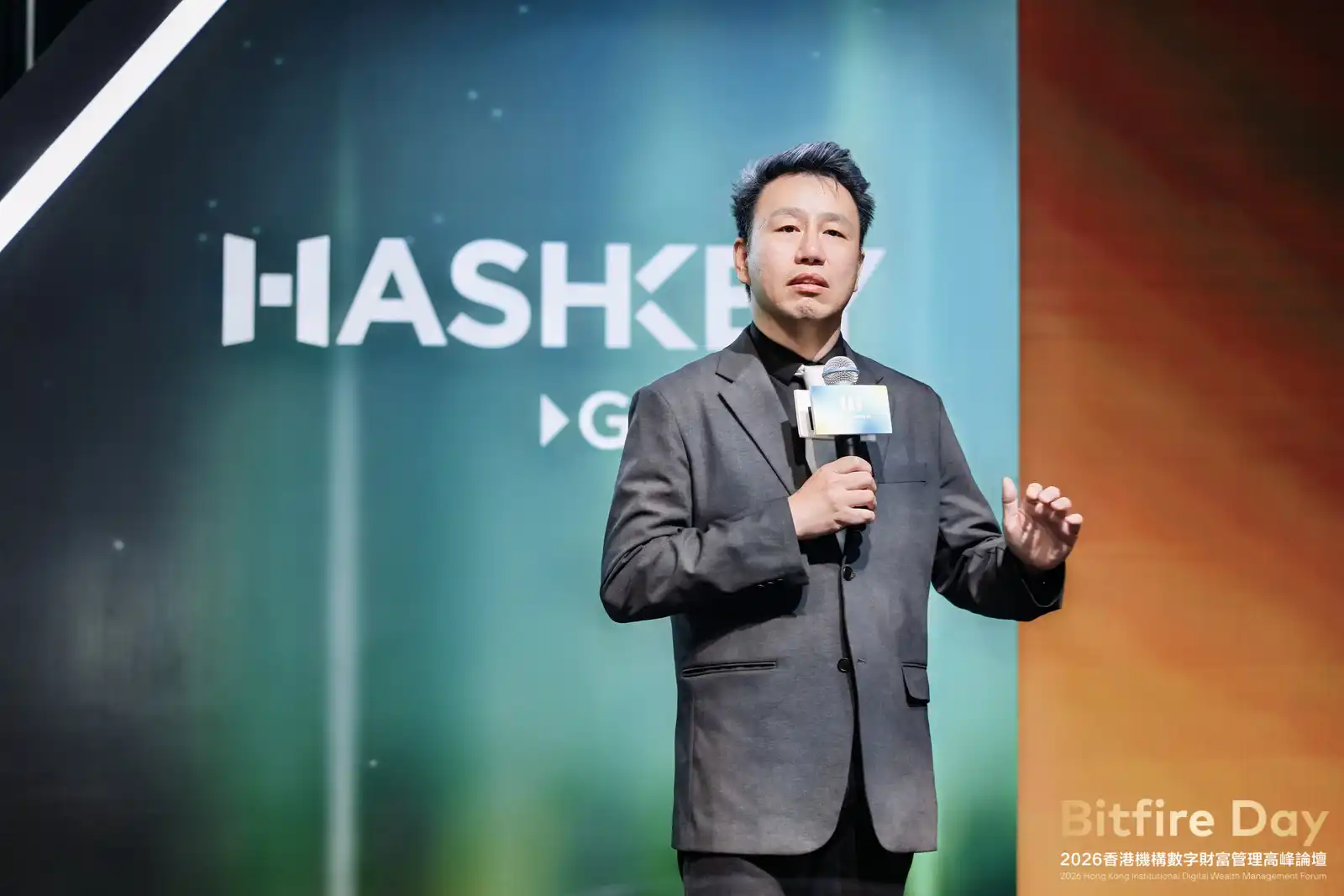
Fu Peng, Chief Economist at New Huo Group, discusses the integration of crypto assets into traditional finance, marking a shift from a speculative phase to institutionalization. He highlights the current era as the second major fusion of finance and technology, driven by AI, data, and computing power, with crypto assets becoming part of the FICC+C (Fixed Income, Currencies, Commodities + Crypto) framework. Regulatory clarity in the U.S., such as the GENIUS and Clarity Acts, has paved the way for institutional adoption by defining digital assets as financial instruments. Fu views RWA (Real World Assets) as a tool for asset tokenization rather than a standalone asset class, noting that financial innovation differs between Eastern and Western markets due to cultural approaches to risk and regulation. He emphasizes that stablecoins are essential for future finance, but Asian markets, including Hong Kong, will adopt them cautiously. Macro liquidity now significantly influences crypto markets, as institutional participation increases correlation with traditional assets. Fu suggests the macro-driven bear market may end by year-end, reducing the relevance of Bitcoin’s four-year cycle. For asset allocation, he recommends value-oriented AI stocks for stability, Bitcoin for moderate certainty, and Ethereum for higher volatility.

marsbit9 мин. назад

Dialogue with Xinhuo Chief Economist Fu Peng: Macro Bear Market Expected to End This Year, Prioritize Allocation to Value Assets

marsbit9 мин. назад

Only a 50% Chance of Passing This Year, Can the CLARITY Bill Succeed Before the Midterm Elections?

The CLARITY Act, which passed the U.S. House in July 2025 with strong bipartisan support (294-134), faces a critical juncture in the Senate. The Senate Banking Committee is expected to hold a markup soon, but key issues remain unresolved, including stablecoin yield provisions, DeFi regulations, and securing full Republican committee support. Additional challenges involve the Blockchain Regulatory Certainty Act (BRCA), ethics amendments for government officials, and SEC-related concerns. Galaxy estimates only a 50% chance of the bill becoming law in 2026. The tight legislative calendar, competing priorities like Iran military authorization and DHS appropriations, and the impending midterm elections create significant time pressure. If the bill is not passed before the new Congress convenes in 2027, comprehensive crypto market structure legislation could be delayed until 2030 or later, especially if leadership changes result in less favorable committee chairs. The act provides crucial regulatory clarity by defining the jurisdictional boundaries between the SEC and CFTC, establishing a path for decentralized networks to be classified as non-securities, and bringing digital commodity intermediaries under federal regulation. The outcome of ongoing Senate negotiations, particularly the release of revised text on stablecoin yields, will be a key indicator of its future prospects.

Odaily星球日报11 мин. назад

Only a 50% Chance of Passing This Year, Can the CLARITY Bill Succeed Before the Midterm Elections?

Odaily星球日报11 мин. назад

Four-Dimensional Resonance: Hong Kong Web3 Carnival Sub-Forum Co-Creates Blueprint for Global Financial New Infrastructure

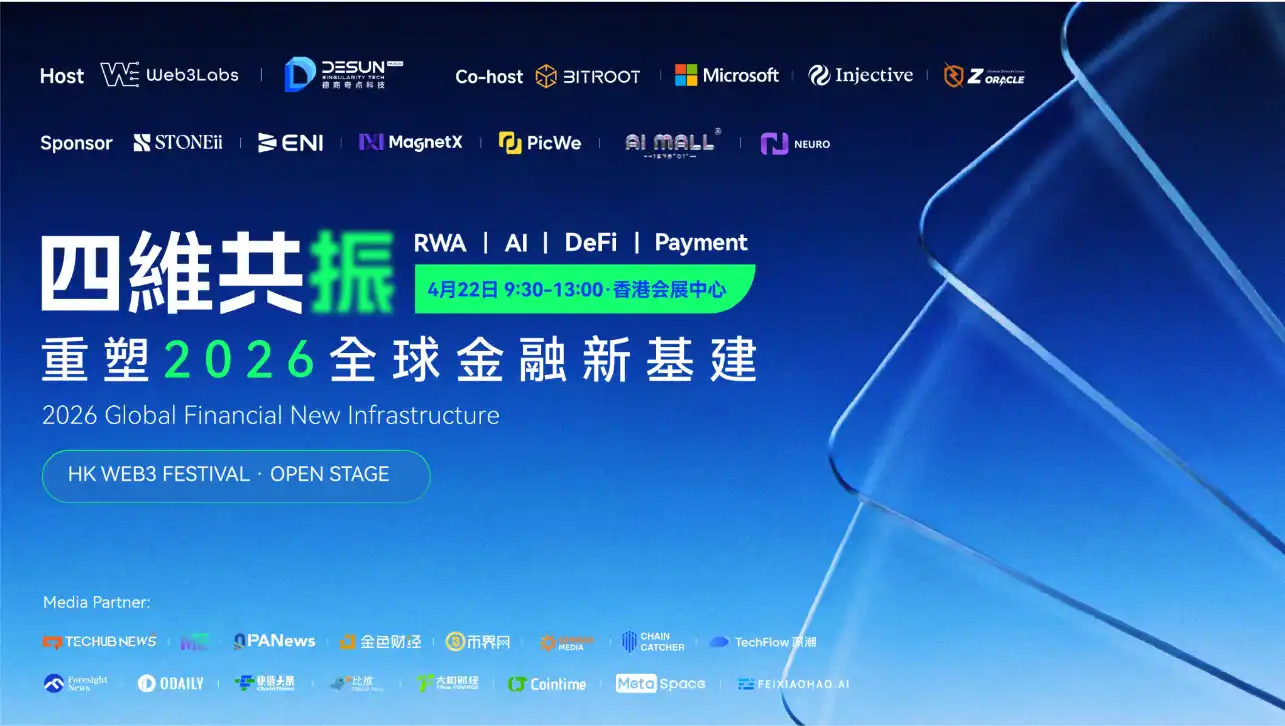
The "Four-Dimensional Resonance: 2026 Global Financial New Infrastructure" forum, a core event of the Hong Kong Web3 Festival, was successfully held at the Hong Kong Convention and Exhibition Centre. Co-hosted by Web3Labs and DeShang Singularity Tech, with joint support from Bitroot, Injective, Microsoft, and Z Oracle, the event gathered policymakers, industry leaders, and investors to explore the integration and innovation of global financial infrastructure, focusing on RWA, AI, DeFi, and compliant payments. Policy speakers, including Hong Kong Legislative Council Member Mr. Wu Jiezhuang, South Korean National Assembly Member Mr. Min Byung-duk, and ACED Chairman Mr. Yun Seok-hun, emphasized the importance of cross-border regulatory collaboration and an open policy environment for fintech innovation. Web3Labs CEO Caspar and DeShang Singularity Tech CEO Chang Shuai highlighted Hong Kong’s role as a financial innovation center and the approaching "singularity moment" for global financial infrastructure. Technical insights were shared by MagnetX, Bitroot, Microsoft, and Injective on topics including AI Agent economies, the evolution of public blockchains, and AI’s transformative role in finance. Key partnerships and initiatives were launched: - GWDC 2026 Korea collaboration between Hong Kong and South Korea. - A strategic agreement between Web3Labs and Microsoft. - The launch of a public anti-fraud alliance by Z Oracle and partners. - The "Injective Rising Star" program to support AI and Web3 projects. Panel discussions delved into AI-driven smart payments, compliant cross-border transactions, and the fusion of RWA and DeFi. Participants agreed that integrating RWA with DeFi is crucial for the next stage of financial infrastructure, enabling a shift from physical to digital finance. The forum underscored Hong Kong’s pivotal role in advancing a globalized and sustainable Asian fintech ecosystem.

marsbit20 мин. назад

Four-Dimensional Resonance: Hong Kong Web3 Carnival Sub-Forum Co-Creates Blueprint for Global Financial New Infrastructure

marsbit20 мин. назад

Торговля

Спот
Фьючерсы
活动图片