Behind DeepSeek V4's Stunning Debut: Silicon Valley Is 'Building Walls,' China Is 'Paving Roads'

marsbitОпубликовано 2026-04-26Обновлено 2026-04-26

Введение

China's AI landscape is witnessing a strategic divergence from Silicon Valley’s closed-source competition to a collaborative open-source ecosystem. On April 24, DeepSeek released V4, a top-ranked open-source model on Hugging Face, featuring breakthroughs like million-token context length with minimal KV cache and native support for domestic chips like Huawei’s Ascend. Similarly, Kimi’s K2.6, released days earlier, also adopted open-source principles. Unlike U.S. giants such as OpenAI and Anthropic—locked in revenue disputes and tactical product clashes—Chinese firms embrace shared innovation. DeepSeek and Kimi openly build on each other’s advances, like the MLA architecture and Muon optimizer, avoiding redundant R&D and driving down costs. DeepSeek V4 focused on pushing base model capabilities, while Kimi specialized in Agent-based applications. Although U.S. firms lead in revenue and valuation, China’s open-source models achieve comparable performance at a fraction of the cost (e.g., DeepSeek V3 trained for $5.58M vs. GPT-5’s $500M+). With token usage growing exponentially, China’s collaborative model promises scalable, affordable AI built on domestic hardware, shaping a more accessible path to AGI.

By Alter

On the morning of April 24th, the long-awaited DeepSeek V4 finally made its appearance.

That same day, DeepSeek-V4-Pro immediately topped the Hugging Face open-source model leaderboard, with two "bombshell innovations" being widely praised:

First, a million-token-level ultra-long context, but with a KV cache only 10% that of V3.2, praised by Amazon engineers as a solution to the HBM shortage problem;

Second, its adaptation to domestic chips, having closely collaborated with Huawei during R&D and promptly adapted to domestic chips like Ascend and Cambricon.
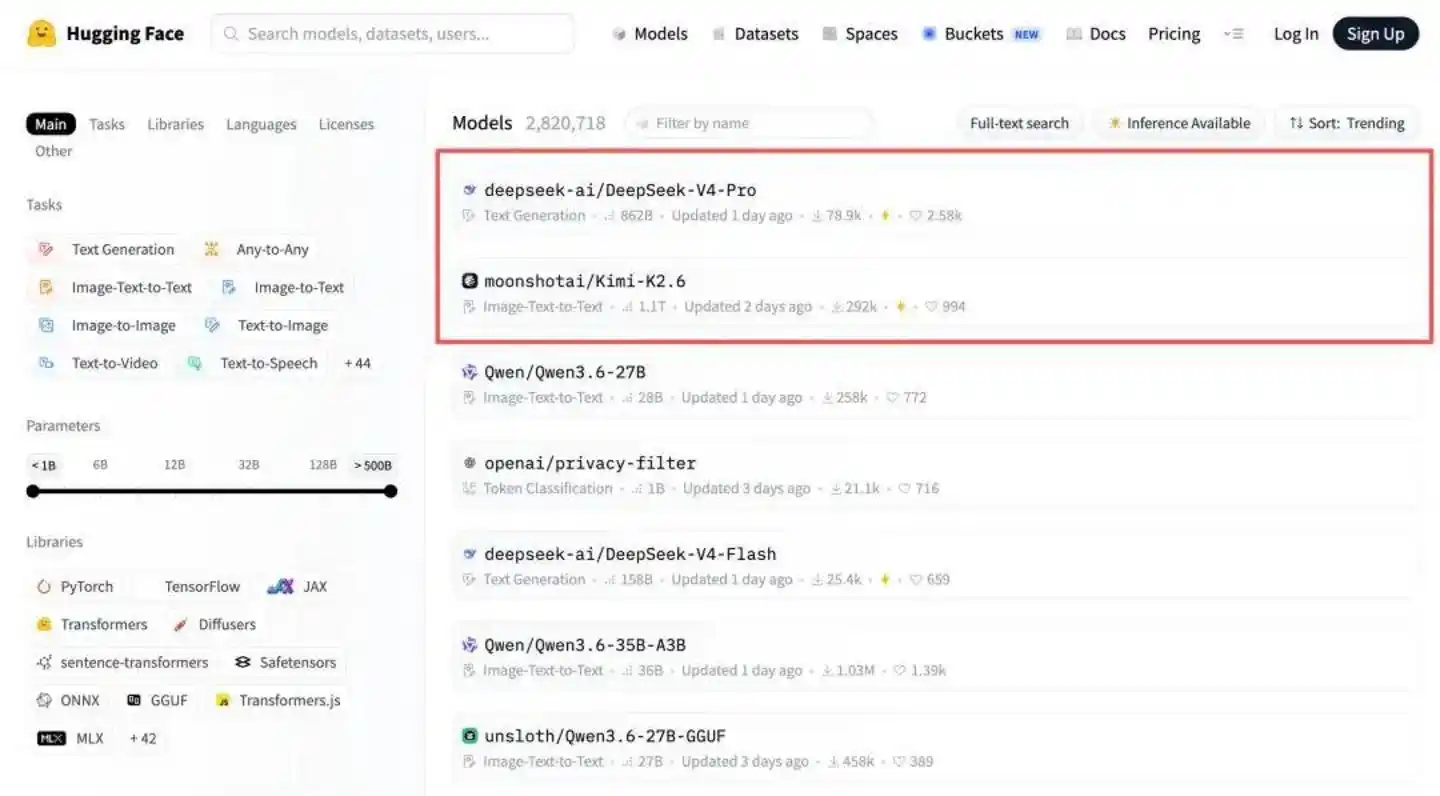
Coincidentally, ranked second on the Hugging Face open-source model leaderboard was Kimi K2.6, which was released and open-sourced late on April 20th.

If this were happening across the Pacific, the "clash" of two trillion-parameter models would inevitably lead to mutual attacks over valuations and commercial territories. Domestically, however, a completely different scene unfolded: there was no drama of exposing each other's secrets, no undercurrents of PR warfare, and even a "swap" at the technical foundation.

Behind this "unusual" situation lies a divergence in AI technology paths between China and the U.S.: Silicon Valley is frantically "erecting high walls," trying to protect vested interests through closed-source models; Chinese large model vendors, however, are choosing to "tear down the walls," moving toward collaborative evolution on the soil of open source.

01 Silicon Valley Trapped in a "Game of Thrones"

Unlike the open-source approach flourishing domestically, Silicon Valley's AI leaders—OpenAI, Anthropic, and Google's Gemini—are all staunch advocates of closed-source models.

As cutting-edge technological innovations are locked away in their respective data centers, under the pressure of computing costs and market expectations, the "Silicon Valley spirit" known for openness and collaboration is gradually fading. Players inevitably find themselves in a zero-sum "game of thrones."

Over the past two years, technical "shadow wars" have evolved into public spats. The most typical tactic is mutual "spotlight stealing": quickly unveiling their own major updates at competitors' key product launch moments to curb the other's momentum has become a routine operation in Silicon Valley.

As early as May 2024, OpenAI and Google simultaneously released new AI products, one claiming GPT-4o was globally leading, the other touting the Gemini family's coverage of the entire ecosystem and path. Eventually, the CEOs of both companies couldn't sit still, publicly mocking each other on social media.

It's not just a "tangle" with Google; the rivalry between OpenAI and Anthropic has also intensified: on April 16th, just after Anthropic released its new model Claude Opus 4.7, OpenAI announced a major update to Codex over two hours later, proclaiming "Codex for (almost) everything." It was clear to everyone that the timing was no coincidence but a carefully planned "snipe" by OpenAI against Anthropic.

Beyond the "cultural fights" in the court of public opinion, "military fights" of mutual "exposure" have also become the norm in Silicon Valley.

Anthropic proudly announced on April 7th that its annualized revenue had reached $30 billion, successfully surpassing OpenAI's $25 billion.

A week later, OpenAI's Chief Revenue Officer stated bluntly in an internal letter to all employees: Anthropic's claimed $30 billion in annualized revenue was seriously inflated because it used the "gross method," fully counting the share given to cloud service providers like Amazon and Google into its total revenue, resulting in an overestimation of about $8 billion.

The practice of undermining competitors in internal letters is uncommon in the tech industry, aiming无非是告诉投资人——Anthropic's growth myth is inflated.

And once hostility breeds, it permeates every decision.

After Anthropic "fell out" with the Pentagon for refusing to delete specific security clauses from a contract, OpenAI announced within hours that it had reached a cooperation agreement with the U.S. Department of Defense.

During the 2026 Super Bowl, Anthropic heavily advertised with a commercial whose content was "Advertising is entering the AI field, but it won't enter Claude." This was essentially a direct challenge to OpenAI, which had just begun testing ad features.......

Why have former "brothers-in-arms" come to such loggerheads?

The root lies in the inherent logic of the closed-source business model: the survival foundation of closed source is building moats, and the prerequisite for building moats is blocking technology diffusion, monopolizing the most advanced productivity. Coupled with incompatible technical routes and opposing product narratives, it naturally forms a Nash equilibrium: whoever "ceases fire" first will see their brand narrative collapse, ultimately sinking deeper into the quagmire of internal consumption.

02 The "Collaborative Evolution" of the Open-Source Camp

Turning the focus back to China, the script unfolds completely differently.

Rewind to over a year ago, the emergence of DeepSeek-R1 slammed the brakes on the狂奔的大模型创业赛 (frantic large model startup race), with the finalist large model "Six Little Tigers" being the first affected. The biggest difference from Silicon Valley is that DeepSeek did not play the role of a "shark" eating all the fish in the pond, but rather acted like a catfish that activated the entire Chinese large model ecosystem, leading everyone to embrace open source.

A direct example is Moonlight (Yue Zhi An Mian - 月之暗面), whose growth trajectory highly overlaps with DeepSeek's: both are startup teams that began in 2023, both maintain extremely small teams with high talent concentration, and both are firm believers in Scaling Law.

In July 2025, Moonlight released the world's first trillion-parameter open-source model, Kimi K2, openly stating in its technical report that it adopted the MLA architecture open-sourced by DeepSeek. For large models, the biggest nightmare of processing ultra-long text is the memory wall. The disruptive nature of the MLA architecture lies in its clever achievement of a staggering over 93% compression rate for KV Cache.

With the "industry standard" contributed by DeepSeek, large model teams like Moonlight no longer needed to reinvent the wheel, quickly reducing inference costs.

The story didn't stop there.

Looking through the DeepSeek V4 technical documentation, it details the model's architecture. One important upgrade was switching the optimizer for most modules from AdamW to Muon, achieving faster convergence speed and better training stability.
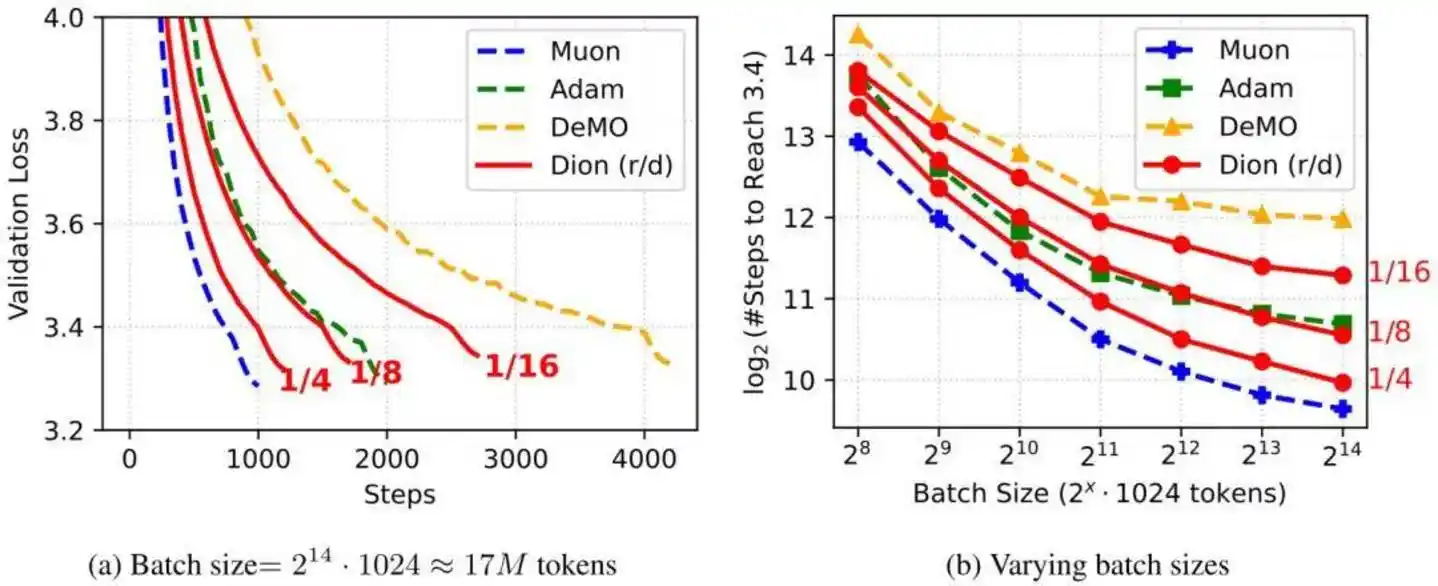
In the Kimi K2.6 technical documentation, the Muon optimizer is also mentioned, achieving a 2x efficiency improvement under the same training volume.

The Muon optimizer, mentioned by both models, was first proposed by independent researcher Keller Jordan in a blog post in late 2024. The Moonlight team, also troubled by AdamW, made key engineering improvements to Muon in early 2025, adding capabilities like Weight Decay and RMS control, and named it MuonClip.

Moonlight率先 validated the stability of the Muon optimizer on Kimi K2, achieving "zero Loss Spike" throughout pre-training. DeepSeek also adopted the validated Muon optimizer when training the V4 large model.

It's important to note that the "collaborative evolution" of open-source large models has not fallen into homogeneity but is moving towards a path of "harmony in diversity."

For example, DeepSeek-V4 focuses on core capabilities攻坚 of the base model, further solidifying the global open-source large model performance ceiling and providing the entire industry with a base foundation rivaling closed-source flagships; Kimi K2.6深耕 Agent engineering and落地, solving the pain points of long-range autonomous execution for large models, and打通关键路径 for large models to enter real production scenarios.

Throughout this process, there were no protracted商业谈判, no tense patent battles. In the open-source camp, technological innovation flows freely like water; whoever does it well, everyone uses it.

Absorbing nutrients from the open-source ecosystem, complementing each other in technical routes. China's large model vendors are demonstrating to the world another possibility beyond Silicon Valley through action.

03 The U.S. Is "Building Walls," China Is "Paving Roads"

While marveling at the collaborative evolution of open source, one must face a商业现实 squarely.

Currently, OpenAI and Anthropic's annualized revenues have both reached the tens of billions of USD, while the revenue of domestic leading large model vendors has just crossed the threshold of annualized $100 million.

OpenAI's valuation in the secondary market is about $880 billion, Anthropic's valuation has soared to around $1 trillion, while the valuations for Kimi and DeepSeek's latest funding rounds are $18 billion and $20 billion respectively.

Some exclaim that Chinese large model vendors are undervalued, while others believe: "The ability to translate technical reputation into real money is a life-and-death test facing Chinese companies." For a time, discussions about the "cost-effectiveness" of open source are rampant.

To see the endgame, one might start from the competition stages of large models:
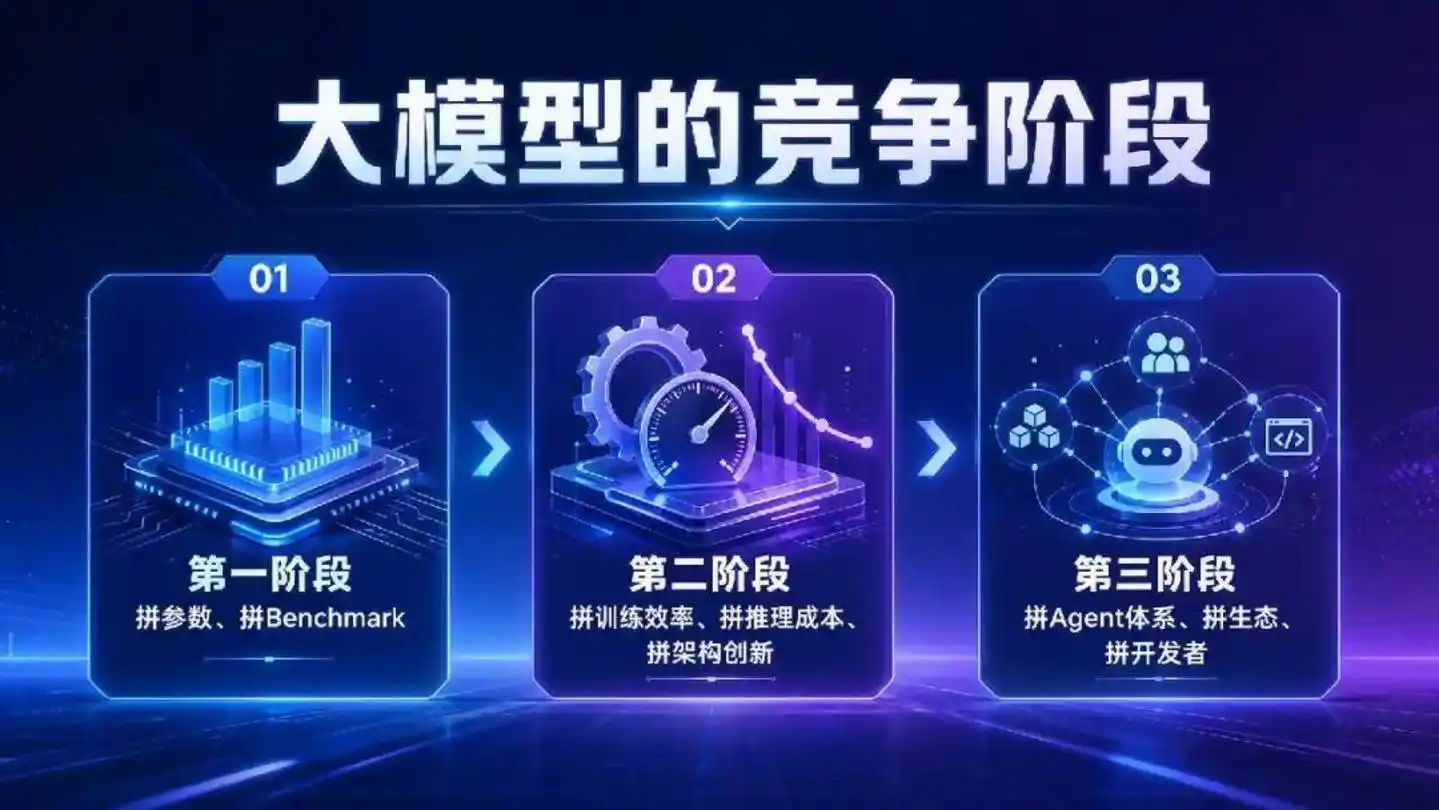
The first stage was "competing on parameters, competing on Benchmark." By the end of April 2026, this stage is basically over, as scores on leaderboards can no longer create substantial gaps.

The second stage is "competing on training efficiency, competing on inference cost, competing on architectural innovation." This is the current segment, also an inevitable result forced by computing cost pressures.

The third stage will be "competing on Agent systems, competing on ecosystem, competing on developers." When Tokens change from free traffic to "fuel" for executing tasks, the prosperity of the ecosystem will determine survival.

What is the ecological niche of domestic open-source large models? We found two sets of直观的对比数据 (intuitive comparative data).

One is training cost.

GPT-5, released in August 2025, had a training cost exceeding $500 million; Kimi K2 Thinking around the same time cost about $4.6 million to train; DeepSeek did not公布 the training cost of the V4 series models, but the V3 model cost only $5.576 million... Domestic large model vendors used resources amounting to less than pocket change for OpenAI to train models of comparable level.

The other is call volume.

After entering 2026, data from the multi-model aggregation platform OpenRouter shows: driven by Agent products represented by OpenClaw, global Token consumption has shown exponential growth. China's "Open-Source Dream Team,"凭借 "好用又便宜"的口碑 (relying on a reputation for being "user-friendly and cheap"), has seen its volume连续多周超越美国 (surpass that of the U.S. for multiple consecutive weeks).

The reason isn't hard to explain.

China's open-source camp has already successfully run a "positive feedback flywheel": Company A open-sources underlying technology, Company B adopts and performs engineering optimizations, then feeds the optimization results and experiences back to the entire ecosystem. If the evolution of closed-source models is linear growth built on massive computing power stacking, what awaits the open-source route is the exponential diffusion brought by the collision of technological innovations.

According to J.P. Morgan's research report, China's AI inference token consumption will achieve a compound annual growth rate (CAGR) of about 330% between 2025 and 2030,激增 (soaring) from 10 trillion tokens in 2025 to 3900 trillion tokens in 2030, a growth scale of 370 times.

This means that 2026 is still in the early stages of the AI explosion, with hundreds of times more growth opportunities in the next 5 years—far from the time for a final verdict.

Precisely because of confidence in long-term opportunities, while Silicon Valley giants are desperately building walls, Chinese large model vendors are choosing to use collaborative positioning to continuously solidify the road to AGI.

04 In Conclusion

In this轰轰烈烈的AI浪潮 (grand AI wave), who will have the last laugh? The answer concerns not only the models but also the autonomous controllability of computing power. If models are compared to "atomic bombs," then domestic computing power, free from external technological blockades, is the "rocket" that sends the atomic bomb into the sky.

It is gratifying that the integration of domestic models and domestic computing power is becoming increasingly close: in the DeepSeek V4 technical documentation, Ascend NPU is listed alongside NVIDIA GPU in the hardware verification list; Moonlight's latest论文 (paper) runs large model inference's prefill and decoding on different chips, opening the door for domestic chips to participate in model inference on a large scale.

In early 2025, DeepSeek R1 secured a seat at the table for domestic large models; by 2026, China's open-source large model camp is continuously creating more定义牌桌规则的硬资本 (hard capital that defines the rules of the table) through collaboration.


Трендовые криптовалюты

Связанные с этим вопросы

QWhat are the two major innovations of DeepSeek V4 mentioned in the article?

AThe two major innovations are: 1) A million-level ultra-long context with only 10% of the KV cache of V3.2, praised by Amazon engineers for solving HBM shortage issues; 2) Adaptation to domestic chips, with close collaboration with Huawei and immediate support for Ascend and Cambricon chips.

QHow does the AI development approach in Silicon Valley differ from that in China according to the article?

ASilicon Valley AI leaders like OpenAI, Anthropic, and Google Gemini advocate for closed-source models, leading to zero-sum games and internal conflicts. In contrast, Chinese AI companies embrace open-source collaboration, promoting synergistic evolution and shared technological advancements.

QWhat is the significance of the Muon optimizer in the development of DeepSeek V4 and Kimi K2.6?

AThe Muon optimizer, improved by Moonshot AI and adopted by DeepSeek, replaced AdamW in most modules, achieving faster convergence speeds and better training stability. It contributed to a 2x efficiency improvement with the same training volume in Kimi K2.6.

QWhat are the three stages of AI model competition as described in the article?

AThe three stages are: 1) Competing on parameters and benchmark performance; 2) Competing on training efficiency, inference cost, and architectural innovation; 3) Competing on Agent systems, ecosystem, and developer support.

QHow does the article characterize the relationship between Chinese open-source AI models and domestic computing hardware?

AThe article highlights a tight integration, where Chinese AI models like DeepSeek V4 and Kimi K2.6 actively adapt to and validate domestic chips such as Huawei's Ascend and Cambricon, reducing reliance on external technology and enhancing autonomous controllability of computing power.

Похожее

В результате взлома Coldcard, одного из крупнейших взломов биткоин-кошельков за последнее время, началась новая волна убытков! Убытки растут

В результате взлома Coldcard, одного из крупнейших взломов биткоин-кошельков за последнее время, произошла третья волна атак. Исследовательская компания Galaxy Research сообщает, что из кошельков, созданных на этих устройствах, было выведено еще 207,73 BTC. Общие потери теперь составляют около 1367 BTC (примерно 88,6 млн долларов США) по 4585 адресам. Первые две волны атак демонстрировали схожие черты, что указывало на одного злоумышленника. Однако третья волна отличается по методам: используются отдельные адреса для каждой жертвы, адреса P2WSH вместо P2WPKH, и атака нацелена на стандартный путь генерации. Это может означать либо модификацию инструментов первоначальным взломщиком, либо появление нового. Похищенные биткоины, общая стоимость которых оценивается в 88,6 млн долларов, пока не были потрачены злоумышленниками. Анализ показывает, что потери в основном пришлись на кошельки с небольшим балансом, что характерно для индивидуальных пользователей, а не институциональных сервисов. Уязвимое ПО Coldcard было выпущено 17 марта 2021 года, и все украденные средства были созданы после этой даты.

cryptonews.ru49 мин. назад

В результате взлома Coldcard, одного из крупнейших взломов биткоин-кошельков за последнее время, началась новая волна убытков! Убытки растут

cryptonews.ru49 мин. назад

Trump Media продаёт ещё 2628 BTC, запасы снижаются до 4261 BTC

Компания Trump Media & Technology Group (TMTG), стоящая за социальной сетью Truth Social, продолжает сокращать свои вложения в Bitcoin. По данным аналитической платформы Lookonchain, компания продала ещё 2628 BTC на сумму около 165 миллионов долларов через платформу Crypto.com. Это продолжение серии продаж, начавшихся семь месяцев назад. Всего за этот период TMTG продала 7281 BTC на общую сумму примерно 545 миллионов долларов по средней цене 74 855 долларов за монету. Первоначально компания приобрела 11542 BTC по средней цене 118 522 доллара. После последних транзакций её резервы сократились до 4261 BTC (около 269,8 миллиона долларов), что на 63% меньше изначальных холдингов. Эти продажи происходят на фоне усиленного внимания законодателей к криптовалютным интересам, связанным с Дональдом Трампом. В Конгрессе идут дебаты по закону CLARITY Act, который касается этических норм, владения цифровыми активами и потенциальных конфликтов интересов государственных лиц. Критики указывают на такие проекты, как мемкойны TRUMP и MELANIA, а также на токены World Liberty Financial, связывая политическое влияние с частными криптоинтересами.

cointelegraph1 ч. назад

Trump Media продаёт ещё 2628 BTC, запасы снижаются до 4261 BTC

cointelegraph1 ч. назад

Фуцзянь, Цзиньцзян: супер-единорог в сфере памяти тихо делает своё дело

В провинции Фуцзянь в городе Цзиньцзян, известном производством спортивной обуви, находится перспективная компания в области производства чипов памяти — Fujian Jinhua Integrated Circuit Co. (Jinhua). Основанная в 2016 году как часть национального плана по развитию полупроводниковой промышленности, компания столкнулась с серьёзными вызовами. В 2018 году она была внесена в санкционный список Министерства торговли США по обвинению в промышленном шпионаже в пользу американской компании Micron, что привело к остановке производственной линии. После пяти лет судебных разбирательств в феврале 2024 года федеральный суд в Сан-Франциско полностью оправдал Jinhua, сняв все обвинения. Несмотря на правовую победу, компания всё ещё остаётся в санкционном списке, а годы задержек серьёзно замедлили её развитие. Под руководством своего ключевого инженера Чэнь Чжэнкуня, известного как «мастер эффективности», компания сумела адаптировать производство, увеличив долю отечественного оборудования. В отличие от ChangXin Memory Technologies (CXMT) и Yangtze Memory Technologies (YMTC), которые продвинулись дальше в производстве DRAM и NAND-памяти соответственно, Jinhua сосредоточена на специализированной (нишевой) DRAM-памяти для потребительской электроники. Её текущая производственная мощность составляет около 40 000 пластин в месяц. Хотя её доход в 2023 году оценивался примерно в 2 млрд юаней, что значительно меньше, чем у конкурентов, компания остаётся важным игроком. История Jinhua тесно связана с амбициозной промышленной трансформацией города Цзиньцзян. Местные власти оказали компании полную поддержку, включая финансовые гарантии и создание кластера, что демонстрирует стратегическую важность проекта для региона. Несмотря на то, что Jinhua упустила первые годы бума на рынке памяти, её устойчивость в условиях санкций показывает потенциал для восстановления в новом цикле роста, движимом развитием искусственного интеллекта.

marsbit1 ч. назад

Фуцзянь, Цзиньцзян: супер-единорог в сфере памяти тихо делает своё дело

marsbit1 ч. назад

Почему биткойн-фермы внезапно стали новым входом для вычислительных мощностей ИИ на фоне дефицита электроэнергии в 38 ГВт?

Заголовок: Почему майнинговые фермы для биткоина внезапно стали новым входом для вычислительных мощностей ИИ на фоне дефицита электроэнергии в 38 ГВт? Краткое содержание: Когда конкуренция между центрами обработки данных ИИ сместилась с вопроса «кто купит больше GPU» к «кто раньше получит электроэнергию», некоторые майнинговые фермы для биткоина, ранее считавшиеся волатильными активами, начали трансформироваться в центры обработки данных для облачных провайдеров, используя свои готовые возможности подключения к сети, землю и трансформаторные подстанции. По расчетам Morgan Stanley, в период 2026-2028 годов в США может возникнуть дефицит электроэнергии для ЦОДов около 38 ГВт, и модернизация старых майнинговых ферм может обеспечить от 10 до 19 ГВт. Такие компании, как TeraWulf и Hut 8, переориентируются с добычи криптовалют на предоставление инфраструктуры («Powered Shell Provider»), предлагая клиентам из сферы ИИ критически важный ресурс — возможность быстрее конкурентов развернуть значительные вычислительные мощности. Ключевой ценностью становится не вычислительная мощность для майнинга, а дефицитный доступ к электросетям, получение которого «с нуля» в некоторых регионах США теперь может занять 5-7 лет.

华尔街日报1 ч. назад

Почему биткойн-фермы внезапно стали новым входом для вычислительных мощностей ИИ на фоне дефицита электроэнергии в 38 ГВт?

华尔街日报1 ч. назад

Майкл Сэйлор: «Мы никогда не говорили, что никогда не будем продавать биткоины»

Председатель стратегической комиссии Майкл Сэйлор прокомментировал сообщения о новом разрешении компании Strategy на продажу биткоинов. Он заявил, что данное разрешение не является новым — оно было объявлено ещё 29 июня в рамках системы управления капиталом компании. Соглашение позволяет продавать BTC на сумму до 5 миллиардов долларов для определённых целей, но не обязывает компанию к продаже. Сэйлор подчеркнул, что Strategy никогда официально не брала на себя обязательство никогда не продавать свои биткоины, хотя и рассчитывает оставаться чистым покупателем BTC в долгосрочной перспективе. Он назвал текущие новости «старыми», переподанными как новые, и подтвердил, что программа монетизации биткоинов компании не предполагает обязательной продажи её активов.

cryptonews.ru3 ч. назад

Майкл Сэйлор: «Мы никогда не говорили, что никогда не будем продавать биткоины»

cryptonews.ru3 ч. назад

Торговля

Спот

Популярные статьи

Как купить S

Добро пожаловать на HTX.com! Мы сделали приобретение Sonic (S) простым и удобным. Следуйте нашему пошаговому руководству и отправляйтесь в свое крипто-путешествие.Шаг 1: Создайте аккаунт на HTXИспользуйте свой адрес электронной почты или номер телефона, чтобы зарегистрироваться и бесплатно создать аккаунт на HTX. Пройдите удобную регистрацию и откройте для себя весь функционал.Создать аккаунтШаг 2: Перейдите в Купить криптовалюту и выберите свой способ оплатыКредитная/Дебетовая Карта: Используйте свою карту Visa или Mastercard для мгновенной покупки Sonic (S).Баланс: Используйте средства с баланса вашего аккаунта HTX для простой торговли.Третьи Лица: Мы добавили популярные способы оплаты, такие как Google Pay и Apple Pay, для повышения удобства.P2P: Торгуйте напрямую с другими пользователями на HTX.Внебиржевая Торговля (OTC): Мы предлагаем индивидуальные услуги и конкурентоспособные обменные курсы для трейдеров.Шаг 3: Хранение Sonic (S)После приобретения вами Sonic (S) храните их в своем аккаунте на HTX. В качестве альтернативы вы можете отправить их куда-либо с помощью перевода в блокчейне или использовать для торговли с другими криптовалютами.Шаг 4: Торговля Sonic (S)С легкостью торгуйте Sonic (S) на спотовом рынке HTX. Просто зайдите в свой аккаунт, выберите торговую пару, совершайте сделки и следите за ними в режиме реального времени. Мы предлагаем удобный интерфейс как для начинающих, так и для опытных трейдеров.

1.8k просмотров всегоОпубликовано 2025.01.15Обновлено 2026.06.02

Как купить S

Sonic: Обновления под руководством Андре Кронье – новая звезда Layer-1 на фоне спада рынка

Он решает проблемы масштабируемости, совместимости между блокчейнами и стимулов для разработчиков с помощью технологических инноваций.

2.4k просмотров всегоОпубликовано 2025.04.09Обновлено 2025.04.09

Sonic: Обновления под руководством Андре Кронье – новая звезда Layer-1 на фоне спада рынка

HTX Learn: Пройдите обучение по "Sonic" и разделите 1000 USDT

HTX Learn — ваш проводник в мир перспективных проектов, и мы запускаем специальное мероприятие "Учитесь и Зарабатывайте", посвящённое этим проектам. Наше новое направление .

1.9k просмотров всегоОпубликовано 2025.04.10Обновлено 2025.04.10

HTX Learn: Пройдите обучение по "Sonic" и разделите 1000 USDT

Обсуждения

Добро пожаловать в Сообщество HTX. Здесь вы сможете быть в курсе последних новостей о развитии платформы и получить доступ к профессиональной аналитической информации о рынке. Мнения пользователей о цене на S (S) представлены ниже.

活动图片














