Сооснователь и бывший генеральный директор криптобиржи BitMEX Артур Хейес в эссе на Substack, опубликованном в пятницу, заявил, что новая программа ФРС «резервных управленческих покупок» (RMP) по сути является переименованной формой количественного смягчения.
Хейес утверждает, что, покупая краткосрочные казначейские векселя и рециркулируя ликвидность через денежные рынки, ФРС фактически финансирует государственные расходы, избегая при этом политической стигмы количественного смягчения, даже несмотря на то, что официальные лица представляют программу как техническую операцию по обеспечению ликвидности.
«RMP — это слабо замаскированный способ для ФРС обналичивать чеки правительства. Это высоко инфляционно как с финансовой точки зрения, так и с точки зрения реальных товаров/услуг», — написал он.
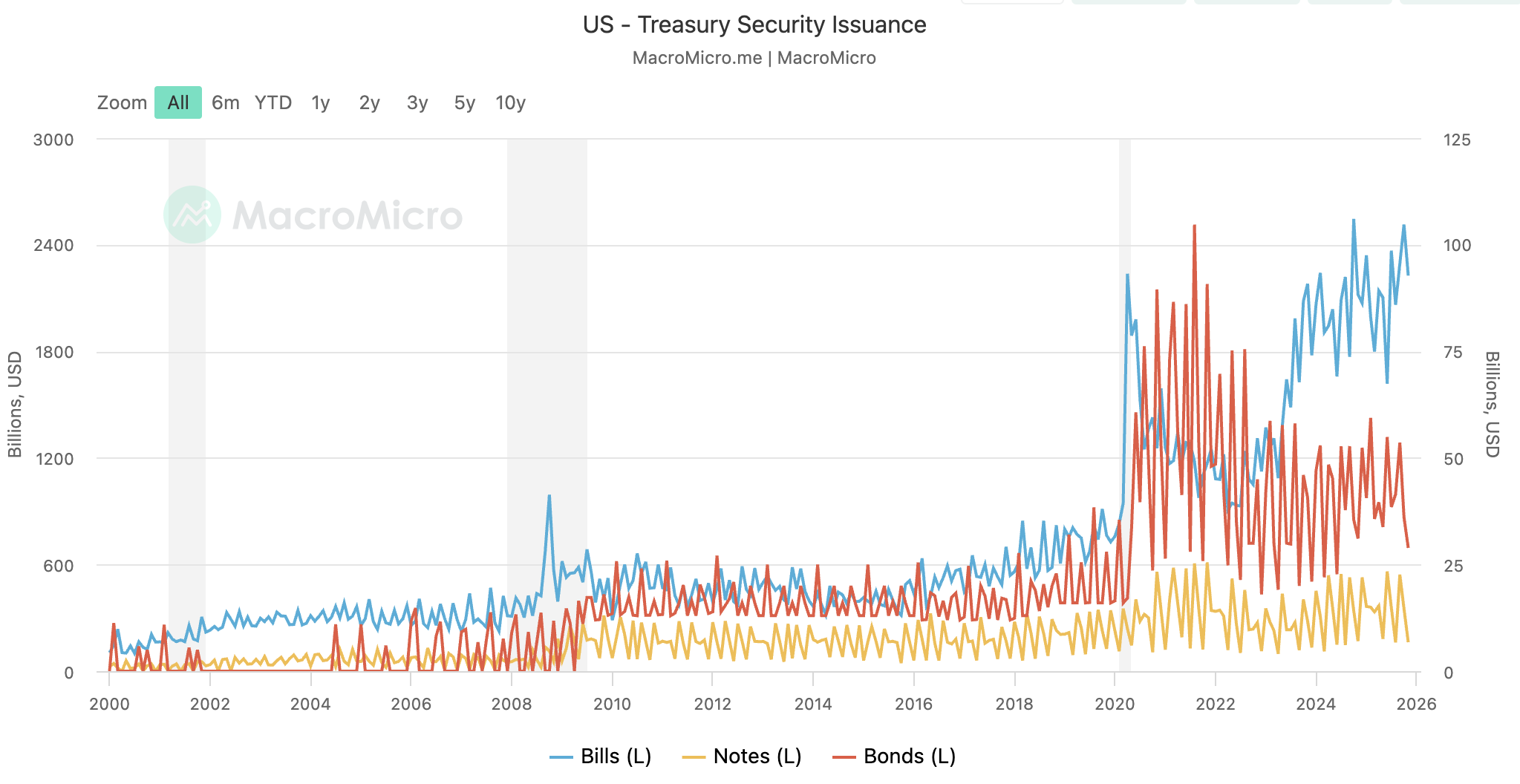
Хейес заявил, что такие политики, как RMP, расширяют фиатную ликвидность и, по его мнению, благоприятствуют дефицитным активам, таким как Биткоин, золото и серебро.
Я люблю количественное смягчение, потому что это означает печатание денег, и, к счастью, я владею финансовыми активами, такими как золото, акции золотодобывающих и серебродобывающих компаний и Биткоин, которые растут быстрее, чем темп создания фиатных денег.
В то же время он предупредил, что люди без активов страдают, поскольку создание денег подрывает покупательную способность, ослабляет заработную плату по отношению к ценам и перемещает богатство в сторону владельцев активов.
«К сожалению, здесь и сейчас для большей части человечества печатание денег разрушает их достоинство как productive людей», — написал он. «Когда правительство намеренно обесценивает валюту, оно разрушает связь между энергетическими затратами и экономическими результатами».
По теме: Биткоин восстанавливается на фоне повышения ставок в Японии, поскольку Артур Хейес прогнозирует курс доллара на уровне 200 иен
Polymarket указывает на паузу после снижения ставки в декабре
10 декабря Комитет по операциям на открытом рынке (FOMC) снизил процентные ставки на 25 базисных пунктов и объявил о покупке краткосрочных казначейских ценных бумаг, что, по словам председателя ФРС Джерома Пауэлла, было сделано «исключительно с целью поддержания достаточного предложения резервов» и отдельно от позиции денежно-кредитной политики.
ФРС заявила, что покупки изначально составят около 40 миллиардов долларов в первый месяц и могут оставаться повышенными в течение нескольких месяцев, чтобы смягчить краткосрочное давление на денежных рынках, особенно вокруг сезонных колебаний, таких как налоговые выплаты.
Несмотря на снижение процентной ставки и объявление о покупках краткосрочных казначейских ценных бумаг, аналитики заявили, что смешанные сигналы от Пауэлла, вероятно, подавят устойчивый рост Биткоина до возобновления цикла снижения ставок в 2026 году.
Согласно данным Yahoo Finance, цена Биткоина 10 декабря составляла около 92 695 долларов. На момент написания статьи он торговался на уровне около 87 300 долларов.
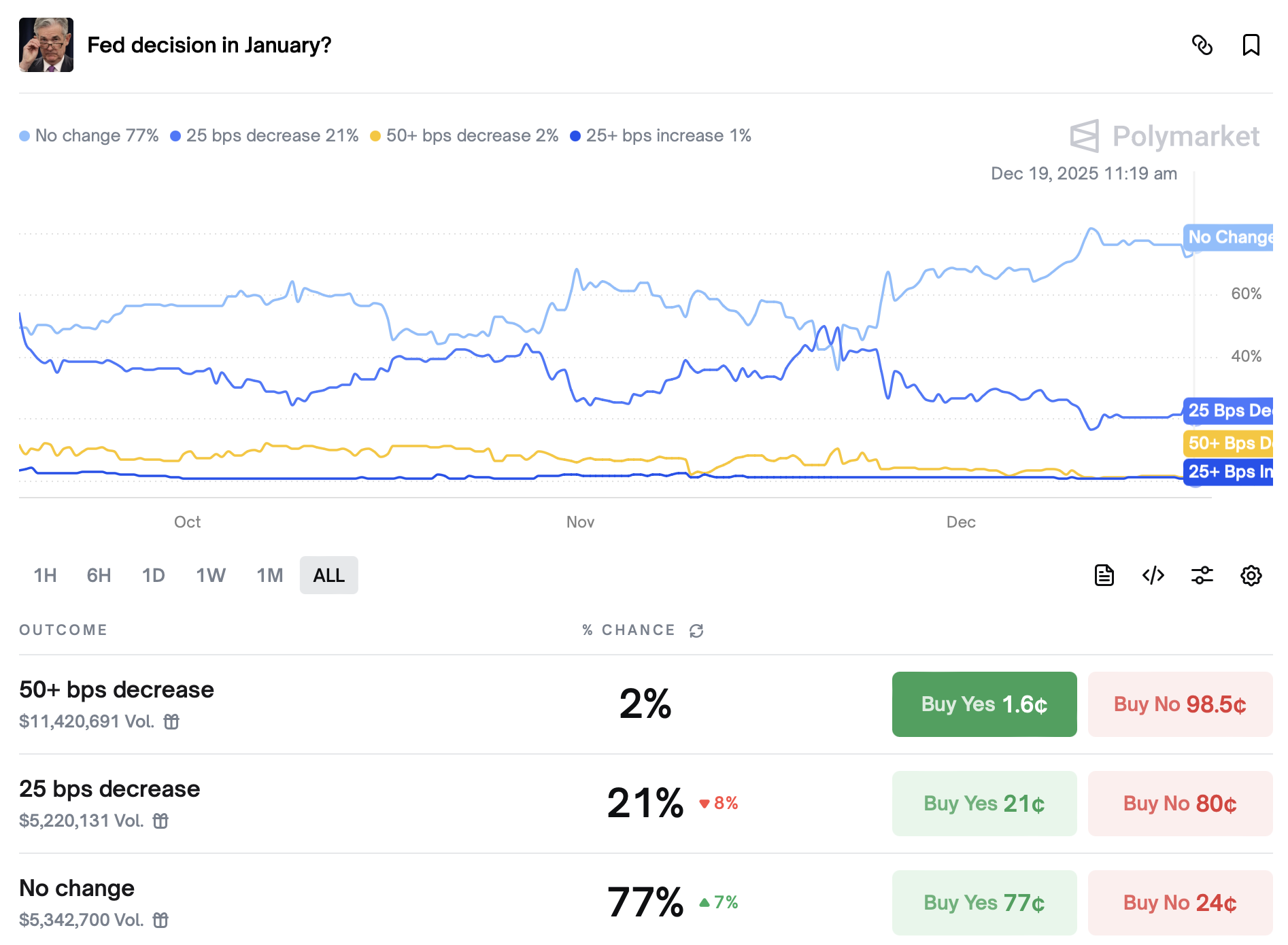
На момент написания статьи трейдеры Polymarket практически единогласно оценивали вероятность отсутствия изменений в политике ФРС в январе примерно в 77%, в то время как вероятность еще одного снижения на 25 базисных пунктов составляет около 21%, а более значительные изменения считаются крайне маловероятными.
Срок полномочий Пауэлла истекает в мае 2026 года. Президент США Дональд Трамп, который публично выступал за то, чтобы следующий председатель ФРС проводил агрессивное снижение процентных ставок, готовится к собеседованию с финалистами на его смену, причем директор Национального экономического совета Кевин Хассет широко рассматривается как главный претендент.
Журнал: Большие вопросы: Выжил бы Биткоин при 10-летнем отключении электроэнергии?