Автор: Клод, Shenchao TechFlow
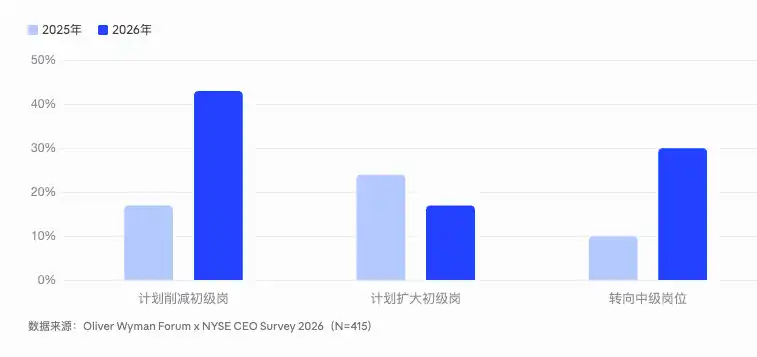
Введение от Shenchao: Новое исследование Oliver Wyman совместно с Нью-Йоркской фондовой биржей с участием 415 генеральных директоров со всего мира показало, что 43% CEO планируют сократить начальные позиции в течение следующих одного-двух лет, смещая кадровую структуру в сторону сотрудников среднего и высшего звена. Этот показатель более чем удвоился по сравнению с 17% в прошлом году. AI систематически заменяет рутинные задачи, выполняемые младшими сотрудниками, в то время как опытные сотрудники становятся более ценными благодаря своему опыту и способности к суждению. По предыдущим расчётам Goldman Sachs, AI чисто устраняет около 16 000 рабочих мест в США ежемесячно, и поколение Z оказывается в первых рядах.
В прошлом, когда наступала волна увольнений, первыми под удар часто попадали старшие, высокооплачиваемые сотрудники. Но логика эпохи AI меняется.
Согласно сообщению Bloomberg от 16 мая, опрос «Повестка дня CEO на 2026 год», проведённый консалтинговой компанией Oliver Wyman совместно с Нью-Йоркской фондовой биржей, показывает, что более 40% генеральных директоров планируют сократить начальные позиции в течение следующих одного-двух лет, смещая кадровую структуру в сторону сотрудников среднего и высшего звена; только 17% CEO заявили, что увеличат долю начальных позиций. Год назад эти цифры были почти полностью противоположными.
Опрос охватил 415 генеральных директоров (266 из публичных компаний, 149 из частных). Выборка публичных компаний составляет в совокупности около 10% от глобальной рыночной капитализации, из них 65 — CEO компаний из списка Fortune 500.
Руководитель Oliver Wyman Forum Джон Ромео в интервью Bloomberg заявил: «Действительно становится сложнее младшим сотрудникам войти на рынок труда. Сейчас генеральные директора больше ценят сотрудников среднего и высшего звена для повышения производительности.»
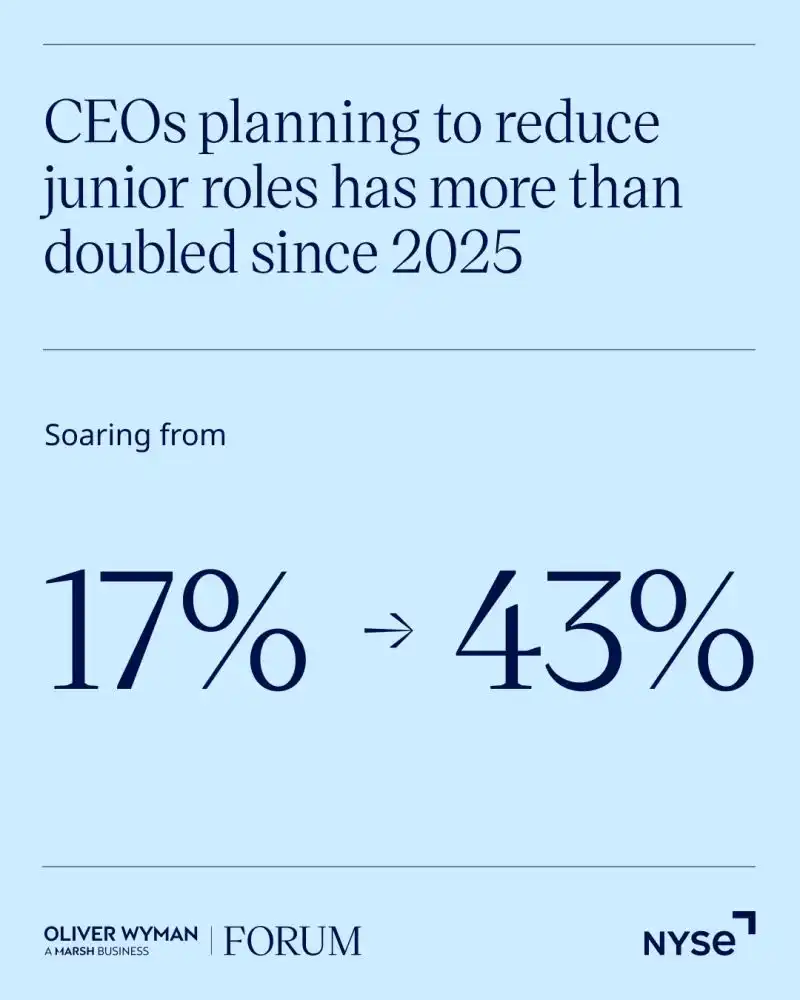
43% CEO сокращают начальные позиции, проявляется эффект «смещения в пользу стажа» AI
Логика этого смещения понятна: задачи, которые на данный момент способны выполнять AI-агенты (Agent), как раз высококонцентрированы в типичной сфере деятельности младших сотрудников. Написание кода, оценка потенциальных клиентов, проверка документов, составление отчётов по данным — эти рутинные когнитивные задачи, которые раньше выполнялись младшими сотрудниками, быстро заменяются системами AI.
Но то, что AI пока не может воспроизвести, — это способность к суждению, формируемая за годы накопления опыта в отрасли. Консультант по будущему труда Равин Джесутасан сказал Bloomberg: «Отношение компаний становится таким: „Мне нужен человек, который действительно это делал, потому что её опыт, способность к суждению и решению проблем делают её ценнее, чем AI“».
Это явление уже подтверждается академическими данными. В исследовании учёных из Гарвардского университета Сееда М. Хоссейни и Гая Лихтингера, проанализировавших резюме и данные о найме, охватывающие 62 миллиона сотрудников и 285 000 американских компаний, показано: с начала 2023 года в компаниях, активно внедряющих генеративный AI, количество младших сотрудников за шесть кварталов сократилось на 7,7% по сравнению с компаниями, не использующими AI, в то время как количество старших сотрудников практически не изменилось. Ключевой вывод: это снижение в основном связано с замедлением найма, а не с массовыми увольнениями. Другими словами, не увольняют, а перестают нанимать.
Отчёт Oliver Wyman говорит об этом тренде ещё более прямо: «CEO с самым длительным горизонтом планирования чаще всего планируют сокращение численности персонала. Это говорит о том, что они ожидают, что организация станет более эффективной благодаря усилению AI, и это не средство сокращения затрат, а конечное состояние.»
Расчёт Goldman Sachs: AI ежемесячно чисто устраняет 16 000 рабочих мест в США, поколение Z оказывается в первых рядах
Экономист Goldman Sachs Элси Пенг в своём исследовательском отчёте за апрель рассчитала, что за последний год эффект замещения AI ежемесячно уничтожал около 25 000 рабочих мест, в то время как эффект усиления AI ежемесячно создавал около 9 000 новых рабочих мест, что в чистом виде даёт около 16 000 устранённых рабочих мест. Frontierbeat
Распределение удара крайне неравномерно. Среди профессий с наибольшей подверженностью замене AI разрыв в уровне безработицы между сотрудниками начального уровня до 30 лет и опытными сотрудниками от 31 до 50 лет значительно увеличился по сравнению с допандемийным периодом. Разрыв в заработной плате также ухудшился. Регрессионный анализ Goldman Sachs оценивает, что с увеличением подверженности замене AI на одно стандартное отклонение разрыв в оплате труда между сотрудниками начального и старшего уровня расширяется примерно на 3,3 процентных пункта. Fortune
Поколение Z непропорционально сильно сконцентрировано на таких рутинных офисных должностях, как ввод данных, поддержка клиентов, юридическое сопровождение, обработка счетов, — как раз в тех областях, где AI наиболее силён в автоматизации. У них нет того буфера опыта, который есть у старших сотрудников. Fortune
Исследование Стэнфордского университета в ноябре прошлого года подтверждает это: в областях с наибольшей подверженностью воздействию AI молодые сотрудники на 16% чаще рискуют потерять работу, чем другие группы. Fortune
Долгосрочный риск разрыва кадрового конвейера
Сокращение начальных позиций может в краткосрочной перспективе снизить затраты и повысить эффективность, но скрытые издержки этого начинают вызывать тревогу.
Глобальный руководитель направления лидерства и изменений в Oliver Wyman Хелен Лейс отметила в интервью Bloomberg, что если компания хочет, чтобы в будущем у неё были специалисты среднего и высшего звена для управления рабочими процессами, управляемыми AI, то «эти люди сначала должны научиться этой работе внутри компании». Отказ от найма младших сотрудников означает перерезание собственного канала поставки талантов.
Сопредседатель Центра цифровой экономики MIT Эндрю Макафи ранее выразил аналогичную озабоченность в Harvard Business Review: кроме обучения на рабочем месте и системы наставничества, как ещё люди могут научиться выполнять работу?
Данные опроса Monster показывают, что почти 90% выпускников 2026 года обеспокоены тем, что AI или автоматизация заменят начальные позиции, что резко возросло по сравнению с 64% в 2025 году. Fortune
Эти опасения не беспочвенны. Согласно отчёту SignalFire, в период с 2023 по 2024 год объём найма на начальные позиции в 15 крупнейших технологических компаниях США снизился на 25%. В Великобритании ситуация более серьёзная: количество позиций для выпускников в сфере технологий сократилось на 46% в 2024 году и, как ожидается, уменьшится ещё на 53% к 2026 году. IEEE SpectrumRezi
Немногие компании идут против тренда: «Победители» от AI, наоборот, больше ценят младших сотрудников
Интересно, что компании, наиболее успешно внедряющие AI, демонстрируют иную кадровую стратегию.
Отчёт Oliver Wyman указывает: «Группа передовых внедрителей AI, действующих вопреки тренду, считает, что эта технология повышает ценность младших талантов, а не заменяет их.» Среди компаний с высокой окупаемостью инвестиций в AI доля тех, кто делает ставку на начальные позиции, выше, чем среди тех, кто ещё не видит отдачи.
IBM в феврале этого года объявила о планах утроить объём найма на начальные позиции в США и переписать описания должностей для эпохи AI. Генеральный директор Salesforce Марк Бениофф на этой неделе объявил о найме 1000 выпускников и стажёров для построения своей системы AI и написал на платформе X: «Говорят, что AI уничтожит начальные позиции, но эти выпускники и стажёры как раз строят AI.» Генеральный директор Amazon Web Services Мэтт Гарман публично заявил, что замена AI младших сотрудников — «одно из самых глупых решений, которое может принять компания», объяснив это тем, что младшие сотрудники часто являются самыми опытными пользователями инструментов AI.
Но эти случаи всё ещё остаются в меньшинстве на фоне общей тенденции. Опрос Oliver Wyman показывает, что 74% CEO замораживают или сокращают штат, что выше 67% в прошлом году. Самые агрессивные увольнения происходят в технологическом, медийном и телекоммуникационном секторах.
Дилемма ROI от AI: большинство компаний всё ещё на стадии «экспериментов за деньги»
Уверенность генеральных директоров в способности AI изменить структуру рабочей силы заметно расходится с фактической отдачей, которую AI приносит.
Опрос Oliver Wyman показывает, что 67% внедрений AI компаниями всё ещё находятся на стадии планирования и пилотных проектов. 53% генеральных директоров заявляют, что оценивать окупаемость инвестиций в AI пока рано, и эта доля увеличилась по сравнению с 41% в прошлом году. Лишь 27% CEO сообщают, что ROI от инвестиций в AI соответствует или превышает ожидания, что ниже 38% в прошлом году. Почти четверть заявляют, что AI вообще не повлиял на выручку.
В отчёте это описывается как «не кризис доверия, а осознание масштабного перепроектирования работы: это происходит медленнее и сложнее, чем изначально предполагал первоначальный энтузиазм.»
Однако в отчёте также отмечается, что компании, внедрившие AI в двух или более сценариях применения, сообщают о сокращении затрат и росте выручки примерно в два раза больше, чем компании с одним сценарием. Кривая ценности AI нелинейна, реальная отдача концентрируется после масштабирования внедрения.
Возможно, фраза экономиста из Новой школы Терезы Гиллардуччи, сказанная Bloomberg, резюмирует нынешнюю ситуацию: даже если AI смещает чашу весов на рабочем месте в пользу опытных сотрудников, это не значит, что они получили гарантии занятости. «Обязательства компаний перед сотрудниками становятся всё слабее.»



















