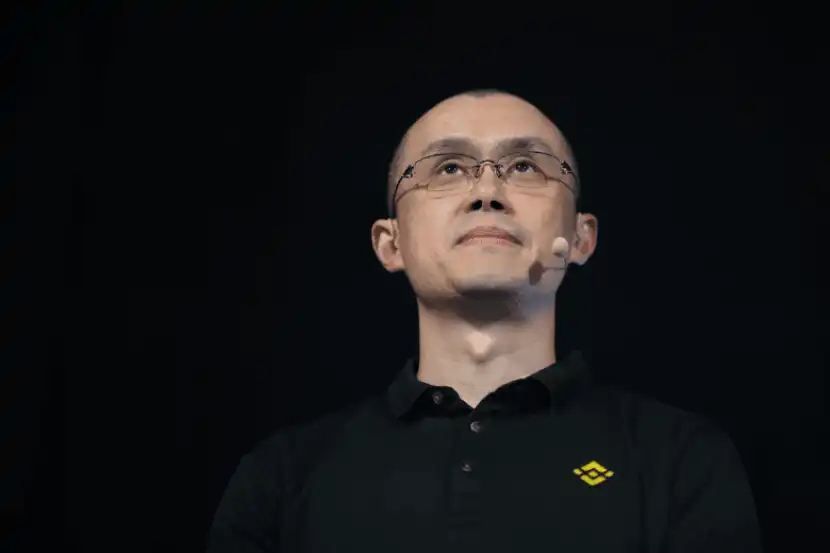
After the Crypto Craze, What Is Changpeng Zhao Thinking?

marsbitОпубликовано 2026-01-27Обновлено 2026-01-27

Введение

In the post-crypto boom era, Binance founder Changpeng Zhao (CZ) is shifting focus from short-term price speculation to long-term structural cycles, regulation, and government engagement. Speaking at Davos 2026, CZ avoided making specific price predictions but suggested Bitcoin could reach new highs in 2026 due to increasingly favorable regulatory environments, particularly in the U.S. and other countries. He revealed he is now acting as an unofficial coordinator between governments and the crypto industry, engaging with over a dozen countries on topics like regulatory frameworks, asset tokenization, and stablecoin design. CZ explicitly denied having any personal or business ties with Donald Trump, emphasizing that policy benefits are industry-wide, not personal. A key insight from his talk was the ongoing friction between traditional banking and crypto, with stablecoins serving as a temporary bridge. CZ’s evolution from a disruptive exchange CEO to a policy dialogue participant signals a broader industry shift from "price narrative" to "institution narrative." The new cycle is expected to be slower, longer, and more structured, driven by regulatory clarity and institutional maturity rather than mere market speculation.

Author: 137Labs

As the crypto market gradually cools and the narrative shifts toward long-term structures, the recent statements by Binance founder Changpeng Zhao provide a noteworthy perspective. This article does not focus on short-term price predictions but instead analyzes how he has shifted the discussion toward more macro variables such as cycles, governments, regulation, and time, based on his recent remarks at Davos. Through this shift, the article attempts to answer a more critical question: After the crypto craze, what stage has the industry truly entered?

At Davos, Changpeng Zhao (CZ) appeared more cautious than ever before.

The founder and former CEO of Binance no longer leads the world's largest cryptocurrency exchange. Yet, at the 2026 World Economic Forum, he remained a figure of interest for the media and policy circles.

The reason lies not in any radical price predictions he offered—quite the opposite, he almost deliberately avoided short-term judgments.

I. He No Longer Predicts Prices, But Talks About "Time"

In an interview with CNBC, when asked about Bitcoin's price, Changpeng Zhao's response was surprisingly conservative:

Short-term prices are almost impossible to predict.

But immediately after, he offered a more macro judgment—

The cryptocurrency market may be entering a structural cycle that lasts for years.

In his description, this is not a traditional bull-bear switch but more of a change in cycle patterns.

He mentioned that Bitcoin historically fluctuated in four-year cycles, but this pattern is now being influenced by changes in the policy environment.

II. Why Might This Cycle Be Different?

The core reason Zhao gave was not technological upgrades or the halving narrative, but politics and regulatory environment.

He pointed out:

· The U.S. attitude toward cryptocurrency is becoming more friendly

· Other countries are quickly following suit with similar policies

· Crypto assets are gradually being incorporated into a "regulatable, discussable" category

In this context, he believes:

Bitcoin could reach a new all-time high in 2026.

However, it's important to note that this is not a statement of bullishness but more of a judgment on a policy-driven cycle.

III. "I Am in Dialogue with About a Dozen Governments"

More noteworthy than his price predictions is Zhao's main focus now.

He revealed in the interview that he is in communication with about a dozen governments, discussing key topics including:

· Cryptocurrency regulatory frameworks

· Asset tokenization

· The design and issuance of stablecoins

This stands in stark contrast to his earlier image of "innovate first, regulate later."

Today, he更像是一名:

Unofficial coordinator navigating between governments and the crypto industry.

IV. Regarding Trump, He Chose a "Clarification with Distance"

As U.S. politics increasingly influences the crypto industry, speculation about the relationship between Changpeng Zhao and Donald Trump has frequently surfaced.

To this, he gave a very clear response:

· He has never met Trump in person

· There is no close personal or business relationship

· The so-called "relationship" stems more from overlapping policy environments

In his explanation, the logic is very clear:

Policy benefits are at the industry level, not the result of personal relationships.

V. An Easily Overlooked Detail:

Why "Bypass the Banks"?

When discussing a Binance-related investment completed using a $1 stablecoin, Zhao added a thought-provoking detail:

The only requirement for using cryptocurrency was to avoid dealing with the banking system.

This statement highlights a practical issue:

Even as regulation becomes clearer, structural friction still exists between the traditional financial system and the crypto industry.

And stablecoins are becoming a temporary solution to bridge the two.

VI. Why Are Governments Becoming the Decisive Variable in the New Cycle?

In the early crypto narrative, governments were often seen as external disruptions, with cycles driven primarily by technological breakthroughs and market sentiment.

But today, that logic is fading.

As crypto assets are incorporated into formal regulatory frameworks, the market's focus shifts from "can it be done" to "how to do it, and under what system." When rules begin to be systematically designed, cycles are no longer solely determined by risk appetite but start to be influenced by the pace of institutional progress.

Regulatory clarity, compliance paths, and the confirmation of legal status do not immediately drive up prices, but they reshape long-term expectations, attracting institutional capital and national-level projects.

In this context, the new cycle is likely to be slower, longer, and more restrained.

Extreme bubbles decrease, while infrastructure and institutions gradually take shape.

If the early crypto cycles relied on imagination, the next phase seems more driven by policy patience and institutional maturity.

Conclusion:

CZ's Transformation Might Be More Important Than His Predictions

If one only extracts a few sentences, Zhao's remarks can easily be interpreted as price predictions.

But what is truly worth noting is his change.

From exchange CEO to industry advisor;

From resisting regulation to participating in institutional discussions;

From talking about coin prices to talking about time.

This perhaps signifies one thing:

The crypto industry is moving from "price narrative" to "institutional narrative."

And this time, the rhythm of the cycle may no longer be determined solely by the market.

This article represents the author's personal views only and does not constitute any investment, legal, or financial advice. The views are based on public information and are for discussion and reference only.

Связанные с этим вопросы

QWhat is the main shift in Zhao Changpeng's (CZ) focus according to the article?

ACZ has shifted his focus from short-term price predictions and a 'build first, regulate later' approach to engaging in macro-level discussions about cycles, government relations, and regulatory frameworks. He is now acting more as an unofficial coordinator between governments and the crypto industry.

QWhat reason does CZ give for why the current crypto market cycle might be different from previous ones?

ACZ states that the core reason is not technological upgrades or the 'halving' narrative, but the changing political and regulatory environment, particularly more friendly attitudes from the U.S. and other countries, which is integrating crypto into a 'governable and discussable' category.

QWhat detail does CZ provide about his relationship with former U.S. President Donald Trump?

ACZ explicitly clarifies that he has never met Donald Trump in person and that there is no close personal or business relationship. He attributes any perceived connection to an overlap in policy environments, not personal rapport.

QAccording to the article, what role is stablecoin playing in the current crypto landscape?

AStablecoins are serving as a temporary solution to bridge the structural friction that still exists between the traditional banking system and the crypto industry, allowing transactions to be settled without directly dealing with banks.

QWhat does the article suggest is the new primary driver of the crypto market's long-term cycle?

AThe article suggests that government policy, regulatory clarity, and institutional maturity are becoming the key long-term drivers, shifting the cycle from being driven by market speculation and imagination to being shaped by policy patience and the pace of regulatory development.

Похожее

Why Hasn't the U.S. Seen the Rise of 'Huabei' or 'Jiebei'?

The article explores why the U.S. lacks large-scale consumer credit products like China's "Huabei" and "Jiebei," despite having a developed financial sector. Key reasons include: 1. **Structural Barriers**: A fragmented federal and state regulatory system, reinforced by post-2008 reforms like the Dodd-Frank Act, raises compliance costs and protects traditional banks, stifling fintech innovation. 2. **Credit Card Dominance**: Credit cards, used by 70-80% of adults, form a $1.28 trillion debt market with high APRs (avg. 22.3%). This system cross-subsidizes users who pay in full with those carrying balances, creating a predatory yet entrenched ecosystem. 3. **Data Privacy Laws**: Strict regulations (e.g., FCRA, CCPA) prevent tech giants from leveraging behavioral data for credit scoring, unlike in China where such data fuels fintech models. 4. **Capital Market Disincentives**: Wall Street penalizes tech firms entering finance due to lower valuations associated with heavy regulation and risk, as seen in Apple’s failure with Apple Card. 5. **Banking Oligopoly**: Major banks control consumer lending, leveraging lobbying power and consumer habits to maintain high-cost credit, while alternatives like payday loans (400% APR) or "unbanked" services remain niche or exploitative. Ultimately, regulatory, structural, and corporate interests collectively block the emergence of accessible, low-cost digital lending in the U.S.

Odaily星球日报44 мин. назад

Why Hasn't the U.S. Seen the Rise of 'Huabei' or 'Jiebei'?

Odaily星球日报44 мин. назад

More and More 'Model Supermarkets' Are Opening: ByteDance, Alibaba, and Tencent Compete to Integrate

Chinese tech giants like ByteDance, Alibaba, and Tencent are accelerating the rollout of integrated AI model subscription services—dubbed “model supermarkets”—to provide developers with bundled access to multiple leading domestic large language models (LLMs). ByteDance’s Volcengine recently upgraded its "Coding Plan" by adding newer models like GLM-5.1, Minimax M2.7, and Kimi k2.6, allowing subscribers to use various top models under a single monthly fee starting at ¥40. However, user feedback reveals significant issues, including rapid consumption of usage limits (e.g., hitting caps within hours), frequent server errors (like HTTP 429), and slow response times during peak hours. Complaints about misleading deduction rates—where calls to advanced models consume more quota—are also common. The trend is industry-wide: Alibaba, Tencent, and Baidu have all launched similar multi-model coding plans. While these platforms reduce trial costs for developers, they also expose challenges in balancing affordability with service quality and computational stability. Amid this shift, independent AI companies like Zhipu, MiniMax, and Moonlight Face (Kimi) are developing strategies to avoid becoming mere “pipes” in this ecosystem—focusing on vertical applications, autonomous agents, and long-context models to retain competitiveness. Analysts suggest that, while platform aggregation may pressure model firms in the short term, specialized and vertical AI capabilities will remain differentiated in the long run.

marsbit48 мин. назад

More and More 'Model Supermarkets' Are Opening: ByteDance, Alibaba, and Tencent Compete to Integrate

marsbit48 мин. назад

Торговля

Спот
Фьючерсы
活动图片