After a 30x Surge and Then a Collapse, Who Set Up the RIVER Scheme Promoted by Hayes?

marsbitОпубликовано 2026-02-03Обновлено 2026-02-03

Введение

The native token RIVER of the chain-abstract stablecoin system River experienced an extreme price surge and crash in January 2026, rising over 2700% from around $2 to over $87 in four weeks, before plummeting 87% to around $11 in just six days. The volatility drew scrutiny from analysts, with Bubblemaps identifying a cluster of over 2,000 wallets linked to RIVER’s creators, which allegedly profited around $10 million through coordinated selling on Bitget. The token had gained attention after Arthur Hayes publicly endorsed it and the project raised $12 million in strategic funding. Analysis by CoinGlass highlighted how negative funding rates were exploited to manipulate leverage and liquidity, triggering cascading liquidations. The event underscores risks associated with low-float, high-volatility tokens where concentrated ownership and derivative structures can amplify both gains and losses.

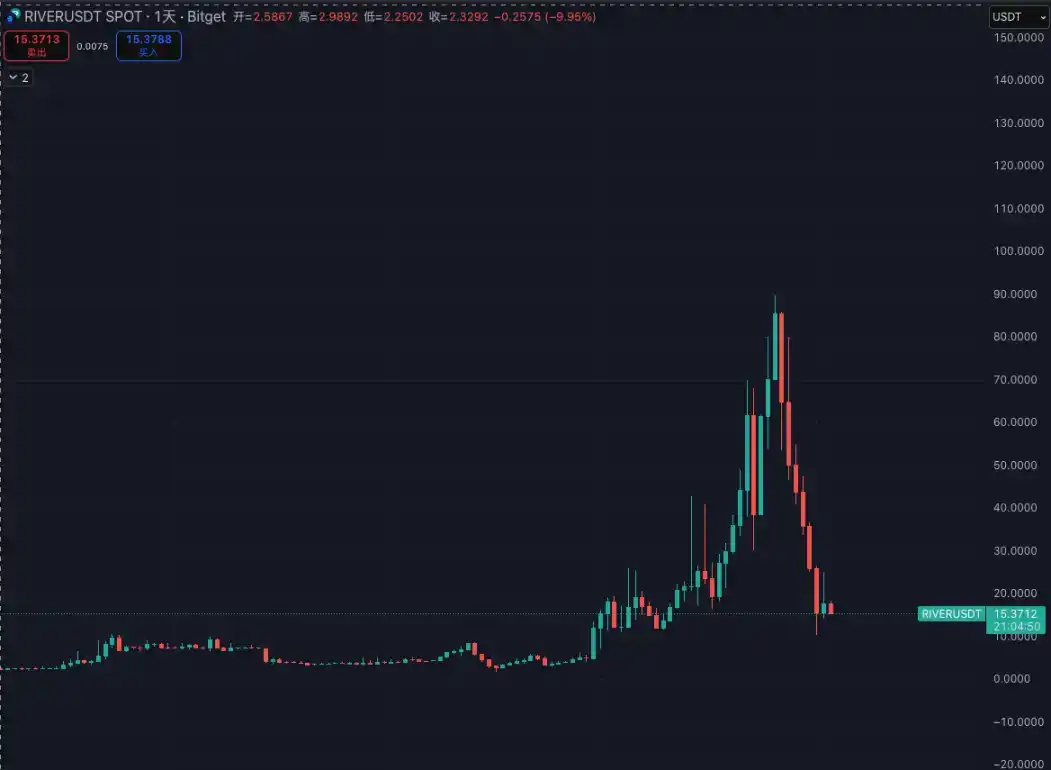
In the first month of 2026, the native token RIVER of the chain-abstracted stablecoin system River experienced an extreme inverted V-shaped reversal within just four weeks. Starting from around $2 in late December 2025, it surged to a historical high of over $87, marking an increase of more than 2700%, only to plummet rapidly within six days to a low of around $11, a drop of 87%.

This abnormal market volatility has drawn significant attention from industry observers and on-chain data analysis institutions. As third-party data agencies like Bubblemaps disclosed key evidence on January 27, suspicions surrounding RIVER token price manipulation, highly concentrated early holdings, and profits by associated addresses are growing.

New Funding of $12 Million, Promoted by Arthur Hayes

The River project is developed by the RiverdotInc team, with its main focus on building a chain-abstracted stablecoin system for the multi-chain ecosystem. The system aims to connect assets, liquidity, and yields across different blockchains, enabling seamless cross-chain interactions without relying on traditional bridging or wrapping mechanisms.

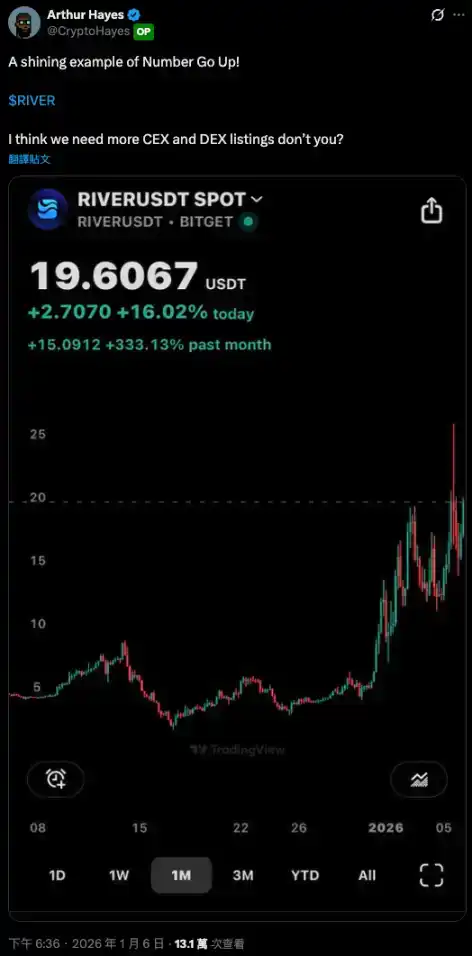
On January 6, BitMEX founder Arthur Hayes publicly called for CEXs to list the token and predicted it would explode. Hayes' endorsement provided the first boost for RIVER. Despite most mainstream crypto assets being in a downward trend at the time, RIVER began a unilateral upward trend, with its market cap more than quadrupling in just a few weeks.

On January 23, River announced the completion of a $12 million strategic funding round. In addition to previously reported participation from Justin Sun and TRON DAO, this round of investors also included Maelstrom Fund (founded by Arthur Hayes), The Spartan Group, and Nasdaq-listed companies and institutions from the United States and Europe.

Officially, the funding will be used to support River's expansion into EVM and non-EVM ecosystems (including TRON, Sui, and major EVM networks) and to continue building on-chain liquidity infrastructure. The funds will accelerate ecosystem deployment, deepen stablecoin liquidity, and promote the integration of satUSD in trading, lending, staking, and yield scenarios. Additionally, River will launch yield products Smart Vault and Prime Vault, providing a unified interface for users and institutions to access cross-ecosystem yields through protocol-native and institutional-grade strategies.

Interestingly, just a couple of days after announcing the large funding round, RIVER's price hit its peak and began to decline.

Funding Rate-Driven Price Manipulation Tactics

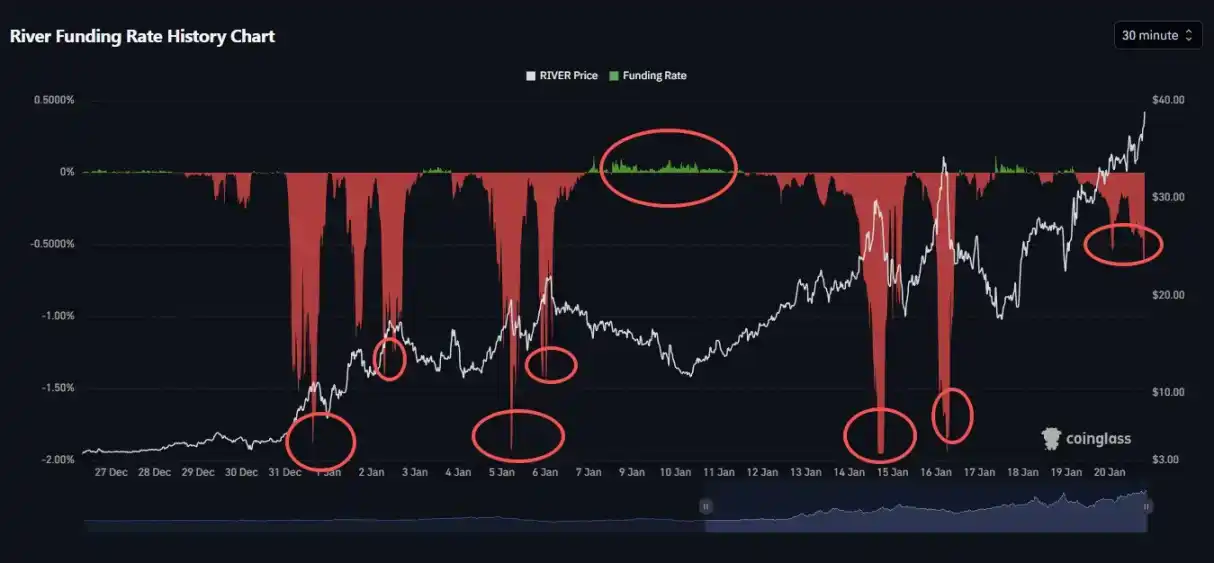
CoinGlass once used RIVER as an example to discuss how funding rates can be used in conjunction with leverage structures to drive price volatility, emphasizing that this pattern has appeared in multiple tokens over the past two years, with RIVER being just one case. It stressed that many traders misunderstand funding rates. Funding rates do not provide directional predictive signals; they provide information on the imbalance between long and short positions, indicating which side of the market is more crowded.

Step 1: Suppress the price while pushing the funding rate into deeply negative territory. First, keep the price low or suppressed while pushing the funding rate into a significantly negative range. The result is that short positions become increasingly concentrated, and the market begins to form a consensus expectation that a rebound is imminent due to the negative funding rate.

Step 2: Lure some traders to go long. During the phase of deeply negative funding rates, some traders will open long positions, motivated by the expectation of a rebound and the hope of receiving funding rate payments. The thread refers to this expectation as part of the trap.

Step 3: Price pushes upward can also occur during negative funding rate phases. CoinGlass's key argument is that when funding rates are extremely negative, prices do not need to enter a trend reversal. The market only needs a controlled upward push to trigger a chain reaction among shorts, including liquidations, stop-losses, and passive covering.

Why does the rally happen when the funding rate is still negative? Many sharp rallies start when funding rates are still negative. The driving force behind the price push comes from the unwinding of leveraged positions, and passive buying in the market amplifies the gains. After the crowded shorts are cleared, funding rates quickly return to more neutral levels. Some traders interpret the normalization of funding rates as a signal of market recovery.

CoinGlass warns that this is actually just the "reset" process of the trap, and manipulators can repeatedly execute the cycle of "creating extreme rates, attracting consistent positions, forcing liquidations, and resetting."

Analysis: RIVER Creators Suspected to Be Directly Related to a Large Cluster of Addresses, Selling RIVER for $10 Million in Profits

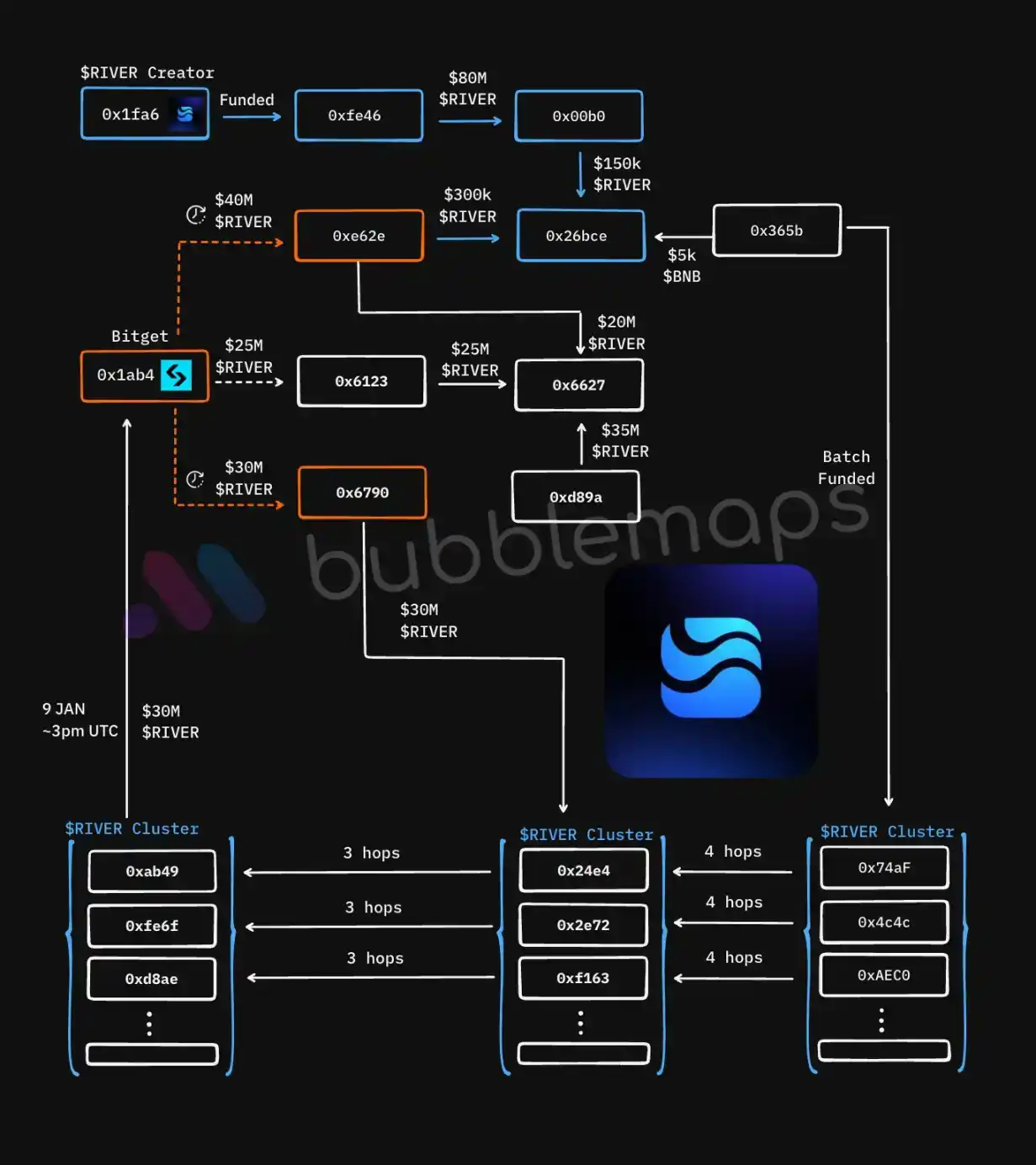
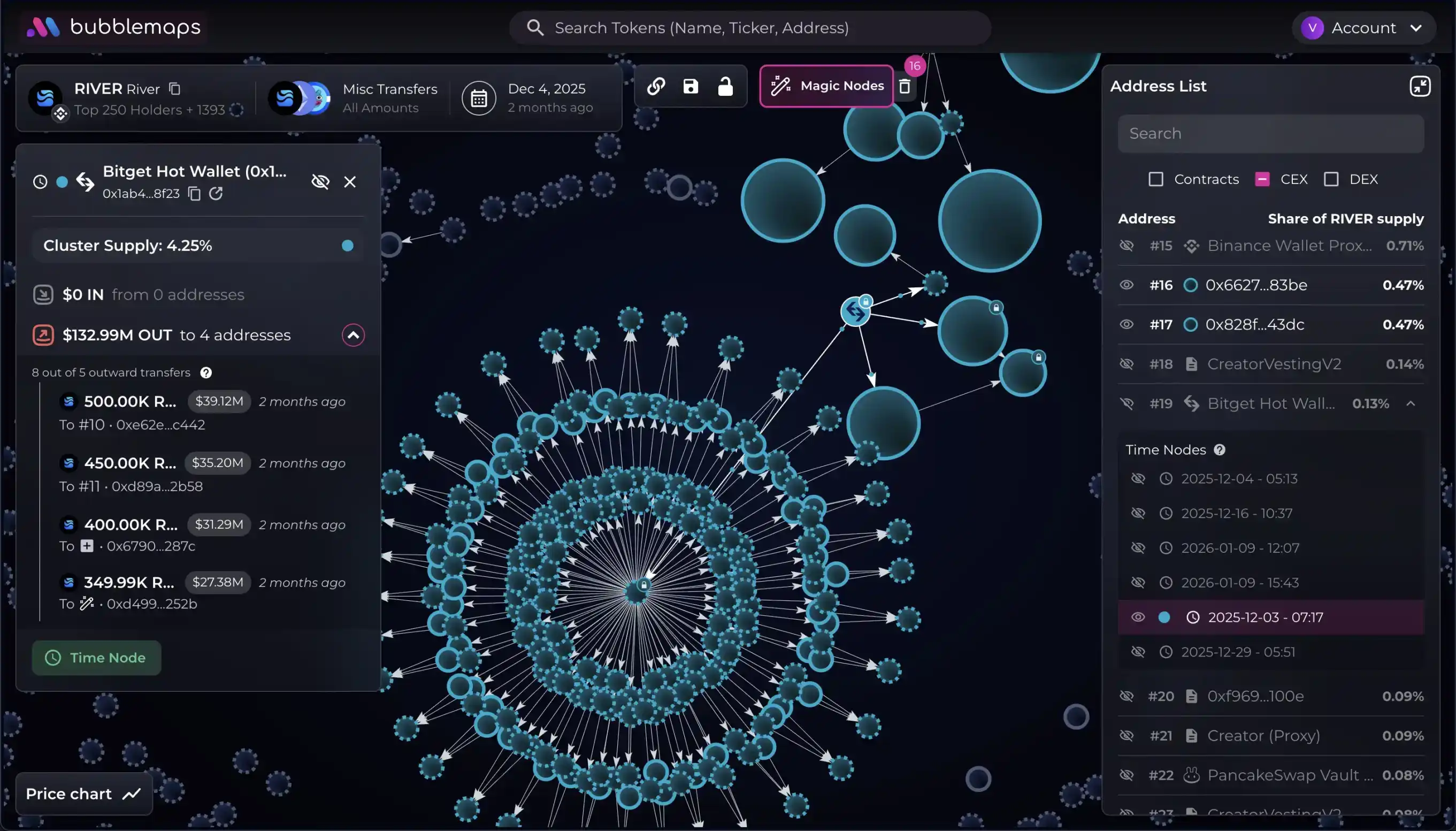
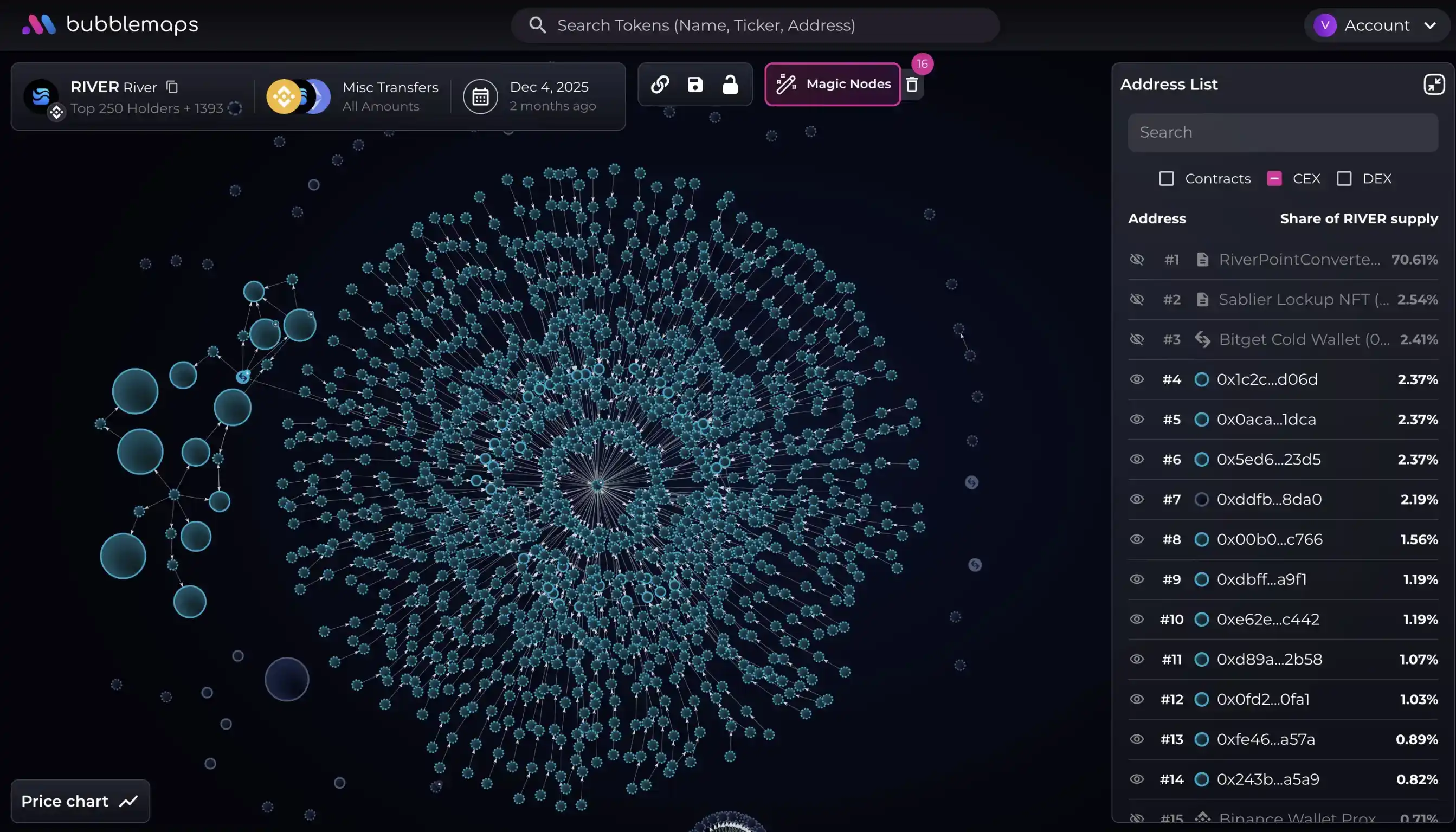
According to Bubblemaps monitoring, a large cluster containing over 2,000 wallet addresses is directly related to RIVER.

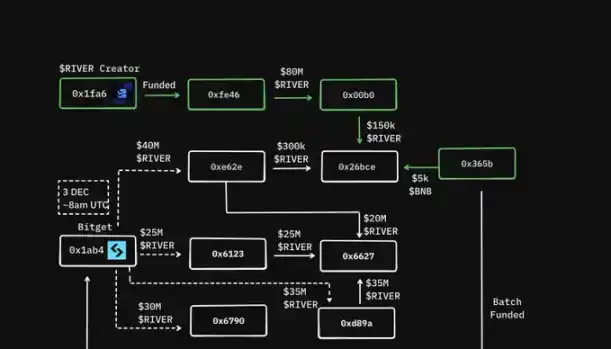
It pointed out that one month after RIVER's launch, seven addresses withdrew 230 million RIVER tokens from Bitget. These wallets had no prior activity and received the tokens within a tight time window on December 3 and 29.

One wallet, 0x6790, distributed 400,000 RIVER across hundreds of wallets. All these receiving wallets showed similar patterns: no prior activity, receiving similar amounts of RIVER, sending tokens to Bitget on January 9 likely for sale, funded by a single source, and经过四层跳转 (after four layers of hopping).

Bubblemaps noted that the wallet funding this cluster is address 0x365b, which is directly connected to the RIVER creator. Additionally, the wallet 0x6790, which distributed RIVER to the cluster, shows links pointing to the RIVER creator. It estimates the cluster's profits at $10 million.

What is certain now is that RIVER completed a drastic repricing from rapid rise to rapid retreat in an extremely short time. Market focus has shifted from narrative and growth expectations to whether there are abnormalities in token distribution and fund flows. The address cluster and associated clues raised by Bubblemaps have amplified suspicions of early concentration of holdings, profits by associated addresses, and selling through exchanges; the funding rate and position crowding mechanism mentioned by CoinGlass provide another explanatory framework, suggesting that derivative structures may have amplified the price swings.

For the market, the RIVER incident once again serves as a reminder that tokens with low circulation and high volatility are prone to extreme price movements when sentiment and structure resonate, and when negative signals emerge in holdings and trading structures, price adjustments often come faster and deeper.

Связанные с этим вопросы

QWhat was the extreme price movement of RIVER token in the first month of 2026?

AThe RIVER token experienced an extreme inverted V-shaped reversal, surging from around $2 in late December 2025 to a high of over $87, a gain of more than 2700%, before crashing down to around $11 in just six days, a drop of 87%.

QWho is a prominent figure that publicly endorsed the RIVER token and what was his prediction?

ABitMEX founder Arthur Hayes publicly called for CEXs to list the token and predicted it would experience a massive breakout.

QAccording to the analysis from Bubblemaps, what was the suspected link between a large cluster of wallets and the RIVER token creators?

ABubblemaps identified a cluster of over 2000 wallet addresses directly linked to RIVER's creators, with evidence showing these wallets received tokens from the creators and later sold them on Bitget, netting an estimated profit of $10 million.

QHow did CoinGlass describe the mechanism of price manipulation involving funding rates, as exemplified by RIVER?

ACoinGlass described a套路 where manipulators first suppress the price to create deeply negative funding rates, lure in long positions expecting a rebound, and then trigger a short squeeze by pushing the price up, forcing liquidations and stop-losses. This cycle of creating extreme rates, attracting one-sided positions, forcing liquidations, and resetting can be repeated.

QWhat was the purpose of the $12 million strategic funding round announced by River, and who were some of the investors?

AThe $12 million strategic funding round was intended to support River's expansion into EVM and non-EVM ecosystems (including TRON, Sui, and major EVM networks), build on-chain liquidity infrastructure, accelerate ecosystem deployment, and launch yield products like Smart Vault and Prime Vault. Investors included Maelstrom Fund (Arthur Hayes), The Spartan Group, Justin Sun, TRON DAO, and Nasdaq-listed companies from the US and Europe.

Похожее

South Korean Exchanges 'Battle' Regulators, Challenging the Boundaries of Enforcement and Legislation

South Korea's cryptocurrency industry is engaged in a rare, direct confrontation with regulators. The Financial Intelligence Unit (FIU), the primary anti-money laundering (AML) watchdog, has recently imposed heavy penalties on major exchanges like Upbit and Bithumb for alleged violations involving unregistered overseas VASPs and AML procedures. However, exchanges are now actively challenging these actions in court and through industry associations. In a significant shift, the Seoul Administrative Court ruled in favor of Upbit's operator, Dunamu, overturning part of an FIU-ordered business suspension. The court found the FIU's penalty criteria and justification insufficiently clear. Similarly, the court suspended the enforcement of a six-month business suspension against Bithumb pending a final ruling, citing potential irreversible harm to the exchange. Beyond legal battles, the industry is contesting proposed legislative amendments. The Digital Asset eXchange Alliance (DAXA) strongly opposes a draft rule that would mandate Suspicious Transaction Reports (STRs) for all crypto transfers over 10 million KRW (~$6,800). DAXA argues this "poison pill" clause violates legal principles and would overwhelm the STR system, increasing reports from 63,000 to an estimated 5.45 million annually for major exchanges, thereby crippling effective AML monitoring. This conflict highlights a structural tension in South Korea's crypto governance: comprehensive digital asset laws are still developing, while regulators rely heavily on AML enforcement. The industry's move from passive compliance to active legal and legislative challenges signifies a new phase, pressing for clearer rules and more proportionate enforcement. While short-term disputes may intensify, this clash could ultimately lead to a more mature and sustainable regulatory framework for South Korea's vibrant crypto market.

marsbit51 мин. назад

South Korean Exchanges 'Battle' Regulators, Challenging the Boundaries of Enforcement and Legislation

marsbit51 мин. назад

After 50x Storage Surge, Justin Sun Always Looks to the Next Decade

Sun Yuchen, known for his controversial stunts like a $30 million lunch with Warren Buffett (canceled due to a kidney stone) and eating a $6.2 million duct-taped banana, is often overshadowed by a significant fact: his decade-long track record of spotting major investment trends. In 2016, he famously advised young people to invest in Bitcoin, Nvidia, Tesla, and Tencent instead of buying property. A hypothetical $20,000 investment in Nvidia and Tesla from that list would now be worth over 50 million RMB. His latest major call was on November 6, 2025, predicting a "50x storage opportunity" tied to the AI boom, which materialized with Sandisk's stock surging nearly 50-fold by 2026. Looking ahead, Sun now focuses on the next frontier: Physical AI. He identifies four key areas: 1. **Embodied AI/Robotics**: He sees this reaching its "iPhone moment," with companies like UBTech and Galaxy General leading in commercialization. 2. **Drones**: Viewed as the first commercially viable form of Physical AI, revolutionizing sectors from warfare (e.g., AeroVironment's Switchblade) to logistics. 3. **Spatial Computing**: Beyond VR, it's about AI understanding physical space, a foundational technology for robotics and autonomous systems, exemplified by Apple's Vision Pro. 4. **Space Exploration**: After a 2025 suborbital flight with Blue Origin, Sun advocates for space as the ultimate frontier, discussing blockchain's potential role in space asset management and data transactions. His investment philosophy involves betting on entire, inevitable trends rather than single companies. For robotics, he sees Tesla (the body/manufacturer) and Nvidia (the brain/AI platform) as complementary plays. In defense drones, he highlights companies making tanks obsolete (AeroVironment) and those augmenting fighter jets (Kratos). For space, he participated in Blue Origin's flight and anticipates SpaceX's potential IPO to redefine the sector's valuation. Sun Yuchen's vision frames the next two decades not as a revolution in information flow (like the internet), but in the fundamental operation of the physical world through AI-powered robots, autonomous systems, and spatial intelligence, ultimately extending human and AI activity into space. While many still focus on conventional assets, he continues to look toward the next technological horizon.

marsbit1 ч. назад

After 50x Storage Surge, Justin Sun Always Looks to the Next Decade

marsbit1 ч. назад

The Billionaires Behind the Most Expensive Midterm Election in History

"The Most Expensive Midterm Elections and Their Billionaire Backers" This analysis details the unprecedented scale of spending in the 2026 midterm elections, highlighting the key billionaire donors shaping the political landscape. Jeff Yass, founder of Susquehanna International Group, has contributed over $81 million, ranking third among individual donors behind George Soros ($102.6M) and Elon Musk ($84.8M). Yass is a major donor to Trump's MAGA Inc. and supports school choice and various candidates. Overall, federal committees have raised over $4.7 billion this cycle, with political ad spending projected to reach $10.8 billion. Republican-aligned groups are significantly out-raising their Democratic counterparts. "Dark money" from undisclosed sources continues to grow. The core stakes involve control of Congress and policy direction for Trump's final term. Donors are also motivated by specific issues: Sergey Brin and Chris Larsen are funding opposition to a proposed California wealth tax and supporting crypto-friendly policies. Other top donors include OpenAI's Greg Brockman and his wife Anna ($50M total to MAGA Inc. and an AI-focused PAC), Richard Uihlein ($45.3M to conservative causes), venture capitalists Marc Andreessen and Ben Horowitz (each over $44M to crypto/AI PACs and MAGA Inc.), Miriam Adelson ($42.6M to GOP leadership PACs), Paul Singer ($33.9M), and Diane Hendricks ($25.8M to MAGA Inc.). The article notes that the peak fundraising period is still ahead, with major primaries approaching.

marsbit1 ч. назад

The Billionaires Behind the Most Expensive Midterm Election in History

marsbit1 ч. назад

The Largest IPO in History Is Approaching, Surpassing SpaceX, 28 Years of AI Self-Iteration, Countdown to Intelligence Explosion

"Anthropic Nears Trillion-Dollar IPO, Fueled by Explosive Growth and 2028 'Intelligence Explosion' Warning Anthropic is considering a deal valuing the AI company near $1 trillion, potentially leading to one of the largest IPOs ever and surpassing SpaceX. Its revenue has skyrocketed, with Annual Recurring Revenue (ARR) reaching $45 billion in May 2026—a 500% increase in just five months. This vertical growth curve is attributed to its key products, Claude Code and Cowork, dominating AI coding and enterprise collaboration. Beyond commercial success, co-founder Jack Clark issued a pivotal warning in an interview: there is a greater than 50% chance that by the end of 2028, AI systems will achieve recursive self-improvement—the ability to autonomously build a 'better version' of themselves, initiating an 'intelligence explosion.' This prophecy underpins the company's astronomical valuation, as the market prices in the potential for transformative and disruptive AI. Further signaling its ambition, Anthropic formed a $1.5 billion joint venture with Goldman Sachs and Blackstone, aiming to disrupt traditional consulting firms like McKinsey by deploying Claude AI for complex strategic work. This move tests AI's capacity to replace high-level cognitive labor, a precursor to its predicted autonomous evolution. The narrative presents a dual future: unprecedented economic opportunity alongside significant risks like economic restructuring and security threats. Anthropic's meteoric rise and Clark's 2028 prediction frame the coming years as a countdown to a potential technological singularity."

marsbit2 ч. назад

The Largest IPO in History Is Approaching, Surpassing SpaceX, 28 Years of AI Self-Iteration, Countdown to Intelligence Explosion

marsbit2 ч. назад

Торговля

Спот
Фьючерсы

Популярные статьи

Как купить RIVER

Добро пожаловать на HTX.com! Мы сделали приобретение River (RIVER) простым и удобным. Следуйте нашему пошаговому руководству и отправляйтесь в свое крипто-путешествие.Шаг 1: Создайте аккаунт на HTXИспользуйте свой адрес электронной почты или номер телефона, чтобы зарегистрироваться и бесплатно создать аккаунт на HTX. Пройдите удобную регистрацию и откройте для себя весь функционал.Создать аккаунтШаг 2: Перейдите в Купить криптовалюту и выберите свой способ оплатыКредитная/Дебетовая Карта: Используйте свою карту Visa или Mastercard для мгновенной покупки River (RIVER).Баланс: Используйте средства с баланса вашего аккаунта HTX для простой торговли.Третьи Лица: Мы добавили популярные способы оплаты, такие как Google Pay и Apple Pay, для повышения удобства.P2P: Торгуйте напрямую с другими пользователями на HTX.Внебиржевая Торговля (OTC): Мы предлагаем индивидуальные услуги и конкурентоспособные обменные курсы для трейдеров.Шаг 3: Хранение River (RIVER)После приобретения вами River (RIVER) храните их в своем аккаунте на HTX. В качестве альтернативы вы можете отправить их куда-либо с помощью перевода в блокчейне или использовать для торговли с другими криптовалютами.Шаг 4: Торговля River (RIVER)С легкостью торгуйте River (RIVER) на спотовом рынке HTX. Просто зайдите в свой аккаунт, выберите торговую пару, совершайте сделки и следите за ними в режиме реального времени. Мы предлагаем удобный интерфейс как для начинающих, так и для опытных трейдеров.

926 просмотров всегоОпубликовано 2026.01.16Обновлено 2026.01.16

Как купить RIVER

Неделя обучения по популярным токенам 7: Ротационный рост анонимных криптовалют, RIVER в начале 2026 года стал одним из самых быстрорастущих активов на рынке.

Нарратив "конфиденциальность + платежи" выступает в качестве основного катализатора, вызывая ротационный рост анонимных криптовалют, таких как DASH и XMR.

1.4k просмотров всегоОпубликовано 2026.01.20Обновлено 2026.01.20

Неделя обучения по популярным токенам 7: Ротационный рост анонимных криптовалют, RIVER в начале 2026 года стал одним из самых быстрорастущих активов на рынке.

Обсуждения

Добро пожаловать в Сообщество HTX. Здесь вы сможете быть в курсе последних новостей о развитии платформы и получить доступ к профессиональной аналитической информации о рынке. Мнения пользователей о цене на RIVER (RIVER) представлены ниже.

活动图片