After 4 Months, Polymarket Helped Trump Catch the Military Operation Leaker, But at a Cost...

Odaily星球日报Опубликовано 2026-04-25Обновлено 2026-04-25

Введение

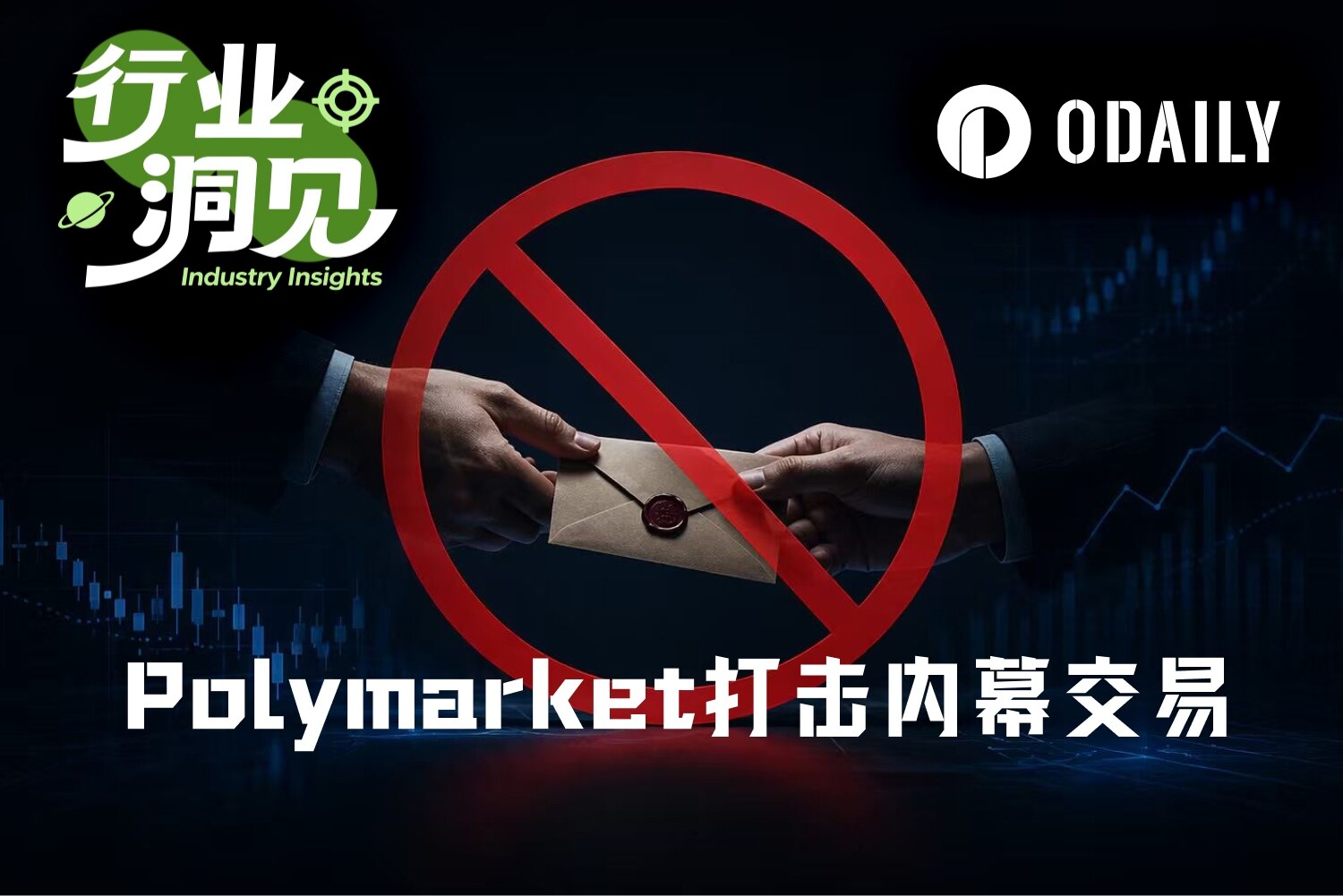
U.S. Army Sergeant Gannon Ken Van Dyke was arrested by the Department of Justice after allegedly using insider information to profit over $409,000 on Polymarket, a prediction market platform. He placed bets totaling $33,933 on events such as whether Venezuelan President Maduro would be ousted and if the U.S. would launch a military operation in Venezuela—events he had advance knowledge of due to his involvement in the military operation that captured Maduro in early January 2026. This case marks the first U.S. crackdown on insider trading within prediction markets. Polymarket had recently strengthened its market integrity rules, explicitly prohibiting trades based on stolen confidential information, illegal insider knowledge, or by individuals capable of influencing event outcomes. The platform has implemented monitoring systems and may ban addresses, pursue legal action, or refer cases to law enforcement. While insider trading had previously contributed to Polymarket’s reputation for early event pricing, the platform now faces a trade-off: stricter enforcement may reduce insider-driven activity and protect regulatory standing, but it could also diminish market foresight and user trust, particularly around address bans and financial security.

Original | Odaily Planet Daily (@OdailyChina)

Author | Golem (@web3_golem)
Not long after, facing the jury, Sergeant Major Gannon Ken Van Dyke would surely recall the moment he stood on the deck of the USS Iwo Jima waiting for sunrise.

On the evening of January 2, 2026, Trump ordered the U.S. military to raid Venezuela and capture the Maduro couple. The mission concluded in the early hours of January 3, and the Maduros were taken to the USS Iwo Jima for transport to the United States. Several hours later, the 38-year-old Sergeant Major Van Dyke, holding a rifle, stood on the deck with three other soldiers, took a photo, and shared it on social media. The atmosphere was relaxed at that moment, but the joy in his heart could not be shared with anyone.

Because he was a leaker, an insider who used inside information to make huge profits on Polymarket. A few days before the U.S. military operation, Van Dyke placed a series of bets on Polymarket, including whether Maduro would step down before January 31, 2026, and whether the U.S. military would attack Venezuela before January 31, 2026. Van Dyke placed a total bet of $33,933 and ultimately profited over $409,000, a return of over 1200%.

Gannon Ken Van Dyke

Van Dyke was not the only one who used inside information to profit from this capture operation. According to monitoring by Odaily Seer先知频道, before the arrest of the Venezuelan president, three addresses on Polymarket had placed bets on his ouster in advance, accumulating profits of $630,400. Among them, address 0x31a5 (0x31a5...8eD9) invested $34,000 and profited $409,000; address 0xa72D (0xa72D...eBd4) invested $5,800 and profited $75,000; address SBet365 invested $25,000 and profited $145,600.

At the time, there was much speculation in the market about the identities of these insider addresses, but it was not known that the address earning the most profit specifically belonged to Van Dyke.

For safety, after seeing reports about the insider trading related to the mission, Van Dyke also deleted his Polymarket account and changed the email address registered with the cryptocurrency exchange account, attempting to cover up the evidence of the transactions.

Despite this, after nearly 4 months of joint investigation by Polymarket and the U.S. Department of Justice, Van Dyke was still caught.

On April 23, the U.S. Department of Justice announced the arrest of Van Dyke. He was charged with crimes including illegally using government confidential information for personal gain, theft of non-public government information, commodities fraud, wire fraud, and conducting illegal monetary transactions. The Department of Justice stated that Van Dyke is expected to appear in court in North Carolina later, and his defense lawyer information has not yet been disclosed.

This is the first arrest action by U.S. authorities against an insider using confidential information to bet on prediction markets. The final trial outcome may have a profound impact on the large amount of insider trading behavior existing in future prediction markets.

But before this, in fact, Polymarket's new enhanced market integrity rules had already made insiders unable to sit comfortably.

Polymarket's Enhanced Market Integrity Rules

On March 23, Polymarket released enhanced market integrity rules and incorporated them into the user terms of service. The new rules clearly state that insider trading and any transactions by personnel who may influence the outcome are strictly prohibited on Polymarket, specifically the following behaviors:

  • Trading using stolen confidential information: If a user possesses confidential information about the outcome or potential outcome of the subject event, and using this information would violate an existing duty of trust or confidentiality owed to another person or entity, that user must not conduct any contract transactions;
  • Must not trade using illegal insider information: If a user knows or has reason to know that the person providing the information would themselves be prohibited from using it to trade, the user must not use confidential information obtained from a person who owes an existing duty of trust or confidentiality to conduct transactions;
  • Must not trade while able to influence the outcome: If a user has sufficient power or influence to affect the outcome of the subject event, that user must not conduct any contract transactions; users also must not trade on the instructions of persons possessing such power or influence.

To help users better understand what kind of behavior would be defined as insider trading, Polymarket also provided specific examples in the market integrity rules on the Polymarket main site and U.S. site, such as military personnel cannot bet on upcoming military operations, political election candidates cannot personally or encourage anyone to bet on their own election results, company CEOs cannot personally or encourage anyone to bet on 'mention markets' involving themselves, etc.

To effectively combat such insider trading, Polymarket has also established a multi-layer monitoring system. When Polymarket or the community (Odaily Note: Any user can now report suspected insider trading behavior) discovers suspicious trading activity, Polymarket will initiate a review, and if necessary, take disciplinary action, ban wallet addresses, initiate legal proceedings, or refer the matter to law enforcement.

Before Van Dyke's arrest, insiders might have thought Polymarket's market integrity rules were just bluster, because on a platform with no KYC and cryptocurrency settlements, trying to penetrate on-chain addresses to uncover the insider behind the screen is extremely difficult and something Polymarket would not be willing to do.

But this thinking is very naive. First, current regulation and on-chain tracking technology are actually very sophisticated and powerful; users may not perform KYC on Polymarket, but they will definitely perform KYC on exchanges and other entry/exit channels. Except for top-tier hackers, average users facing such investigations basically have nowhere to hide. Second, to争取 (win) support from U.S. regulators, Polymarket will also actively cooperate with law enforcement investigations into insider trading. For typical insider cases like Van Dyke's, they would spare no effort even if it costs manpower and resources.

Analyzing this far, if you are an insider with knowledge of some minor event, you might still侥幸 (be侥幸侥幸侥幸侥幸侥幸侥幸侥幸侥幸侥幸侥幸侥幸侥幸侥幸侥幸侥幸侥幸侥幸侥幸侥幸侥幸侥幸侥幸侥幸侥幸侥幸侥幸侥幸侥幸侥幸侥幸侥幸侥幸侥幸侥幸侥幸侥幸侥幸侥幸侥幸侥幸侥幸侥幸侥幸侥幸侥幸侥幸侥幸侥幸侥幸侥幸侥幸侥幸侥幸侥幸侥幸侥幸侥幸侥幸侥幸侥幸侥幸侥幸侥幸侥幸侥幸侥幸侥幸侥幸侥幸侥幸侥幸侥幸侥幸侥幸侥幸侥幸侥幸侥幸侥幸侥幸侥幸侥幸侥幸侥幸侥幸侥幸侥幸侥幸侥幸侥幸侥幸侥幸侥幸侥幸侥幸侥幸侥幸侥幸侥幸侥幸侥幸侥幸侥幸侥幸侥幸侥幸侥幸侥幸侥幸侥幸侥幸侥幸侥幸侥幸侥幸侥幸侥幸侥幸侥幸侥幸侥幸侥幸侥幸侥幸侥幸侥幸侥幸侥幸侥幸侥幸侥幸侥幸侥幸侥幸侥幸侥幸侥幸侥幸侥幸侥幸侥幸侥幸侥幸侥幸侥幸侥幸侥幸侥幸侥幸侥幸侥幸侥幸侥幸侥幸侥幸侥幸侥幸侥幸侥幸侥幸侥幸侥幸侥幸侥幸侥幸侥幸侥幸侥幸侥幸侥幸侥幸侥幸侥幸侥幸侥幸侥幸侥幸侥幸侥幸侥幸侥幸侥幸侥幸侥幸侥幸侥幸侥幸侥幸侥幸侥幸侥幸侥幸侥幸侥幸侥幸侥幸侥幸侥幸侥幸侥幸侥幸侥幸侥幸侥幸侥幸侥幸侥幸侥幸侥幸侥幸侥幸侥幸侥幸侥幸侥幸侥幸侥幸侥幸侥幸侥幸侥幸侥幸侥幸侥幸侥幸侥幸侥幸侥幸侥幸侥幸侥幸侥幸侥幸侥幸侥幸侥幸侥幸侥幸侥幸侥幸侥幸侥幸侥幸侥幸侥幸侥幸侥幸侥幸侥幸侥幸侥幸侥幸侥幸侥幸侥幸侥幸侥幸侥幸侥幸侥幸侥幸侥幸侥幸侥幸侥幸侥幸侥幸侥幸侥幸侥幸侥幸侥幸侥幸侥幸侥幸侥幸侥幸侥幸侥幸侥幸侥幸侥幸侥幸侥幸侥幸侥幸侥幸侥幸侥幸侥幸侥幸侥幸侥幸侥幸侥幸侥幸侥幸侥幸侥幸侥幸侥幸侥幸侥幸侥幸侥幸侥幸侥幸侥幸侥幸侥幸侥幸侥幸侥幸) think that you are not like Van Dyke engaging in insider trading on such a high-profile event or are not a U.S. citizen, so U.S. regulators or Polymarket can't do anything to you.

Polymarket and regulators certainly cannot treat every case of insider trading the same way they treated Van Dyke. For insider trading behaviors with small profits and limited impact, uncovering the insider's true identity or going through judicial procedures itself seems like "making a fuss over nothing". But Polymarket also has a killer move against these insider trades—banning addresses. And this move is the rule that all insiders, all users, should truly fear, as it is even shaking Polymarket's core narrative.

The Cost

On April 23, the prediction market Kalshi disclosed that it had fined three congressional candidates who bet on their own election results and banned them from the platform for 5 years. Do you think they made huge profits from this? Actually, the combined fines for the three candidates were less than $8,000, and one of them only bet $100.

Being able to handle insider trading so quickly is thanks to the KYC and compliance system Kalshi built from its inception. But if such small-amount, low-impact insider trading were placed on Polymarket, it might not even be noticed, let alone handled.

This is not because Polymarket subjectively condones insider trading, but because the self-regulatory difficulty of Polymarket itself is very high. Due to features like no KYC, low account creation barriers, and on-chain anonymity, Polymarket finds it difficult to manage and review users like Kalshi does. This creates a breeding ground for insiders. When the economic incentive for insider trading is high enough and the risk is low enough, human nature cannot withstand the test.

Odaily Planet Daily previously analyzed when insiders used Polymarket to obtain illegal profits in the Maduro capture operation that insider trading is a double-edged sword for Polymarket (related reading:When War is Settled Before the News: How Prediction Markets 'Priced' the Maduro Capture Action 6 Days Early).

On one hand, insider trading often means releasing information ahead of mainstream media, which brings trading volume and information disclosure speed超越 (surpassing) media to Polymarket. Pricing ahead of time and predicting event outcomes has gradually become Polymarket's core narrative. But on the other hand, insider trading also means information is leaked in advance, and interested parties will naturally resist it. Especially when regulators believe insider trading threatens traditional information security, Polymarket needs to choose between its own safety and the advantages brought by insider trading.

Judging from the results, the introduction of the enhanced market integrity rules has already表明 (indicated) Polymarket's stance, but the cost is that user trust in the platform may also erode.

Banning user addresses is itself a sensitive issue for a decentralized platform, because一旦 (once) abused or误伤 (wrongly applied), it can cause user resentment and concerns about fund safety. Allowing people from all over the world to participate in prediction markets and ensuring free entry and exit of funds has always been one of Polymarket's core competencies. But when Polymarket赋予 (grants) itself the power to ban suspicious user accounts, not only will insiders no longer dare to trade on Polymarket, but normally profitable users will also worry whether the platform will use this as an excuse to prevent withdrawals. Once the floodgates of account banning are opened, they may never be closed again.

In summary, although cracking down hard on insider trading can ensure Polymarket's safety at the regulatory level, it will inevitably weaken Polymarket's前瞻性 (foresight) and准确性 (accuracy) in predicting event outcomes, and will also make users worry more about the safety of their funds. In the end, the matured Polymarket will become an平庸的 (mediocre) adult.

Связанные с этим вопросы

QWhat was the main reason for the arrest of Gannon Ken Van Dyke by the U.S. Department of Justice?

AHe was arrested for using stolen government classified information to place bets on the Polymarket prediction market, specifically regarding the U.S. military operation in Venezuela and the ousting of President Maduro, making a significant profit.

QHow much profit did Gannon Ken Van Dyke make from his insider trading on Polymarket?

AHe invested $33,933 and made a profit of over $409,000, representing a return of over 1200%.

QWhat are the three specific behaviors strictly prohibited under Polymarket's enhanced market integrity rules?

A1. Trading using stolen confidential information that violates a duty of trust. 2. Trading using illegal insider information obtained from someone who is themselves prohibited from using it. 3. Trading by individuals who have the power or influence to affect the outcome of an event.

QWhat is one major potential consequence for Polymarket itself as a result of its crackdown on insider trading?

AA major potential consequence is that it could undermine user trust in the platform, as users may fear their accounts could be banned or funds frozen, even if they are not engaging in insider trading. This could also diminish the platform's core narrative of providing early and accurate event pricing.

QBesides legal action, what is Polymarket's 'kill switch' for dealing with smaller-scale insider trading cases?

APolymarket's primary tool for dealing with smaller-scale or less impactful insider trading is to ban the user's wallet address, preventing them from accessing the platform and their funds.

Похожее

GitHub, Transfixed by AI

On the night of February 9th, GitHub suffered a major outage caused by a simple configuration change—reducing a cache refresh interval from 12 to 2 hours—that triggered a cascade of failures. This was not an isolated event, but part of a broader pattern. In early 2026, GitHub experienced at least 8 major incidents, failing to meet its promised 99.9% availability. These outages stemmed from structural issues: explosive growth in load, tight service coupling, and insufficient protection against abnormal traffic. This unprecedented load is driven by AI Agents. In 2025, GitHub handled ~1 billion commits. By 2026, weekly commits reached 275 million, projecting to ~14 billion for the year—a 14x increase. AI tools like Claude Code now contribute 4.5% of all public repository commits, with weekly submissions surging 25x in just three months. AI-generated pull requests jumped from 4 million to 17 million per month in half a year. Unlike human developers, AI Agents work continuously, generating commits at a scale that overwhelms infrastructure designed for human rhythms. The surge also shattered GitHub's business model. Copilot's flat-rate pricing, based on assisting human developers, became unsustainable as Agentic AI sessions consumed resources worth hundreds of dollars for a few dollars in fees. In response, GitHub imposed usage limits and, by June 1st, shifted to a pay-per-use "AI Credits" system. Facing this new reality, GitHub realized a 10x scaling plan was insufficient. It announced a need to *redesign* its architecture for 30x current scale—decoupling services, adding fault isolation, and improving change management to prevent cascading failures. Other platforms like Stripe and AWS are facing similar challenges with AI Agents. Fundamentally, GitHub is transitioning from a human collaboration platform to an "exhaust pipe" for automated AI workflows. Its detailed post-mortem reports aim to maintain trust during this turbulent rebuild. The February outage was not just a technical glitch, but a signal of the software industry's entry into a new, AI-driven era.

marsbit11 мин. назад

GitHub, Transfixed by AI

marsbit11 мин. назад

Both Suffer Massive Losses Exceeding $90 Billion, Which Is in Greater Peril: Strategy or Bitmine?

Facing massive paper losses exceeding $90 billion each amidst a sharp market downturn, "Digital Asset Treasury" (DAT) giants Strategy and Bitmine find themselves in a precarious position, but with different underlying risks. Strategy, heavily invested in Bitcoin (BTC), faces significant financial strain. Its strategy relies heavily on debt, including convertible notes and preferred stock (STRC) requiring substantial dividend payments. With its cash reserves dwindling and BTC offering no staking yield for cash flow, Strategy's high leverage makes it vulnerable. A continued price decline could force asset sales to meet obligations, potentially creating a negative feedback loop. Its market value has already fallen sharply. In contrast, Bitmine, an Ethereum (ETH) holder, appears on firmer financial ground. It primarily funds its purchases through equity offerings (like ATM programs), avoiding debt pressure. It also generates income by staking a large portion of its ETH holdings. While not immune to market drops and shareholder dilution concerns, Bitmine maintains more flexibility, recently announcing a new preferred share offering to raise further capital. The core divergence lies in their financing: Bitmine uses equity (investor money), while Strategy uses debt (borrowed money). Consequently, Bitmine currently faces less immediate liquidity pressure than Strategy, which must navigate the dual challenge of servicing debt/dividends and a declining core asset (BTC) price.

marsbit18 мин. назад

Both Suffer Massive Losses Exceeding $90 Billion, Which Is in Greater Peril: Strategy or Bitmine?

marsbit18 мин. назад

Where the AI Bubble Really Is: Which Layer of Players Are Naked

AI Bubble: Where It Really Is and Who's Swimming Naked This analysis dissects the AI industry not as a single entity but as a five-layer pyramid, arguing that bubbles are concentrated in specific tiers, not uniformly distributed. **Key Distinction from the 2000 Dot-com Bubble:** Unlike 2000, where companies had stock prices before revenue, today's leading AI players have massive, contract-backed revenue driving their valuations. Core infrastructure demand is real, with every GPU running at full capacity for paying customers. **The Five-Layer Pyramid & Bubble Assessment:** * **L0 (Fab/Manufacturing) & Top L4 (Leading AI Apps): NO BUBBLE.** Companies like TSMC, NVIDIA, major cloud providers (Microsoft, Google, Meta, Amazon), and top AI labs have real revenues and orders. Supply is tightly constrained by TSMC's disciplined capacity control and physical limits like power/land for data centers, preventing a supply glut. * **L1 (Memory): BATTLEGROUND.** Sky-high HBM margins could signal a new structural cycle or a classic "boom before bust." The oligopoly of three major players may enforce supply discipline, making this a high-stakes bet. * **L2 (Interconnect/Optical Modules): BUBBLE TERRITORY.** Companies like Lumentum and AAOI have seen stock surges (4-10x) far outpacing revenue growth. This hardware segment has lower physical barriers to expansion than fabs, allowing speculation. It mirrors the 2000 bubble's epicenter—optics. * **L3 (Infrastructure/"GPU Landlords"): VULNERABLE.** GPU leasing companies profit from the current compute shortage but own no long-term moat. Their business model relies on a temporary bottleneck that will ease as big tech expands and new tech (e.g., potential space-based data centers) emerges. * **L4 Long Tail (VC-backed Startups): STRONG BUBBLE SIGNALS.** VC funding concentration in AI is twice that of the 1999 peak. Many startups with little revenue use the valuation logic of successful giants to justify their own, creating high risk of a "valuation crunch" when funding dries up. **Critical Risks to Monitor:** 1. **GPU Depreciation & Accounting:** Companies extending the assumed useful life of GPUs artificially boost profits. The true economic life depends on future generational leaps from NVIDIA. 2. **"GPU Credit" & Off-Balance-Sheet Leverage:** Emerging structures where shell companies borrow to buy GPUs and lease them out (with chipmakers sometimes investing) move debt off major balance sheets. This echoes the "vendor financing" of 2000 and the securitization risks of 2008, though currently small-scale. 3. **TSMC Abandoning Caution:** If the primary supply bottleneck (TSMC's conservative capacity planning) breaks, runaway supply could trigger a bust. 4. **Algorithmic Efficiency Breakthrough:** A major leap in software efficiency could drastically reduce the need for raw compute hardware, undermining the investment thesis. **Conclusion:** The AI boom is expensive and has frothy areas, but its core is underpinned by real demand and physical supply constraints. The bubble risk is layered: most present in optical components, GPU leasing, and the long-tail startup ecosystem, while the foundational chip manufacturing and leading application layers remain relatively solid—for now.

marsbit31 мин. назад

Where the AI Bubble Really Is: Which Layer of Players Are Naked

marsbit31 мин. назад

Торговля

Спот
Фьючерсы

Популярные статьи

Как купить 4

Добро пожаловать на HTX.com! Мы сделали приобретение 4 (4) простым и удобным. Следуйте нашему пошаговому руководству и отправляйтесь в свое крипто-путешествие.Шаг 1: Создайте аккаунт на HTXИспользуйте свой адрес электронной почты или номер телефона, чтобы зарегистрироваться и бесплатно создать аккаунт на HTX. Пройдите удобную регистрацию и откройте для себя весь функционал.Создать аккаунтШаг 2: Перейдите в Купить криптовалюту и выберите свой способ оплатыКредитная/Дебетовая Карта: Используйте свою карту Visa или Mastercard для мгновенной покупки 4 (4).Баланс: Используйте средства с баланса вашего аккаунта HTX для простой торговли.Третьи Лица: Мы добавили популярные способы оплаты, такие как Google Pay и Apple Pay, для повышения удобства.P2P: Торгуйте напрямую с другими пользователями на HTX.Внебиржевая Торговля (OTC): Мы предлагаем индивидуальные услуги и конкурентоспособные обменные курсы для трейдеров.Шаг 3: Хранение 4 (4)После приобретения вами 4 (4) храните их в своем аккаунте на HTX. В качестве альтернативы вы можете отправить их куда-либо с помощью перевода в блокчейне или использовать для торговли с другими криптовалютами.Шаг 4: Торговля 4 (4)С легкостью торгуйте 4 (4) на спотовом рынке HTX. Просто зайдите в свой аккаунт, выберите торговую пару, совершайте сделки и следите за ними в режиме реального времени. Мы предлагаем удобный интерфейс как для начинающих, так и для опытных трейдеров.

645 просмотров всегоОпубликовано 2025.10.20Обновлено 2026.06.02

Как купить 4

Неделя обучения по популярным токенам 4: В 2025 году экосистема TRON переживает взрывной рост, TRON укрепляет позиции лидера по переводу стейблкоинов

В 2025 году экосистема TRON быстро развивается, уделяя особое внимание взаимодействию, безопасности и практическому внедрению.

2.1k просмотров всегоОпубликовано 2025.12.30Обновлено 2025.12.30

Неделя обучения по популярным токенам 4: В 2025 году экосистема TRON переживает взрывной рост, TRON укрепляет позиции лидера по переводу стейблкоинов

Обсуждения

Добро пожаловать в Сообщество HTX. Здесь вы сможете быть в курсе последних новостей о развитии платформы и получить доступ к профессиональной аналитической информации о рынке. Мнения пользователей о цене на 4 (4) представлены ниже.

活动图片