Afghanistan's Stablecoin, An Unexpected Hub of Crypto Innovation

marsbitОпубликовано 2026-01-26Обновлено 2026-01-26

Введение

A surprising blockchain-based financial innovation is emerging from Afghanistan, despite the country's isolation under Taliban rule. HesabPay, an Afghan startup, has developed a platform that is transforming humanitarian aid delivery in conflict zones. The system uses digital wallets and stablecoins to transfer funds instantly, bypassing traditional banking obstacles like high fees and sanctions. The platform is now being used by major aid organizations. The UN Refugee Agency (UNHCR) has used it to disburse nearly $25 million to over 86,000 Afghan families. Mercy Corps partnered with HesabPay to extend its services to Syria, where cash shortages and banking restrictions are severe, and is developing projects for Sudan and Haiti. Key advantages include reduced transaction costs, instant transfers, and enhanced transparency. The blockchain creates a digital record for every transaction, allowing donors to track exactly where funds go. The system also includes real-time dashboards and anti-fraud algorithms to flag suspicious activity like money laundering, providing a level of oversight difficult to achieve with physical cash aid. While risks exist, such as the potential for a central bank to shut down a national stablecoin, aid workers see the technology as a way to deliver assistance quickly, securely, and with greater accountability to rebuild trust in aid effectiveness. For beneficiaries like a Syrian farmer, it provides a lifeline to restart their lives after war.

Author: Aryn Baker, The New York Times

Compiled by: Felix, PANews

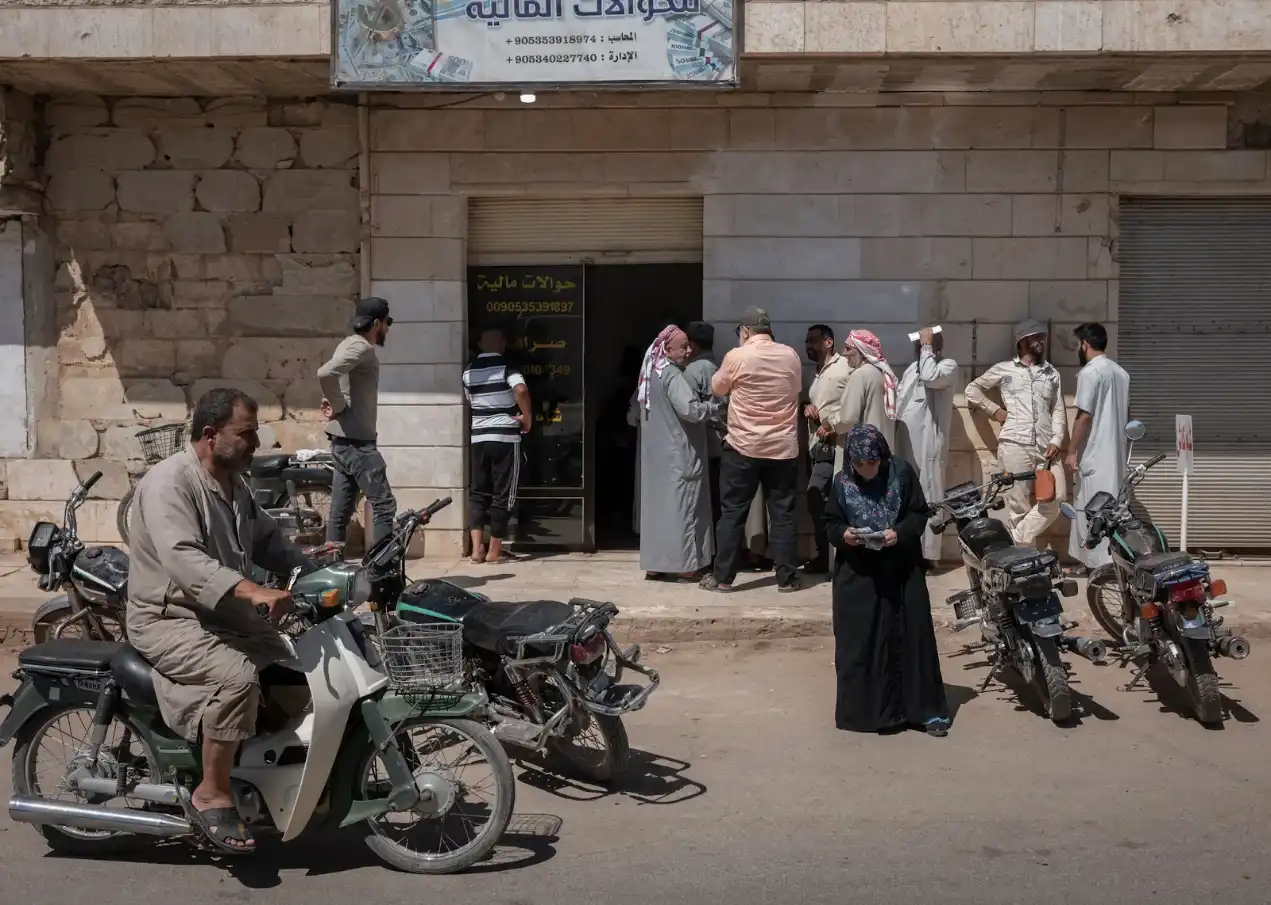
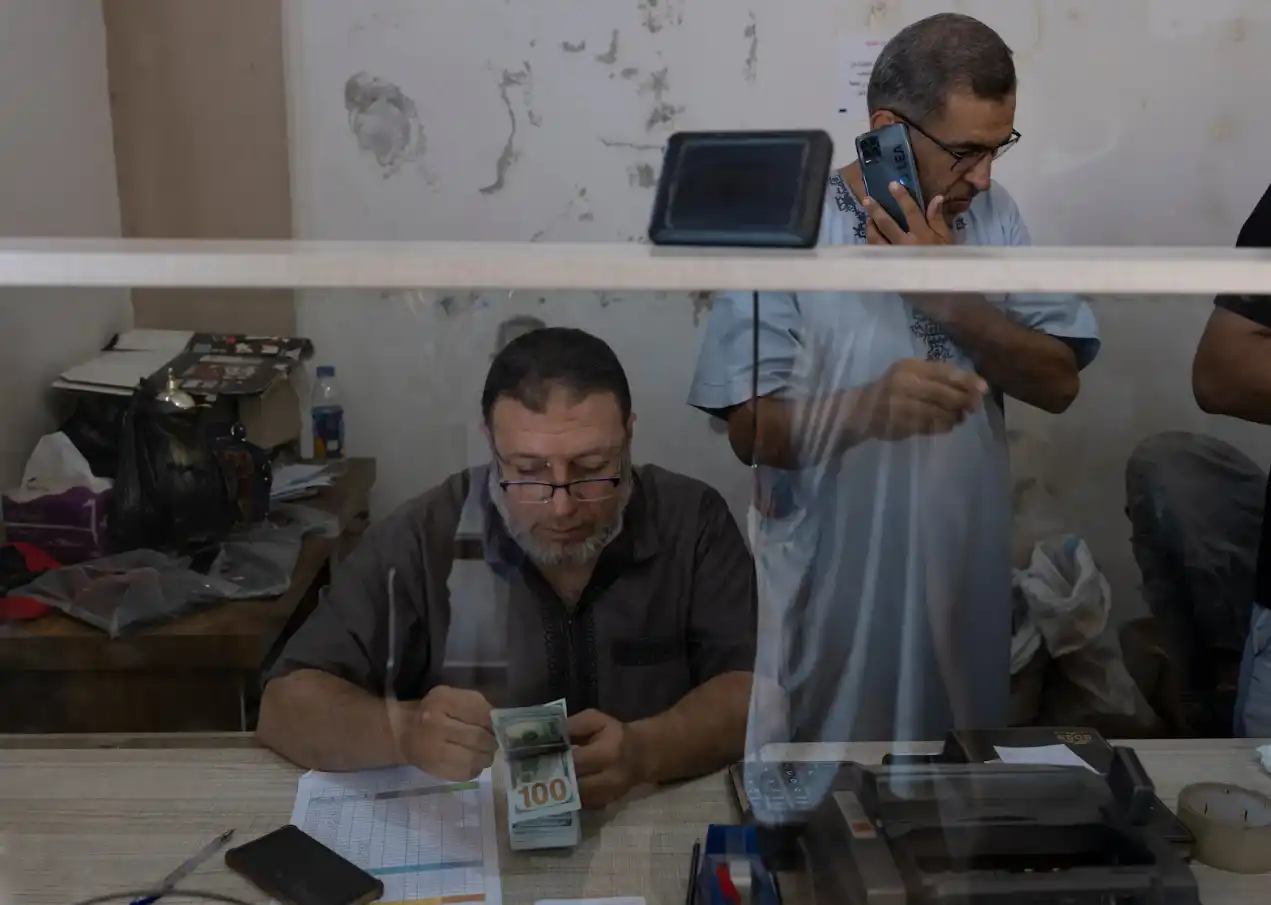
In a bustling currency exchange in northwestern Syria, a 46-year-old farmer clutched a plastic card as if it were her lifeline. She had never heard of cryptocurrency, but this card contained $500 worth of crypto, helping her restart her farm after nearly 14 years of civil war.

As the teller confirmed the amount and withdrew cash for Hala Mahmoud Almahmoud's account, the farmer smiled with relief and paused to express her gratitude. She asked where such technology came from.

The answer surprised her: Afghanistan.

Many might not imagine that this blockchain-based innovation in cash transfers originates from a country known for Taliban rule and skepticism toward the internet. Yet, in this nearly isolated nation, an Afghan startup is developing tools aimed at transforming how humanitarian aid is delivered in conflict-ravaged countries.

"We have faced these challenges ourselves, so we know how to create effective solutions," said Zakia Hussain, a 26-year-old programmer at the startup HesabPay, which designed the technology behind the card held by Ms. Almahmoud.

Hala Mahmoud Almahmoud outside her home near Latamina, Syria. She received $500 in cryptocurrency aid to help reopen her farm.

The UN Refugee Agency (UNHCR) is one of the early supporters of the platform. The agency uses it to support over 86,000 families in Afghanistan, making it one of the largest public blockchain aid projects globally. Mercy Corps, the charitable organization that donated to Ms. Almahmoud, partnered with HesabPay to extend aid to Syria and is currently developing projects for Sudan and Haiti.

In Syria, accessing funds from abroad is highly complex. Cash is scarce, international banks avoid the region, and remittance companies like Western Union charge fees as high as 10%. HesabPay enables organizations like Mercy Corps to bypass these obstacles.

Sanzar Kakar, an Afghan-American entrepreneur and founder of HesabPay, previously ran Afghanistan's largest payroll processing company. However, the 2021 U.S. withdrawal from Afghanistan and the Taliban's return to power triggered a financial collapse. Sanctions halted international remittances, and the central bank was paralyzed.

To address the country's growing financial insecurity, Kakar turned to blockchain technology. He created HesabPay (meaning "account" in the local language), a mobile-based application that allows instant transfers from one digital wallet to another, bypassing banks and the Taliban government. He stated that the Afghan government has granted his company a formal financial operating license.

The aid organization Mercy Corps, which donated funds, partnered with HesabPay to extend the platform's services to Syria.

Today, the platform has over 650,000 wallets in Afghanistan, with about 50,000 actively used, transferring approximately $60 million worth of Afghan afghani stablecoins (stablecoins pegged to the Afghan currency) monthly.

Since February 2025, the UN has used HesabPay to distribute nearly $25 million to returning Afghans through 80,000 digital wallets, according to Carmen Hett, Treasurer of Corporate Finance at UNHCR: "This helps reduce transaction fees, shorten waiting times, and enhance traceability, real-time monitoring, and accountability."

Ric Shreves, a decentralized finance solutions expert and president of the Decentralized Cooperation Foundation, said it is not surprising that organizations like Mercy Corps and the UN are turning to blockchain-based fund transfers for aid. For such organizations, "this approach offers almost all advantages compared to traditional aid methods."

However, he noted that risks remain, especially when payment systems are based on local currency stablecoins, as in Afghanistan. (In Syria, HesabPay wallets are backed by U.S. dollars, a more stable option.) Just as wallets can be shut down for interacting with sanctioned individuals, they could theoretically be closed by a central bank for political reasons.

Using blockchain technology makes it easier for Mercy Corps to send funds to Syria, where cash is scarce and international banks typically do not operate.

Ric Shreves stated, "When we provide people with non-physical transaction methods, it also means these transactions can potentially be blocked through technical means." He added that digital currency is clearly safer than cash, but it still cannot be hidden under a mattress like cash.

In recent years, aid organizations have increasingly opted for cash assistance, viewing it as a quick and dignified form of aid. However, cash assistance has a flaw: it is difficult to track where the money goes. Donors want to see their contributions reach those in need. Since President Trump significantly cut U.S. foreign aid early last year, organizations like Mercy Corps face greater pressure to demonstrate the effectiveness and integrity of their aid.

This is where blockchain comes into play, creating a digital record that accurately tracks how much money was sent, to whom, and where it went. Scott Onder, Chief Investment Officer at Mercy Corps, said this combination of speed and accountability "might help regain the trust of those who have doubts about the effectiveness of aid."

HesabPay also includes additional security measures, such as real-time dashboards to track wallet activity and cross-check it with international compliance databases. The company stated that the system is designed to detect illegal activities like terrorist financing, money laundering, and cyber fraud, immediately alerting when suspicious transactions occur. For aid donors, this provides a level of oversight that is nearly impossible in fragile countries.

Abdul Moti Hammoud, a resident of Halfaya, lost a leg after accidentally triggering a landmine while driving a tractor. He is a beneficiary of the aid organization Mercy Corps.

In a recent online demonstration, Nigel Pont, the company's senior advisor for humanitarian affairs, clicked on a purple dot representing a HesabPay agent in Afghanistan. Dozens of light blue beneficiary wallets unfolded, showing recent transfer records. Another click revealed where the funds went. Then, a wallet suddenly turned red, triggering a suspected fraud alert—slightly awkward during a live demo, but exactly the type of risk the system is designed to identify.

"From an aid donor's perspective, this is extremely valuable," said Nigel Pont, former Chief Strategy Officer at Mercy Corps. "A system that automatically flags fraud risks means you can verify immediately, rather than waiting six months for a report that someone stole $20,000." Nigel Pont acknowledged that no system can completely eliminate corruption, but then again, neither can cash.

22-year-old Abdul Halim Hasan was waiting in line at the same currency exchange in Syria as Ms. Almahmoud. He said he imagines a day when he can use HesabPay like a regular bank account, receiving funds, paying bills, and saving money securely. For now, though, his HesabPay card allows him to access the funds needed to restart his life after the war, and that is enough.

Ms. Almahmoud (second from left) and her family with Mercy Corps staff in Halfaya.

Related reading: Philanthropist or Predator? The Crypto Business of Top Global Influencer "Mr. Beast"

Связанные с этим вопросы

QWhat is the innovative blockchain-based cash transfer solution mentioned in the article, and where was it developed?

AThe innovative blockchain-based cash transfer solution is called HesabPay, and it was developed in Afghanistan.

QWhich organizations are using HesabPay to deliver humanitarian aid, and in which countries is it being implemented?

AThe United Nations High Commissioner for Refugees (UNHCR) and Mercy Corps are using HesabPay. It is being implemented in Afghanistan and Syria, with projects under development for Sudan and Haiti.

QWhat are the main advantages of using a blockchain-based system like HesabPay for aid organizations, according to the article?

AThe main advantages include lower transaction fees, shorter wait times, enhanced traceability, real-time monitoring, accountability, and a system designed to detect and alert for illegal activities like terrorist financing and money laundering.

QWhat potential risk does the article associate with using a local currency stablecoin, like the one used in Afghanistan, compared to a dollar-backed one?

AThe risk is that a wallet based on a local currency stablecoin could theoretically be shut down by a country's central bank for political reasons, whereas a dollar-backed stablecoin is a more stable option.

QHow did the situation in Afghanistan following the 2021 U.S. withdrawal influence the creation of HesabPay?

AThe U.S. withdrawal and the Taliban's return to power caused a banking collapse and sanctions that cut off international remittances. This financial insecurity prompted Sanzar Kakar to create HesabPay to bypass banks and the Taliban government for instant digital money transfers.

Похожее

Three Scenarios for BTC's Future Direction and a Duel Between Two Strong Forces | Special Invited Analysis

**Title: Three Scenarios for BTC's Future Trajectory and a Key Duel | Invited Analysis** The market remains at a critical juncture. Over the past week, Bitcoin (BTC) consolidated broadly between $79,500 and $80,600, validating previous technical analysis. The current focus is on whether this marks the start of a new uptrend or a pause within a larger correction. **BTC Multi-Cycle Analysis & Three Possible Scenarios** BTC's daily chart structure, following its peak at $126,200 in October 2025, presents three primary technical scenarios based on Elliott Wave theory: 1. **Bullish Scenario (End of Correction):** The corrective A-B-C wave from $126,200 ended at the $60,000 low in February 2026. The current price action is the start of a major Wave I uptrend. A subsequent Wave II pullback would not break below $60,000. 2. **Bearish Scenario 1 (Complex Correction):** The correction is unfolding as an A-B-C-D-E pattern. The current move from $60,000 is a D-wave rally. After its completion, a final E-wave decline could potentially breach the $60,000 level. 3. **Bearish Scenario 2 (Larger Correction):** The entire move down from $126,200 to $60,000 was a large A-wave. The current rally is a B-wave correction within a larger A-B-C structure, to be followed by a C-wave decline below $60,000. *Analysis suggests Scenario 2 is less probable due to time disproportions between waves. The battle is effectively between the Bullish Scenario (1) and Bearish Scenario (3).* **Key BTC Levels & Weekly Strategy** On the 4-hour chart, BTC trades above a crucial consolidation zone ("Central Pivot C"). * **Key Resistance:** $83,500-$84,500; $89,000-$90,500. * **Key Support:** $78,500-$79,500 (pivot upper bound); $73,500-$75,000; $69,500-$70,500. **Weekly Outlook:** The market direction hinges on BTC's ability to hold above or break below the $78,500-$79,500 support zone. * **Mid-term Strategy:** Neutral/Wait-and-see stance due to unclear direction. * **Short-term Tactics:** Two contingency plans using 30% max capital: * **Plan A (Bullish):** Look for long entries if price holds above $78,500-$79,500 with confirming signals. Initial stop-loss below $78,500. * **Plan B (Bearish):** Consider short positions if price breaks below $73,500-$75,000 with confirming signals. Initial stop-loss above $76,500. **HYPE Analysis & Strategy** HYPE's daily chart shows a seven-segment structure from its January low of $20.46, forming a "rising pivot" zone. * **Key Level to Watch:** $45.76 (previous high). A break above would confirm the bullish structure remains intact. * **Short-term Strategy:** Focus on pivot zone boundaries ($38.41 upper, $34.44 lower). * **Long:** Consider on support near $38.41 with bullish confirmation signals. * **Short:** Consider on a break below $34.44 with bearish confirmation signals. * Position size must be below 30% with strict stop-loss discipline. **Risk Management Reminder:** Always set an initial stop-loss upon entry. Move stop-loss to breakeven at +1% profit, then trail it upwards to lock in profits dynamically. All views are based on technical analysis for informational purposes only and do not constitute investment advice. The market is inherently risky.

Odaily星球日报5 мин. назад

Three Scenarios for BTC's Future Direction and a Duel Between Two Strong Forces | Special Invited Analysis

Odaily星球日报5 мин. назад

Sequoia Interview with Hassabis: Information is the Essence of the Universe, AI Will Open Up Entirely New Scientific Branches

Demis Hassabis, co-founder and CEO of Google DeepMind and Nobel laureate, discusses the path to AGI and its profound implications in a Sequoia Capital interview. He outlines his lifelong dedication to AI, tracing his journey from game development (e.g., *Theme Park*)—a perfect AI testing ground—to neuroscience and finally founding DeepMind in 2009. He emphasizes the critical lesson of being "5 years, not 50 years, ahead of time" for successful entrepreneurship. Hassabis reiterates DeepMind's two-step mission: first, solve intelligence by building AGI; second, use AGI to tackle other complex problems. He highlights the transformative potential of "AI for Science," particularly in biology where tools like AlphaFold have revolutionized protein folding. He envisions AI-powered simulations drastically shortening drug discovery from years to weeks and enabling personalized medicine. Furthermore, he predicts AI will spawn new scientific disciplines, such as an engineering science for understanding complex AI systems (mechanistic interpretability) and novel fields enabled by high-fidelity simulators for complex systems like economics. He posits a fundamental worldview where information, not just matter or energy, is the essence of the universe, making AI's information-processing core uniquely suited to understanding reality. He defends classical Turing machines as potentially sufficient for modeling complex phenomena, including quantum systems, as demonstrated by AlphaFold. On consciousness, Hassabis suggests first building AGI as a powerful tool, then using it to explore deep philosophical questions. He believes components like self-awareness and temporal continuity are necessary for consciousness but that defining it fully remains an open challenge. He predicts AGI could arrive around 2030 and, once achieved, would be used to probe the deepest questions of science and reality, much as envisioned in David Deutsch's *The Fabric of Reality*.

链捕手23 мин. назад

Sequoia Interview with Hassabis: Information is the Essence of the Universe, AI Will Open Up Entirely New Scientific Branches

链捕手23 мин. назад

Morgan Stanley 2026 Semiconductor Report: Buy Packaging, Buy Testing, Buy China Chips, Avoid Traditional Tracks

Morgan Stanley 2026 Semiconductor Report: Buy Packaging, Buy Testing, Buy Chinese Chips; Avoid Traditional Segments. The core theme is the shift in AI compute supply from NVIDIA dominance to a three-track system of GPU + ASIC + China-local chips. The key opportunity is capturing share in this expansion, while non-AI semiconductors face marginalization due to resource reallocation to AI. Key investment conclusions, in order of priority: 1. **Advanced Packaging (CoWoS/SoIC) - Highest Conviction**: TSMC is the primary beneficiary of explosive demand, driven by massive cloud capex. Its pricing power and AI revenue share are rising significantly. 2. **Test Equipment - Undervalued & High-Growth Certainty**: Chip complexity is causing test times to double generationally, structurally driving handler/socket/probe card demand. Companies like Hon Hai Precision (Foxconn), WinWay, and MPI offer compelling value. 3. **China AI Chips (GPU/ASIC) - Long-Term Irreversible Trend**: Export controls are accelerating domestic substitution. Companies like Cambricon, with firm customer orders and SMIC's 7nm capacity support, are positioned to benefit from lower TCO (30-60% vs NVIDIA) and growing local cloud demand. 4. **Avoid Non-AI Semiconductors (Consumer/Auto/Industrial)**: These segments face a weak, structurally hindered recovery due to AI's resource "crowding-out" effect on capacity and supply chains. 5. **Memory - Severe Internal Divergence**: Strongly favor HBM (Hynix primary beneficiary) and NOR Flash (Macronix). Be cautious on interpreting price rises in DDR4/NAND as true demand recovery. The report emphasizes a 2026-2027 time window, stating the AI capital expenditure cycle is far from over. Key macro variables include persistent export controls and AI's systemic "crowding-out" effect on traditional semiconductor supply chains.

marsbit1 ч. назад

Morgan Stanley 2026 Semiconductor Report: Buy Packaging, Buy Testing, Buy China Chips, Avoid Traditional Tracks

marsbit1 ч. назад

Circle:Sluggish Market? The Top Stablecoin Stock Continues to Expand

Circle, the issuer of the stablecoin USDC, reported its Q1 2026 earnings on May 11th, Eastern Time. Against a backdrop of weak crypto market sentiment, USDC's average circulation in Q1 was $752 billion, with a modest 2% sequential increase to $770 billion by quarter-end. New minting volumes declined due to the poor crypto market, but remained high, indicating demand expansion beyond crypto trading. USDC's market share remained stable at 28% of the total stablecoin market, while competition from Tether's USDT persists. A key highlight was "Other Revenue," which reached $42 million, more than doubling year-over-year, though sequential growth slowed to 13%. This revenue stream, including fees from services like Web3 software, the Cipher payment network (CPN), and the Arc blockchain, is critical for diversifying away from interest income. Circle's internally held USDC share increased to 18%, helping to improve gross margin by 130 basis points to 41.4% by reducing external sharing costs. However, profitability was pressured as total revenue growth slowed, primarily due to the significant weight of interest income, which is tied to USDC规模 and Treasury rates. Adjusted EBITDA was $133 million with a 19.2% margin. Management maintained its full-year 2026 guidance for adjusted operating expenses ($570-$585 million) and other revenue ($150-$170 million). The long-term target for USDC's CAGR remains 40%, though near-term volatility is expected. The article concludes that while Circle's current valuation of $28 billion appears reasonable after a recent recovery, further upside depends on the pace of stable币 adoption and potential positive sentiment from the advancement of regulatory clarity acts like CLARITY.

链捕手1 ч. назад

Circle:Sluggish Market? The Top Stablecoin Stock Continues to Expand

链捕手1 ч. назад

Tech Stocks' Narrative Is Increasingly Relying on Anthropic

The narrative of tech stocks is increasingly relying on Anthropic. Anthropic, the AI company behind Claude, has become central to the financial stories of major tech giants. Elon Musk dissolved xAI, merging it into SpaceX as SpaceXAI, and secured an exclusive deal to rent the massive "Colossus 1" supercomputing cluster to Anthropic. In return, Anthropic expressed interest in future space-based compute collaborations. Google and Amazon are also deeply invested. Google plans to invest up to $40 billion and provide significant compute power, while Amazon holds a 15-16% stake. Both companies reported massive quarterly profit surges largely due to valuation gains from their Anthropic holdings. Crucially, Anthropic has committed to multi-billion dollar cloud compute contracts with both Google Cloud and AWS. This creates a clear divide: the "A Camp" (Anthropic-Google-Musk) versus the "O Camp" (OpenAI-Microsoft). The A Camp's strategy intertwines equity, compute orders, and profits, making Anthropic a "systemic financial node." Its performance directly impacts its partners' financials and stock prices. In contrast, OpenAI, while leading in user traffic, faces commercialization challenges, lower per-user revenue, and a recently restructured relationship with Microsoft. The AI industry is shifting from a race for raw compute (symbolized by Nvidia) to a focus on monetizable applications, where Anthropic currently excels. However, this concentration of market hope on one company amplifies systemic risk. The rise of powerful open-source models like DeepSeek-V4 poses a significant threat, as they could undermine the value proposition of closed-source models like Claude. The article suggests ongoing geopolitical efforts to suppress such competitors will be a long-term strategic focus for Anthropic's allies.

marsbit1 ч. назад

Tech Stocks' Narrative Is Increasingly Relying on Anthropic

marsbit1 ч. назад

Торговля

Спот
Фьючерсы

Популярные статьи

Как купить S

Добро пожаловать на HTX.com! Мы сделали приобретение Sonic (S) простым и удобным. Следуйте нашему пошаговому руководству и отправляйтесь в свое крипто-путешествие.Шаг 1: Создайте аккаунт на HTXИспользуйте свой адрес электронной почты или номер телефона, чтобы зарегистрироваться и бесплатно создать аккаунт на HTX. Пройдите удобную регистрацию и откройте для себя весь функционал.Создать аккаунтШаг 2: Перейдите в Купить криптовалюту и выберите свой способ оплатыКредитная/Дебетовая Карта: Используйте свою карту Visa или Mastercard для мгновенной покупки Sonic (S).Баланс: Используйте средства с баланса вашего аккаунта HTX для простой торговли.Третьи Лица: Мы добавили популярные способы оплаты, такие как Google Pay и Apple Pay, для повышения удобства.P2P: Торгуйте напрямую с другими пользователями на HTX.Внебиржевая Торговля (OTC): Мы предлагаем индивидуальные услуги и конкурентоспособные обменные курсы для трейдеров.Шаг 3: Хранение Sonic (S)После приобретения вами Sonic (S) храните их в своем аккаунте на HTX. В качестве альтернативы вы можете отправить их куда-либо с помощью перевода в блокчейне или использовать для торговли с другими криптовалютами.Шаг 4: Торговля Sonic (S)С легкостью торгуйте Sonic (S) на спотовом рынке HTX. Просто зайдите в свой аккаунт, выберите торговую пару, совершайте сделки и следите за ними в режиме реального времени. Мы предлагаем удобный интерфейс как для начинающих, так и для опытных трейдеров.

1.3k просмотров всегоОпубликовано 2025.01.15Обновлено 2025.03.21

Как купить S

Sonic: Обновления под руководством Андре Кронье – новая звезда Layer-1 на фоне спада рынка

Он решает проблемы масштабируемости, совместимости между блокчейнами и стимулов для разработчиков с помощью технологических инноваций.

2.2k просмотров всегоОпубликовано 2025.04.09Обновлено 2025.04.09

Sonic: Обновления под руководством Андре Кронье – новая звезда Layer-1 на фоне спада рынка

HTX Learn: Пройдите обучение по "Sonic" и разделите 1000 USDT

HTX Learn — ваш проводник в мир перспективных проектов, и мы запускаем специальное мероприятие "Учитесь и Зарабатывайте", посвящённое этим проектам. Наше новое направление .

1.8k просмотров всегоОпубликовано 2025.04.10Обновлено 2025.04.10

HTX Learn: Пройдите обучение по "Sonic" и разделите 1000 USDT

Обсуждения

Добро пожаловать в Сообщество HTX. Здесь вы сможете быть в курсе последних новостей о развитии платформы и получить доступ к профессиональной аналитической информации о рынке. Мнения пользователей о цене на S (S) представлены ниже.

活动图片