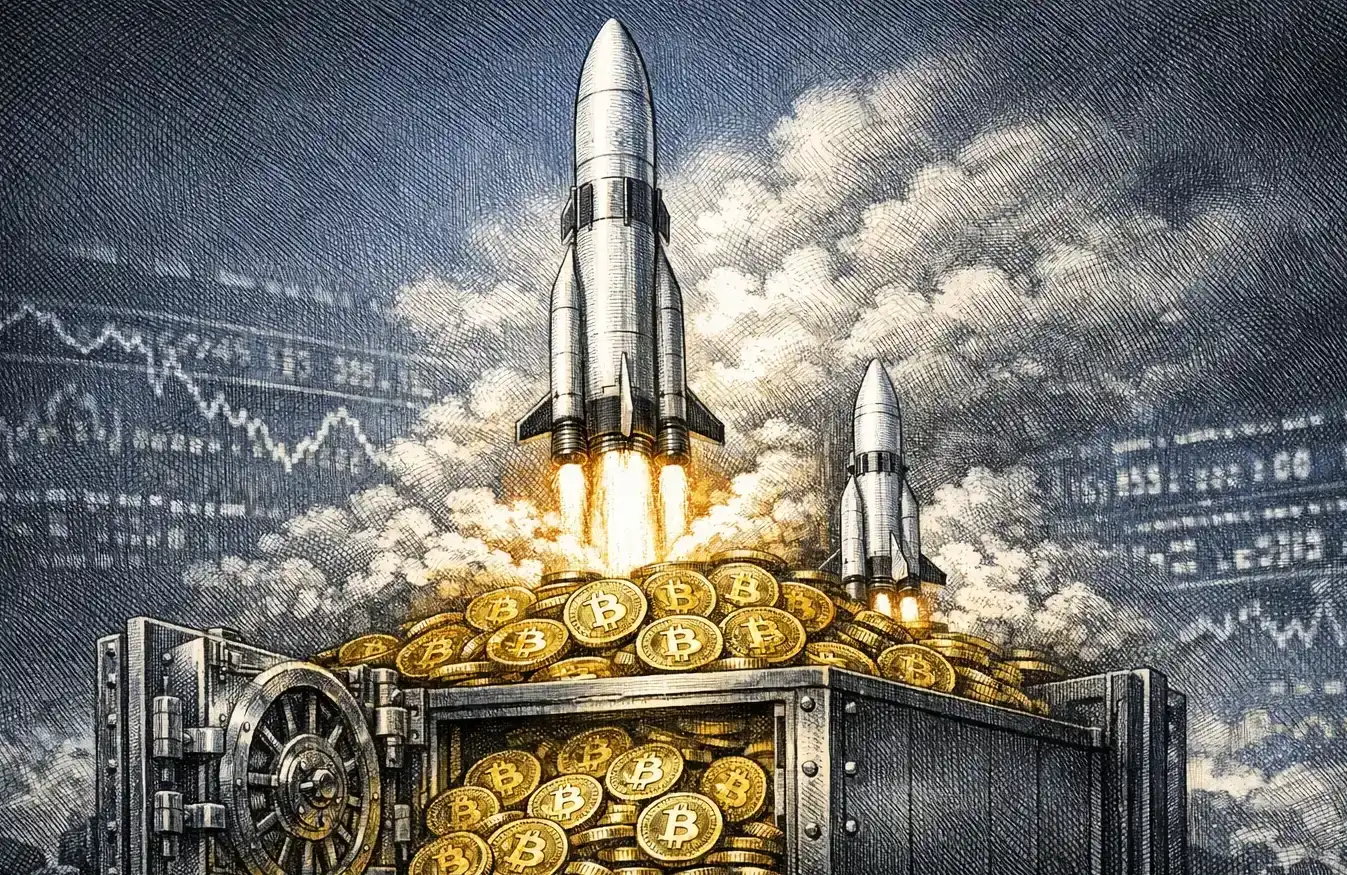
a16z Proposes "Staked Media": A New Game Using Deposits to Combat Misinformation

比推Опубликовано 2025-12-17Обновлено 2025-12-17

Введение

a16z has proposed a concept called "Staked Media" to combat misinformation using cryptographic technology and economic incentives. In an era where AI-generated content and fake news are widespread, the idea requires content creators or media organizations to cryptographically sign and stake a certain amount of cryptocurrency (such as ETH or USDC) when publishing content. This acts as a verifiable and unchangeable commitment on-chain. If the content is proven false, the staked funds are slashed; if true, the stake can be returned or even rewarded. The staking amount may vary based on the creator’s influence and content importance. To determine truthfulness, a combination of community voting (by users who also stake tokens) and algorithmic analysis is used. Disputes can be escalated to an expert committee. Malicious voters or creators may also face penalties. Repeat offenders would suffer reputational damage and higher staking requirements in the future. The system aims to incentivize truthfulness through financial stakes, reputation mechanisms, and potential legal accountability. It is suggested that such a model could be implemented within two years.

Recently, a16z proposed a concept called "Staked Media," which is quite interesting. Considering that social media is now filled with AI accounts, and fake news looks as real as the truth, ordinary users simply don't have the time or energy to distinguish between what's true and false.

The prediction of "Staked Media" is not far-fetched. It might emerge within the next two years.

So, what is Staked Media?

Simply put, it uses encryption technologies like zk to allow media or individuals to prove their credibility, similar to "making a written pledge" online. This "pledge" would be recorded on the blockchain, making it tamper-proof. But just making a pledge isn't enough; there also needs to be "staking something" as collateral, such as ETH, USDC, or other crypto tokens. This serves as proof that the published content is true and reliable. If the content is proven to be false, the staked assets would be slashed. This creates an environment that encourages truth-telling.

Nowadays, AI-generated articles and videos are everywhere, and fake news is rampant. Staked Media aims to make content publishers more cautious rather than speaking recklessly. For a simple example, imagine a YouTuber posting a video praising a certain product. They would have to "make a pledge" on the Ethereum chain and stake some ETH or USDC. If the video is fake, the money is lost, and viewers can rest assured. Another example: suppose you're a blogger recommending a mobile phone. You'd need to stake $100 worth of ETH on the Ethereum chain, making a pledge like, "If the phone's beauty filter doesn't achieve a certain effect, I will compensate." Viewers see that you've staked money and consider you trustworthy. If the video is fabricated by AI, the $100 is gone.

How could staking be implemented? Let's imagine.

Whether it's a big V/influential media or a small V, when posting content, they would need to "make a pledge" on the chain (e.g., Ethereum) (by signing for verification) and simultaneously deposit a certain amount of tokens (like ETH/USDT) into a specific smart contract. If the content is false, this money would be slashed (given to victims or burned). If the content is verified as true, the money could be returned after a certain period, and they might even receive rewards (such as tokens issued by the Staked Media platform itself or funds slashed from other fake content).

The specific amount staked could be determined based on the platform's rules. For major media/influencers publishing important news, the staked token amount would be higher, perhaps worth hundreds or thousands of dollars or even more. For small V's posting daily content, maybe a few dozen dollars would suffice. It could be linked to the content's influence (with a floating algorithm)—the greater the influence, the more that needs to be staked.

For media, staking indeed adds a financial cost, but it can gain the trust of the audience, which is a necessary cost in the era of fake news.

However, how to determine truth or falsehood? Through a dual verification system of community and algorithms. On the community side, users with voting rights (who need to stake crypto assets) would vote on the chain. If a certain threshold, say 60% or higher, votes that the content is false, it would be deemed false. Additionally, algorithms would analyze data to assist. If the content publisher disagrees, they can initiate arbitration, which would then be handled by an expert committee. If voters are found to be maliciously manipulating, their funds would be slashed. Participating in voting and being a member of the expert committee would come with rewards. Rewards would come from slashed funds and the media's own tokens, etc.

Furthermore, content creators could use zk technology to generate proof of authentic source from the very beginning, such as creating videos with zk technology.

What if wealthy individuals cheat? A wealthy person might stake a large amount to spread fake news, as long as the benefits are substantial enough.

It's not just about staking funds; there's also historical record and a reputation system. Accounts with slashing records would be labeled, and the required staking amount for their future content would increase. If an account is slashed 3 or 4 times, people would be less likely to trust their content later on. There could also be legal accountability. Therefore, falsifying information carries significant costs—not only financial but also the trust built over time, historical records, reputation systems, and real-world legal responsibilities.

Perhaps Staked Media projects are already on the way.


Twitter:https://twitter.com/BitpushNewsCN

Bitpush TG Discussion Group:https://t.me/BitPushCommunity

Bitpush TG Subscription: https://t.me/bitpush

Original link:https://www.bitpush.news/articles/7596328

Связанные с этим вопросы

QWhat is the core concept of 'Staked Media' proposed by a16z?

AStaked Media requires content creators to cryptographically prove their credibility by staking assets (like ETH or USDC) as collateral when publishing content. If the content is proven false, the staked assets are slashed, creating an incentive for truthfulness.

QHow does the staking mechanism work in Staked Media to combat misinformation?

AContent creators must sign a verifiable 'pledge' on a blockchain (e.g., Ethereum) and lock tokens in a smart contract. If the content is deemed false through community voting and algorithmic analysis, the staked tokens are forfeited. Honest content results in the return of tokens or potential rewards.

QWhat role does the community play in verifying content truthfulness in Staked Media?

ACommunity members with voting rights (who also stake crypto assets) vote on-chain to determine if content is false. A threshold (e.g., 60% votes) triggers penalties. Malicious voters risk losing their staked funds, while honest participants may receive rewards from slashed tokens or platform incentives.

QHow does Staked Media address potential abuse by wealthy actors who might stake large amounts to spread false news?

ABeyond financial stakes, the system incorporates historical record and reputation tracking. Accounts with prior penalties face higher staking requirements and distrust. Repeated violations (e.g., 3-4 slashes) lead to loss of credibility and potential legal accountability, making abuse costly and unsustainable.

QWhat technological tools are suggested to enhance content authenticity in Staked Media?

AZero-knowledge (zk) cryptography is proposed to generate proof of authentic content origin, such as zk-based video verification, ensuring the content's integrity from creation to publication.

Похожее

The Value Distribution of Stablecoins

**Summary: The Value Distribution of Stablecoins** The article argues that stablecoins are evolving from mere trading tools into broader channels for dollar access. It divides the stablecoin ecosystem into four layers to analyze how value is distributed: 1. **Issuance Layer:** Mints stablecoins, holds reserve assets, and captures the spread between reserve yield and user costs (e.g., Tether, Circle). This layer currently earns the largest profit margin. 2. **Infrastructure Layer:** Connects stablecoins to the traditional financial system, handling fiat on/off-ramps, banking integration, compliance (KYC/AML), and asset management (e.g., Bridge, BVNK). This is the "unglamorous" but critical work, building the essential bridges between crypto and real-world finance. 3. **Acquiring/Distribution Layer:** Integrates stablecoins into merchant systems, manages payment flows, and provides enterprise financial software (e.g., Stripe, Coinbase). They act as the access point for businesses. 4. **Application Layer:** The end-users and businesses that ultimately use stablecoins for payments, settlements, or as a store of value. They benefit from convenience but have little pricing power. The core thesis is that while the issuance layer currently dominates profits, the often-overlooked **infrastructure layer holds significant long-term potential**. The real challenge and barrier to mass adoption is not the on-chain transfer of stablecoins (which is simple), but the complex "last mile" integration into existing business workflows, banking systems, and regulatory frameworks across different countries. Companies in this layer are currently in a "land grab" phase, investing heavily to build networks, secure bank partnerships, and establish compliance pathways. While their position is currently pressured by the profitable issuers above and distribution platforms below, the article suggests that if stablecoins become a default financial rail for businesses, the infrastructure providers who have done the hard work of integration will ultimately gain strong pricing power and become entrenched, essential players.

marsbit6 ч. назад

The Value Distribution of Stablecoins

marsbit6 ч. назад

The Value Distribution of Stablecoins

The Value Distribution of Stablecoins The article argues that stablecoins are evolving from a mere trading tool into a broad "dollar channel." It analyzes the industry's value chain through four layers: 1. **Issuance Layer (e.g., Tether, Circle):** The top layer that mints stablecoins, holds reserve assets, and captures the thickest interest rate spread. 2. **Infrastructure Layer (e.g., Bridge, BVNK):** Connects stablecoins to the traditional financial system, handling critical but complex "dirty work" like fiat on/off-ramps, banking integration, compliance (KYC/AML), and cross-border settlement. 3. **Acquiring/Distribution Layer (e.g., Stripe, Coinbase):** Embeds stablecoins into merchant systems, manages payment flows, and integrates with enterprise software. 4. **Application Layer:** End-users and businesses that ultimately use stablecoins for payments, settlement, or storing value. The author posits that while the issuance layer currently captures the most profit, the most overlooked and potentially critical layer is infrastructure. The core challenge for stablecoin adoption isn't the on-chain transfer (which is simple), but bridging the gap between blockchain and the real-world financial system. This involves solving practical problems for businesses: fiat conversion, reconciliation, tax handling, and user onboarding. Infrastructure companies are currently in a difficult "land-grab" phase—building networks, securing banking relationships, and achieving compliance country-by-country. They face pressure from both the profitable issuance layer above and distribution platforms below. However, the author suggests this layer is building a crucial moat. Once stablecoins become a default business rail, the infrastructure players who have done the hard work of integration may gain significant, durable value and pricing power.

链捕手6 ч. назад

The Value Distribution of Stablecoins

链捕手6 ч. назад

Торговля

Спот
Фьючерсы

Популярные статьи

Как купить SFP

Добро пожаловать на HTX.com! Мы сделали приобретение SafePal (SFP) простым и удобным. Следуйте нашему пошаговому руководству и отправляйтесь в свое крипто-путешествие.Шаг 1: Создайте аккаунт на HTXИспользуйте свой адрес электронной почты или номер телефона, чтобы зарегистрироваться и бесплатно создать аккаунт на HTX. Пройдите удобную регистрацию и откройте для себя весь функционал.Создать аккаунтШаг 2: Перейдите в Купить криптовалюту и выберите свой способ оплатыКредитная/Дебетовая Карта: Используйте свою карту Visa или Mastercard для мгновенной покупки SafePal (SFP).Баланс: Используйте средства с баланса вашего аккаунта HTX для простой торговли.Третьи Лица: Мы добавили популярные способы оплаты, такие как Google Pay и Apple Pay, для повышения удобства.P2P: Торгуйте напрямую с другими пользователями на HTX.Внебиржевая Торговля (OTC): Мы предлагаем индивидуальные услуги и конкурентоспособные обменные курсы для трейдеров.Шаг 3: Хранение SafePal (SFP)После приобретения вами SafePal (SFP) храните их в своем аккаунте на HTX. В качестве альтернативы вы можете отправить их куда-либо с помощью перевода в блокчейне или использовать для торговли с другими криптовалютами.Шаг 4: Торговля SafePal (SFP)С легкостью торгуйте SafePal (SFP) на спотовом рынке HTX. Просто зайдите в свой аккаунт, выберите торговую пару, совершайте сделки и следите за ними в режиме реального времени. Мы предлагаем удобный интерфейс как для начинающих, так и для опытных трейдеров.

271 просмотров всегоОпубликовано 2026.05.22Обновлено 2026.06.02

Как купить SFP

Как купить CTR

Добро пожаловать на HTX.com! Мы сделали приобретение Citrea (CTR) простым и удобным. Следуйте нашему пошаговому руководству и отправляйтесь в свое крипто-путешествие.Шаг 1: Создайте аккаунт на HTXИспользуйте свой адрес электронной почты или номер телефона, чтобы зарегистрироваться и бесплатно создать аккаунт на HTX. Пройдите удобную регистрацию и откройте для себя весь функционал.Создать аккаунтШаг 2: Перейдите в Купить криптовалюту и выберите свой способ оплатыКредитная/Дебетовая Карта: Используйте свою карту Visa или Mastercard для мгновенной покупки Citrea (CTR).Баланс: Используйте средства с баланса вашего аккаунта HTX для простой торговли.Третьи Лица: Мы добавили популярные способы оплаты, такие как Google Pay и Apple Pay, для повышения удобства.P2P: Торгуйте напрямую с другими пользователями на HTX.Внебиржевая Торговля (OTC): Мы предлагаем индивидуальные услуги и конкурентоспособные обменные курсы для трейдеров.Шаг 3: Хранение Citrea (CTR)После приобретения вами Citrea (CTR) храните их в своем аккаунте на HTX. В качестве альтернативы вы можете отправить их куда-либо с помощью перевода в блокчейне или использовать для торговли с другими криптовалютами.Шаг 4: Торговля Citrea (CTR)С легкостью торгуйте Citrea (CTR) на спотовом рынке HTX. Просто зайдите в свой аккаунт, выберите торговую пару, совершайте сделки и следите за ними в режиме реального времени. Мы предлагаем удобный интерфейс как для начинающих, так и для опытных трейдеров.

263 просмотров всегоОпубликовано 2026.05.25Обновлено 2026.06.02

Как купить CTR

Что такое USOIL

USOILUSDT Перпетуальный контракт — это торговый символ для нефти сорта Западный Техас (WTI), цена которой указана в долларах США, представляющий 1 баррель сырой нефти.

134 просмотров всегоОпубликовано 2026.05.25Обновлено 2026.05.25

Что такое USOIL

Обсуждения

Добро пожаловать в Сообщество HTX. Здесь вы сможете быть в курсе последних новостей о развитии платформы и получить доступ к профессиональной аналитической информации о рынке. Мнения пользователей о цене на A (A) представлены ниже.

活动图片