a16z Outlook: AI Will Reshape Research, Identity, and the Foundation of the Network Economy by 2026

比推Опубликовано 2026-01-12Обновлено 2026-01-12

Введение

a16z Crypto experts predict three major AI trends for 2026. First, AI will increasingly perform substantive research tasks, moving from basic assistance to handling abstract, multi-step reasoning. This will enable a new "generalist" research style that explores conceptual relationships and leverages AI "hallucinations" for creative breakthroughs, though it requires better model interoperability and compensation mechanisms—potentially solvable via blockchain. Second, identity verification will shift from "Know Your Customer" (KYC) to "Know Your Agent" (KYA). With non-human agents vastly outnumbering humans in financial services, there is a critical need for infrastructure that issues cryptographically signed credentials to link agents to entities, constraints, and liabilities. Without KYA, agents will remain excluded from economic systems. Third, AI agents impose a "hidden tax" on the open web by disrupting its economic model. They extract data from ad-supported websites (the context layer) while bypassing revenue sources like ads and subscriptions. To sustain the open internet, new techno-economic solutions are needed—such as real-time usage-based compensation, nano-payments, and attribution systems—to automatically reward content contributors and replace static licensing models.

Author: a16z crypto

Compiled by: Deep Tide TechFlow

Original title: a16z: Three Major Trends in Artificial Intelligence by 2026


This Year, AI Will Take on More Substantive Research Tasks

As a mathematical economist, back in January 2025, I found it difficult to get consumer-grade AI models to understand my workflow; however, by November 2025, I was able to give abstract instructions to AI models as if I were directing a PhD student... and sometimes they even returned novel and correct answers. Beyond my personal experience, AI is being more widely applied in research, especially in the field of reasoning. These models not only directly assist in the discovery process but also autonomously solve challenging problems such as the Putnam exam (perhaps the world's most difficult university math test).

It is still uncertain in which areas this research assistance will be most helpful and how exactly it will be implemented. But I predict that this year, AI research will promote and reward a new style of "generalist" research: one that focuses more on conceptualizing the relationships between various ideas and quickly inferring from more hypothetical answers.

These answers may not be entirely accurate, but they can still guide research in the right direction (at least within a certain topological structure). Ironically, this is somewhat like harnessing the power of model "hallucination": when models are "smart enough," giving them abstract space to stimulate thinking may still produce some meaningless results—but sometimes it can lead to breakthrough discoveries, much like how humans can be most creative when not thinking linearly or following explicit directions.

Reasoning in this way requires a new style of AI workflow—not just simple "agent-to-agent" interactions, but a "nested agent" collaborative model. In this model, different layers of models assist researchers in evaluating the proposals of earlier models and gradually refining the essence. I am already using this method to write papers, while others are conducting patent searches, inventing new forms of artistic works, and even (unfortunately) discovering new smart contract attack methods.

However, operating these nested reasoning agent combinations for research still requires better interoperability between models and a method to identify and appropriately compensate each model's contributions—issues that blockchain technology may help resolve.

—Scott Kominers (@skominers), a16z crypto research team member, Harvard Business School professor

From "Know Your Customer" (KYC) to "Know Your Agent" (KYA): The Shift in Identity Verification

The bottleneck in the agent economy is shifting from intelligence to identity verification. In the financial services sector, the number of "non-human identities" now exceeds human employees by 96 times—yet these "identities" remain "ghosts" unable to access banking services.

The key missing infrastructure here is "Know Your Agent" (KYA). Just as humans need credit scores to obtain loans, agents need cryptographically signed credentials to conduct transactions—credentials that link the agent to its principal, constraints, and responsibilities. Until this infrastructure is established, merchants will continue to block these agents at the firewall.

The industries that have spent decades building KYC infrastructure now have only a few months to figure out how to implement KYA.

—Sean Neville (@psneville), Co-founder of Circle, Architect of USDC; CEO of Catena Labs

Solving the "Invisible Tax" of Open Networks: The Economic Challenge of the AI Era

The rise of AI agents is imposing an "invisible tax" on open networks, fundamentally disrupting their economic foundation. This disruption stems from the growing mismatch between the internet's "context layer" and "execution layer": currently, AI agents extract data from ad-supported websites (the context layer) to provide convenience to users while systematically bypassing the revenue sources that support the content (such as ads and subscriptions).

To prevent the gradual decline of open networks (and protect the diverse content that fuels AI), we need to deploy technical and economic solutions on a large scale. These solutions may include next-generation sponsored content models, micro-attribution systems, or other new funding models. However, existing AI licensing agreements have proven financially unsustainable, often compensating content providers for only a fraction of the revenue lost due to AI traffic diversion.

The network urgently needs a new techno-economic model that allows value to flow automatically. The key shift in the coming year will be from static licensing models to compensation mechanisms based on real-time usage. This means testing and scaling systems—possibly leveraging blockchain-enabled nanopayments and complex attribution standards—to automatically reward every entity that contributes information to the successful completion of an AI agent's task.

—Liz Harkavy (@liz_harkavy), a16z crypto investment team


Twitter: https://twitter.com/BitpushNewsCN

BitPush TG Discussion Group: https://t.me/BitPushCommunity

BitPush TG Subscription: https://t.me/bitpush

Original link: https://www.bitpush.news/articles/7601924

Связанные с этим вопросы

QAccording to Scott Kominers, what new research style is AI expected to promote in 2026?

AAI is expected to promote and reward a new 'generalist' research style that focuses on conceptualizing the relationships between various ideas and quickly inferring from more hypothetical answers.

QWhat does Sean Neville identify as the key missing infrastructure for the agent economy?

ASean Neville identifies 'Know Your Agent' (KYA) as the key missing infrastructure, which involves cryptographically signed credentials that link an agent to its principal, constraints, and liabilities.

QWhat problem does Liz Harkavy say AI agents are causing for the open web's economic foundation?

ALiz Harkavy states that AI agents are imposing an 'invisible tax' on the open web by systematically bypassing the revenue sources (like ads and subscriptions) that support the content they extract data from, disrupting its economic foundation.

QWhat technological solution does the article suggest for compensating content creators in the AI era?

AThe article suggests using systems that may leverage blockchain-enabled nanopayments and sophisticated attribution standards to automatically reward every entity that contributes information for an AI agent's successful task completion.

QWhat shift is considered crucial in the next year regarding compensation models for AI-use of content?

AThe crucial shift is from static licensing models to real-time, usage-based compensation mechanisms.

Похожее

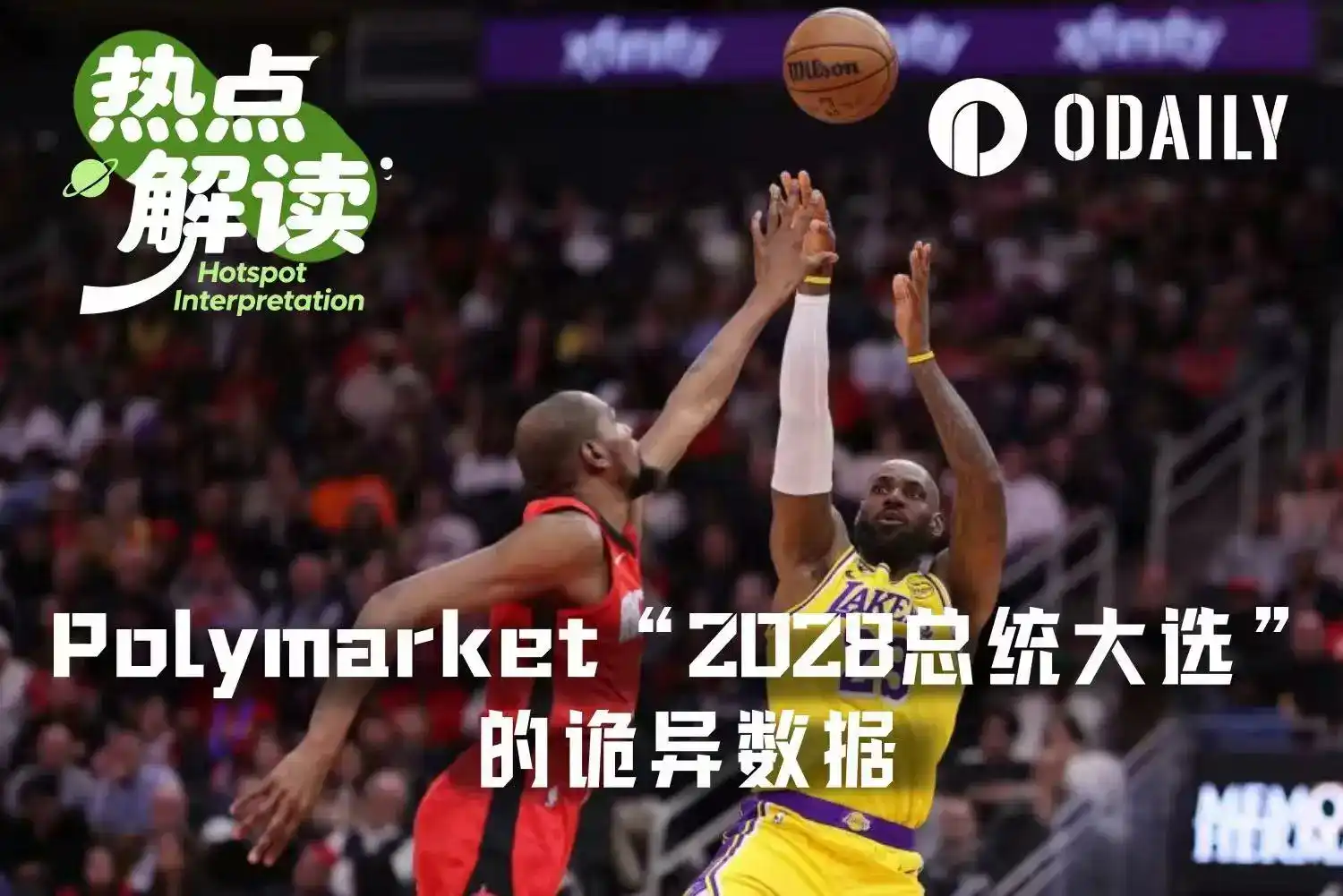
Polymarket's "2028 Presidential Election" Volume King Is... LeBron James???

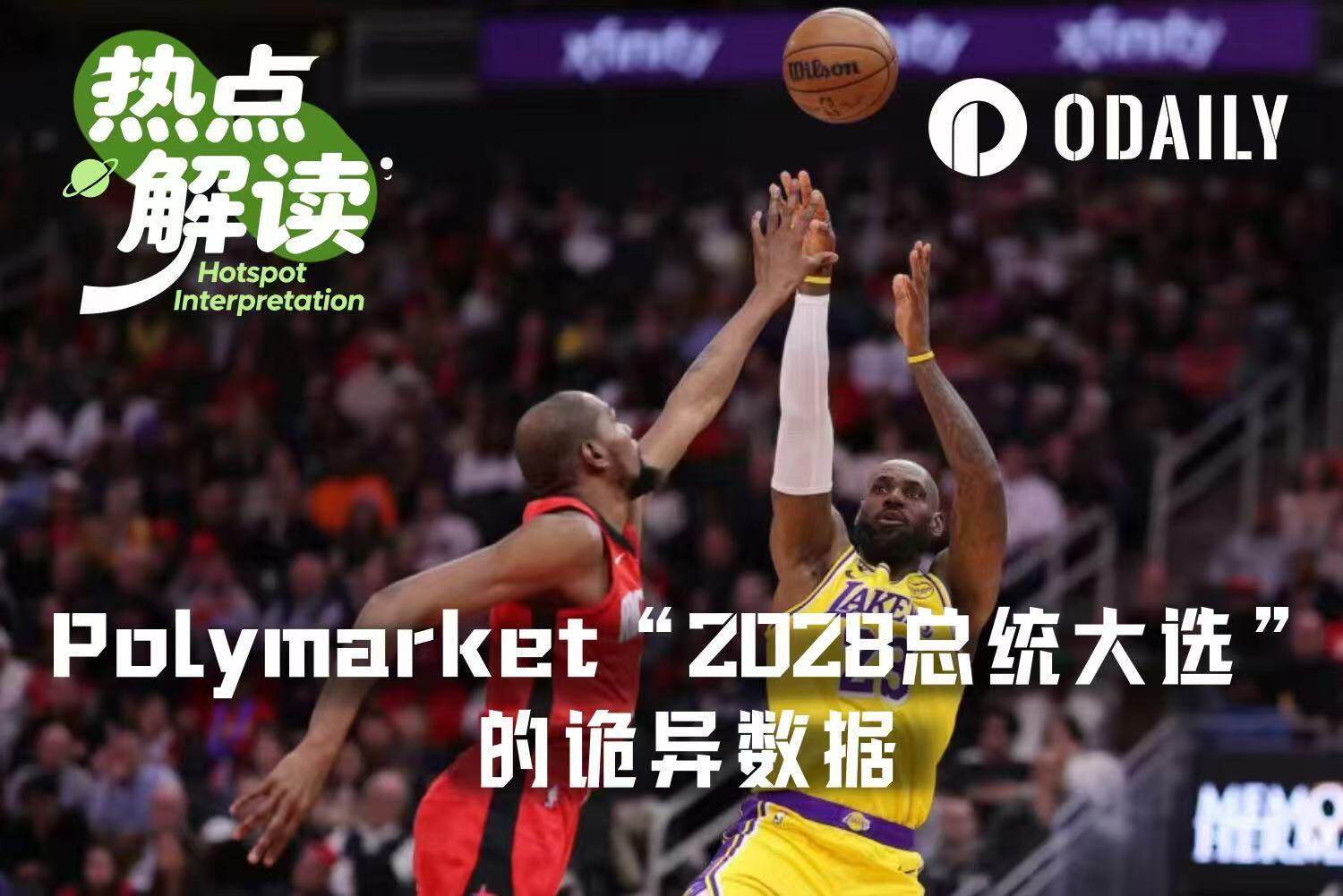
An article from Odaily Planet Daily, authored by Azuma, discusses a peculiar phenomenon observed on the prediction market platform Polymarket regarding the "2028 US Presidential Election" event. Despite having a real-time probability of less than 1%, unlikely candidates such as NBA star LeBron James (with $48.41 million in trading volume), celebrity Kim Kardashian ($33.84 million), and even ineligible figures like Elon Musk ($23.14 million) and New York City Mayor Zohran Mamdani ($18.39 million) account for approximately 70% of the total trading volume. In contrast, high-probability candidates like Vice President JD Vance ($10.58 million), California Governor Gavin Newsom ($15.71 million), and Secretary of State Marco Rubio ($9.32 million) have significantly lower trading activity. The article explains that this counterintuitive trend is not driven by irrational speculation but by rational strategies. Polymarket offers a 4% annualized holding reward for certain markets, including the 2028 election, to maintain long-term pricing accuracy. This yield exceeds the current 5-year US Treasury rate (3.98%), attracting large investors ("whales") to hold "NO" shares on low-probability candidates for risk-free returns. Additionally, some users utilize a platform feature that allows converting a set of "NO" shares into corresponding "YES" shares for better liquidity or pricing efficiency, rather than directly buying "YES" shares for their preferred candidates. Thus, the seemingly absurd trading activity is strategically motivated.

marsbit1 ч. назад

Polymarket's "2028 Presidential Election" Volume King Is... LeBron James???

marsbit1 ч. назад

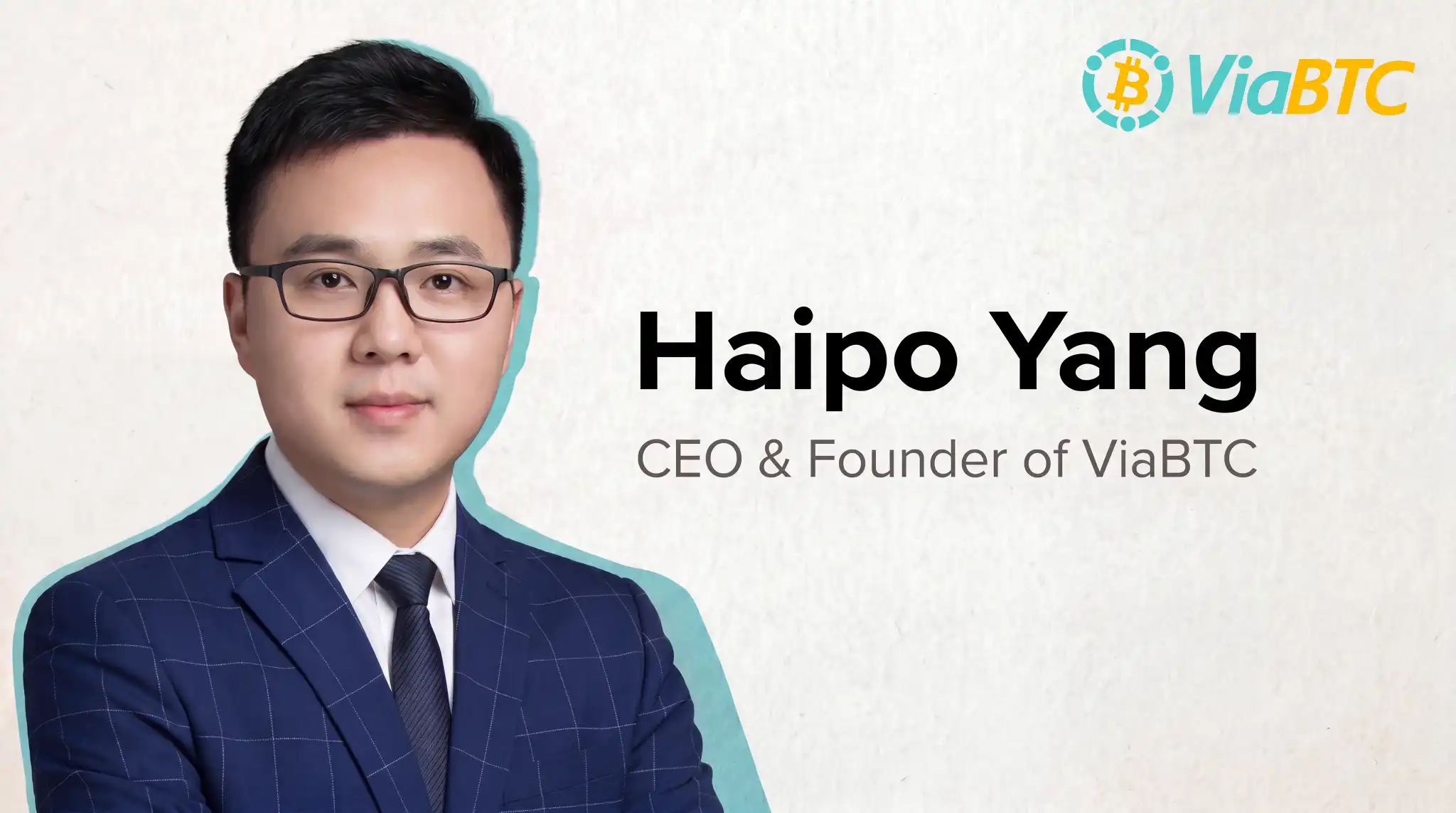
Dialogue with ViaBTC CEO Yang Haipo: Is the Essence of Blockchain a Libertarian Experiment?

"ViaBTC CEO Yang Haipo: Blockchain as a Hardcore Libertarian Experiment" In a deep-dive interview, ViaBTC CEO Yang Haipo reframes the essence of blockchain, arguing it is not merely a new technology or infrastructure but a hardcore libertarian experiment. This experiment, born from the 2008 financial crisis and decades of cypherpunk ideology, tests a fundamental question: to what extent can freedom and self-organization exist without centralized trust? The discussion highlights the experiment's verified outcomes. On one hand, it has proven its core value of censorship resistance, providing critical financial lifelines for entities like WikiLeaks and individuals in hyperinflationary or sanctioned countries via tools like stablecoins. However, Yang points out a key paradox: the most successful product, USDT, is itself a centralized compromise, showing users prioritize a less-controlled pipeline over pure decentralization. On the other hand, the experiment has exposed the severe costs of this freedom—a "dark forest" without safeguards. Events like the collapses of LUNA, Celsius, and FTX, resulting in massive wealth destruction and prison sentences for founders, underscore the system's fragility and the inherent risks of an unregulated environment. Yang observes that despite decentralized protocols, human nature inevitably recreates centralized power structures, speculative frenzies, and narrative-driven cycles (from ICOs to Meme coins), where emotion and belonging often trump technological substance. Looking forward, he believes blockchain's future is significant but niche. Its real value lies in serving specific, real-world needs for financial sovereignty and bypassing traditional controls, not as a universal infrastructure replacing all centralized systems. For the average participant, Yang's crucial advice is to cultivate independent judgment. True freedom is not holding a crypto wallet, but possessing a mind resilient to groupthink and narrative hype in a high-risk, often irrational market.

marsbit1 ч. назад

Dialogue with ViaBTC CEO Yang Haipo: Is the Essence of Blockchain a Libertarian Experiment?

marsbit1 ч. назад

Торговля

Спот
Фьючерсы

Популярные статьи

Неделя обучения по популярным токенам (2): 2026 может стать годом приложений реального времени, сектор AI продолжает оставаться в тренде

2025 год — год институциональных инвесторов, в будущем он будет доминировать в приложениях реального времени.

1.8k просмотров всегоОпубликовано 2025.12.16Обновлено 2025.12.16

Неделя обучения по популярным токенам (2): 2026 может стать годом приложений реального времени, сектор AI продолжает оставаться в тренде

Обсуждения

Добро пожаловать в Сообщество HTX. Здесь вы сможете быть в курсе последних новостей о развитии платформы и получить доступ к профессиональной аналитической информации о рынке. Мнения пользователей о цене на AI (AI) представлены ниже.

活动图片