A Game with No Winners: How to Break the Deadlock in the Altcoin Market?

marsbitОпубликовано 2026-01-12Обновлено 2026-01-12

Введение

The altcoin market is currently trapped in a "four-lose dilemma" due to flawed token distribution models. The prevalent low initial circulation strategy, designed to artificially maintain high fully diluted valuations (FDV), has backfired. It creates a scenario where centralized exchanges, token holders, project teams, and venture capitalists all ultimately suffer. Exchanges face community backlash from poor token performance, holders experience price collapse as supply unlocks, projects damage the industry's fundraising capacity, and VCs see their long-term investment channels deteriorate. Market responses, such as the 100% initial circulation of meme coins and the community-centric MetaDAO model, have failed to provide sustainable solutions, often creating new problems like extreme volatility or alienating talented founders. A potential path forward requires rebalancing interests: exchanges should shift from arbitrary lockups to KPI-based unlocks; holders should demand transparency and control over major decisions without micromanaging; projects must only issue tokens with clear utility and product-market fit; and VCs should stop forcing token launches on every project. The next 12 months will be challenging as the market absorbs the last wave of excess supply from the 2021-2022 funding boom. However, this digestion period, coupled with more selective token launches and evolving standards, could lead to a healthier market. The long-term viability of the altcoin model dep...

Author: Momir @IOSG

The altcoin market has experienced its toughest period this year. To understand why, we must go back to decisions made years ago. The financing bubble of 2021-2022 spawned a batch of projects that raised substantial funds. These projects are now issuing tokens, leading to a fundamental problem: a massive supply is hitting the market, while demand is scarce.

The issue is not just oversupply; worse still, the mechanisms that created this problem have remained largely unchanged. Projects continue to issue tokens regardless of product-market fit, treating token issuance as an inevitable step rather than a strategic choice. As venture capital dries up and primary market investments shrink, many teams see token issuance as the only financing channel or a way to create exit opportunities for insiders.

This article will analyze the "lose-lose-lose-lose dilemma" that is unraveling the altcoin market, examine why past repair mechanisms have failed, and propose potential rebalancing ideas.

1. The Low Float Dilemma: A Four-Way Losing Game
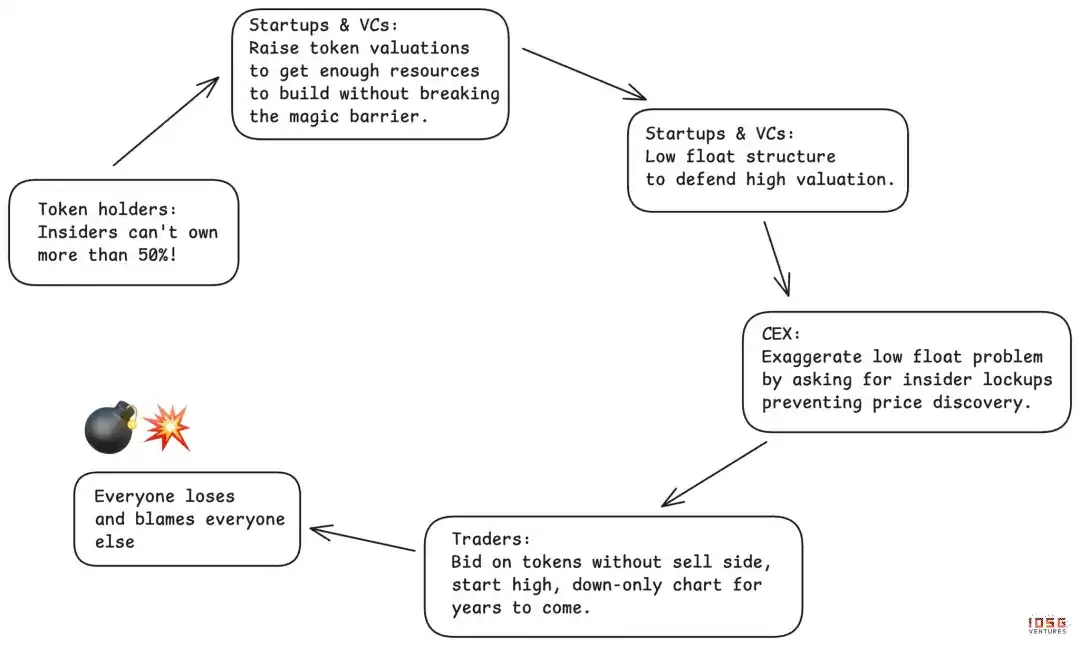
Over the past three years, the entire industry has relied on a severely flawed mechanism: low float token launches. Projects issue tokens with extremely low circulating supplies, often only a single-digit percentage, artificially maintaining a high FDV (Fully Diluted Valuation). The logic seems reasonable: low supply should stabilize the price.

But a low float doesn't stay low forever. As supply is gradually released, the price inevitably crashes. Early supporters become the victims instead. The data shows that most tokens have performed poorly since listing.

The most cunning aspect is that the low float creates a situation where everyone thinks they are benefiting, but in reality, everyone is losing:

  • Centralized exchanges (CEXs) thought they were protecting retail investors by demanding low floats and strengthening control, but instead incurred community resentment and poor token performance.
  • Token holders originally believed "low float" would prevent insider dumping, but ended up with neither effective price discovery nor protection, instead seeing their early support backfire. When the market demanded that insider holdings not exceed 50%, primary market valuations were pushed to distorted levels, forcing insiders to rely on low float strategies to maintain superficial stability.
  • Project teams thought they could sustain high valuations and reduce dilution through low float manipulation, but once this practice became a trend, it destroyed the entire industry's financing capacity.
  • Venture capitalists (VCs) thought they could mark their holdings based on the low float token's market cap and continue fundraising, but as the drawbacks of the strategy were exposed, their mid-to-long-term financing channels were ultimately cut off.
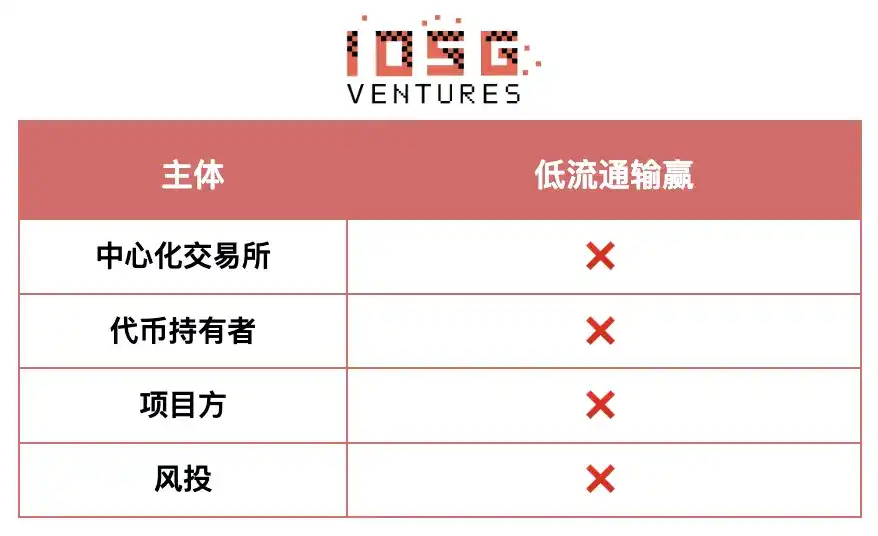
A perfect lose-lose-lose-lose matrix. Everyone thinks they are playing a masterful game, but the game itself is inherently disadvantageous to all participants.

2. Market Reactions: Meme Coins and MetaDAOs

The market has attempted to break the deadlock twice, and both attempts exposed the complexity of token design.

First Wave: The Meme Coin Experiment

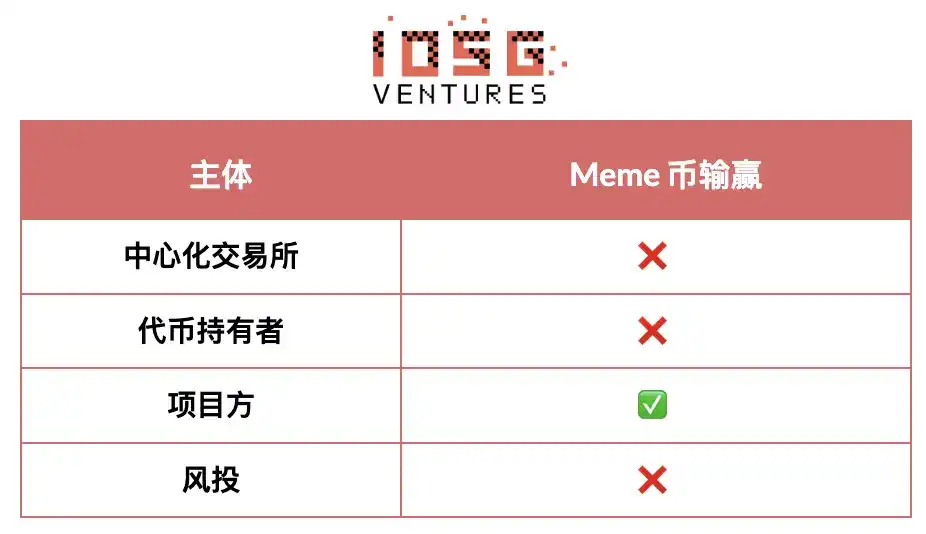
Meme coins were a backlash against VC low-float launches. The slogan was simple and appealing: 100% circulating supply on day one, no VCs, completely fair. Finally, retail wouldn't be screwed by the game.

Reality was much darker. Without a filtering mechanism, the market was flooded with unscreened tokens. Rogue, anonymous operators replaced VC teams. This didn't bring fairness; instead, it created an environment where over 98% of participants lost money. Tokens became vehicles for rug pulls, with holders being cleaned out minutes or hours after launch.

Centralized exchanges were caught in a dilemma. Not listing meme coins meant users would trade directly on-chain; listing them meant taking the blame when the price crashed. Token holders suffered the worst losses. The real winners were only the issuing teams and platforms like Pump.fun.
Second Wave: The MetaDAO Model

MetaDAOs were the market's second major attempt, swinging the pendulum to the other extreme—heavily favoring token holder protection.

There were indeed benefits:

  • Token holders gained control, making capital deployment more attractive
  • Insiders could only cash out upon achieving specific KPIs
  • Opened new financing avenues in a capital-tight environment
  • Relatively lower initial valuation, fairer access

But MetaDAOs overcorrected, bringing new problems:

Founders lost too much control too early. This created a "founder lemon market"—talented teams with options avoided this model, leaving only desperate teams to accept it.

Tokens still launched at a very early stage, experiencing extreme volatility, but with even fewer screening mechanisms than the VC cycle.

Infinite minting mechanisms made listings on tier-1 exchanges nearly impossible. MetaDAOs and CEXs, which control the vast majority of liquidity, are fundamentally misaligned. Without CEX listings, tokens are trapped in illiquid markets.
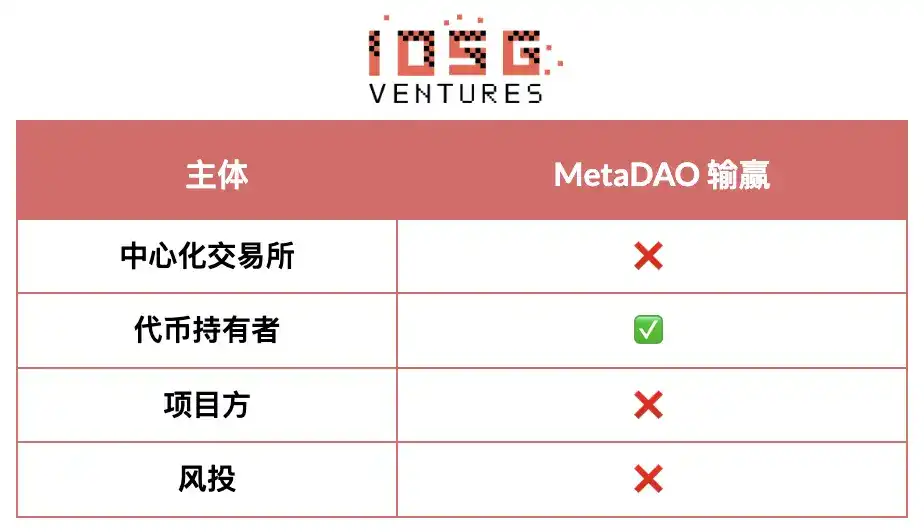
Each iteration attempted to solve problems for one party and proved the market's ability to self-correct. But we are still searching for a balanced solution that serves the key participants: exchanges, holders, projects, and capital providers.

The evolution continues. Until balance is found, there will be no sustainable model. This balance isn't about pleasing everyone but drawing a clear line between harmful practices and reasonable rights.

3. What Should the Balanced Solution Look Like?

Centralized Exchanges

Should stop: Requiring extended lockups that hinder proper price discovery. These extended locks appear protective but actually prevent the market from finding a fair price.

Are entitled to demand: Predictability in token release schedules and effective accountability mechanisms. The focus should shift from arbitrary time locks to KPI-based unlocks, with shorter, more frequent release cycles tied to actual progress.

Token Holders

Should stop: Overcorrecting due to historical lack of rights, exerting excessive control that scares away the best talent, exchanges, and VCs. Not all insiders are the same; demanding uniform long-term lockups ignores role variations and hinders price discovery. Obsessing over magical ownership thresholds ("insiders can't exceed 50%") precisely creates the soil for low-float manipulation.

Are entitled to demand: Strong information rights and operational transparency. Holders should understand the business behind the token, receive regular updates on progress and challenges, and know the true state of treasury reserves and resource allocation. They have the right to ensure value isn't siphoned through opaque dealings or alternative structures. The token should be the primary IP holder, ensuring created value accrues to token holders. Finally, holders should have reasonable control over budget allocation, especially for significant expenses, but should not micromanage daily operations.

Project Teams

Should stop: Issuing tokens without clear signals of product-market fit or actual token utility. Too many teams treat tokens as inferior, glorified equity—worse than venture equity but without legal protection. Token issuance shouldn't happen just because "that's what crypto projects do" or because money is running out.

Are entitled to demand: The ability to make strategic decisions, place bold bets, and handle daily operations without needing DAO approval for everything. If held accountable for results, they must have the power to execute.

Venture Capitalists
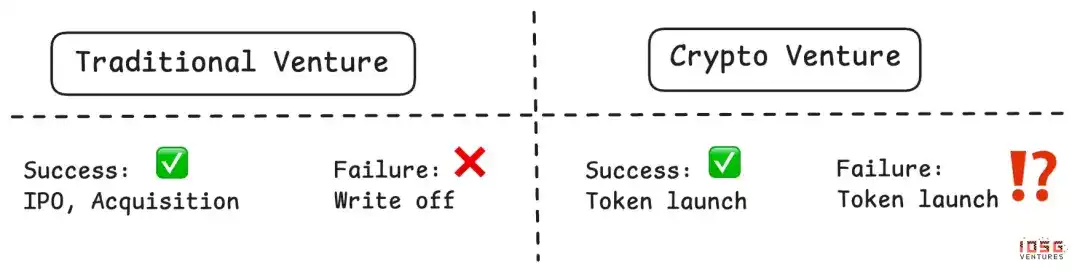
  • Should stop: Forcing every portfolio company to issue a token, reasonable or not. Not every crypto company needs a token. Forcing token issuance to mark holdings or create exit opportunities has flooded the market with low-quality projects. VCs should be stricter and realistically assess which companies are truly suited for a token model.
  • Are entitled to demand: Returns commensurate with the extreme risk of investing in early-stage crypto projects. High-risk capital deserves high returns when bets pay off. This means reasonable ownership stakes, fair vesting schedules reflecting contribution and risk, and the right not to be demonized upon successful investment exits.

Even if a balanced path is found, timing is crucial. The short-term outlook remains grim.

4. The Next 12 Months: The Final Wave of Supply Shock
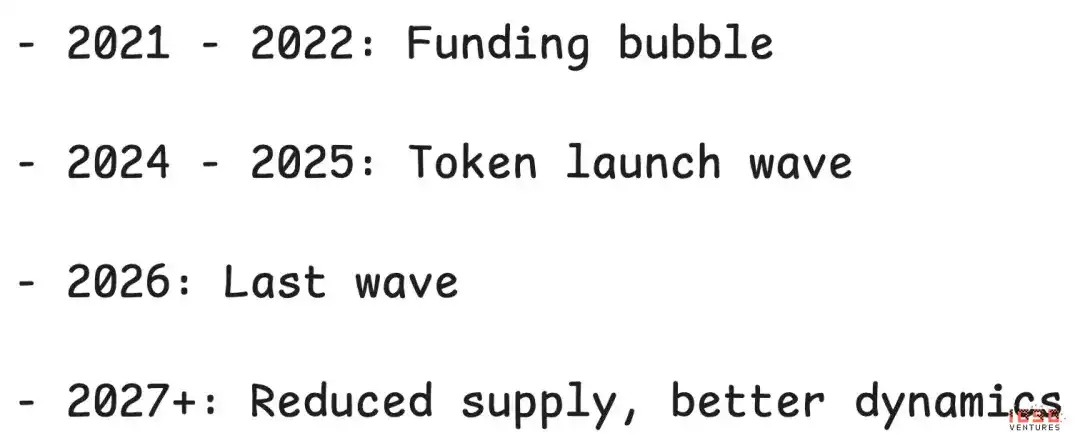
The next 12 months will likely be the last wave of oversupply from the previous VC hype cycle.

After weathering this digestion period, the situation should improve:

  • By the end of 2026, projects from the last cycle will have either finished token issuance or shut down.
  • Financing costs remain high, limiting the formation of new projects. The pipeline of VC projects waiting to launch tokens has noticeably shrunk.
  • Primary market valuations return to rationality, reducing the pressure to use low floats to prop up high valuations.

Decisions made three years ago shaped today's market. Decisions made today will determine the market's state two to three years from now.

But beyond the supply cycle, the entire token model faces a deeper threat.

5. Existential Crisis: The Lemon Market

The greatest long-term threat is altcoins becoming a "lemon market"—where quality participants are driven away, leaving only those with no other options.

Possible evolution path:

Failed projects continue issuing tokens to gain liquidity or extend their lifespan, even with zero product-market fit. As long as all projects are expected to issue tokens, regardless of success, failed projects will keep flooding the market.

Successful projects, seeing the惨状 (miserable state), opt out. When strong teams see persistently poor overall token performance, they may pivot to traditional equity structures. Why endure the torment of the token market if you can be a successful equity company? Many projects lack a compelling reason to issue a token. For most application-layer projects, tokens are shifting from a necessity to an option.

If this trend continues, the token market will be dominated by failed projects with no other choice—the unwanted "lemons."

Despite the risks, I remain optimistic.

6. Why Tokens Can Still Win

Despite the challenges, I still believe the worst-case lemon market scenario will not materialize. Tokens offer unique game-theoretic mechanisms that equity structures simply cannot replicate.

Accelerating growth through ownership distribution. Tokens enable precise allocation strategies and growth flywheels impossible with traditional equity. Ethena's use of token-driven mechanisms to rapidly bootstrap user growth and build a sustainable protocol economic model is a prime example.

Creating a moated community of passionate loyalty. Done right, tokens can build a community with real skin in the game—participants become highly engaged, loyal ecosystem advocates. Hyperliquid is an example: their trader community became deeply involved, creating network effects and loyalty that would be impossible to replicate without a token.

Tokens can enable growth much faster than equity models while opening vast space for game-theoretic design, unlocking huge opportunities when executed correctly. These mechanisms are truly transformative when they work.

7. Signs of Self-Correction

Despite the difficulties, the market is showing signs of adjustment:

Tier-1 exchanges have become extremely selective. Token issuance and listing requirements have tightened significantly. Exchanges are strengthening quality control, conducting stricter evaluations before listing new tokens.

Investor protection mechanisms are evolving. Innovations from MetaDAOs, DAO-owned IP (referencing Uniswap and Aave governance disputes), and other governance experiments show communities are actively trying better structures.

The market is learning, albeit slowly and painfully.

Recognizing the Cycle's Position

Crypto markets are highly cyclical, and we are currently in a trough. We are digesting the negative consequences of the 2021-2022 VC bull market, hype cycle, overinvestment, and misaligned structures.

But cycles always turn. Two years from now, after the 2021-2022 cohort is fully digested, after new token supply diminishes due to funding constraints, and after better standards are trial-and-errored—market dynamics should improve significantly.

The key question is whether successful projects will return to the token model or permanently shift to equity structures. The answer depends on the industry's ability to solve the issues of interest alignment and project screening.

8. The Path to Breaking the Deadlock

The altcoin market stands at a crossroads. The four-way lose-lose dilemma—exchanges, holders, projects, and capital all losing—has created an unsustainable market condition, but it is not a dead end.

The next 12 months will be painful, with the final wave of 2021-2022 supply arriving. But after the digestion period, three things could drive a recovery: better standards formed from painful trial and error, a realignment mechanism acceptable to all four parties, and selective token issuance—only when it truly adds value.

The answer depends on choices made today. Three years from now, looking back at 2026, we will view it just as we view 2021-2022 today: What are we building?


Связанные с этим вопросы

QWhat is the 'four-lose dilemma' in the altcoin market described in the article?

AThe 'four-lose dilemma' refers to a flawed mechanism where low initial token circulation is used to artificially maintain high fully diluted valuation (FDV). This creates a situation where all key participants—exchanges, token holders, project teams, and venture capitalists—initially believe they are benefiting but ultimately lose out due to inevitable price crashes, poor token performance, and the destruction of the industry's financing capabilities.

QHow did the market attempt to break the 'low circulation trap', and what were the outcomes?

AThe market attempted to break the trap twice. First, with meme coins, which offered 100% circulation on day one and no VC involvement, but this led to a flooded market with rampant scams and over 98% of participants losing money. Second, the MetaDAO model emerged, giving token holders more control and tying insider vesting to KPIs. However, it caused founders to lose too much control too early, creating a 'lemons market' for talent, and made listings on major centralized exchanges nearly impossible due to infinite minting mechanisms.

QWhat are the author's proposed balanced solutions for the main participants in the altcoin market?

AFor exchanges: Stop mandating extended lockups that hinder price discovery and instead demand predictable token release schedules with KPI-based vesting. For token holders: Stop overcorrecting with excessive control and demand strong information rights, operational clarity, and transparency. For project teams: Stop launching tokens without product-market fit and retain the right to make strategic decisions. For VCs: Stop forcing every portfolio company to issue a token and instead focus on investments that genuinely suit a token model, while rightly expecting high returns for high-risk investments.

QWhat is the 'lemons market' threat facing the altcoin ecosystem, according to the article?

AThe 'lemons market' threat is a scenario where the altcoin market becomes dominated by low-quality, failing projects ('lemons') that have no other options but to issue tokens for liquidity or survival. Meanwhile, successful projects, deterred by the poor overall performance and structural issues of the token market, may permanently shift to traditional equity structures, leaving the token space with only the least desirable participants.

QWhy does the author remain optimistic about the future of tokens despite the current challenges?

AThe author remains optimistic because tokens offer unique game-theoretic mechanisms that traditional equity cannot replicate. These include the ability to accelerate growth through precise ownership distribution strategies (e.g., Ethena) and to create passionate, loyal communities with strong network effects (e.g., Hyperliquid). The author believes that when these mechanisms are executed correctly, they are transformative and will prevent the worst-case 'lemons market' scenario from fully materializing.

Похожее

Visa подаётся в стабильные монеты: не для того, чтобы уничтожить их, а чтобы взимать с них "арендную плату"

Автор: Blue Fox Notes Visa активно внедряет стабильные монеты: запущена платформа для стабильных монет. Цель — упростить банкам, финансовым учреждениям и финтех-компаниям выпуск и управление стабильными монетами с их бесшовной интеграцией в существующую экосистему платежей Visa. Платформа Visa позволяет осуществлять эмиссию (minting), переводы (movement) и управление (management) стабильными монетами, а также помогает интегрировать их в текущие системы платежей, расчетов и переводов. Целевой охват — более 200 млн торговых точек и 15 тыс. финансовых учреждений. Будучи традиционным платежным гигантом, Visa не стремится уничтожить стабильные монеты, а скорее принимает и модернизирует их. Рост масштабов стабильных монет увеличивает количество транзакций в сети Visa (что уже приносит реальный доход). Это благоприятно для дальнейшего внедрения стабильных монет и расширения рынка, хотя может снизить концентрацию рынка среди ведущих эмитентов, сместив конкуренцию в сферу дистрибуции, подключения торговцев и соблюдения нормативных требований. Влияние на USDC (Circle): краткосрочно позитивное, так как платформа Visa напрямую поддерживает расчеты и интеграцию с USDC, давая ему преимущество первопроходца. Однако в долгосрочной перспективе ожидается острая конкуренция с альянсными монетами (OUSD) и банковскими стабильными монетами. Модель Circle, основанная на прибыли от резервов, может столкнуться с вызовами. Влияние на USDT (Tether): более существенно. USDT доминирует на рынке криптовалютных транзакций и в развивающихся странах. Традиционный финансовый сектор, представленный такими игроками, как Visa, предпочитает прозрачные и регулируемые варианты (USDC, OUSD). Доля USDT в платежах торговцев и институциональных расчетах может сократиться. В целом, Visa приходит не для того, чтобы "уничтожить" USDC/USDT, а чтобы "взимать арендную плату" и расширять рынок. Это положительно для долгосрочного развития экосистемы стабильных монет, хотя модель прибыли, основанная исключительно на эмиссии, столкнется с трудностями. Влияние на Ethereum: нейтрально–позитивное. Тесное сотрудничество Visa с экосистемой Ethereum может привести к притоку традиционного капитала в сеть ETH в форме стабильных монет. Массовая адаптация стабильных монет привлечет больше институциональных участников и торговцев в блокчейн, увеличивая спрос на Ethereum как на расчетный слой. Платформа Visa, скорее всего, будет поддерживать несколько блокчейнов, но Ethereum, как наиболее зрелая и децентрализованная сеть, останется предпочтительным выбором для регулируемых стабильных монет.

marsbit2 мин. назад

Visa подаётся в стабильные монеты: не для того, чтобы уничтожить их, а чтобы взимать с них "арендную плату"

marsbit2 мин. назад

Как распознать криптомошенничество или rug pull?

Представьте, что вы нашли многообещающий новый токен с тысячами держателей, растущей ценой и активным сообществом. Все выглядит легитимно, пока ликвидность внезапно не исчезает. Так начинается «скам» (rug pull). Разработчики сначала создают видимость надежности через заблокированную ликвидность и отказ от прав на контракт. Затем они раскручивают токен в соцсетях и нагнетают ажиотаж. Чем сильнее сообщество, тем легче привлечь новый капитал. Весь процесс от раскрутки до вывода средств часто занимает 48-72 часа. «Жесткие» скамы мгновенно выводят ликвидность, а «мягкие» постепенно снижают стоимость через продажи инсайдеров или отказ от развития проекта. Ключевые признаки скама: 1. **Высокая концентрация токенов:** если 5-10 кошельков контролируют более 30% предложения. 2. **Подозрительный смарт-контракт:** неверифицированный код, скрытые функции (например, для дополнительной эмиссии), возможность обновления контракта разработчиком. 3. **Рыночное поведение:** быстрый рост цены на основе рекламы от инфлюенсеров, низкий органический объем торгов, снижение числа новых держателей перед крупными переводами с кошельков разработчиков. Основные виды мошеннических схем: * **Ловушки (Honeypots):** Позволяют покупать, но блокируют или ограничивают продажу (98 442 случая). * **Скрытая эмиссия (Hidden mint):** Позволяет разработчикам напечатать новые токены после запуска, размывая доли держателей (60 985 случаев). * **Фальшивый отказ от прав (Fake ownership renunciation):** Заявления о децентрализации ложны, контроль сохранен (48 974 случая). Вывод: чтобы избежать скама, важно анализировать не только цену, но и сходимость нескольких факторов: структуру владения токенами, код смарт-контракта и модели торговли. Прозрачные условия вестинга, верифицированный код и независимый аудит значительно снижают риски.

ambcrypto53 мин. назад

Как распознать криптомошенничество или rug pull?

ambcrypto53 мин. назад

Открытый интерес по XRP достигает $2,6 млрд на фоне роста спроса на деривативы

Открытый интерес по фьючерсам XRP достиг 2,6 млрд долларов, что означает рост более чем на 10% за 24 часа, согласно данным CoinGlass. Это ставит XRP на четвертое место среди крупнейших криптоактивов по данному показателю. Рост открытого интереса свидетельствует об увеличении активности на деривативном рынке, но не указывает однозначно на бычьи или медвежьи настроения, а также не подтверждает рост спроса на спотовом рынке. Активность может быть вызвана долгосрочными или короткими позициями, хеджированием или спекуляциями. Ключевым вопросом является то, поддержит ли этот рост открытого интереса более сильное движение цены или создаст дополнительные риски волатильности. Для подтверждения устойчивости тренда необходимы сопутствующие сигналы, такие как рост объемов спотовой торговли и устойчивость ключевых ценовых уровней. В противном случае высокий уровень открытого интереса может привести к усилению давления при ликвидации позиций.

bitcoinist2 ч. назад

Открытый интерес по XRP достигает $2,6 млрд на фоне роста спроса на деривативы

bitcoinist2 ч. назад

Прогноз цены Биткоина на 2030 год: вот что нужно знать о следующем бычьем рынке

Недавний анализ AMBCrypto указывает на трудности майнеров Bitcoin (BTC), что соответствует условиям исторических медвежьих рынков. Снижение цены BTC наблюдается после падения 10 октября 2025 года, и точное дно рынка пока не определено. Ключевым фактором для разворота тренда станут чистые притоки стейблкоинов на биржи, которые выступают "топливом" для бычьего рынка. В настоящее время этот показатель отрицателен. Основатель Alphractal, Жоао Ведсон, на основе анализа исторических паттернов предполагает, что дно цикла в районе $41,5–45 тыс. может быть достигнуто в первой половине октября 2026 года. Что касается прогноза цены Bitcoin к 2030 году, технический анализ с использованием уровней Фибоначчи предлагает возможный сценарий. После потенциальной коррекции до области около $39,1 тыс. (близко к целевой зоне Ведсона) возможно возобновление долгосрочного восходящего тренда. Этот тренд может преодолеть уровень расширения Фибоначчи 61.8% на отметке $152,3 тыс. Итоговый пик следующего цикла, согласно такому анализу, может достигнуть $200–220 тыс. к 2030 году, после чего Bitcoin, вероятно, снова вступит в медвежью фазу. Отмечается, что текущий рыночный цикл может оказаться длиннее предыдущих. **Краткий итог:** * По фрактальному анализу, дно рынка Bitcoin возможно в октябре 2026 года. * Для роста к целям в $200+ тыс. к 2030 году необходимы значительные притоки стейблкоинов на биржи.

ambcrypto2 ч. назад

Прогноз цены Биткоина на 2030 год: вот что нужно знать о следующем бычьем рынке

ambcrypto2 ч. назад

Рыночный пульс BTC: 30-я неделя

После восстановления с уровня ниже 58 000 долларов и тестирования 65 000 долларов, биткоин перешёл в фазу консолидации около 64 500 долларов. Восходящий импульс ослаб, объёмы спот-торгов остаются низкими. Волатильность снизилась, что указывает на уменьшение премии за риск на деривативных рынках. Спекулятивный аппетит постепенно возвращается: открытый интерес на фьючерсах и опционах вырос, поток на перпетуальных контрактах сместился к чистым покупкам, а спрос на защиту от падения ослаб. Восстановление происходит осторожно, без агрессивного использования кредитного плеча. Активность в блокчейне стабилизируется. Институциональное давление на продажу ослабевает, о чём свидетельствуют улучшившиеся потоки спот-ETF в США и приближение средних цен покупки ETF к точке безубыточности. Рынок выглядит более сбалансированным: долгосрочные инвесторы обеспечивают поддержку, а спекулятивная активность остаётся сдержанной. Тем не менее, растущая доля краткосрочного капитала, чувствительного к цене, повышает вероятность резких всплесков волатильности, делая рынок устойчивым, но более восприимчивым к сдвигам в импульсе и давлению со стороны продавцов.

insights.glassnode4 ч. назад

Рыночный пульс BTC: 30-я неделя

insights.glassnode4 ч. назад

Торговля

Спот
活动图片