Source: Delphi Digital
Original Title: 10 Predictions for 2026
Compiled and Edited by: BitpushNews
Perpetual Decentralized Exchanges (Perp DEXs) will become the new Wall Street; AI Agents will achieve autonomous trading; exchanges will evolve into "Everything Apps".
Here are 10 key predictions from our 2026 annual report:
1. AI Agents Begin Autonomous Trading
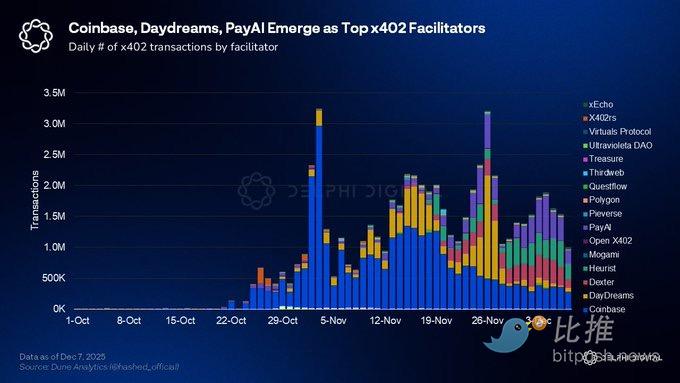
The x402 protocol allows any API to manage access permissions through crypto payments. When an AI agent needs a service, it can pay instantly with stablecoins—no shopping cart, no subscription. The ERC-8004 standard adds trust by creating a reputation registry for agents containing historical performance data and staked collateral.
Combine the two, and you get an autonomous agent economy. A user can delegate a travel planning agent, which automatically subcontracts a flight search agent (paying for data via x402), and then completes the booking on-chain—all without human intervention.
2. Perpetual DEXs Devour Traditional Finance
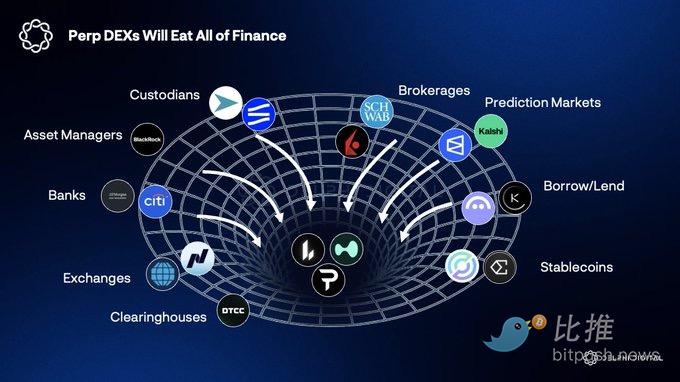
Traditional Finance (TradFi) is expensive because of its fragmented nature: trading happens on exchanges, settlement through clearinghouses, and custody with banks. Blockchain compresses all of this into a single smart contract.
Currently, Hyperliquid is building native lending functionality. Perp DEXs will likely act as brokers, exchanges, custodians, banks, and clearinghouses all at once. Competitors like @Aster_DEX, @Lighter_xyz, and @paradex are rapidly catching up.
3. Prediction Markets Ascend to Traditional Financial Infrastructure
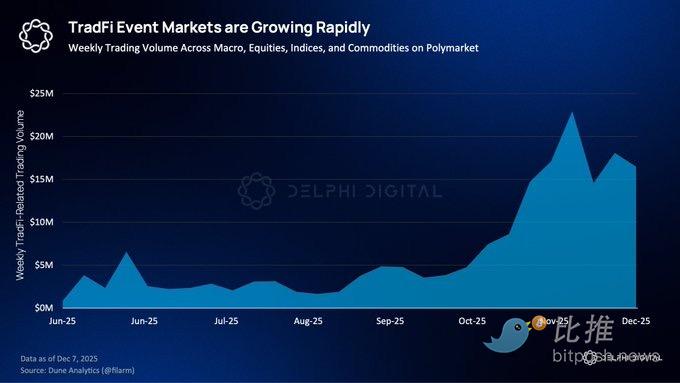
Thomas Peterffy, Chairman of Interactive Brokers, defines prediction markets as a real-time information layer for portfolios. Early demand at Interactive Brokers focused on weather contracts related to energy, logistics, and insurance risks.
2026 will open new categories: stock event markets for earnings surprises and guidance ranges; markets for macro indicators like CPI and Fed decisions; and cross-asset relative value markets. A trader holding tokenized Apple stock (AAPL) can hedge earnings risk with a simple binary contract instead of researching complex options. Prediction markets will become a "first-class" derivative.
4. Ecosystems Reclaim Stablecoin Revenue from Issuers
Last year, just by controlling the issuance channel, Coinbase captured over $900 million in USDC reserve revenue. Public chains like Solana, BSC, Arbitrum, Aptos, and Avalanche have a total annual fee revenue of about $800 million, but they host over $30 billion in USDC and USDT. This means the platforms driving stablecoin usage are losing more revenue to issuers than they earn in fees.
Now, this is changing. Hyperliquid runs a competitive bidding process for USDH and now captures half the reserve revenue for its aid fund. Ethena's "Stablecoin-as-a-Service" model is being adopted by Sui, MegaETH, and Jupiter. Revenue that was passively enjoyed by incumbent issuers is being reclaimed by the platforms creating demand.
5. DeFi Conquers Uncollateralized Lending

DeFi lending protocols have billions in Total Value Locked (TVL), but almost all require over-collateralization. zkTLS (Zero-Knowledge Transport Layer Security) opens new doors. Users can prove their bank balance exceeds a certain amount without revealing account numbers, transaction history, or true identity.
@3janexyz uses verified Web2 financial data to provide instant uncollateralized USDC credit lines. Algorithms monitor borrowers in real-time and adjust rates dynamically. The same framework can also underwrite AI agents based on their historical performance as a "credit score." @maplefinance, @centrifuge, and @USDai_Official are also tackling related areas.
2026 will be the year uncollateralized lending moves from experiment to infrastructure.
6. Onchain FX Finds Product-Market Fit
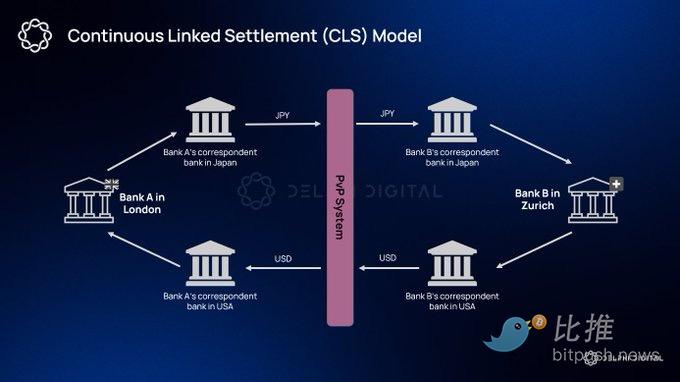
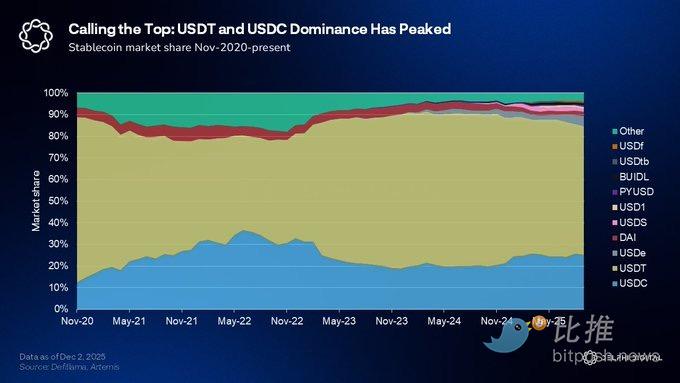
While USD stablecoins account for 99.7% of supply, this may have peaked. Traditional foreign exchange (FX) is a multi-trillion dollar market, but it's full of intermediaries, fragmented settlement paths, and expensive fees. Onchain FX compresses this entire structure by turning all currencies into tokenized assets on a shared execution layer, eliminating multiple middlemen.
Its product-market fit (PMF) will likely emerge in emerging market currency pairs where traditional FX paths are most expensive and inefficient. These neglected corridors are where crypto's value proposition is clearest.
7. Gold and Bitcoin Lead the "Fiat Debasement Hedge" Trade
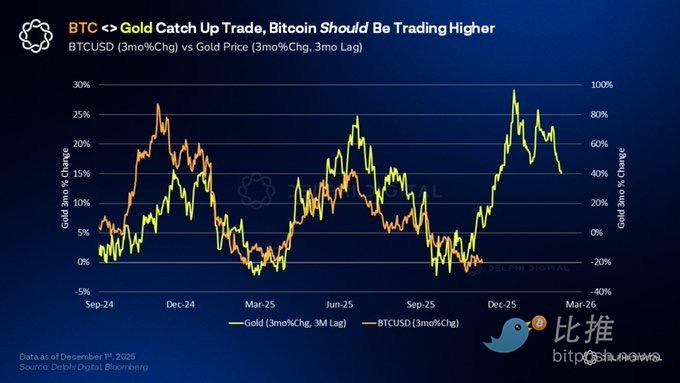
After we pointed out gold was one of the most watchable charts, it surged 60%. Despite record highs, global central banks bought over 600 tons, with China being the most aggressive buyer.
The macro environment supports further strength: global central banks are cutting rates; fiscal deficits will persist until 2027; global M2 supply is hitting new highs; the Fed is ending quantitative tightening (QT). Typically, gold leads Bitcoin by three to four months. As currency debasement becomes a mainstream topic in the 2026 midterm elections, both assets will attract flight-to-quality flows.
8. Exchanges Evolve into "Everything Apps"
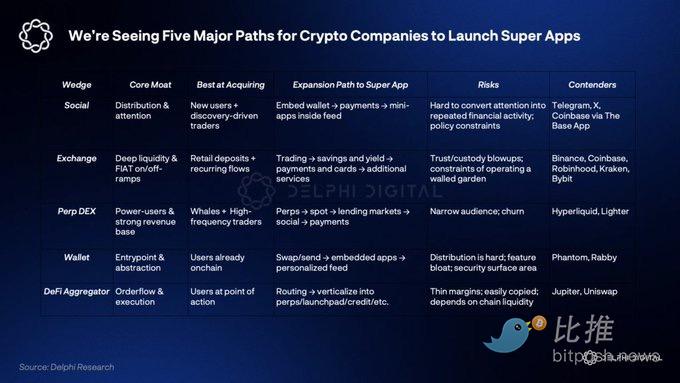
Coinbase, Robinhood, Binance, and Kraken are no longer just building exchanges; they are building everything apps.
Coinbase has Base as an operating system, Base App as an interface, USDC yield as underlying profit, and derivatives from Deribit. Robinhood's Gold membership grew 77% year-over-year, becoming a retention engine. Binance already operates at super-app scale with over 270 million users and $250 billion in Pay transaction volume. When distribution costs become cheap, value flows to platforms with users. In 2026, the winners will begin to win comprehensively.
9. Privacy Infrastructure Catches Up with Demand
Privacy rights are under pressure. The EU passed the Chat Control Act; cash transaction limits are capped at €10,000; the ECB's planned digital euro will have a €3,000 holding limit.
Privacy infrastructure is catching up. @payy_link is launching private crypto cards; @SeismicSys provides protocol-level encryption for fintech companies; @KeetaNetwork enables on-chain KYC without revealing personal data; @CantonNetwork offers privacy infrastructure for large financial institutions. Without a privacy path, stablecoin adoption will hit a ceiling.
10. Altcoin Returns Remain Dispersed
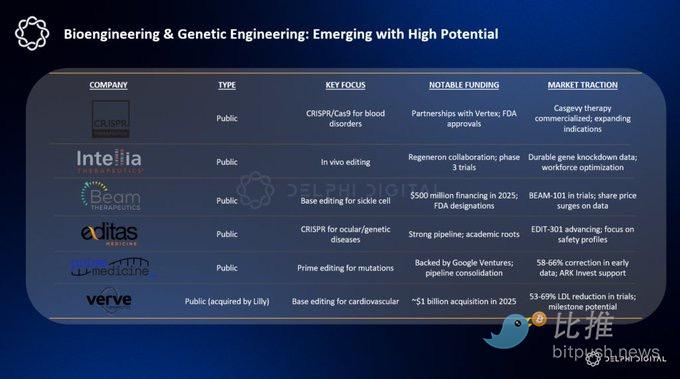
The kind of broad-based "rising tide" rebounds of past cycles will not return.
Over $3 billion in token unlocks are imminent. Competition from AI, robotics, and biotech industries is intensifying. ETF flows are highly concentrated in Bitcoin and a few large-cap assets.
Capital will coalesce around structural demand: tokens with ETF flows, protocols with real revenue and buybacks, and apps with genuine product-market fit. Winners will be concentrated in teams that build defensive moats in categories generating real economic activity.
Conclusion
The crypto industry is entering its next phase. Institutionalization has arrived. Prediction markets, on-chain credit, the agent economy, and stablecoins as infrastructure represent real paradigm shifts.
Crypto is becoming the infrastructure layer for global finance. The teams that understand this will define the next decade.
Twitter:https://twitter.com/BitpushNewsCN
Bitpush TG Community:https://t.me/BitPushCommunity
Bitpush TG Subscription: https://t.me/bitpush