Автор: Pink Brains
Компиляция: AididiaoJP, Foresight News
Децентрализованный ИИ существует потому, что у централизованного ИИ есть структурные узкие места, которые невозможно решить ни капиталом, ни кодом:
- Вычислительные ресурсы дефицитны и дороги
- Чрезмерная концентрация контроля
- Невозможно проверить выходные данные моделей
- Получение обучающих данных становится всё сложнее
Вычислительные ресурсы дефицитны и дороги
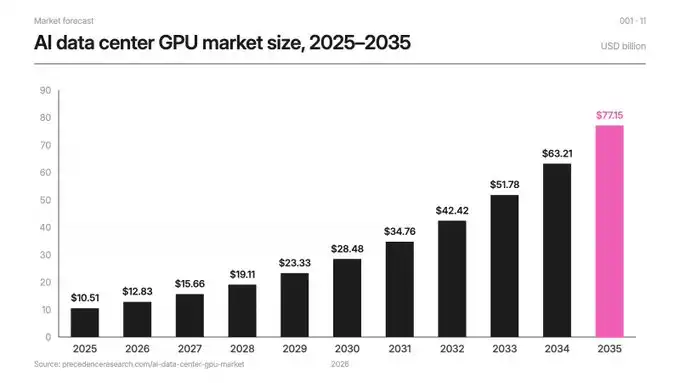
Инфраструктура GPU, по прогнозам, вырастет с 100 миллиардов долларов в 2025 году до 770 миллиардов долларов к 2035 году. GPU для центров обработки данных распродаются в течение нескольких месяцев подряд. Ожидается, что рынок децентрализованных вычислений вырастет с 90 миллиардов долларов в 2024 году до 220 миллиардов долларов к 2035 году (данные Research and Markets). Эта цифра имеет смысл только если вы верите, что дефицит является структурной, а не циклической проблемой, и мы считаем, что это именно так.
Чрезмерная концентрация контроля
ChatGPT, Gemini, Grok, Claude принадлежат и управляются несколькими частными компаниями. Текущая политика в области ИИ предполагает, что только несколько субъектов, способных сконцентрировать огромные вычислительные ресурсы, могут обучать мощные системы. Как только это предположение рухнет, ландшафт того, кто может создавать передовой интеллект, изменится кардинально.
Невозможно проверить выходные данные
Когда модель принимает решение, пользователь не может проверить, была ли запущена правильная модель, правильно ли выполнены вычисления, не были ли раскрыты конфиденциальные данные. Для чат-бота это ещё терпимо, но когда ИИ обрабатывает кредиты, здравоохранение или когда автономные агенты управляют кошельками в реальном времени, это совершенно неприемлемо.
Получение обучающих данных становится всё сложнее из-за проблем с конфиденциальностью и регулированием
Централизованный краулер, расположенный в одном регионе AWS, быстро будет ограничен по скорости, заблокирован по географическому признаку или ему будут подсовывать отравленный кеш. Как сказано в обзоре a16z на 2026 год, конфиденциальность становится «самым важным рвом в криптопространстве».
ИИ нуждается в блокчейне, чтобы сделать интеллект открытым, проверяемым и экономически доступным.
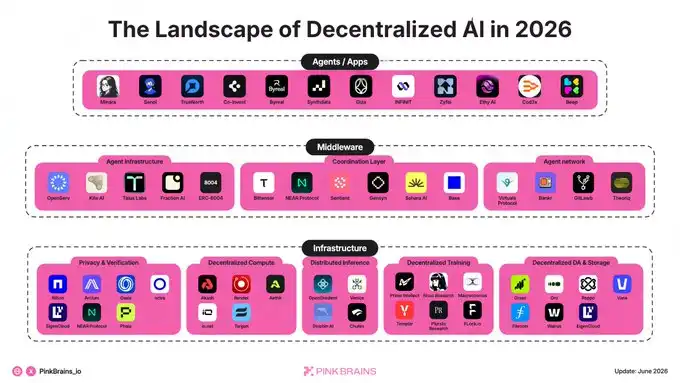
Карта технологического стека децентрализованного ИИ
- Слой приложений и услуг: ИИ-агенты могут делать многое, но в криптопространстве двумя доминирующими вариантами использования на данный момент являются агентские финансы (Agentic Finance) и агентские платежи (Agentic Payments).
- Слой промежуточного ПО (Middleware): связующие звенья — от фреймворков для создания и идентификации агентов, рынков агентов до координационного слоя.
- Слой инфраструктуры: базовые ресурсы для ИИ — уровень приватности и верификации, вычисления, инференс, обучение, данные и хранение.
Слой приложений и услуг
Агентские финансы превращают запросы на естественном языке в действия в блокчейне.
Агент ARMA от @gizatechxyz уже обработал более 46 миллиардов долларов объема агентских сделок на выбранных кредитных рынках — работает без опеки блочно за блоком на фреймворке AVS от EigenLayer.
@Infinit_Labs управляет кластером из более чем 20 специализированных агентов, которые могут превратить намерение вроде «зарабатывайте 1000 долларов в месяц с 1 BTC» в стратегии в один клик на Ethereum, Solana и Base.
@coinvestai от Liquid интегрирует исполнение в реальном времени прямо в ChatGPT и Claude, поддерживая торговлю на более чем 500 рынках через Model Context Protocol.
@minara интегрирована с Hyperliquid и недавно присоединилась к Lighter. Она запускает полный цикл торговли «анализ → решение → исполнение» через модель DMind и более 50 интеграций.
@Cod3xOrg: сеть легковесных ИИ-агентов, которые могут превращать намерения в построение и исполнение транзакций в блокчейне.
@Zyfai_: самокустодиальный DeFAI-агент, который автоматизирует и оптимизирует фарминг доходов, постоянно ребалансируя капитал между протоколами для получения скорректированной на риск APY без вмешательства человека.
Что касается прогнозных рынков, @SynthdataCo — это подсеть Bittensor, запускающая децентрализованную сеть финансового интеллекта для прогнозов. Майнеры соревнуются в моделировании краткосрочной ценовой неопределенности. Она уже предоставляет данные в реальном времени для таких продуктов, как Mode AI Quant на крипторынках Kalshi.
Агентские платежи: машина платит машине
Как интернет стал слоем коммуникации для цифровой экономики, так блокчейн и стейблкоины становятся расчетным слоем для агентских платежей.
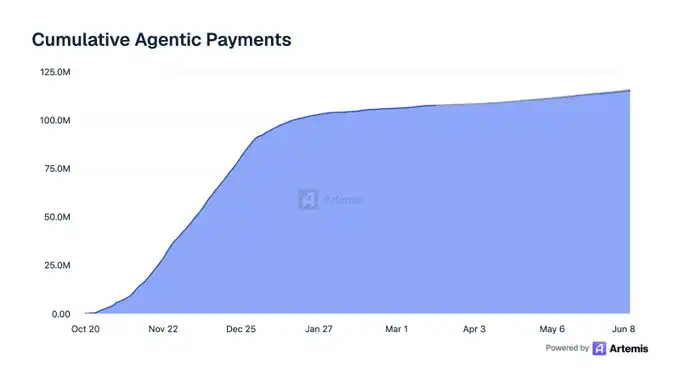
По состоянию на май 2026 года, x402 обработал более 173 миллионов транзакций на Base и Solana. В состав фонда x402 входят Google, Visa, AWS, Circle, Anthropic, Stripe и Cloudflare. Stripe начал использовать его с февраля 2026 года; AWS запустил собственный AgentCore Payments.
Активность покупателей и продавцов растет, большинство транзакций связано с реальным оплачиваемым использованием по запросу: вызовы API, услуги инференса ИИ, агентская коммерция и подобные рабочие нагрузки. Первоначальный цикл хайпа остыл, но реальное использование начинает соответствовать.
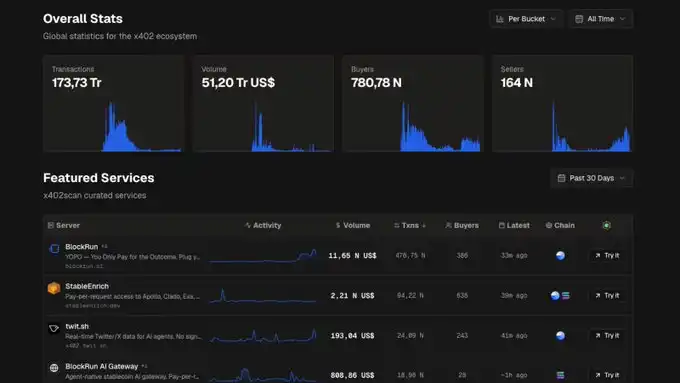
В то же время Machine Payments Protocol от Stripe и Tempo появляется как второй трек, с момента запуска записавший более 411,9 тысячи транзакций и 9600 покупателей.
Вместе эти сети показывают, что коммерция между машинами смещается в сторону более широкого применения, где программные агенты могут автономно торговать на машинных скоростях.
Слой промежуточного ПО (Middleware)
По мере роста количества агентов ключевой проблемой становится координация: как агенты находят друг друга, доказывают свою идентичность и совершают сделки без участия человека.
Пробелы в доверии здесь являются узким местом. Предполагаемый масштаб агентской коммерции к 2030 году достигнет 1,5-5 триллионов долларов, но внедрение ограничено одним моментом — большинство пользователей готовы позволить ИИ проводить исследования, но мало кто готов позволить ИИ реально совершать покупки.
Сегодняшние системы по-прежнему полагаются на API-ключи, и почти ни одна система не рассматривает агентов как сущности с идентичностью.
@GoKiteAI создает специализированный L1, в котором идентичность и платежи являются нативными примитивами. ERC-8004 — это стандарт Ethereum, предоставляющий агентам переносимую ончейн-идентичность и репутацию, которая может следовать за ними через цепочки.
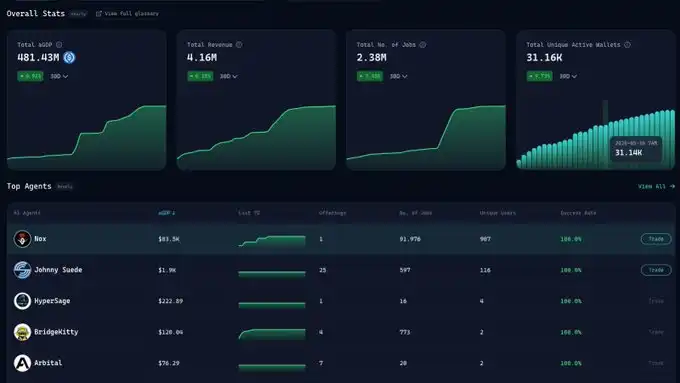
На стороне рынков, @virtuals_io — это операционная система для агентской экономики на Base. По состоянию на июнь 2026 года он обработал более 2,38 миллиона агентских задач, создав почти 4,8 миллиарда долларов «агентского ВВП».
Но жемчужиной этого слоя является Bittensor. Это сеть специализированных подсетей, каждая из которых является микроэкономикой: майнеры запускают модели ИИ, валидаторы оценивают выходные данные, эмиссия TAO направляется тем, кто производит наиболее полезную работу. Три механизма делают его экономически серьезным:
- Халвинг в декабре 2025 года снизил ежедневную эмиссию TAO с 7200 до 3600, что соответствует хардкапу в 21 миллион.
- Обновление dTAO предоставляет каждой подсети собственный токен Alpha и пул AMM — рынок решает эмиссию.
- Обновление Taoflow (запущено в ноябре 2025 года) распределяет эмиссию исключительно на основе чистого потока стейкинга. Подсеть, у которой количество анстейкинга превышает количество стейкинга, может упасть до нуля. По замыслу это дарвинизм.
В сети уже более 128 активных подсетей, по сообщениям, три крупнейшие вычислительные подсети достигли совокупных 20 миллионов долларов годового регулярного дохода (ARR) в течение трех месяцев после монетизации. Дарвинизм — это продукт.
Другие проекты сосредоточены на создании специализированных блокчейнов для ИИ или предоставлении инструментов, фреймворков и стимулов, необходимых для поддержки экосистем ИИ, принадлежащих сообществу.
@NEARProtocol: невидимый координационный слой, сочетающий расчеты, идентичность, конфиденциальность, TEE, MPC и защиту PII для обслуживания автономных агентов.
@base — «главная база» для агентской экономики. Base MCP позволяет таким ИИ-инструментам, как Claude, ChatGPT, Cursor, через промпты выполнять ончейн-действия на таких платформах, как Uniswap, Morpho, Avantis — обмен, переводы, взаимодействие с DeFi.
@SentientAGI: его экосистема GRID соединяет агентов, модели, данные и вычисления, маршрутизируя запросы к специализированным участникам для предоставления наилучшего результата.
@gensynai: верифицируемое выполнение машинного обучения, координирует распределенное оборудование для обучения и инференса, обеспечивая доверие к работе, токен $AI координирует сеть.
@SaharaAI соединяет данные, модели, агентов и вознаграждения в единой нативной для ИИ экосистеме.
Слой инфраструктуры
Инфраструктура — это скелет ИИ — примитивы сырых вычислений, инференса, обучения, данных и приватности, от которых зависит всё верхнее. Это самый капиталоемкий слой в стеке децентрализованного ИИ.
Децентрализованные вычисления
@akashnet управляет рынком обратных аукционов, где провайдеры делают ставки, чтобы получить ваши рабочие нагрузки. В первом квартале 2026 года рост новых аренд составил 27%, достигнув 43 500+, третий квартал подряд роста. Его сервис инференса AkashML обработал почти 120 миллиардов токенов в апреле, стоимость на 60–85% ниже, чем у основных облачных провайдеров.
@rendernetwork сообщил о росте использования на 428% в годовом исчислении.
@ionet агрегировал более 130 000 GPU из 130+ стран на Solana.
@AethirCloud — один из тех, кто реально приносит доход: заявляет около 166 миллионов долларов годового регулярного дохода (ARR) (третий квартал 2025 года), предоставил более 1,5 миллиарда вычислительных часов.
Распределенный и верифицируемый инференс
Инференс составляет более 70% операционных затрат на ИИ, и Goldman Sachs прогнозирует, что агентский ИИ увеличит потребление токенов в 24 раза к 2030 году — до 120 триллионов токенов в месяц.
Децентрализованный ответ — сделать инференс дешевым, приватным и верифицируемым.
@AskVenice уже обслуживает более 2 миллионов пользователей с помощью приватных и нецензурируемых моделей, предоставляя более 50 миллиардов токенов в день, его защита — это модели.
@OpenGradient обработал более 2 миллионов верифицируемых инференсов, сгенерировав 500 000+ доказательств zkML.
@chutes_ai: разработчики могут развертывать и масштабировать модели ИИ через простой API, поддерживаемый майнерами GPU, стоимость может быть до 85% дешевле, чем у AWS. Доход платформы превращается в спрос на токены через механизм автоматического стейкинга.
@dphnAI — децентрализованная сеть инференса ИИ. Примечательно, что Dolphin разработал нецензурируемую модель, используемую Venice AI, и направляет 100% дохода сети на обратный выкуп токенов.
Децентрализованное обучение
Обучение — самая сложная проблема, но и та, которая имеет наибольшее влияние — она определяет, должны ли передовые модели создаваться внутри трех-четырех корпоративных лабораторий.
INTELLECT-1 (10 миллиардов параметров) от @PrimeIntellect — это первый запуск глобального распределенного обучения; INTELLECT-2 (32 миллиарда параметров) — первый запуск распределенного обучения с подкреплением (RL).
@tplr_ai успешно обучил модель Covenant-72B на более чем 70 распределенных узлах, обработав около 1,1 триллиона токенов, снизив затраты на связь в 146 раз.
@NousResearch: его сеть Psyche реализует отказоустойчивое распределенное обучение, Hermes 4.3 стала первой моделью Hermes, обученной не на централизованном кластере, а на децентрализованной инфраструктуре.
Подсеть IOTA (SN9) от @MacrocosmosAI занимается децентрализованным предобучением LLM и «обучением дома», а её подсеть Data Universe (SN13) обрабатывает уровень данных. Серия алгоритмов DiLoCo с низкой коммуникацией позволяет GPU, разбросанным по всему миру, сотрудничать без сверхбыстрых внутренних сетей дата-центров.
Децентрализованная доступность и хранение данных
По мере масштабирования рабочих нагрузок ИИ оба становятся узким местом. Передовые модели потребляют огромные объемы свежих данных, а потребности в хранении резко возросли до такой степени, что основные производители жестких дисков сообщают о продаже производственных мощностей на годы вперед.
Экономика привлекательна. Децентрализованное хранилище может быть на 60-80% дешевле, чем традиционные облачные провайдеры, такие сети, как @Filecoin, предлагают хранение по цене менее 1 доллара за ТБ в месяц, в то время как централизованные альтернативы стоят около 30 долларов.
@grass платит 2,5 миллионам узлов из 190 стран за неиспользуемую пропускную способность, позволяя лабораториям ИИ сканировать сеть в реальном времени.
@WalrusProtocol — быстрорастущий конкурент, построенный @Mysten_Labs для децентрализованного хранения и доступности данных — использует двумерное кодирование стирания для эффективного хранения больших «блобов» и всё чаще позиционируется как слой постоянной памяти для ИИ-агентов.
@eigencloud: верифицируемая облачная платформа, построенная вокруг доступности данных, верифицируемых вычислений и разрешения споров. Обеспеченная рестейкингом ETH, её теория заключается в том, чтобы позволить ИИ-агентам работать с криптографическими гарантиями, делая действия доказуемыми, аудируемыми и исполняемыми.
@vana — EVM L1, где Data DAOs и Data Liquidity Pools превращают личные данные в токенизируемые, торгуемые активы.
@reppo и @oroagents создают высококачественные и надежные наборы данных для обучения ИИ с помощью мотивирующих конкурсов.
Слой приватности и верификации
Обычный пользователь ИИ не может проверить, обрабатывались ли его данные приватно моделью, правильно ли были выполнены вычисления и даже использовалась ли заявленная модель.
В 2026 году приватность и верификация становятся обязательным условием для ИИ, а не дополнительной функцией.
@nillion — «слепой компьютер», использующий MPC и собственный Nil Message Compute для выполнения вычислений на зашифрованных данных без их расшифровки. Сценарии использования включают приватный инференс ИИ, зашифрованные базы данных и приватный RAG (позволяющий ИИ запрашивать специализированные базы знаний без раскрытия их содержимого).
@Arcium: децентрализованная сеть конфиденциальных вычислений на Solana. Сценарии использования включают Umbra (скрытые переводы / приватный фарминг) и конфиденциальное обучение ИИ на чувствительных наборах данных.
@OasisProtocol: приватность-ориентированный L1, использующий ROFL (Runtime Offchain Logic), фреймворк на основе TEE для запуска верифицируемых, защищенных приватностью оффчейн-вычислений — для ИИ-агентов, обучения моделей или оракулов.
@octra: приватность-ориентированный L1 с нативной поддержкой FHE, использующий фирменную схему HFHE (Hypergraph FHE), разработанную для параллельных зашифрованных вычислений и высокой пропускной способности.
@eigencloud: тяжеловес в верификации, построенный на основе безопасности рестейкинга EigenLayer. EigenAI (верифицируемый инференс LLM — это API, совместимый с OpenAI, для открытых моделей, где промпт и ответ можно доказательно проверить на отсутствие изменений) и EigenCompute (верифицируемое оффчейн-исполнение для логики агентов).
@PhalaNetwork. Облачные GPU мощны, но не приватны; Phala делает рабочие нагрузки доказуемыми, даже зашифрованными для самой Phala. Её основной продукт — GPU TEE на Phala Cloud развертывает открытые модели на оборудовании, предоставляя API, совместимый с OpenAI, где каждый инференс имеет криптографическое доказательство.
Куда движется децентрализованный ИИ в 2026-2027 годах
Спрос на ИИ растет быстрее, чем инфраструктура за ним поспевает, ИИ-агенты становятся основным двигателем роста — ончейн-трек готов.
Вычисления превращаются в класс активов, ончейн-рынки становятся его финансовым слоем. Институциональные участники переходят от экспериментов к инвестициям в инфраструктуру.
Токеномика становится структурным преимуществом децентрализованного ИИ в координации капитала, вычислений и данных. Возможности расширяются от ИИ к роботам, автономным машинам и физическому ИИ.
Заключение
Децентрализованный ИИ растет в основных стеках — инфраструктуре, промежуточном ПО, приложениях — о чем свидетельствуют доходы от вычислений, растущая агентская экономика и крупномасштабное распределенное обучение.
Но эта область все еще находится на ранней стадии. Доходы часто отстают от токенных стимулов, внедрение остается неравномерным, и, хотя общие инвестиции в ИИ стремительно растут, децентрализованный ИИ все еще составляет лишь небольшую часть венчурных инвестиций. Токен-ориентированные сети могут быть мощным преимуществом, но только при правильном дизайне захвата стоимости.
Тем не менее, появление таких проектов, как Bittensor, NEAR, Virtuals, Base и Venice, показывает, что децентрализованный ИИ эволюционирует от спекулятивной нарративной модели к новой модели координации вычислений, данных, капитала и интеллекта.