Автор: Лянь Янь Шэ
По состоянию на 3 июня 2026 года MicroStrategy (MSTR) владеет 843 706 биткойнами (рыночная стоимость ~531 млрд долларов) и одновременно имеет 6,7 млрд долларов конвертируемых облигаций и 15,5 млрд долларов бессрочных привилегированных акций, годовые обязательства по выплатам составляют около 17,12 млрд долларов. Только одна серия привилегированных акций STRC имеет объем 10,5 млрд долларов, ежегодные дивидендные выплаты по ней составляют около 1,2 млрд долларов, в то время как годовой доход от программного бизнеса компании составляет лишь около 500 млн долларов — только на проценты уходят все деньги.
一、Неприкасаемый талисман дал трещину
С 26 по 31 мая 2026 года MicroStrategy продала по средней цене 77 135 долларов за монету 32 биткойна на общую сумму около 2,5 млн долларов. Эта сделка составляет лишь 0,004% от общего холдинга в 843 738 монет, рынок начал оценивать риск истощения денежного потока MicroStrategy.
После выхода новостей биткойн за 24 часа упал ниже 70 000 долларов, в настоящее время ~63 000 долларов. Акции MSTR за два дня упали на 17%. На платформе Polymarket вероятность того, что MicroStrategy продаст больше биткойнов до конца 2026 года, взлетела примерно до 90%. В условиях истощения денежного потока MicroStrategy приходится продавать монеты для выплаты процентов.
2,5 млн долларов для компании с капитализацией 44 млрд долларов — это мелочь. Но обещание Майкла Сейлора, которое он три года подряд повторял — никогда не продавать биткойны — было нарушено.
Еще 5 мая на телефонной конференции по итогам первого квартала Сейлор дал намек. Его дословная фраза: «Мы можем продать некоторое количество биткойнов для выплаты дивидендов, чтобы снизить чувствительность рынка и дать сигнал, что мы действительно это делаем». Генеральный директор Фонг Ле выразился более прямо: компания будет продавать биткойны, когда это будет ей выгодно, а не просто сидеть и говорить «никогда не продадим».
Подобные заявления свидетельствуют о том, что финансовое положение MicroStrategy уже находится в опасном состоянии.
二、Полная картина долгов: сколько на самом деле должна MicroStrategy?
Структуру капитала MicroStrategy можно упрощенно представить в три слоя: нижний слой — резерв из 843 706 биткойнов (активы); средний слой — конвертируемые облигации (традиционный долг); верхний слой — бессрочные привилегированные акции (новый уровень финансирования).
2.1 Структура конвертируемых облигаций: матрица долга с низкими процентами от 8,2 до 6,7 млрд долларов
До 2024 года MicroStrategy накопила около 4,26 млрд долларов конвертируемых облигаций (по состоянию на 3-й квартал 2024 года). Затем в ноябре 2024 года она выпустила еще 3 млрд долларов 0% конвертируемых облигаций с погашением в 2029 году, а в 1-м квартале 2026 года — еще 2 млрд долларов 0% конвертируемых облигаций с погашением в 2030 году. Пиковый общий объем конвертируемых облигаций составлял около 9,26 млрд долларов.
15 мая 2026 года MicroStrategy использовала около 1,38 млрд долларов наличных, чтобы с дисконтом 8% выкупить 1,5 млрд долларов номинальной стоимости 0% конвертируемых облигаций с погашением в 2029 году. После выкупа общий объем конвертируемых облигаций снизился примерно до 6,754 млрд долларов (источник: Dashboard strategy.com).
Текущая детализация выпусков конвертируемых облигаций:
| Срок погашения |
Основная сумма |
Ставка купона |
Годовые проценты |
Право продажи держателем |
| Февраль 2027 г. |
~1,05 млрд долл. |
~0% |
~0 долл. |
Нет права продажи |
| Сентябрь 2028 г. |
1,01 млрд долл. |
0,625% |
6,3 млн долл. |
Можно продать в сентябре 2027 г. |
| Декабрь 2029 г. |
~1,5 млрд долл. |
0% |
0 долл. |
Можно продать в июне 2028 г. |
| Март 2030 г. |
800 млн долл. |
0,625% |
5 млн долл. |
Можно продать в сентябре 2028 г. |
| 2030 г. (новый) |
2 млрд долл. |
0% |
0 долл. |
Требует подтверждения |
| Март 2031 г. |
604 млн долл. |
0,875% |
5,3 млн долл. |
Можно продать в сентябре 2028 г. |
| Июнь 2032 г. |
800 млн долл. |
2,25% |
18 млн долл. |
Можно продать в июне 2029 г. |
| Итого |
~6,754 млрд долл. |
Взвешенная ~0,42% |
~34,6 млн долл./год |
— |
У этих конвертируемых облигаций есть несколько общих черт: все они являются необеспеченным старшим долгом, биткойны никогда не использовались в качестве залога; ставка купона крайне низкая, взвешенная средняя составляет всего 0,42%; держатели имеют право на конвертацию (могут конвертировать по заранее установленной цене в обыкновенные акции MSTR), MicroStrategy имеет право выбора способа расчета (наличные/акции/комбинация); большинство выпусков имеют право продажи держателем (опцион Put), что является способом снижения пузыря, о котором будет сказано позже.
Это самый безопасный уровень всей долговой системы — безопасный не для кредиторов, а для MicroStrategy. Чрезвычайно низкая стоимость процентов означает, что ежегодно необходимо выплачивать всего около 34,6 млн долларов, но реальное давление по погашению основной суммы долга распределено по временной шкале с 2027 по 2032 год. В феврале 2027 года необходимо выплатить 1 млрд долларов.
2.2 Бессрочные привилегированные акции: 15,5 млрд долларов постоянного кредита
Начиная с января 2025 года MicroStrategy открыла для себя новый путь финансирования — бессрочные привилегированные акции. По состоянию на 3 июня 2026 года общий объем привилегированных акций достиг ошеломляющих 15,482 млрд долларов (источник: Dashboard strategy.com), что в 2,3 раза превышает объем конвертируемых облигаций.
В настоящее время существует 5 публично торгуемых серий привилегированных акций:
| Код |
Название |
Объем |
Дивидендная ставка |
Ключевые характеристики |
| STRK |
Strike |
~563 млн долл. |
Фиксированная 8% |
Конвертируемые в MSTR (цена конвертации 1000 долл.), кумулятивные привилегированные акции |
| STRF |
Strife |
~2,1 млрд долл. |
Фиксированная 10% |
Неконвертируемые, высший приоритет, при невыплате ставка увеличивается на 1% в год |
| STRD |
Stride |
~1,1 млрд долл. |
Фиксированная 10% |
Некумулятивные (можно приостановить без возмещения), низший приоритет |
| STRC |
Stretch |
~8,5 млрд долл. |
Динамическая корректировка, текущая 11,5% |
Бессрочные привилегированные акции, без даты погашения, ежемесячные дивиденды |
| STRE |
Stream |
Не раскрывается |
Не раскрывается |
Номинированы в евро, ориентированы на европейские институты |
Из пяти типов привилегированных акций STRC не только самая крупная, но и центральное противоречие всей долговой системы.
2.3 Годовые данные по выплате процентов
| Категория |
Годовая сумма |
Доля |
| Дивиденды по привилегированным акциям STRC |
~978 млн долл. |
~57% |
| Другие привилегированные акции (STRK+STRF+STRD+STRE) |
~360 млн долл. |
~21% |
| Итого по привилегированным акциям |
1,338 млрд долл. |
~78% |
| Проценты по конвертируемым облигациям (взвешенные 0,42%) |
35 млн долл. |
~2% |
| Итого годовые обязательства по выплатам |
1,712 млрд долл./год |
100% |
Годовой доход MicroStrategy от программного бизнеса составляет всего около 500 млн долларов. Одни только годовые дивиденды по STRC составляют почти 1 млрд долларов и съедают весь денежный поток компании. Именно поэтому им пришлось продавать биткойны.
三、STRC: Как работает постоянный заем в 8,5 млрд долларов?
3.1 Логика дизайна продукта
Полное название STRC — Series A Perpetual Stretch Preferred Stock. Он был размещен на бирже в июле 2025 года, при IPO собрано 2,521 млрд долларов, начальная ежемесячная дивидендная ставка — 9%. Сейлор назвал это «моментом iPhone» для компании. Ключевая цель — позволить компании значительно увеличить холдинги, не продав ни одного биткойна.
Юридически STRC является бессрочными привилегированными акциями, а не облигациями. Это означает:
-
Нет срока погашения: Инвесторы никогда не смогут требовать от MicroStrategy возврата основной суммы долга. У STRC нет давления по погашению основной суммы.
-
Нет обязательных условий выкупа: Компания оставляет за собой право принудительного выкупа по цене 101 доллар, но это право выбора, а не обязательство.
-
Дивиденды не гарантированы: Если компания решит приостановить выплату дивидендов, действие статьи о блокировке дивидендов синхронно заморозит распределение по всем нижестоящим акциям (включая обыкновенные акции MSTR) до тех пор, пока STRC не будет компенсирована невыплаченная часть дивидендов.
-
Биткойны не используются в качестве залога: Официально четко заявлено, что привилегированные акции STRC и другие не обеспечены биткойнами компании, а имеют лишь приоритетное право требования на оставшиеся активы.
Короче говоря: покупатели STRC передали деньги MicroStrategy и никогда не смогут получить обратно основную сумму, а могут лишь выйти, продав их на вторичном рынке или когда компания выберет их выкуп по цене 101 доллар за акцию. MicroStrategy по сути использует деньги, привлеченные от розничных и институциональных инвесторов, которые не нужно возвращать, чтобы покупать больше биткойнов и выплачивать долги.
В настоящее время номинальная стоимость STRC составляет всего 94 доллара. В феврале этого года STRC также падал до этого уровня.
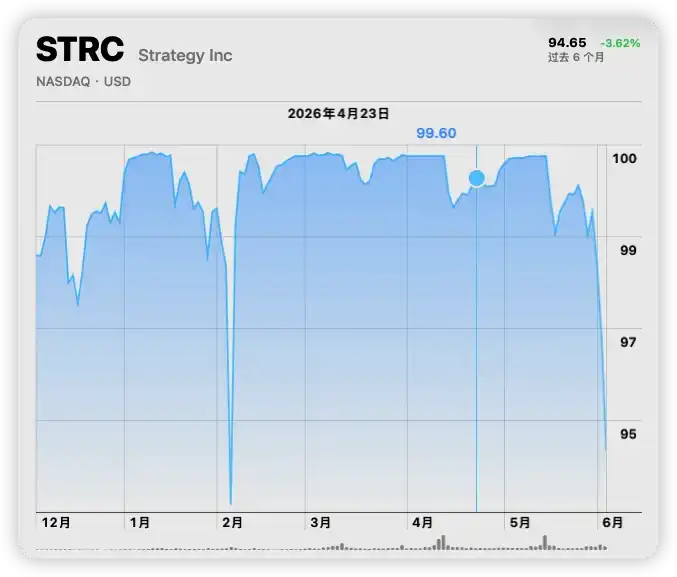
Покупатели STRC — не крипто-нативные верующие в биткойн, а инвесторы в инструменты с фиксированным доходом, стремящиеся к стабильным высоким процентам. Их ориентир — не спот на биткойн, а высокодоходные облигации. Покупающие их люди хотят именно этого ежемесячного денежного потока в 11,5%, а не роста стоимости биткойна.
3.2 Цикл из трех ног
Функционирование STRC не зависит от операционного денежного потока, это цикл «левая нога тянет правую»:
Первая нога: Новые инвесторы покупают STRC, привлеченные средства поступают на счет MicroStrategy.
Вторая нога: Средства делятся на две части: большая часть идет на покупку биткойнов (увеличение резервов BTC), меньшая часть поступает в резерв в долларах USD.
Третья нога: Долларовый резерв ежемесячно выплачивает дивиденды по STRC; резерв биткойнов растет в цене на вторичном рынке.
Пока этот цикл крутится, MicroStrategy не нужно продавать ни одного биткойна из своих запасов для выплаты процентов.
3.3 Критическое значение в 2,3%
На конференц-звонке по итогам квартала Сейлор привел ключевой расчет критического значения: если годовой темп роста биткойна достигнет 2,3%, то ежегодный рост стоимости позиции в BTC в долларах будет больше или равен общей сумме годовых обязательств в 1,5 млрд долларов.
Пересчитаем по данным на 3 июня 2026 года: 843 706 BTC × 63 409 долларов × 2,3% ≈ 1,23 млрд долларов, что ниже текущих годовых обязательств в 1,712 млрд долларов. При текущем уровне цены биткойна для покрытия всех обязательств требуется более высокий годовой темп роста BTC. Если также учесть падение цены с ~81 000 долларов в марте до ~63 000 долларов в июне (падение на 22%), это долговое давление становится очевидным.
3.4 Хронология от повышения ставок до заявления о продаже биткойнов
Если расположить хронологию STRC от листинга до заявления о продаже монет, можно увидеть четкую цепочку сигналов:
-
Июль 2025 г.: Листинг STRC, начальная дивидендная ставка 9%.
-
Декабрь 2025 г.: MicroStrategy незаметно создала резерв в 1,44 млрд долларов (начала подготовку к «замедлению дополнительной эмиссии STRC»).
-
Март 2026 г.: Дивидендная ставка STRC повышена с 9% до 11,5% (сигнал того, что вторичный рынок требует более высокой процентной ставки).
-
17 апреля 2026 г.: Переход на полумесячные выплаты дивидендов (для снижения волатильности в дни без дивидендов).
-
5 мая 2026 г.: Сейлор официально признал возможность продажи BTC для выплаты дивидендов.
За девять месяцев STRC превратился из «момента iPhone» в дивидендную обузу.
四、Четыре механизма управления долгом MicroStrategy
Долговая игра MicroStrategy использует высокую премию акций MSTR и возможности финансирования через привилегированные акции для решения проблемы основной суммы долга и процентов. В отношении этих долгов команда Сейлора в основном использует следующие четыре способа управления.
4.1 Путь первый: конвертация долга в акции (ключевой механизм выхода)
Это базовое условие всех конвертируемых облигаций MicroStrategy. Согласно договору, когда долг подлежит погашению или держатель активирует конвертацию, MicroStrategy имеет право выбора способа расчета и может погасить его полностью наличными, полностью обыкновенными акциями MSTR или комбинацией наличных и акций.
На практике, пока цена акций MSTR выше цены конвертации, установленной при выпуске облигаций, кредиторы обычно выбирают конвертацию в акции (поскольку доход от продажи акций после конвертации выше, чем получение наличных). Это означает, что при сохранении оптимизма на рынке эти долги в конечном итоге не нужно будет погашать настоящими деньгами; они будут поглощены ликвидностью акций на вторичном рынке ценой умеренного размытия существующей доли акционеров. Именно поэтому ранее конвертируемые облигации MicroStrategy были раскуплены.
4.2 Путь второй: выкуп за наличные со скидкой (снижение пузыря)
Когда облигации торгуются на вторичном рынке со скидкой, MicroStrategy напрямую выкупает долг досрочно за наличные.
Последний случай (15 мая 2026 г.): MicroStrategy использовала около 1,38 млрд долларов наличных и со скидкой 8% напрямую выкупила 0% конвертируемые облигации на сумму 1,5 млрд долларов с погашением в 2029 году. Цена конвертации этих облигаций составляла 672,40 доллара за акцию, тогда как цена акций MSTR в то время была значительно ниже, делая опцион на конвертацию практически бесполезным, из-за чего рыночная цена облигаций упала до 88,93 доллара от номинала. MicroStrategy выкупила их по цене чуть выше рыночной, не только уменьшив будущее долговое бремя, но и напрямую получив прибыль на бумаге.
Для поддержки таких операций MicroStrategy специально создала резерв в долларах США для управления ликвидностью. Этот резерв при создании в декабре 2025 года составлял 1,44 млрд долларов, на пике в конце 1-го квартала — около 2,21 млрд долларов, а после выкупа в мае резко упал примерно до 900 млн долларов (по данным Dashboard на 3 июня — 900 млн долларов).
4.3 Путь третий: рефинансирование и замещение долга
В периоды низких процентных ставок MicroStrategy выпускает облигации большего объема с более поздними сроками погашения, чтобы выкупить старые облигации, срок погашения которых приближается или условия которых ограничены.
Классический случай (сентябрь 2024 г.): MicroStrategy выпустила 1,01 млрд долларов конвертируемых облигаций 2028 года (ставка купона 0,625%), а на полученные деньги немедленно досрочно выкупила обеспеченные старшие ноты на 500 млн долларов. Этот шаг рефинансирования имел два эффекта: во-первых, увеличил дюрацию (отодвинул срок погашения); и во-вторых, что самое главное, освободил 69 080 биткойнов, заложенных по старым облигациям, превратив все биткойны обратно в незаложенные качественные активы.
4.4 Путь четвертый: переход к бессрочным привилегированным акциям (дополнительная эмиссия по программе ATM)
Это наиболее очевидное изменение стратегии MicroStrategy в 2025-2026 годах. Чтобы избежать риска концентрации погашений традиционных конвертируемых облигаций, в прошлом году MicroStrategy через программу ATM активно выпускала на рынок два типа продуктов: MSTR (цифровые долевые инструменты) и STRC (цифровые кредитные инструменты/привилегированные акции).
Ключевым преимуществом таких бессрочных привилегированных акций, как STRC, является отсутствие срока погашения, а значит, нет давления по погашению основной суммы долга. MicroStrategy фактически использует деньги, привлеченные от розничных и институциональных инвесторов, которые не нужно возвращать, чтобы погашать традиционные долги с четкими сроками погашения, однако это требует высоких процентов.
С начала 2026 года только по привилегированным акциям STRC через ATM было привлечено около 5,58 млрд долларов, а общий объем достиг примерно 8,5 млрд долларов. Значительная часть этих средств была направлена на покупку биткойнов и пополнение долларового резерва.
五、Почему MicroStrategy пришлось продавать биткойны для выплаты процентов
5.1 Цепочка триггеров
STRC предусматривает этот запасной вариант — продажу монет для выплаты процентов. Полная цепочка триггеров выглядит так:
Препятствия в дополнительной эмиссии STRC → Истощение долларового резерва → Необходимость продажи BTC для выполнения обязательств до того, как резерв иссякнет
В повседневной деятельности MicroStrategy ежемесячно требуется выплачивать около 125 млн долларов дивидендов + процентов (в сумме годовые обязательства 15-17 млрд долларов). Источники этих денег делятся на две части:
-
1. Средства, привлеченные от новой эмиссии STRC. Инвесторы покупают STRC, часть средств напрямую поступает на операционный счет, чего достаточно для покрытия ежемесячных выплат. Это обычный путь.
-
2. Долларовый резерв в 2,25 млрд долларов. Когда темпы дополнительной эмиссии STRC замедляются, и ежемесячное финансирование ниже ежемесячных обязательств, разница покрывается из резерва.
При текущем резерве в 900 млн долларов, разделенном на ежемесячные обязательства в 125 млн долларов, этого хватит примерно на 7,2 месяца. Это и есть сжатая на сегодняшний день ситуация с теми 18 месяцами покрытия, о которых ранее говорило руководство; выкуп в мае на 1,4 млрд долларов напрямую истощил большую часть резерва.
5.2 Сколько монет нужно продать?
Если STRC полностью не продается, долларовый резерв истощен, а цена BTC не растет, сколько из резерва в 843 706 биткойнов придется продать MicroStrategy, чтобы выплатить годовые обязательства?
Формула расчета: Годовые выплаты в долларах ÷ Цена BTC = Требуемое количество к продаже
При годовых обязательствах в 1,712 млрд долларов и текущей цене BTC в 63 409 долларов, годовая необходимость продажи составляет примерно 27 000 BTC, что составляет около 3,2% от общего холдинга.
Если BTC вернется к уровню 81 000 долларов (уровень начала мая), годовой объем необходимых продаж снизится примерно до 21 100 монет (2,5% от общего холдинга).
При цене в 63 409 долларов, не учитывая рост стоимости BTC, весь холдинг может поддерживать выплаты около 31 года. Именно так получается цифра «31,2» в графе «Срок покрытия дивидендов BTC в годах» на Dashboard strategy.com.
5.3 Зачем снижать чувствительность рынка
Когда 5 мая на телефонной конференции Сейлор говорил о снижении чувствительности рынка, это были не просто слова. Недавно продали 32 монеты (0,004% от общего холдинга), показав рынку: смотрите, не рухнуло! В следующий раз, когда понадобится продать, паники будет меньше. А в итоге — сильный обвал!
Генеральный директор Фонг Ле описал цель продажи монет как укрепление баланса и повышение содержания BTC на акцию. Действия MicroStrategy означают, что продажа монет переопределяется с подстраховки на случай кризиса в обычный операционный инструмент.
六、Сценарий "взрыва": Развалится ли MicroStrategy?
6.1 Финансовая пирамида?
Известный медвежий инвестор с Уолл-Стрит Питер Шифф неоднократно публично заявлял, что MicroStrategy — это классическая централизованная финансовая пирамида, STRC — неустойчивая афера, и предсказывал скорое банкротство компании.
| Обвинение |
Факты |
| MicroStrategy — финансовая пирамида |
По состоянию на июнь 2026 года компания владеет 843 706 BTC (стоимость ~53,5 млрд долл.), общий долг + привилегированные акции ~22,2 млрд долл., коэффициент покрытия активов ~2,4. Биткойны не заложены, нет условий для принудительного закрытия. |
| Дивиденды по STRC неустойчивы |
Дивиденды действительно являются некумулятивными или дискреционными (совет директоров может решать по своему усмотрению), юридически их можно отложить или приостановить. Доходность в 11,5% уже включает компенсацию за риск. |
| Компания продает BTC для погашения долгов |
Продажа 32 BTC в мае 2026 года (2,5 млн долл.) является фактом, но цель — выплата дивидендов по STRC, что составляет 0,004% от холдинга. |
| На грани банкротства |
У компании положительный операционный денежный поток (выручка в 1-м кв. 124 млн долл.), резерв наличных 900 млн долл., годовые процентные расходы всего 34,6 млн долл. При отсутствии условий принудительного закрытия отсутствует механизм запуска сценария банкротства. |
Вывод: Утверждение о финансовой пирамиде не подкреплено данными. Однако также необходимо отметить, что MicroStrategy не является объектом стоимостного инвестирования. Это инструмент для получения кредитного плеча к биткойну с премией. mNAV 1,23 означает, что цена акций торгуется с премией в 23% к чистой стоимости биткойновых активов на акцию, а не ниже внутренней стоимости.
6.2 Ранжирование реальных рисков (от высокого к низкому)
⚠️ Риск первый: Исчезновение премии mNAV → Истощение способности к финансированию
Это самый смертельный риск для MicroStrategy. В настоящее время MicroStrategy уже трудно привлекать средства без залога биткойнов.
Основная логика финансирования MicroStrategy заключается в использовании премии, возникающей из-за того, что цена акций MSTR выше стоимости биткойновых активов на акцию, для выпуска акций/привилегированных акций с целью арбитража. Пока mNAV > 1, при выпуске каждой акции MSTR или каждого выпуска STRC компания получает больше денег, чем стоимость эквивалентного количества BTC. Если mNAV упадет ниже 1 (т.е. цена акций окажется ниже стоимости BTC на акцию), этот механизм арбитража перестанет работать.
Текущий mNAV составляет 1,23, что значительно снизилось по сравнению с более ранним диапазоном 1,5-2,0. Если он продолжит сжиматься до уровня около 1, финансирование по программе ATM для STRC станет невозможным, долларовый резерв невозможно будет пополнить, и в конечном итоге будет запущен путь продажи монет.
⚠️ Риск второй: Долгосрочная стагнация BTC + STRC не продается → Вынужденный цикл продажи монет
Это порочный круг положительной обратной связи и худший сценарий, ожидаемый рынком в настоящее время.
-
BTC не растет → Новые покупатели STRC выжидают (не хотят покупать падающий актив).
-
STRC не продается → Долларовый резерв продолжает истощаться.
-
Резерв иссякает → Вынужденная продажа BTC для выплаты процентов.
-
Продажа BTC → Давление на цену BTC, дальнейшее ослабление привлекательности STRC.
-
Цикл возвращается к первому шагу.
При текущей скорости расходования резерва в 900 млн долларов (ежемесячные расходы ~125 млн долларов) резерва хватит примерно на 7 месяцев. Это означает, что если выпуск новых STRC будет продолжаться в застойном состоянии, начало 2027 года станет ключевой критической точкой, когда наличные резервы иссякнут.
⚠️ Риск третий: Отсрочка дивидендов по привилегированным акциям → Обвал рыночного доверия
В проспекте эмиссии STRD четко указано, что дивиденды являются некумулятивными (non-cumulative), то есть компания может в любой момент приостановить выплаты без необходимости их возмещения. Хотя дивиденды по STRC не заявлены явно как некумулятивные, они относятся к дискреционной категории совета директоров. Теоретически MicroStrategy может на законных основаниях приостановить все дивиденды по привилегированным акциям.
Но цена приостановки дивидендов чрезвычайно высока: она немедленно вызовет переоценку рынком всех серий привилегированных акций, разрушит позиционирование STRC как замены сберегательного счета и приведет к фактическому прекращению всего плана финансирования через привилегированные акции.
6.3 Каких рисков не существует? Будет ли биткойн ликвидирован
❌ Риск принудительной ликвидации: Все конвертируемые облигации MicroStrategy являются необеспеченным долгом; биткойны никогда не использовались в качестве залога. Резкое падение цены биткойна не вызовет принудительной продажи резервных биткойнов. Слухи о ликвидации в начале июня 2026 года были официально разъяснены как обычная корректировка баланса.
❌ Риск дефолта по погашению долга: Конвертируемые облигации на 1,05 млрд долларов со сроком погашения в феврале 2027 года являются ближайшим выпуском. К тому времени у MicroStrategy будет несколько вариантов: погасить наличными, выпустить новые облигации для замещения или побудить держателей конвертировать их в акции. При резерве наличных в 900 млн долларов и постоянном финансировании через привилегированные акции в краткосрочной перспективе технический дефолт маловероятен.
❌ Риск того, что процентные расходы разрушат отчет о прибылях и убытках: Годовые проценты по конвертируемым облигациям составляют всего 34,6 млн долларов, что практически пренебрежимо мало для компании с капитализацией в 44 млрд долларов. Реальное бремя — это дивиденды по привилегированным акциям (1,712 млрд долларов), но дивиденды можно отложить, они не являются жестким обязательством.
Период с февраля 2027 года по сентябрь 2028 года — это время концентрации выкупов для MicroStrategy. В течение 12 месяцев более чем на 5,9 млрд долларов конвертируемых облигаций может быть предъявлено требование о выкупе или они достигнут срока погашения. Необходимость возврата основной суммы долга — самая большая проблема.
七、Если произойдет худшее, что случится с биткойном?
7.1 Биткойн не будет принудительно ликвидирован
Первостепенный факт, который необходимо прояснить. Холдинг MicroStrategy в 843 706 биткойнов никогда не использовался в качестве залога для каких-либо долгов. Все конвертируемые облигации являются необеспеченным долгом, а привилегированные акции и вовсе представляют собой чисто долевой инструмент. Это означает:
-
Независимо от того, насколько упадет цена биткойна, ни один кредитор не имеет права требовать от MicroStrategy продажи биткойнов для погашения долга.
-
Даже если MicroStrategy войдет в процедуру банкротства (чрезвычайно маловероятно), биткойны будут распределены среди кредиторов как активы компании в процессе ликвидации, а не проданы на рынке.
7.2 Оценка давления продаж в худшем сценарии
Даже если MicroStrategy вынуждена пойти по пути продажи монет для выплаты процентов (STRC не продается + резерв исчерпан), необходимый объем продаж будет намного ниже, чем представляется в панических настроениях рынка:
-
Необходимость продажи в год: При цене 63 409 долларов/BTC примерно 27 000 монет/год.
-
Доля от общего холдинга: 3,2%.
-
Необходимость ежедневной продажи: около 74 BTC.
-
Для сравнения: Среднедневной объем торгов биткойном обычно составляет 200-500 тысяч монет.
Это означает, что в худшем сценарии маржинальное влияние продаж MicroStrategy на рынок составит около 0,02%-0,04% от дневного объема торгов, чего недостаточно для запуска системных распродаж.
7.3 Настоящее влияние на рынок — не в давлении продаж, а в доверии
Продажа 32 BTC в начале июня 2026 года (2,5 млн долларов) привела к падению BTC с примерно 73 тысяч до 63 тысяч долларов за 48 часов, что означает снижение рыночной капитализации примерно на 60 млрд долларов, что в 24 тысячи раз превышает фактическую сумму продажи.
Это показывает, что реальным ценообразующим фактором для рынка является сама возможность того, что MicroStrategy может продавать. Самая ценная вещь — это история о том, что они никогда не продадут. И эта история была разрушена всего 32 биткойнами.
八、MicroStrategy не предала биткойн. Она просто наконец признала, что за биткойн тоже нужно платить.
Если обобщить историю MicroStrategy с 2020 по 2024 год в одном предложении, это звучало бы так: компания-разработчик программного обеспечения решила превратить все свои денежные средства в биткойн. Но история 2025-2026 годов совершенно иная.
MicroStrategy больше не является простой машиной HODL. То, что она делает сейчас, по сути не отличается от банка: она превращает базовый актив — биткойн — в финансовые продукты с различными профилями риска и доходности и продает их разным типам капитала:
-
Обыкновенные акции MSTR → Продаются долевым инвесторам, желающим получить кредитное плечо к биткойну.
-
STRK (конвертируемые привилегированные акции) → Продаются хедж-фондам, желающим получить защиту + участие в росте.
-
STRF/STRD (высокодоходные привилегированные акции) → Продаются инвесторам в инструменты с фиксированным доходом, желающим высокой доходности.
-
STRC (привилегированные акции с динамической ставкой) → Продаются стабильному капиталу, желающему «альтернативу сберегательному счету».
-
Конвертируемые облигации → Продаются институциям, играющим на арбитраже волатильности.
Сейлор хочет построить частный биткойн-банк, где биткойн является базовым резервом, рынок акций США — входом для финансирования, а привилегированные акции — продуктами для вывода доходности на рынок инструментов с фиксированным доходом.
Предпосылки этой системы:
-
Долгосрочный рост BTC (как минимум годовой ≥2-3% для покрытия дивидендов).
-
Сохранение премии mNAV (для сохранения арбитражного пространства и способности к финансированию).
-
Постоянная доступность рынка привилегированных акций (STRC продается).
Если все три условия выполняются одновременно, возможно, Сейлору действительно удастся превратить компанию-разработчика программного обеспечения в Berkshire Hathaway цифровой эпохи. Но если одно из этих условий перестанет выполняться, особенно если исчезнет премия mNAV, эта история быстро вернется к реальности.
Краткосрочный прогноз (вторая половина 2026 года): Риск «взрыва» отсутствует. Резерв наличных в 900 млн долларов может покрыть обязательства по выплате процентов примерно на 7 месяцев. Способность BTC покрывать обязательства в течение 31 года обеспечивает огромную буферную зону. Ключевое окно для наблюдения — 2027 год. Если к тому времени премия mNAV будет оставаться ниже 1,1, а выпуск STRC будет в застое, MicroStrategy будет вынуждена превратиться из чистого покупателя в чистого продавца.
Долгосрочный прогноз: Она играет в изощренную, публичную и обеспеченную реальными активами игру кредитного плеча. У нее есть реальные активы в виде биткойнов (843 706 монет), реальный доход от бизнеса ПО (~5 млрд долларов в год), реальная способность к финансированию (в 2026 году уже привлечено 11,7 млрд долларов). Но ее уязвимость также заключается в этом: она чрезвычайно чувствительна к настроениям рынка и премии финансирования, а эти вещи в медвежьем рынке рассеиваются быстрее, чем падает биткойн.