The U.S. derivatives regulator is sharpening its stance on prediction markets just as the sector sees explosive growth.
In remarks delivered on 31 March, a senior official at the Commodity Futures Trading Commission said insider trading laws do apply to prediction markets, pushing back against a growing narrative that such activity exists in a regulatory gray area.
The agency signaled that it will “aggressively detect, investigate, and prosecute” insider trading involving the misuse of material non-public information.
Insider trading rules extend to event contracts
The CFTC’s enforcement division emphasized that prediction market contracts fall under existing anti-fraud provisions of U.S. commodities law.
That includes trading based on misappropriated information obtained through a breach of duty, a framework commonly known as the “misappropriation theory.”
The remarks directly challenge a widely circulated belief across social media and parts of the crypto industry that insider trading is either permissible or inevitable in prediction markets.
Instead, the agency made clear that such conduct can constitute fraud under the Commodity Exchange Act, particularly when confidential information is used improperly.
Exchanges face growing compliance pressure
The warning was not limited to individual traders.
The CFTC also highlighted the role of exchanges, noting that platforms must maintain surveillance systems, enforce fair trading practices, and avoid listing contracts susceptible to manipulation.
The regulator highlighted risks in certain event-based contracts, including those tied to individual actions or outcomes, where access to non-public information could distort pricing.
Record growth brings regulatory focus
The renewed scrutiny comes as prediction markets scale rapidly.
Data from CryptoRank and DeFiLlama shows total trading volume across platforms such as Polymarket and Kalshi reached $75 billion in Q1 2026, up sharply from just $330 million in Q1 2024.
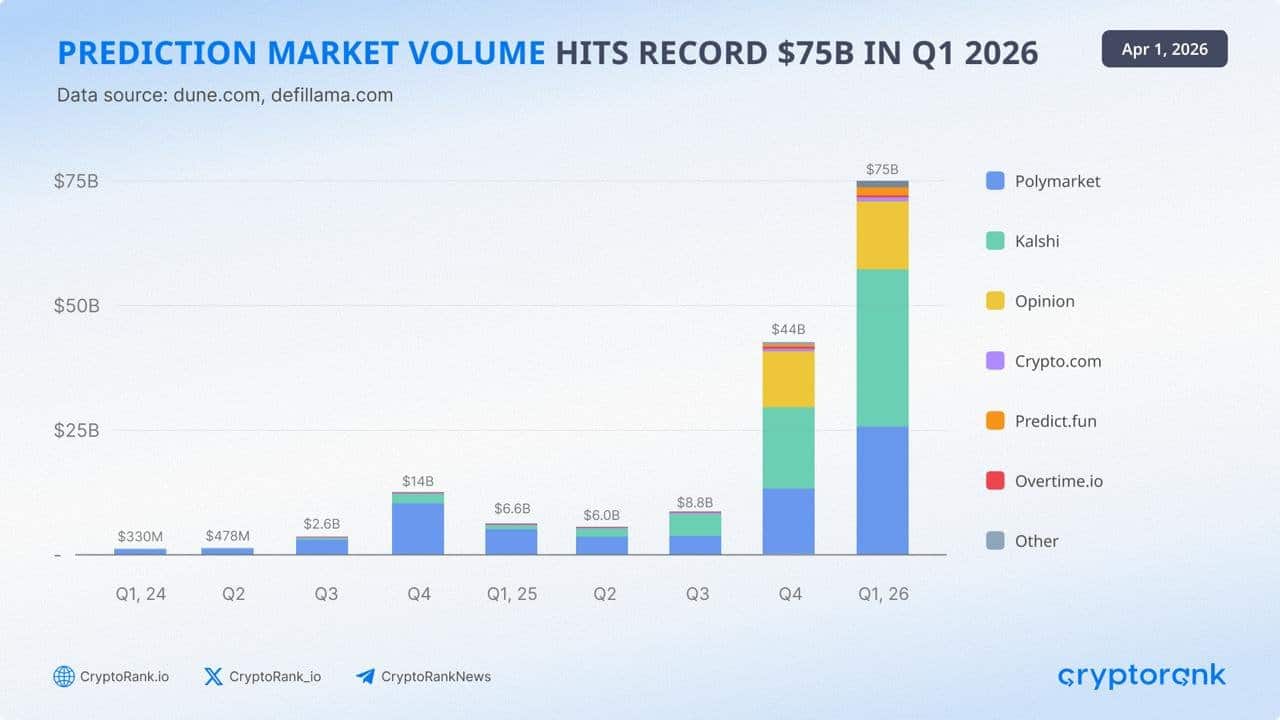
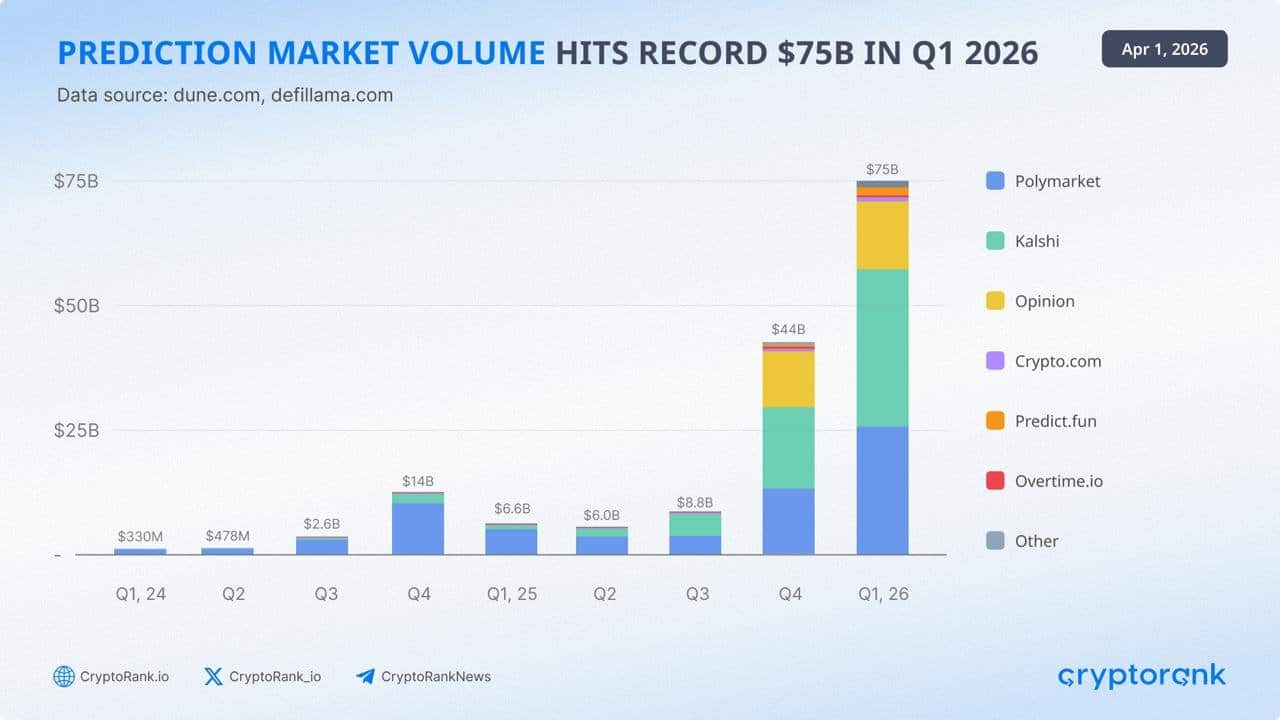
The growth reflects increasing demand for event-based trading across political outcomes, macroeconomic indicators, and sports markets.
But with that expansion has come rising concern over market integrity, particularly around insider information and potential manipulation.
A shift in enforcement approach
The CFTC also outlined a broader shift in its enforcement approach.
While signaling an end to so-called “regulation by enforcement,” the agency identified five core priorities: insider trading, market manipulation, disruptive trading practices, retail fraud, and willful violations of AML and KYC rules.
At the same time, it plans to introduce a new cooperation framework that could offer declinations for firms that self-report, fully cooperate, and remediate misconduct.
Final Summary
- Prediction markets have grown rapidly to $75 billion in quarterly volume, drawing increased regulatory scrutiny over insider-trading risks.
- The CFTC has made clear that insider trading laws apply to these markets, signaling more active enforcement as the sector grows.