Hong Kong Freezes Stablecoin Rollout, Leaving HSBC, Standard Chartered Waiting

bitcoinistОпубликовано 2026-04-02Обновлено 2026-04-02

Введение

Hong Kong has postponed the issuance of its first batch of stablecoin licenses, delaying approvals for major applicants like HSBC and Standard Chartered. The delay, attributed to money laundering concerns, may lead to stricter KYC regulations. This setback affects 36 applicants and follows mainland China's earlier crackdown on stablecoins due to regulatory and illegal activity risks. Despite initial plans to issue a small number of licenses in March, the Hong Kong Monetary Authority (HKMA) has not yet granted any approvals. The article also notes similar regulatory delays in South Korea, while Japan and the U.S. have advanced their stablecoin frameworks. The stablecoin market cap remains strong at $316 billion, a new all-time high. Bitcoin is trading around $68,700, down 4% over the week.

Hong Kong has postponed its first batch of stablecoin licenses amid money laundering concerns that could warrant stricter KYC rules.

Hong Kong Has Delayed Its Initial Batch Of Stablecoin Licenses

As reported by Wu Blockchain, citing coverage from Caixin, Hong Kong has postponed the issuance of its first stablecoin approvals, meaning that applicants would be waiting for longer before they can receive a license.

Hong Kong first passed its stablecoin bill in August 2025, making it so that organizations looking to issue stablecoins in the Chinese city’s jurisdiction will need to acquire approval from the Hong Kong Monetary Authority (HKMA).

Following the rollout of the new rules, HKMA started receiving applications from big names like Standard Chartered in its Joint Venture (JV) and HSBC. The first batch of approvals was expected to go out by the end of March, but now April has begun, and no licenses have been handed out at all.

“Hong Kong is concerned that stablecoins may be used for money laundering and may therefore implement stricter KYC regulations,” noted Wu Blockchain. The delay has thrown a wrench in the plans of 36 applicants. Earlier, mainland Chinese regulators cracked down on the sector, stating that fiat-tied cryptocurrencies don’t qualify as legal tender, as they fail to meet regulatory requirements and pose a risk of being used for illegal activities.

Despite the mainland’s stance, however, Hong Kong still moved forward with its stablecoin plans, announcing in February that a “very small number” of issuer licenses would be handed out in March. With that plan not coming to fruition, it now remains to be seen when the HKMA will be able to advance the city’s stablecoin ambitions.

Elsewhere in Asia, South Korea has also seen its stablecoin plans stall, with the Bank of Korea (BoK) arguing for bank-majority stablecoins, while the Financial Services Commission (FCS) advocates for laxer rules.

Meanwhile, Japan took ahead of its neighbors with the launch of its first yen-backed coin last year. The nation could also see its first bank-backed stablecoin this year, with Shinsei Trust and Banking planning on a Q2 2026 launch.

Over in the United States, President Donald Trump signed into law the GENIUS Act last year, providing a formal framework for stablecoins. Overall, this part of the cryptocurrency sector has seen significant global regulatory momentum over the past year, so it’s not surprising to see that its market cap has held up relatively well despite the recent market downturn.
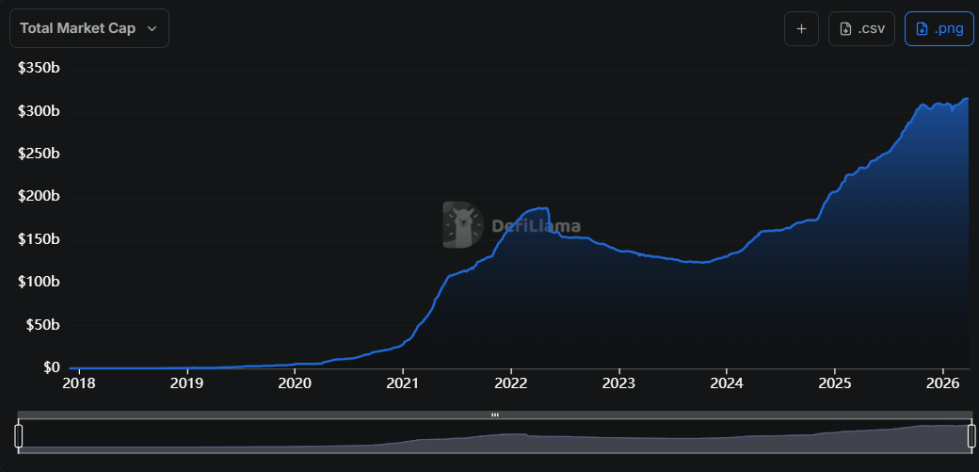
The trend in the stablecoin market cap over the last several years | Source: DefiLlama

As the chart from DefiLlama shows, the market cap of the fiat-tied tokens has mostly moved sideways in recent months, with its value currently sitting at $316 billion, a new all-time high (ATH).

Bitcoin Price

At the time of writing, Bitcoin is trading around $68,700, down over 4% in the last week.

Looks like the price of the coin has gone up a bit over the past day | Source: BTCUSDT on TradingView


Связанные с этим вопросы

QWhy has Hong Kong postponed the issuance of its first stablecoin licenses?

AHong Kong has postponed the issuance due to concerns that stablecoins may be used for money laundering, which could lead to the implementation of stricter Know Your Customer (KYC) regulations.

QWhich major financial institutions are among the applicants for stablecoin licenses in Hong Kong?

AMajor applicants include Standard Chartered, through its Joint Venture, and HSBC.

QWhat was the original timeline for issuing the first batch of stablecoin licenses, and what is the current status?

AThe first batch of approvals was expected to be issued by the end of March, but as of the beginning of April, no licenses have been handed out.

QHow does the regulatory stance on stablecoins in mainland China differ from that in Hong Kong?

AMainland Chinese regulators have cracked down on stablecoins, stating they do not qualify as legal tender and pose a risk for illegal activities. In contrast, Hong Kong has moved forward with its own regulatory framework to license stablecoin issuers.

QWhat is the current total market capitalization of stablecoins, according to the article?

AThe current market capitalization of stablecoins is $316 billion, which is a new all-time high (ATH).

Похожее

From Threat to Ceasefire: How Did the U.S. Lose Its Dominance?

From escalating threats to a sudden ceasefire, the US appears to have lost its dominant position in the confrontation with Iran. The conflict has entered a more complex phase where ceasefire and strategic maneuvering coexist. A key shift lies in the reversal of the diplomatic structure: rather than forcing Iranian concessions through military action, the US has been drawn into a negotiation framework based on Tehran’s "Ten-Point Plan." Although Washington has not formally accepted all terms, its de facto recognition of Iran’s control over the Strait of Hormuz marks a significant strategic retreat. This has allowed Iran to regain diplomatic and economic leverage. The outcome is counterintuitive: the conflict has not weakened Iran but instead restored its deterrence capability. Meanwhile, the failure of US military means has undermined the credibility of American threats, forcing any future negotiations to be based on genuine compromise. However, the ceasefire remains fragile, with localized clashes continuing and Israel’s actions adding further uncertainty. The situation remains on the brink of escalation, highly dependent on external variables. More profoundly, a conflict originally intended to pressure or even topple the Iranian regime may instead consolidate its internal power structure. The US has shifted from a dominant party to a negotiator, while Iran has moved from a pressured state to an active player. The confrontation has thus entered a longer-term and more complicated stage.

marsbit2 ч. назад

From Threat to Ceasefire: How Did the U.S. Lose Its Dominance?

marsbit2 ч. назад

Торговля

Спот
Фьючерсы
活动图片