From ChatGPT to Capital War: What Crypto Opportunities Are Hidden Behind OpenAI's Sprint Toward IPO?

marsbitОпубликовано 2026-06-10Обновлено 2026-06-10

Введение

From ChatGPT to Capital Wars: Hidden Crypto Opportunities Behind OpenAI's IPO Push On June 9th, OpenAI confirmed it has confidentially filed for an IPO with the U.S. SEC, alongside revealing a long-term roadmap aiming for AI to handle most of its own R&D by 2028. This move signals a shift in the AI industry from technological competition to a capital-intensive race, potentially evolving into an ecosystem war. For the crypto market, this event could mark the beginning of a new funding narrative. OpenAI's transformation from a non-profit research lab in 2015 to a commercial behemoth was catalyzed by ChatGPT's explosive growth in 2022. Its business now spans consumer AI assistants, enterprise APIs, and critically, massive AI infrastructure requiring trillions in investment by 2030. The core driver for the IPO is the immense cost of the AI arms race, primarily for GPU compute power for training and inference. With rivals like Anthropic also filing to go public and giants like Google and Meta investing heavily, competition is intensifying around capital, compute, and ecosystem scale. The crypto market, whose cycles have often been fueled by external narratives like DeFi and NFTs, may see a refocus towards "AI means of production." Key beneficiaries could include decentralized compute networks (e.g., Render, Akash) addressing GPU scarcity, AI Agent platforms enabling autonomous task execution, and projects tokenizing AI infrastructure/assets (AI x RWA). However, an OpenAI IPO c...

Author:Climber, CryptoPulse Labs

On June 9, OpenAI officially confirmed that it had secretly filed an IPO application with the U.S. SEC. At the same time, the company's long-term technology roadmap was revealed for the first time, indicating that by 2028, AI will undertake most of its own research and development work.

On the surface, this appears to be just a routine listing move, but behind it lies a shift in the logic of the AI industry. Technological competition is turning into capital competition, which will further evolve into an ecosystem war.

For the crypto market, this event may not just be a piece of tech news, but the beginning of a new capital narrative.

I. From Chatbot to AI Empire: The Commercial Evolution of OpenAI

Ten years ago, few would have imagined that an artificial intelligence research lab would grow into one of the world's most-watched tech giants.

In 2015, OpenAI was founded as a non-profit research institution with the goal of ensuring that the development of artificial intelligence truly benefits humanity rather than being controlled by a few organizations. At that time, OpenAI resembled more of an academic lab than a commercial company.
The real game-changer was the explosion of ChatGPT in 2022. After its launch, ChatGPT reached hundreds of millions of users in just a few months, becoming one of the fastest-growing consumer products in internet history. From that moment, OpenAI began its transformation from a research institution into a commercial behemoth.

Today, OpenAI's business spans multiple directions. The most easily perceived by the general public is the ChatGPT product, which has evolved from a simple chat tool into a comprehensive AI assistant, including search, content generation, image generation, code writing, AI Agent capabilities, and more.

In addition, another major business for OpenAI is enterprise services. A large number of companies use its large model capabilities through API calls, including customer service systems, automated office tools, development tools, and enterprise-level AI solutions.

More notably, its strategic focus has already begun to shift. The latest roadmap reveals that OpenAI aims to develop automated AI researchers in the future—leveraging AI to develop the next generation of AI models. Simply put, future AI will not only participate in work but may also engage in technological creation.

Among all its operations, what burns the most cash is not software but infrastructure.

Training AI models requires massive amounts of GPUs, operational processes need data centers, and future Agent systems will require even larger-scale computing networks. OpenAI previously disclosed plans to invest approximately $600 billion in AI infrastructure by 2030.

Therefore, today's OpenAI is no longer just a chatbot company but more like a super platform spanning AI applications, cloud services, computing power, and future infrastructure.

However, alongside this high growth lies immense pressure. Increasing model training costs, unproven profit models, executive departures, and organizational structure controversies have also raised external concerns about its long-term development capabilities.

Rapid growth coexisting with massive expenditures—this is perhaps the most accurate depiction of OpenAI's current state.

II. The Escalating AI War: Technology Competition is Turning into a Cash-Burning Battle

Many might wonder: Why is OpenAI rushing to go public right after completing a financing round exceeding $100 billion? The reason is simple—the AI industry is incredibly capital-intensive.

In the traditional internet era, a company's main expenses might come from servers and labor costs. But in the era of large models, the largest expenditure has shifted to computing power costs.

Training a more powerful model requires hundreds of thousands or even millions of GPUs for computation. Once the model is live, sustained inference services are needed to support user usage. With the advent of the Agent era, future computing power consumption may even grow exponentially.

OpenAI's public roadmap mentions the ambition to achieve AI collaborating with human researchers to complete most R&D work by 2028. This means that in the future, not only will humans be using AI, but AI itself will also start consuming vast amounts of computing resources.

And the capital market may be the only sufficiently large pool of funds available right now.

Secretly filing an S-1 form is essentially a preparatory move. It allows the company to undergo SEC review without disclosing extensive financial details while retaining more flexibility for a future listing.

More importantly, OpenAI's competitors are already in motion. Anthropic has taken the lead by filing its IPO application and surpassed OpenAI's valuation in its latest funding round.

Simultaneously, Musk's xAI continues to expand through the X and SpaceX ecosystems, while Google and Meta are also investing resources at a frenzied pace.

The entire AI industry has begun to enter a state resembling an arms race.

In the past, the competition was about model capabilities; now, it's about capital, computing power, ecosystems, and user scale. Compared to its competitors, OpenAI's biggest advantage doesn't come solely from technology.

First is user access advantage. For many ordinary users, ChatGPT has almost become synonymous with AI. Second is the developer ecosystem. A vast number of startup projects and enterprises are built on the OpenAI API system, creating a strong network effect. Lastly is brand advantage. Similar to the cognitive barrier Google formed during the search era, OpenAI has already established itself in the public's mind.

However, after going public, the company will also face new challenges. Previously, OpenAI dealt with investment institutions; now, it will face the entire capital market. Before, the story was about the future; now, the market will focus more on profits, revenue, and financial data.

This is a threshold that all super unicorns must cross.

III. After OpenAI Rings the Bell, Who Will Become the Biggest Winner in Crypto?

For the crypto market, what truly deserves attention in OpenAI's IPO is not its stock price, but the shift in capital logic. Over the past few crypto bull markets, the core narratives have almost always originated from the external world.
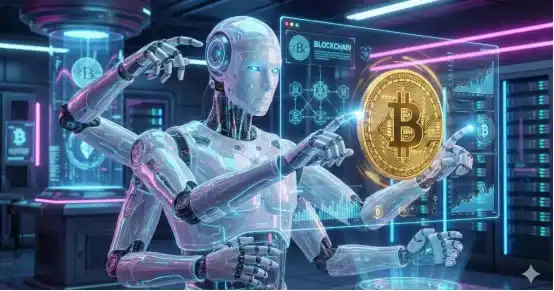
DeFi in 2020, NFTs in 2021, later RWAs, and AI Agents in recent years—these are essentially reflections of changes in the real world onto the crypto market.

OpenAI's listing may signify that the AI narrative is entering a new stage. Previously, market hype focused more on the application layer of AI, such as AI chat, AI assistants, and AI Agent projects. But future market attention may gradually shift to AI means of production.

Therefore, the first to benefit might be the AI computing power sector. As GPU resources become increasingly expensive, the importance of decentralized computing networks is rising. More and more projects are attempting to build distributed computing markets using idle GPUs.

Projects like Render, Bittensor, Akash, and io.net fall under this logic. If future AI demand continues to explode, these projects may regain capital attention.

Another potential beneficiary is the AI Agent sector. OpenAI has explicitly proposed plans for automated AI researchers. This means that future AI will not only be responsible for content output but could autonomously perform complex tasks.

The crypto world is naturally suited for building AI economic systems, so related projects may continue to attract market interest.

Additionally, the AI data layer and the combination of AI with RWA could become new directions. In the future, vast amounts of computing power assets, data centers, and AI infrastructure will require financing, and on-chain assetization might emerge as a new trend.

Of course, it's worth noting that OpenAI's listing could also create a capital siphon effect.

If a large amount of capital starts flowing toward AI supergiants, some high-risk capital might flow out of the crypto market. Thus, the true beneficiaries may not be all AI-themed tokens, but rather those projects with real businesses, genuine demand, and infrastructure capabilities.

Conclusion

Over the past few years, many believed the core of the AI revolution lay in the models. But it's becoming increasingly clear that what truly determines victory may not be the models themselves, but who possesses more capital, more computing power, and a larger ecosystem.

OpenAI's secret IPO filing, on the surface, is just a listing move. But behind it, it represents the AI industry entering a new era. For the crypto market, perhaps the question truly worth focusing on in the future is not whether AI will change the world, but who will become the water, electricity, and coal of the AI era.

Because in every gold rush, the ones who truly make money are often not the prospectors, but those who sell the shovels.

Связанные с этим вопросы

QWhat are the main business areas OpenAI has expanded into since the launch of ChatGPT?

AOpenAI's business has expanded beyond ChatGPT to include a consumer-facing AI assistant with features like search, content generation, image generation, code writing, and AI Agents. It also offers enterprise services via API, providing solutions for customer service, office automation, and developer tools. A key future strategic focus, as revealed in their roadmap, is developing automated AI researchers to create next-generation AI models. The company is evolving into a super-platform encompassing AI applications, cloud services, computing power, and future infrastructure.

QAccording to the article, why is OpenAI pushing for an IPO despite recent large funding rounds?

AOpenAI is pushing for an IPO primarily due to the enormous costs associated with the AI industry, especially for computing power (GPU resources). Training stronger models and supporting future AI Agent systems require massive and potentially exponential growth in computational resources. The capital markets represent the only pool of capital large enough to fund this 'arms race' against competitors like Anthropic, xAI, Google, and Meta. A secret S-1 filing allows the company to prepare for an IPO with flexibility while keeping financial details private during SEC review.

QWhat potential opportunities in the Crypto market does the article link to OpenAI's IPO?

AThe article links OpenAI's IPO to potential opportunities in the Crypto market by shifting the focus to 'AI means of production.' Key opportunities include: 1) AI computing power projects like Render, Bittensor, Akash, and io.net, which offer decentralized computing networks to address GPU scarcity. 2) AI Agent projects, as the automated AI researcher concept aligns with building AI economic systems on-chain. 3) AI data layers and the tokenization of AI infrastructure assets (AI combined with RWA). The article cautions that projects with real utility and infrastructure capabilities are most likely to benefit.

QHow has the nature of competition in the AI industry evolved, as described in the text?

AThe nature of competition in the AI industry has evolved from a focus on technological prowess to a comprehensive 'capital war.' Initially, competition was about model capabilities. Now, it centers on capital, computing power, ecosystem size, and user scale. OpenAI's advantages include its user entry point (ChatGPT as a household name), its developer ecosystem creating network effects, and its strong brand. The industry is now in a state similar to an arms race, where financial resources are as critical as technological innovation.

QWhat is the core analogy the article uses in its conclusion to describe the potential winning strategy in the AI era?

AThe article concludes with the analogy of a gold rush: 'In every gold rush, the people who really make money are often not the gold miners, but those who sell shovels.' It suggests that for the Crypto market, the key question is not whether AI will change the world, but who will become the foundational 'water, electricity, and coal' of the AI era. The winning strategy is to provide the essential infrastructure and tools (the 'shovels') that enable the broader AI ecosystem.

Похожее

"119 to 176 Dollars": Behind SpaceX's Listing, MSX Once Again Successfully Executes the Pre-IPO Closed Loop

Following May's 300% gain on Cerebras, MSX delivered another outstanding performance during SpaceX's listing night. On June 12, SpaceX (SPCX) launched on Nasdaq, reaching a high of $176. This marked the successful culmination of MSX's Pre-IPO project launched in March, where users subscribed at $119, achieving gains of approximately 40-48%. This event validated MSX's complete Pre-IPO mechanism, a crucial advantage in a market where access to top-tier private company equity is typically limited to institutions. MSX's model provides a full cycle for users: subscription (at $119 for SpaceX), real-time on-chain portfolio tracking, optional early redemption, seamless conversion to tradable spot assets (SPCX.M) upon IPO, and final settlement in stablecoins. This end-to-end process distinguishes MSX from platforms that faced settlement issues during the SpaceX IPO, highlighting that the core challenge of Pre-IPO is not just access, but a clear exit and conversion path post-listing. This success with SpaceX is MSX's second major Pre-IPO verification, following the Cerebras listing in May, which yielded ~300% returns for early participants. These back-to-back achievements demonstrate MSX's capability to source, structure, and deliver real assets through a replicable on-chain model. The true barrier for Pre-IPO products lies not in providing an entry point, but in ensuring reliable fulfillment from subscription through to post-IPO liquidity. MSX's proven闭环 (closed-loop) process addresses this, offering Web3 users a structured way to access high-growth, pre-public companies in sectors like AI and frontier tech. MSX plans to continue expanding its Pre-IPO portfolio with this focus on authenticity, transparency, and post-listing execution.

Odaily星球日报7 ч. назад

"119 to 176 Dollars": Behind SpaceX's Listing, MSX Once Again Successfully Executes the Pre-IPO Closed Loop

Odaily星球日报7 ч. назад

Торговля

Спот
Фьючерсы

Популярные статьи

Как купить S

Добро пожаловать на HTX.com! Мы сделали приобретение Sonic (S) простым и удобным. Следуйте нашему пошаговому руководству и отправляйтесь в свое крипто-путешествие.Шаг 1: Создайте аккаунт на HTXИспользуйте свой адрес электронной почты или номер телефона, чтобы зарегистрироваться и бесплатно создать аккаунт на HTX. Пройдите удобную регистрацию и откройте для себя весь функционал.Создать аккаунтШаг 2: Перейдите в Купить криптовалюту и выберите свой способ оплатыКредитная/Дебетовая Карта: Используйте свою карту Visa или Mastercard для мгновенной покупки Sonic (S).Баланс: Используйте средства с баланса вашего аккаунта HTX для простой торговли.Третьи Лица: Мы добавили популярные способы оплаты, такие как Google Pay и Apple Pay, для повышения удобства.P2P: Торгуйте напрямую с другими пользователями на HTX.Внебиржевая Торговля (OTC): Мы предлагаем индивидуальные услуги и конкурентоспособные обменные курсы для трейдеров.Шаг 3: Хранение Sonic (S)После приобретения вами Sonic (S) храните их в своем аккаунте на HTX. В качестве альтернативы вы можете отправить их куда-либо с помощью перевода в блокчейне или использовать для торговли с другими криптовалютами.Шаг 4: Торговля Sonic (S)С легкостью торгуйте Sonic (S) на спотовом рынке HTX. Просто зайдите в свой аккаунт, выберите торговую пару, совершайте сделки и следите за ними в режиме реального времени. Мы предлагаем удобный интерфейс как для начинающих, так и для опытных трейдеров.

1.5k просмотров всегоОпубликовано 2025.01.15Обновлено 2026.06.02

Как купить S

Sonic: Обновления под руководством Андре Кронье – новая звезда Layer-1 на фоне спада рынка

Он решает проблемы масштабируемости, совместимости между блокчейнами и стимулов для разработчиков с помощью технологических инноваций.

2.3k просмотров всегоОпубликовано 2025.04.09Обновлено 2025.04.09

Sonic: Обновления под руководством Андре Кронье – новая звезда Layer-1 на фоне спада рынка

HTX Learn: Пройдите обучение по "Sonic" и разделите 1000 USDT

HTX Learn — ваш проводник в мир перспективных проектов, и мы запускаем специальное мероприятие "Учитесь и Зарабатывайте", посвящённое этим проектам. Наше новое направление .

1.8k просмотров всегоОпубликовано 2025.04.10Обновлено 2025.04.10

HTX Learn: Пройдите обучение по "Sonic" и разделите 1000 USDT

Обсуждения

Добро пожаловать в Сообщество HTX. Здесь вы сможете быть в курсе последних новостей о развитии платформы и получить доступ к профессиональной аналитической информации о рынке. Мнения пользователей о цене на S (S) представлены ниже.

活动图片