Nvidia, AMD, Qualcomm CEOs Gather in Taipei: Whether Your Chips Can Sell Is Decided by Taiwanese Assembly Plants

marsbitОпубликовано 2026-06-02Обновлено 2026-06-02

Введение

**Summary:** The buzz around this year’s Computex in Taipei isn't just about flashy keynotes from top CEOs like Jensen Huang (Nvidia), Lisa Su (AMD), and Cristiano Amon (Qualcomm). The real story lies in Taiwan’s hardware ecosystem—the often-overlooked manufacturers of modules, cooling systems, and assembly lines who hold decisive power over which chips succeed or fail. While brands like Dell, HP, and Lenovo set final product specs, it’s Taiwan’s engineers and suppliers who make early, critical decisions during development. If a module maker declines to design around a new chip, or an assembler won’t integrate it, that component can be effectively dead before reaching the market. This bottom-up dynamic defines the industry’s pace: fast, collaborative, and ruthlessly pragmatic. Computex remains the world’s premier computer expo, but its true value is offstage—in private meetings, small forums, and factory visits where relationships are forged and supply-chain hurdles are solved. For global tech leaders, showing up in Taipei isn’t about spectacle; it’s about paying respect to the engineers who turn silicon into sellable systems.

Author: Tim Culpan

Translation: Deep Tide TechFlow

Deep Tide Guide: This year's Computex has attracted a record number of overseas tech CEOs, but they are not here for show. This article reveals a neglected truth: The fate of chip manufacturers is not decided by brand companies like Dell or HP, but by supply chain engineers in Taiwan who handle modules, cooling, and assembly. Understanding this bottom-up power structure is key to understanding the real operational logic of the tech industry.

Good evening Taipei. The Computex Taipei computer exhibition opens tomorrow (Tuesday, June 2nd), and this annual event is more bustling than ever before.

I was recently asked what's different about Computex this year, why it's suddenly so hot. The answer is: nothing is different. I've been attending every year since 2000, and the exhibition itself has barely changed.

What has changed in recent years is the world's rediscovered interest in computers, along with a sudden realization that Taiwan dominates this industry. This year, servers—those giant computers inside big, boring black boxes—have become part of mass conversation and cultural discussion in an unprecedented way.

This is my guide for Computex, teaching you how to attend efficiently and how to understand what's really happening behind the scenes of this globally most important exhibition.

The origin story of Computex is written in its name, Computer Expo. Even as the world's interest in computers has waxed and waned, this annual event has always remained true to its roots.

Over the years, the rise of consumer electronics, gaming consoles, and smartphones made computers seem boring. But this exhibition never strayed from its original purpose. It has always been a stage for computer manufacturers to showcase desktops, laptops, servers, motherboards, cables, peripherals, and all components of the PC industry.

The exhibition officially begins on Tuesday of the first week of June. Monday is not an official exhibition day, but some companies hold events. Saturday is the final day, open to the public. I recommend avoiding Saturday at Computex.

Computex is mainly divided into three parts:

  • Industry Keynote Speeches
  • Forums
  • Exhibition Floor

Keynote Speeches

Keynote speeches are opportunities for executives to pitch their companies, ecosystems, and latest products to people. Remember, the target audience at Computex is engineers, product managers, supply chain purchasers, and global sourcing executives. This is a group proficient in technology, familiar with soldering and motherboards. Bus speeds and thermal thresholds are their daily topics.

For many years, Intel specifically reserved one of its annual chip launches for Computex. AMD often did the same. Taiwan's VIA Technologies once became a hero at Computex, while Intel was the villain for bursting this little rival's balloon (literally, I'm not joking). Graphics chip manufacturers ATi and Nvidia heavily relied on Computex to introduce their niche products to an attentive audience.

Well-known brands occupy prime marketing spots around the exhibition hall

Image: Tim Culpan/Culpium

Computex was, is, and remains the premier computer exhibition.

Therefore, Intel's CEO usually gives a keynote, and one or two other bosses might show up to speak. A few foreign CEOs are about all we could expect, while local leaders like Asus's Jonney Shih or Acer's Gianfranco Lanci would carry Taiwan's flag. Regional or vice-president level bosses of global giants often appear as company ambassadors.

This year, Computex has attracted the most overseas bosses I can remember, including:

Qualcomm, Cristiano Amon

Intel, Lip-Bu Tan

Arm, Rene Haas

AMD, Lisa Su

Nvidia, Jensen Huang

Marvell, Matt Murphy

NXP, Rafael Sotomayor

The importance of Computex is not because all these tech CEOs are coming to Taipei. On the contrary, they are all coming to Taipei because Computex is so important.

The global industry elite come to Taipei to kiss the ring of tech power.

I count AMD's Lisa Su on the list, even though she came to town before Computex, not specifically for the exhibition itself. Nvidia's Jensen Huang is not officially appearing at Computex either. At least not officially. His Monday GTC keynote is not on the official Computex schedule.
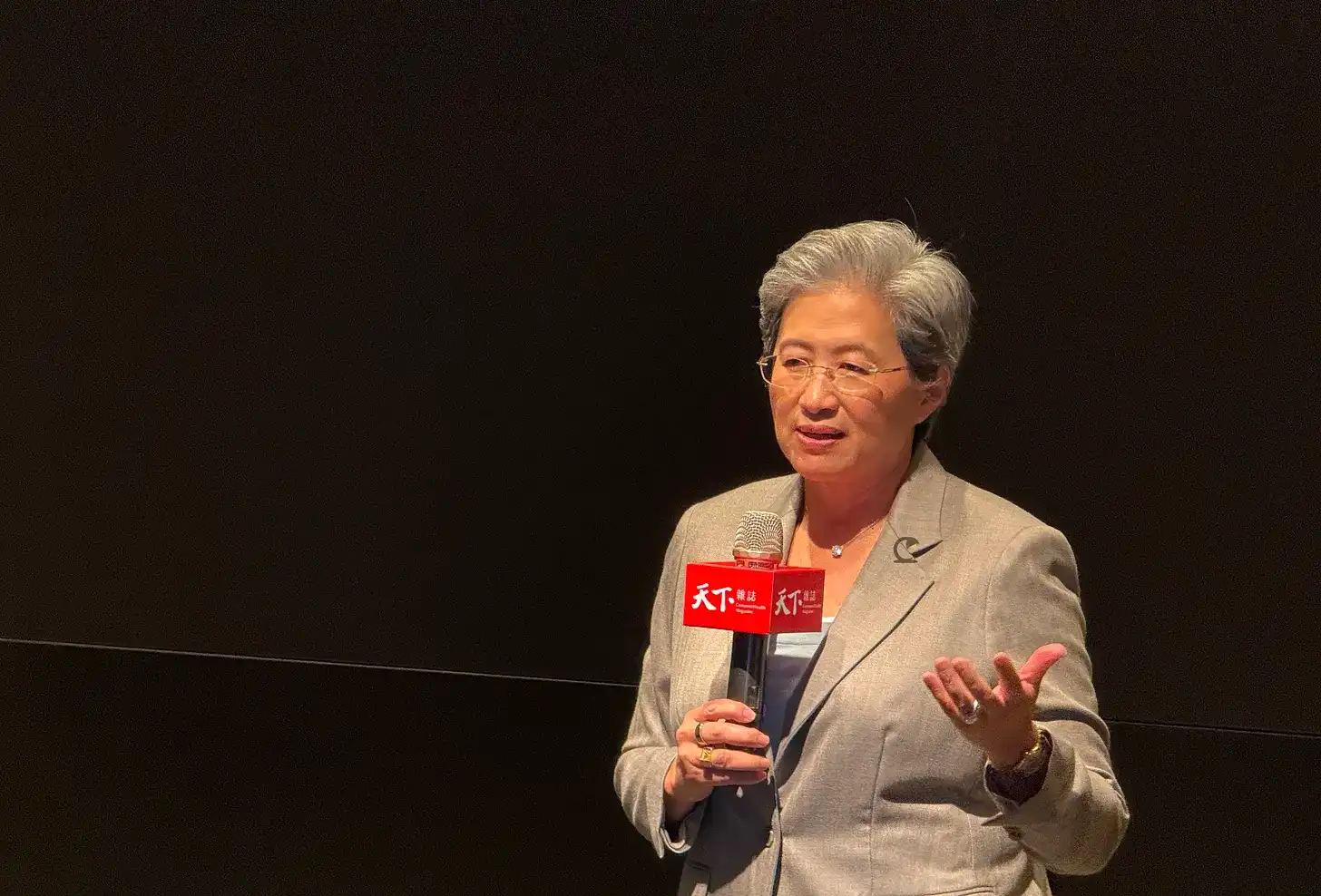
AMD CEO Lisa Su speaks to reporters after attending a pre-Computex 100 event and making announcements in Taipei

Photo: Tim Culpan/Culpium

But this precisely illustrates the point. So many executives realize that Computex, and Taiwan more broadly, are so crucial to their business that they find ways to squeeze into this packed schedule. They want to make major announcements while the world is watching them, and then meet key figures in closed-door sessions to build relationships that will make or break their business over the next 12 months.

The real action doesn't actually happen in the keynotes. All the news naturally flows from interviews under embargo and press releases, timed exactly for when the boss takes the stage.

Forums

Since keynotes are thoroughly covered by media, press releases, and social media, your time might be better spent on small forums focusing on super-niche topics. For example, ABB Robotics' Managing Director Craig McDonnell will host a forum this year on industrial-grade physical AI for robotics. If that's not your thing, consider Google DeepMind's Ed H. Chi and his speech on the future of personalized universal assistants. There are many more. There are also supporting events like Innovex, focusing on startups and emerging companies.

Companies want to present at these forums to promote their vision and ecosystem. Companies also want to sit in the audience to understand what competitors and partners are doing, exchange business cards. I guarantee you'll learn more and build higher-quality connections from a few carefully selected forums than from attending every keynote.

The Exhibition Floor

I'm always surprised to find Computex visitors scheduling their departure for Wednesday or Thursday. But this is understandable if you don't know where the real treasures lie. I think these early departures happen because the final days of most other exhibitions really don't have much good stuff left.

But the most exciting action is neither in the keynotes nor the forums. Everything happens on the exhibition floor, in the VIP areas of those 3x3 booths, in invitation-only hotel suites, in meeting rooms at tech company offices near the Taipei Nangang Exhibition Center and Neihu District.

Many enterprises, including local tech companies and local offices of foreign companies, mark Computex as a closed day on their calendars, prohibiting leave or business trips to ensure full attendance.

Overseas clients are the lifeblood of Taiwan's industry, especially the tech sector, and local partners prepare for this annual pilgrimage. Veterans come because they understand something many visitors don't: winning over the PC ecosystem is crucial for winning market share with end-buyers.

The tech ecosystem is more bottom-up than many imagine. Foreign clients have the money, but local suppliers have the talent and the connections.
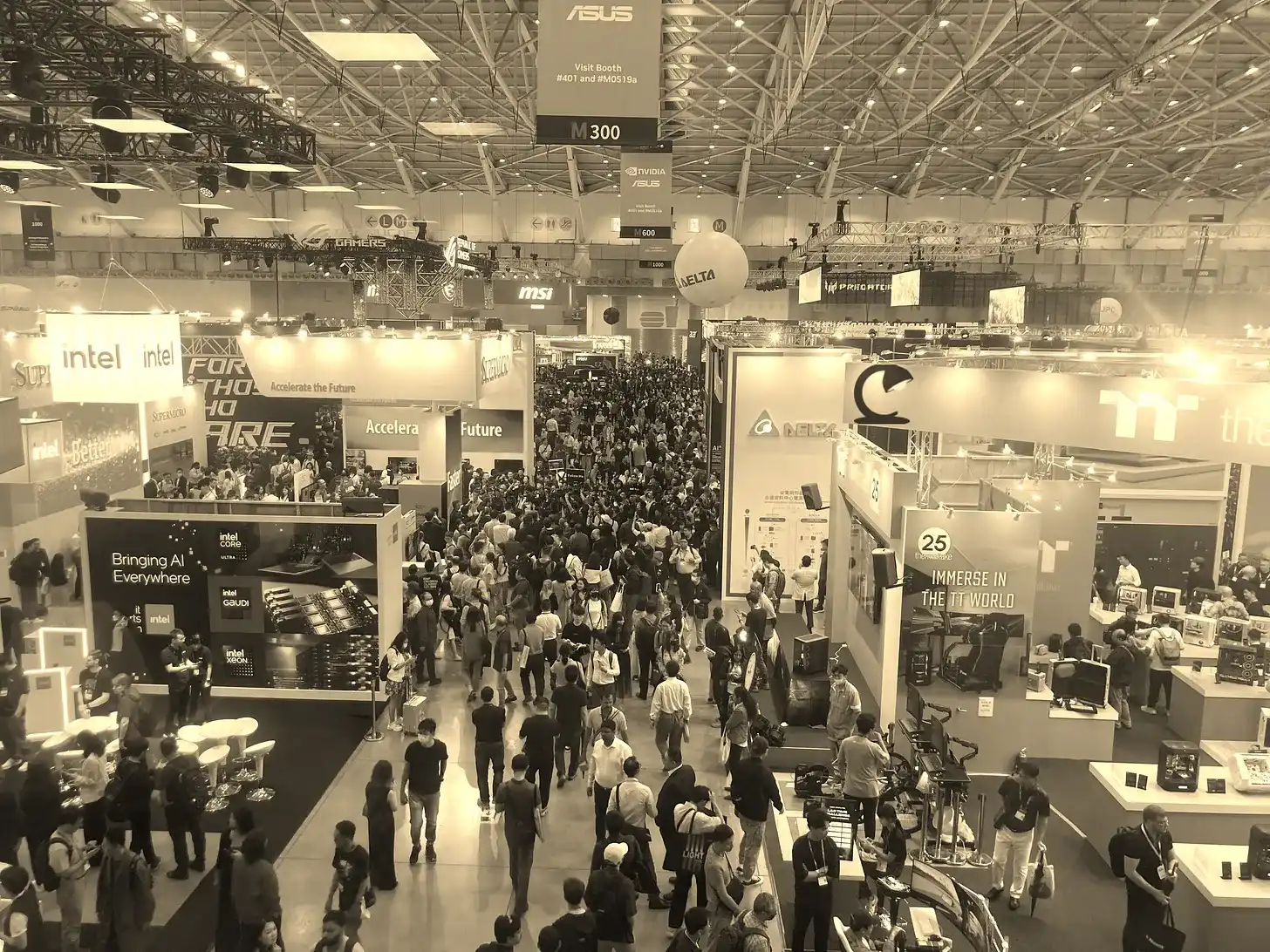
Another trade show? Perhaps not?

Image: Tim Culpan/Culpium

A module manufacturer that doesn't want to design circuit boards around your chip won't become an advocate for your product. A thermal management or mechanical parts maker unwilling to spend time learning and building around your specifications won't have ready solutions when the assembler needs them.

And an assembler that doesn't want to invest time and resources developing a system integrating your product, partly because upstream manufacturers aren't ready with parts, won't even bother showing it to the branded PC manufacturers.

While Dell, HP, Lenovo, Acer, and Asus decide what products to sell, what specifications, and at what price, they are powerless if the rest of the ecosystem isn't interested.

A little-known reality is that system manufacturers and their suppliers make many crucial product and engineering decisions before presenting to brand clients. These choices mark whether your component is taken seriously or becomes yet another oddity that barely ships.

Although many parts are made in South Korea, Japan, China, and even the US, the real ones calling the shots are Taiwan's hardware gang. An uninterested assembler, or a confused and fatigued module manufacturer, can kill your product even before it leaves TSMC's wafer fab. This isn't some conspiracy. It's cold, hard pragmatism.

Tech cycles are short. Margins are thin. Technical barriers are high. The only speed at which this industry functions is fast. Doing so requires cooperation between competitors and partners. As Lisa Su recently said in Taipei about her competitors, "We're all friends because we grew up together." Bringing something new to market is a huge risk for every possible manufacturing participant.

The exhibition floor and the hidden backrooms are where these relationships develop. It's at these booths that niche manufacturers of heat spreaders, high-speed cables, or multi-layer printed circuit boards showcase their products. Then they listen as existing or potential clients share engineering challenges, outline their own sales forecasts, and seek advice on how to build products under oppressive profit margins and impossible deadlines.

Got an idea? Please share.

For big companies like Intel, AMD, Nvidia, Qualcomm, and Marvell, not being mentioned in these discussions means your chip is being rejected by those who make the final product. Similarly, failing to show up and support these manufacturers will lead them to work with suppliers who are willing to do so.

Like any industry, relationships and interoperability matter. What's unique about tech hardware is that the manufacturing of physical products combines with product development cycles operating at tech speed.

Computex offers a unique opportunity to observe this ecosystem. You just need to know where to look.

Связанные с этим вопросы

QWhy did the article claim that the fate of chip companies like NVIDIA, AMD, and Qualcomm is determined by Taiwanese assembly and component manufacturers?

ABecause the Taiwanese supply chain (module makers, heat dissipation engineers, assembly factories) plays a critical bottom-up role. They decide whether to invest resources into designing circuits, making components, and integrating a specific chip into a system. If they are not interested or supportive, the brand companies (like Dell, HP) have nothing to sell, effectively killing the chip's market potential before it even leaves the fab.

QWhat is the primary purpose of the Computex exhibition according to the article?

AComputex is fundamentally a computer expo for the industry's engineers, product managers, and supply chain professionals. Its core purpose is not the flashy keynotes but facilitating the crucial behind-the-scenes meetings where hardware component makers, module suppliers, and system assemblers collaborate, solve engineering challenges, and build the relationships that determine which technologies and chips get integrated into final products.

QWhat is the most important place for real business deals and relationship-building during Computex?

AThe most critical action happens on the exhibition floor itself—specifically in the VIP areas of small booths, in invitation-only hotel suites, and in closed-door meetings at tech company offices near the venue. This is where component manufacturers and system assemblers have practical discussions about engineering problems, sales forecasts, and production challenges, forming the alliances that make or break products.

QHow does the article explain the unprecedented attendance of so many overseas tech CEOs at Computex this year?

ATheir attendance is a result of Computex's (and Taiwan's) enduring importance, not the cause of it. These CEOs come to Taipei to 'kiss the ring' of tech power. They recognize that Taiwan's hardware ecosystem is vital to their business success, so they schedule major announcements and critical private meetings around the event to build the relationships that will define their fortunes for the next year.

QWhat unique challenge does the tech hardware industry face, as highlighted in the article?

AThe tech hardware industry uniquely combines the physical manufacturing of products with product development cycles that operate at 'tech speed.' This requires incredibly fast and close collaboration between competitors and partners across the supply chain to manage high technical barriers, thin profit margins, and short cycles. Failure to cooperate and integrate quickly can cause a product to fail before it even reaches the market.

Похожее

Blockchain Has Finally Started to Sail into the Mainstream After 18 Years

Blockchain Finds Its True Path After 18 Years: Becoming the Financial Backbone for AI Agents and Autonomy This analysis explores a pivotal shift in the blockchain and crypto investment landscape, driven by the dominance of AI. Major venture capital firms, including Variant, Paradigm, Haun Ventures, and YZi Labs, are moving beyond pure "crypto" investment theses. They are expanding their focus to AI, robotics, and frontier tech, signaling that blockchain is no longer seen as a standalone sector but as an underlying infrastructure layer. The core argument is that blockchain's killer application may not be user-facing apps, but rather providing the economic rails for the coming wave of AI agents, autonomous robots, and automated systems. Key capabilities like self-custody wallets, programmable stablecoins for micropayments, on-chain identity, and verifiable smart contracts are positioned as essential for a future where machines conduct economic activity. The recent $1.4 billion investment by Tether (via its venture arm) in German robotics company NEURA Robotics exemplifies this, aiming to embed Tether's wallet tools directly into robots for autonomous transactions. While many "AI + Crypto" projects remain superficial, the article concludes that true value lies where crypto is a necessary component—enabling machine-to-machine payments, agent autonomy, verifiable data provenance, and open financial settlement for the AI era. For crypto venture capital, this convergence with AI represents both an adaptation to shifting capital flows and a potential path to unlocking the large-scale, non-speculative utility the industry has long sought.

marsbit8 мин. назад

Blockchain Has Finally Started to Sail into the Mainstream After 18 Years

marsbit8 мин. назад

Blockchain has finally begun sailing toward the main channel after 18 years

After 18 years of development, blockchain technology is beginning to move from a specialized niche into mainstream adoption, according to a recent industry analysis. The shift is reflected in the changing strategies of major crypto venture capital firms, which are expanding their focus beyond pure "digital ownership" towards broader themes like "autonomy." The report highlights that leading VC firms like Variant, Paradigm, Haun Ventures, and YZi Labs are broadening their investment mandates to include not only crypto but also artificial intelligence (AI), robotics, biotech, and other frontier technologies. This reflects a recognition that the isolated "crypto investment" narrative is losing appeal to limited partners (LPs) as capital and attention increasingly flow toward AI and other high-growth tech sectors. A key emerging thesis is that blockchain's most significant future application may not be as a consumer-facing product, but as the underlying economic and settlement infrastructure for the AI era. As AI agents and autonomous systems become more prevalent, they will require programmable, global, and low-cost payment networks (like stablecoins), verifiable digital identities, and secure wallets to manage transactions and assets on behalf of users. The investment by stablecoin issuer Tether into robotics company NEURA, with plans to integrate its wallet technology, is cited as a prime example of this convergence. However, the article cautions that simply labeling projects as "AI + Crypto" is insufficient. True value lies in integrations where blockchain technology is essential—such as enabling machine-to-machine micropayments, verifiable data provenance for AI, or transparent governance for autonomous organizations—rather than being a superficial marketing add-on. In conclusion, while AI currently dominates the tech narrative and capital flows, it may ultimately create the real-world, high-frequency demand that the crypto industry has long sought. For crypto VCs and projects, the path forward is to position blockchain not as a competing sector, but as a critical foundational layer powering autonomy and economic activity in an AI-driven future.

链捕手14 мин. назад

Blockchain has finally begun sailing toward the main channel after 18 years

链捕手14 мин. назад

Y Combinator Co-founder: How to Make a Billion Dollars?

The Y Combinator co-founder argues that becoming a billionaire by founding a successful startup is not only possible but demonstrably achievable without unfair or unethical practices. He disputes a politician's claim to the contrary, using the example of a founder whose company grew at 93% monthly solely through creating a product users loved and recommended. The core mechanism is exponential growth. A conservative 15% monthly growth rate compounds to a 4384x increase over five years, which can easily lead to billion-dollar valuations and founder wealth. The process depends on two key variables: the growth rate and the duration it can be sustained. A high growth rate stems from a great product that users naturally promote, while a long duration requires a large enough market. For aspiring founders, especially young ones, the simplest path is to build something they and their friends genuinely need. Young people's current needs often predict future mass-market trends. He advises against actively "searching" for ideas, as this tends to filter out unconventional but promising ones. Instead, inspiration should come from working on interesting projects with friends, as many iconic companies (e.g., Apple, Facebook) started this way. Ultimately, building a massively valuable startup is not about exploitation but empathy: deeply understanding a user group and building a product that significantly improves their lives. This, powered by exponential growth in a large market, is the legitimate path to immense wealth creation.

Foresight News17 мин. назад

Y Combinator Co-founder: How to Make a Billion Dollars?

Foresight News17 мин. назад

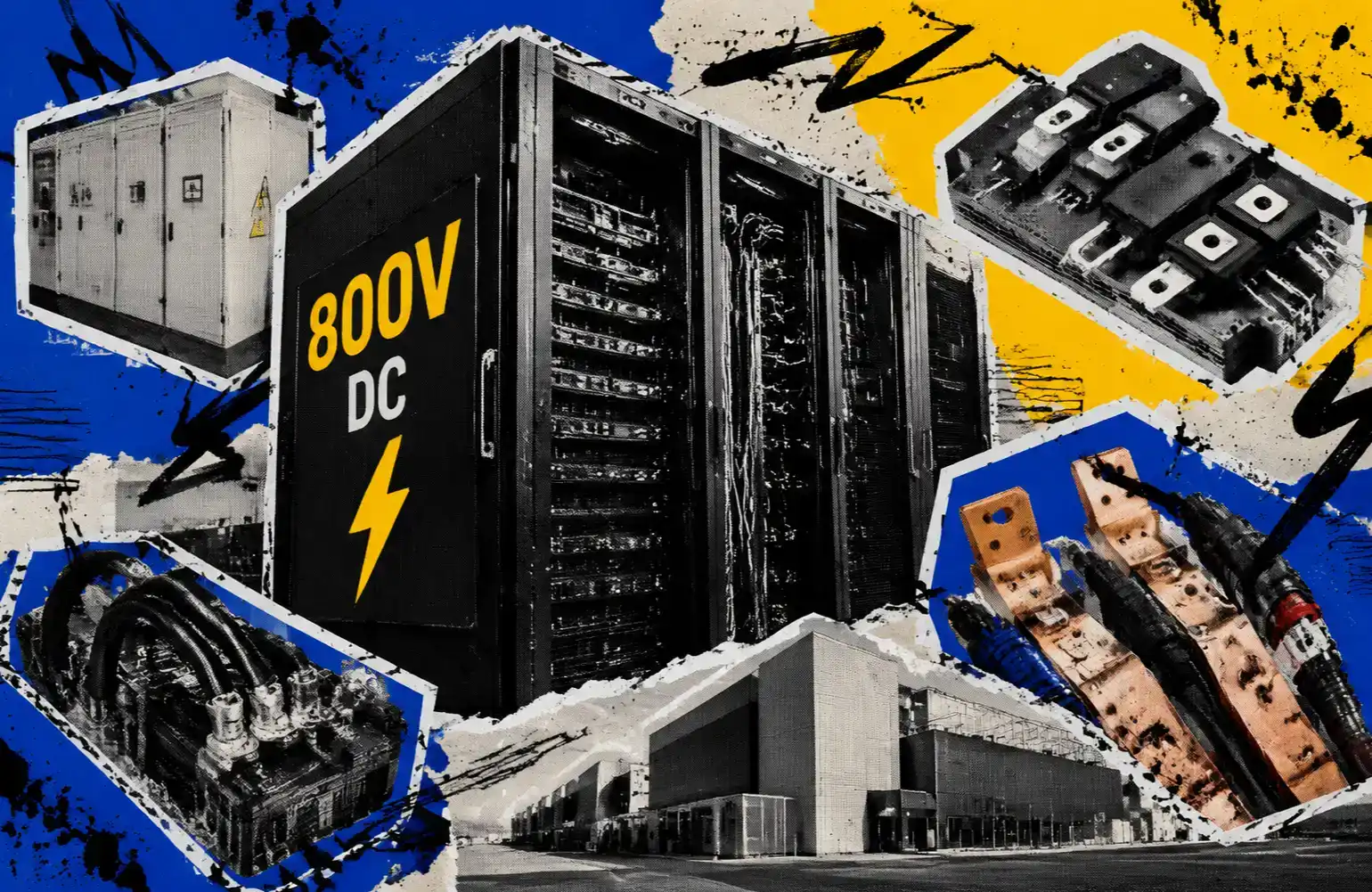
The 800V Voltage Standard Championed by Nvidia: Which Infrastructure Providers Stand to Benefit?

NVIDIA is actively promoting the 800VDC architecture as a key direction for its next-generation AI factories and high-power racks, particularly for the upcoming Rubin and Kyber platforms. The primary driver is the rapidly increasing power density of AI racks, with designs like GB200/GB300 NVL72 reaching 120-140kW and future systems potentially hitting 180-220kW. At such high power levels, traditional low-voltage power delivery becomes inefficient due to massive current, leading to significant copper use, cable bulk, heat, and power loss. The 800VDC standard aims to increase efficiency by transmitting power at higher voltage and lower current to the rack before stepping it down locally for GPUs. NVIDIA claims this can improve efficiency by up to 5%, reduce total cost of ownership (TCO) by up to 30%, and cut copper usage by approximately 45%. This shift redefines infrastructure roles, pushing power engineering to the forefront alongside GPU performance. Key beneficiaries and ecosystem partners highlighted include: 1. **Power Infrastructure Providers:** Companies like Vertiv, Schneider Electric, Delta Electronics (台达电), and Korean firms LS Electric and HD Hyundai Electric are involved in designing next-gen AI factory power distribution, rack power supplies, and backup systems. 2. **Power Semiconductors:** Suppliers of SiC/GaN devices, such as Infineon and STMicroelectronics, are better suited for high-voltage, high-efficiency conversion in this new architecture. 3. **Connectivity & Structure:** The focus shifts to high-reliability components like busbars, high-voltage connectors, and advanced PCBs that meet stricter insulation and safety requirements. 4. **Liquid Cooling & Rack ODM:** As power and heat density rise, liquid cooling becomes critical. Full-rack system integrators (e.g., Dell, Wiwynn, Wistron) must now demonstrate robust pre-delivery testing capabilities, including burn-in testing under full load, requiring significant power and cooling infrastructure in their factories. The transition is not immediate for all data centers but is targeted at high-density AI factories. NVIDIA’s 800VDC ecosystem is in a preparatory phase, with full-scale production expected to align with the 2027 launch of Kyber rack-scale systems. The investment thesis revolves around which companies can demonstrate proven product integration, customer validation, and reliable delivery of complete, high-power AI rack systems, making power, cooling, and testing capabilities new critical variables in the AI infrastructure value chain alongside GPUs.

marsbit37 мин. назад

The 800V Voltage Standard Championed by Nvidia: Which Infrastructure Providers Stand to Benefit?

marsbit37 мин. назад

Did 'Unlimited Minting' Actually Happen? Zcash Founder Responds to Four Major Market Concerns

The Orchard shielding pool in the privacy cryptocurrency Zcash was recently found to have contained a critical counterfeiting vulnerability that existed for four years. This discovery caused significant market panic and a sharp drop in the price of ZEC, though it has since recovered partially. Zcash founder Zooko Wilcox addressed four key questions raised by the vulnerability. First, while it's unknown if the bug was exploited, he believes it likely was not, citing advanced, targeted discovery methods, a rapid response to freeze the pool, and the typical "smash-and-grab" nature of past crypto exploits. Second, he states that if no exploitation occurred, all legitimate user funds in Orchard are recoverable. However, cautious users moving funds should be aware of privacy trade-offs and other risks involved in transferring to transparent or Sapling pools. Third, users currently cannot independently verify that the total ZEC supply hasn't been inflated due to this bug. However, the proposed "Ironwood" network upgrade will restore this ability by permanently sealing the Orchard pool. This will prevent any counterfeit funds from circulating and allow anyone running a node to cryptographically verify that the supply cap has not been breached. Finally, regarding other undiscovered vulnerabilities, Wilcox notes that intensive ongoing audits by multiple teams, including using advanced AI-assisted tools, have so far found no other counterfeiting bugs. This provides increased, though not absolute, confidence. In conclusion, while assessments suggest the bug was likely unused and funds are safe, the core issue was the loss of user-verifiable supply integrity. The Ironwood upgrade is presented as the solution, aiming to restore trust by allowing users to independently verify Zcash's supply security without relying on third-party assurances.

marsbit38 мин. назад

Did 'Unlimited Minting' Actually Happen? Zcash Founder Responds to Four Major Market Concerns

marsbit38 мин. назад

Торговля

Спот
Фьючерсы
活动图片