Автор: Ben Lakoff
Компиляция: Shenchao TechFlow
Введение от Shenchao: Когда основатель Bankless распродал весь ETH, а 19-летние разработчики устремились в Solana, медвежий нарратив вокруг Ethereum стал консенсусом. Однако партнёр BanklessVC Бен Лейкофф считает, что это точный аналог эпохи «Баллмера» в Microsoft — на поверхности нарратив медвежий, а базовые фундаментальные показатели стабильно растут. Ставка в 30%, приток средств через ETF и прояснение регуляторной среды сжимают ликвидные предложение, а то, что крипто-регулирование превратилось из угрозы существованию в правовые рамки, как раз и есть момент, когда стоит заходить на рынок.
Добро пожаловать к майскому обзору торговых потоков.
Тезисная часть в этом месяце немного длиннее, поэтому я помещаю её в начало, а все раунды финансирования, сборы фондов и результаты хакатонов — в конце.
Эпоха Баллмера для Ethereum
В прошлом месяце Дэвид Хоффман распродал весь свой ETH по 2070 долларов и написал вдумчивую статью с объяснением причин. Это разлетелось по всей платформе X (ранее Twitter).
Затем Дэвид принял участие в подкасте Chopping Block, и мне очень понравился тот разговор. Тарун сказал, что Ethereum «костенеет», потому что 19-летние больше не хотят строить на нём. Макс Ресник назвал Фонд Ethereum «избегающим рисков». Бычий Хасиб дал всему медвежьему настрою имя: это эпоха Баллмера для Ethereum. Эта формулировка нашла во мне отклик.
Эта концепция слишком хороша, чтобы её просто так оставить.
Да, я бычий на «криптовалюту», я бычий на BTC, я бычий на ETH... Я бычий на этот тренд. Но притворяться, что медвежий нарратив слаб — это просто самообман, поэтому я хочу подробнее изложить свою позицию. Это моё личное мнение, которое не обязательно отражает точку зрения BanklessVC и, конечно же, не является инвестиционной рекомендацией.
Медвежий нарратив получил имя, и он не ошибается
Суть реальна. Фактически, с момента публикации той статьи мы упали ещё на 10%.
Тезис Дэвида: ETH как валюта изначально была долгосрочной ставкой, а роуллап-центричная дорожная карта делает её ещё более долгосрочной. Ethereum — это «дающий, а не берущий»... он задуман для распределения блок-пространства по себестоимости. Маржа L2 достигает 98% от доходов с blob'ов. Лимит газа постепенно повышается до 100 млн+. Форк BPO радикально увеличивает предложение blob'ов. Рост стейблкоинов с 3 до 1630 млрд долларов создал ценность для Circle и Tether, а не для ETH. Между тем SOL, NEAR, BNB и TRX уже переоценили свою стоимость, ориентируясь на комиссионные доходы. Он прав в механике. Протокол задуман для изобилия блок-пространства, что прямо противоположно захвату стоимости через комиссии, которого вы хотите.
Точка зрения Таруна о «костенении» — это культурная версия того же самого. Таланты следуют за энергией основателей, а сейчас эта энергия — в Solana, Monad, Hyperliquid и следующих проектах (возможно, не в Ethereum, не в криптовалюте). Тезис Ресника об «избегающем рисков EF» — это институциональная версия. Фонд, в момент, когда нужно сохранять конкурентоспособность, набожно фокусируется на защите целостности сети.
Хасиб прав. «Эпоха Баллмера». Медленный продуктовый ритм. Промахи в переходных периодах. Более острые конкуренты с убийственным инстинктом. Громкие критики с правильными идеями.
Что на самом деле происходило в эпоху Баллмера в Microsoft
Баллмер руководил Microsoft с 2000 по 2014 год. Мем: потратил впустую 14 лет. Упустил мобильный рынок, упустил поиск, упустил социальные сети, выпустил Vista, швырнул несколько стульев.
Вот мем, который я помню, но мем что-то упускает. Акции Microsoft торговались в боковике более десяти лет, в то время как корпоративная франшиза неумолимо росла сложными процентами на фундаментальном уровне. Дивиденды выполняли большую часть работы. Лицензии на Office и Windows продолжали печатать деньги на протяжении всего нарратива «Microsoft умерла». Затем пришёл Сатья, и MSFT выросла в 10 раз.
Урок (по крайней мере, в версии Microsoft) заключается в том, что глубоко интегрированная, любимая корпорациями, проверенная временем инфраструктура часто продолжает расти сложными процентами во время собственного медвежьего нарратива. Медвежий нарратив часто прав на поверхности. Просто этого недостаточно, чтобы открывать короткие позиции.
Ethereum по-прежнему остаётся крупнейшей заслуживающей доверия нейтральной публичной блокчейн-платформой для токенизированных активов. BUIDL запускается там. Около 66% предложения USDC находится там. Самая глубокая ликвидность DeFi — там.
Но лидерство быстро сокращается. BUIDL не только на Ethereum (40%), что ниже примерно 85% год назад. USDC существует в 34 блокчейнах. Western Union выбрала Solana, а не Ethereum для USDPT. Институциональный выбор по умолчанию смещается от единственного «Ethereum» к множественным «публичным блокчейнам».
Для действующего игрока это всё ещё по-бычьи. Просто это уже не монополия. Желание 19-летних строить на нём — это реальная долгосрочная проблема. Но это не тот вопрос, который определит ближайшие два года.
Под шумом: ликвидное предложение рушится
Это часть, которую большинство медвежьих нарративов упускает.
Около 30% ETH поставлено в стейкинг. Казначейские компании держат ещё более 6% и продолжают наращивать. Только BitMine владеет 4,47% предложения и публично нацеливается на 5%. Спотовые ETF постоянно поглощают всё больше. Решение SEC/CFTC от 17 марта, классифицировавшее стейкинг-вознаграждения как не ценные бумаги, открыло весь путь для стейкинг-ETF. Ещё пять эмитентов (Fidelity, Franklin, Invesco, 21Shares, VanEck) ожидают решения по поправкам о стейкинге во втором квартале.
Каждый ETH, поставленный в стейкинг через ETF, — это ETH, который нельзя продать при ценовом импульсе. Чистая эмиссия составляет около 0,23% годовых. Ликвидное предложение сокращается быстрее, и в большинстве дней эти источники спроса конкурируют на рынке. Математике всё равно, скучен ETH или нет.
Так что Дэвид прав, ETH не будет переоценён из-за сжигания комиссий. Дорожная карта выбрала изобилие. Но ETH может быть переоценён из-за сжатия ликвидного предложения, спроса на доходность от стейкинга и премии за институциональную точку Шеллинга, не выигрывая войну комиссий. По крайней мере, в краткосрочной перспективе.
TAM криптовалют продолжает расти
Отстранимся немного от ETH. Реальная история последних 12 месяцев заключается в том, что регулирование криптовалют превратилось из угрозы существованию в правовые рамки.
Закон GENIUS стал законом. Платёжные стейблкоины теперь имеют федеральный режим. Закон CLARITY был принят Палатой представителей в июле прошлого года, а 14 мая прошёл через Банковский комитет Сената; структурно выглядит так, что он, скорее всего, будет принят до промежуточных выборов. Объём стейблкоинов в обращении превышает 2,8 трлн долларов и растёт сложными процентами. Токенизированные казначейские облигации наращивают масштаб. Спотовые ETF существуют для всё большего числа активов.
Это не этап умирания криптовалют. Это этап, когда криптовалюты становятся регулируемым, триллионным сегментом финансовой системы, к которому скучные институты обязаны подключиться.
На предыдущих медвежьих рынках мы действительно беспокоились о том, будет ли эта экосистема существовать в будущем. Однако есть некоторые предостережения, и они важны.
Первое: победа криптовалют — это не то же самое, что победа децентрализованных криптовалют. По-настоящему ужасный медвежий сценарий — это не математика комиссий Дэвида. А тот, в котором «победа блокчейна» в итоге выглядит как Canton, JPM Onyx, разрешённые реестры DTCC и несколько подсетей Avalanche, при этом публичный крипто-активный комплекс по сути не захватывает реальную ценность.
Этот мир существует (и вызывает беспокойство), но я сделаю ставку на сторону публичных блокчейнов по нескольким причинам. Чисто разрешённые блокчейны как институциональный ответ продвигались десять лет, но постоянно теряли adoption (может, в этот раз всё иначе?). Архитектура, которая действительно побеждает, — это разрешённые активы на рельсах публичных блокчейнов: BUIDL, BENJI, USDY от Ondo. Токены реализуют KYC и ограничения на переводы; расчёты происходят на Ethereum, Solana и другой публичной инфраструктуре. Эмпирический опыт сосуществования KYC-пулов с открытыми публичными пулами (Aave Arc, Compound Treasury) показывает, что они провалились.
Это всё ещё по-бычьи для публичных блокчейнов как settlement-слоя, включая ETH. Но это слабее, чем полная компоновочность DeFi. Разрешённые активы не могут свободно комбинироваться с открытыми пулами, но версия с контролируемым доступом — это модель, которая побеждает.
Второе: вопрос больше не в том, произойдёт ли adoption криптовалют. А в том, какие криптовалюты его захватят. Честный ответ: не всё пойдёт в ETH, но огромная, институционализированная, регулируемая, «требующая доверенной нейтральности» часть почти наверняка пойдёт. Потому что альтернатива — потребовать от банков первого уровня проводить расчёты токенизированных активов на блокчейне, который работает как стартап... маловероятно.
Вот где концепция Баллмера недооценивает бычий рынок. Она работает, только если базовый рынок продолжает расти. Базовый рынок криптовалют быстро растёт самым благословленным регуляторами, институционализированным образом.
Стратегия штанги: бычий на тренд, а не на экстремизм
Медвежий нарратив, который я воспринимаю серьёзно, — это не анализ комиссий. А лидерство и конкуренция. EF действительно может нуждаться в своём моменте Сатьи. Вакуум убийственного инстинкта реален. Solana, Monad и Hyperliquid не замедляются. Пары ETH/BTC и ETH/SOL могут какое-то время торговаться в боковике или снижаться, прежде чем развернуться.
Спобы позиционирования вокруг этого прост: перестаньте быть экстремистами.
Держите ETH для сделки «выдержал испытание временем / институционализация / сжатие ликвидного предложения». Держите SOL для сделки «потребитель / пропускная способность / дистрибуция». Держите BTC для макросхеджирования. Держите небольшую корзину следующего поколения L1 и победителей на уровне приложений, куда действительно направлена культурная энергия.
Я знаю. ETH — это актив стоимостью 250 млрд долларов, подверженный макротрендам, и распределение вашего капитала всегда связано с компромиссами. Я не экстремист, но я всё равно бычий на ETH. Подводя итог причинам:
Ликвидное предложение сокращается быстрее эмиссии.
Утверждение стейкинг-ETF во втором квартале — это реальный, датированный катализатор.
Принятие закона CLARITY масштабно высвобождает институциональные криптовалюты. Более чёткие правила позволяют регулируемому капиталу массово развёртываться во всём классе активов. Ров Ethereum — это сетевое преимущество действующего игрока плюс доверенная нейтральность, которые делают его публичным блокчейном по умолчанию для расчётов токенизированных активов, даже если лидерство сокращается.
Медвежий нарратив настолько громкий, что теперь стал консенсусом. Историческая точность консенсусного медвежьего настроя после 60%-ной просадки до 2000 долларов очень низка.
Опционная стоимость «момента Сатьи» не заложена в цене. Если EF будет реорганизован или появится более агрессивная сущность для руководства разработкой протокола, это будет чистый апсайд, который не содержится ни в одной медвежьей модели.
Я рассматриваю эту сделку как «Дэвид частично прав, и ETH всё ещё работает». Microsoft работала эффективно под руководством Баллмера. Adoption криптовалют побеждает. Актив, которым вы больше всего хотите владеть, — это тот, который наиболее глубоко интегрирован в ту часть криптовалют, правила для которой правительство США только что потратило два года на разработку.
Отступите и посмотрите, что на самом деле говорят регуляторы. SEC и CFTC говорят вам, что они хотят перестроить финансы на блокчейне. Переместить доллар в ончейн. В таком мире, как это может не быть сумасшедшим бычьим сигналом? Возможно, если вы киберпанк, это не тот мир, который вы представляли... активы с контролируемым доступом, KYC-каналы, всему требуется разрешение. Но для публичных блокчейнов как settlement-инфраструктуры? Несомненно, бычий сигнал.
В этом ключ к пониманию того, где мы находимся в цикле. ИИ — это центр внимания, точка. Он горячий, растёт параболически, и как ранний инвестор это как раз проблема. Вы хотите размещать капитал там, где не жарко. Когда сектор настолько перегрет, трудно вкладывать капитал без премии, за исключением самых ранних предпосевных стадий.
Криптовалюты сейчас не в тренде. Медвежий нарратив — это консенсус. Энергия — в другом месте. Это именно та ситуация, которую вы хотите, а не та, от которой нужно бежать.
На достаточно длинном горизонте всё становится ИИ, всё становится блокчейном. Один из них оценен так, как будто это уже произошло. Другой только что получил двухлетнее преимущество, закреплённое в законах, пока все смотрят в другую сторону.
Пристегнитесь. А теперь переходим к остальному финансированию в крипто-/web3-сфере :)
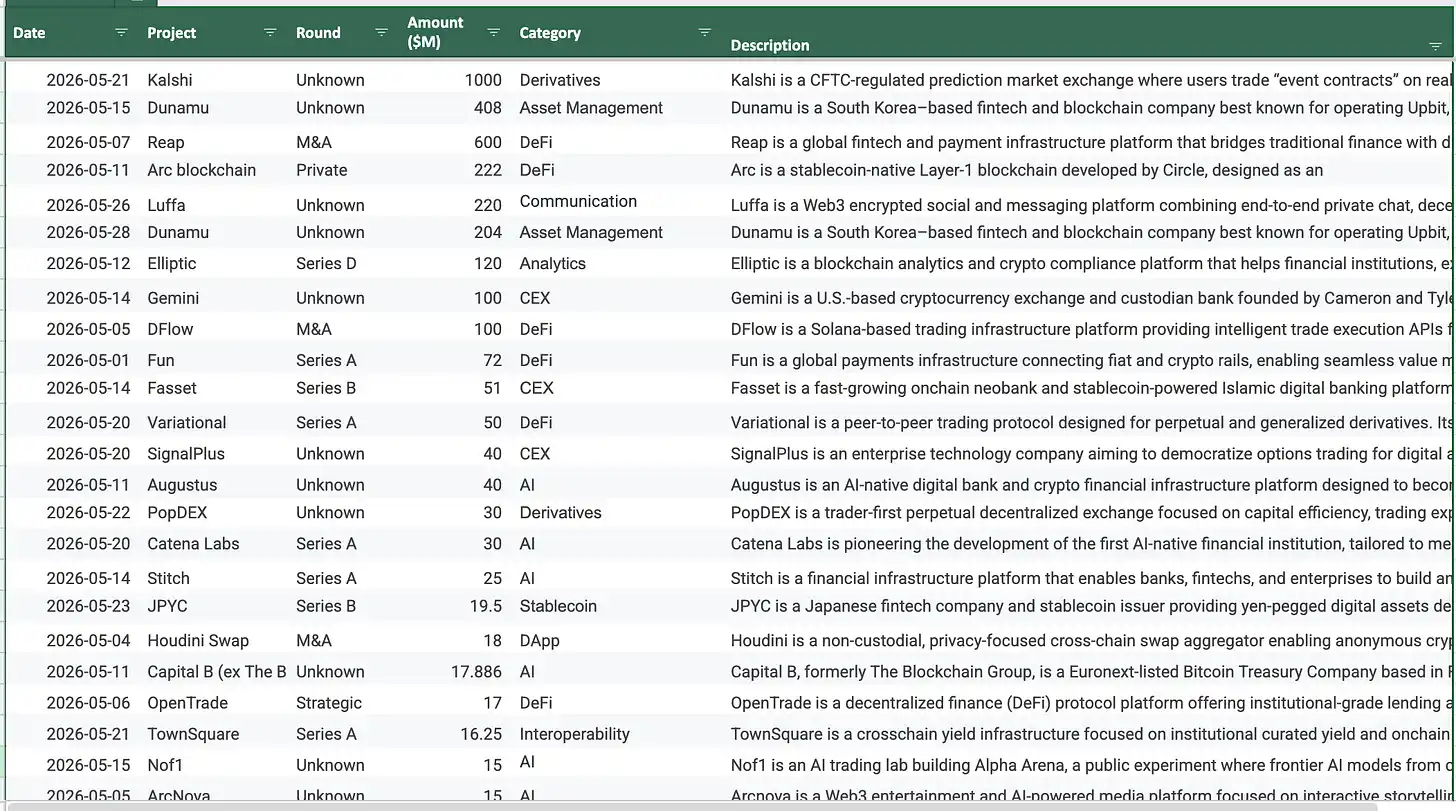
Топ-10 раундов финансирования в криптовалютах
Kalshi | Раунд F | Предикшн-маркеты | 10 млрд долл. | 2026-05-07
Лидер: Coatue, участники: Sequoia, a16z, IVP, Paradigm, Morgan Stanley и ARK Invest. Этот раунд в 10 млрд долларов оценивает Kalshi в 220 млрд долларов, что вдвое больше оценки в 110 млрд долларов всего пять месяцев назад. Годовой объём торгов вырос в три раза за шесть месяцев до 178 млрд долларов, институциональный объём торгов вырос на 800%. Kalshi регулируется CFTC, а не является нативной криптовалютой, поэтому это звёздочка в этом списке, но сейчас она контролирует более 90% активности предикшн-рынков в США, а предикшн-маркеты — одна из самых чистых историй входа, которые сейчас есть у криптовалют.
Dunamu (Upbit) | Стратегические инвестиции | Централизованная биржа | 408 млн долл. | 2026-05-28
Три компании, связанные с Samsung (Samsung Securities, Samsung SDS, Samsung Card), согласились купить 4% акций Dunamu, оператора крупнейшей в Южной Корее криптобиржи Upbit, у Kakao примерно за 408 млн долларов (612,8 млрд вон). Каждый покупатель упомянул позиционирование для воны-стейблкоинов, токенизированных ценных бумаг и ончейн-расчётов перед принятием «Основного закона о цифровых активах» в Корее. Это часть майского спринта по передаче около 14% акций Dunamu корейским гигантам, таким как Hana и Hanwha. Завершение 19 июня.
Circle (Arc) | Предпродажа токенов | Инфраструктура / Стейблкоины | 222 млн долл. | 2026-05-11
Circle привлекла 222 млн долларов (FDV 3 млрд долларов) для Arc, своего институционального L1 для расчётов стейблкоинов и токенизированных активов. a16z crypto вложила 75 млн долларов, участники: BlackRock, Apollo, ICE, SC Ventures, SBI, Janus Henderson, General Catalyst, Marshall Wace, ARK, Haun и Bullish. Это самый чёткий сигнал 2026 года о том, что «традиционные финансы выбирают рельсы». Регулируемый эмитент стейблкоинов строит собственный блокчейн, а в списке акционеров — крупнейшие управляющие активами компании.
Ripple (Ripple Prime) | Долговое финансирование | Инфраструктура / Прайм-брокер | 200 млн долл. | 2026-05-11
Ripple получила долговое финансирование в размере 200 млн долларов от фондов под управлением Neuberger Specialty Finance для расширения кредитных возможностей своего мульти-активного прайм-брокера Ripple Prime. Существующие институциональные кредиты служат обеспечением. Выручка Ripple Prime с момента приобретения платформы Ripple в 2025 году выросла в три раза в годовом исчислении. Кредитование традиционных финансов под обеспечение кредитных книг крипто-прайм-брокеров.
Elliptic | Раунд D | Комплаенс / ИИ x Крипто | 120 млн долл. | 2026-05-12
Лидер: One Peak в этом раунде на 120 млн долларов (оценка 670 млн долларов), участники: Nasdaq Ventures, Deutsche Bank и British Business Bank. Это крупнейший раунд венчурного финансирования чистыми акциями в этом месяце. Elliptic создаёт инструменты AML/комплаенса на основе агентов. Интерпретация с точки зрения апреля: это операционный и комплаенс-слой, который постоянно напоминают, что нужен DeFi, теперь с поддержкой капитала традиционных финансов.
Fun | Раунд A | Платежи / Потребители | 72 млн долл. | 2026-05-01
Совместное лидерство: Multicoin Capital и SignalFire, участники: Infinity Ventures, Pharsalus Capital и Джастин Матин. Fun — это канал on/off-ramp между криптовалютами и фиатом для финансовых платформ, таких как Polymarket. Крупнейший раунд венчурного финансирования в потребительском/платёжном сегменте в этом месяце, чистая ставка на тренд предикшн-рынков и потребительского крипто-ажиотажа.
Fasset | Раунд B | Стейблкоины / Платежи | 51 млн долл. | 2026-05-14
Лидер: SBI Group в этом раунде на 51 млн долларов, участники: Investcorp и Arz Portföy. Fasset — это необанк на основе стейблкоинов для развивающихся рынков с годовым объёмом торгов около 32 млрд долларов. Это реальное доказательство тезиса о стейблкоинах как средстве платежа, и оно происходит там, где это важнее всего: в уголках мира, где долларовые рельсы действительно меняют жизнь.
Variational | Раунд A | DeFi / Деривативы / RWA | 50 млн долл. | 2026-05-20
Лидер: Dragonfly, участники: Bain Capital Crypto и Coinbase Ventures. Variational управляет платформой на основе модели RFQ, предлагающей ончейн-перпетуальные контракты на реальные активы: нефть, золото, серебро, медь. Суждение команды: перпетуальные контракты на RWA могут превзойти перпетуальные контракты на BTC и ETH в течение года. Это самая тезисно-глубокая небольшая сделка месяца.
OpenTrade | Стратегический / Growth-раунд | Стейблкоины / RWA | 17 млн долл. | 2026-05-06
Mercury Fund и Notion Capital поддержали раунд OpenTrade на 17 млн долларов для расширения её инфраструктуры доходности стейблкоинов, обеспеченных реальными активами (RWA). Ещё одна точка данных для доминирующей темы месяца: тренд доходных стейблкоинов с залогом в виде RWA на фундаментальном уровне.
Cycles | Seed-раунд | Инфраструктура / Клиринг | 6,4 млн долл. | 2026-05-21
Лидер: Blockchange Ventures, участники: Coinbase Ventures, Compound VC и Primitive Ventures. Cycles создаёт защищённую сеть многостороннего клиринга для ончейн-финансов и стейблкоинов. Небольшой по размеру, но именно такой институциональный канал, который должен существовать, прежде чем история о «следующем притоке 10 триллионов долларов» станет реальностью.
Нажмите здесь, чтобы увидеть все раунды финансирования за май
Объявления о сборе средств венчурных фондов в мае
После оживлённого апреля объявления о новых фондах в этом месяце были спокойнее, но было два крупных движения...
Haun Ventures | Фонд II, 1 млрд долл. | 2026-05
Компания Кэти Хон привлекла 1 млрд долларов через ранний фонд и сопутствующий поздний фонд, увеличив активы под управлением до более чем 2 млрд долларов. Три приоритетные темы: инфраструктура финансов следующего поколения, токенизация активов и новые рынки, а также «экономика агентов», где системы ИИ торгуют от имени людей. Средства будут развёрнуты в течение следующих 2-3 лет.
a16z crypto | Крипто-фонд V, 2,2 млрд долл. | 2026-05
Фонд, который мы отметили в марте как цель около 2 млрд долларов, официально закрылся на 2,2 млрд долларов. Все стадии, 10-летний инвестиционный горизонт, фокус на реальные приложения: стейблкоины, платежи, финансовые услуги, перпетуальные контракты, кредитование, предикшн-маркеты, токенизация активов. Формулировка a16z: фундаментальные показатели криптовалют «находятся на историческом максимуме».
Напоминание: если вам интересно узнать больше о Bankless Ventures Fund II, заполните эту форму, и мы свяжемся с вами!
ETHGlobal Нью-Йорк 2026 | 2026-06-12 — 14
Нью-Йорк, офлайн. Предшествует ETHConf NYC (8-10 июня) и Pragma NYC.
Base Onchain Summer Хакатон | Примерно июнь 2026 (дата уточняется)
Онлайн. Флагманский ончейн-хакатон Base; предыдущий привлёк более 7500 разработчиков, спонсоры включали Stripe, Shopify, Farcaster и Zora. (Даты на 2026 год ещё не подтверждены, проверьте на Devfolio.)
ETHGlobal Лиссабон 2026 | 2026-07-24 — 26
Лиссабон, Португалия, офлайн. Pragma Lisbon 25 июля.
Solana Frontier Хакатон | 2026-04-06 — 05-11
Онлайн. Крупнейшее крипто-предпринимательское соревнование, около 2857 заявок за пять недель. Призы: 30 тыс. долларов главному победителю, 10 тыс. долларов каждому из 20 выдающихся команд, плюс 2,5 млн долларов венчурного финансирования и место в акселераторе от Colosseum. На момент окончания месяца победители ещё не объявлены; судейство продолжается, следите за blog.colosseum.com в начале-середине июня.
ETHPrague 2026 | 2026-05-08 — 10
Прага, Чешская Республика (ратуша). Пятое по счёту; конференция плюс хакатон, фокус на «солнечно-панковском» будущем Ethereum.
Solana Mobile Хакатон | 2026-04
Онлайн. Завершён, более 400 приложений от разработчиков из 66 стран.
Solana Frontier Демо-день | Июнь 2026 (дата уточняется)
Онлайн. Финальные презентации команд-участников хакатона Frontier, ожидается после объявления победителей.
ETHGlobal Нью-Йорк День презентаций | 2026-06-14
Нью-Йорк. Оценка проектов и презентации в последний день хакатона.
ETHPrague 2026 Финальная презентация | 2026-05-10
Прага. Демо и оценка в последний день хакатона ETHPrague.
Открытые заявки на акселераторы
Solana Incubator (Когорта 5) | Открыт набор / Ранний дедлайн ~ 05.06
Нью-Йорк. 3-месячная программа, начало в сентябре 2026; rolling review, приоритет ранним заявкам. Ищут 4-6 команд (существующие команды Solana, web3-команды, рассматривающие Solana, или web2-команды, добавляющие web3).
Alliance DAO (ALL18) | Открыт набор / Rolling review
Виртуально плюс офлайн-ретрит. Когорта ALL18 начинается 7 сентября 2026; решение о собеседовании примерно через 2 недели после подачи заявки. Коэффициент приёма ~5%; медианное финансирование выпускников — 3,5 млн долларов при оценке 25 млн долларов.
a16z Crypto Startup Accelerator (CSX) | Открыт набор (проверьте следующий набор)
Офлайн, 9-недельная программа, проводится два раза в год в разных городах. 500 тыс. долларов за 7% доли; коэффициент приёма ~3%.
Outlier Ventures Base Camp | Rolling заявки
Виртуально плюс офлайн. 12-недельный акселератор, принимает ранние заявки на 2026 год в направлениях DeAI, DeFi, RWA и DePIN.
Techstars Web3 | Открыт набор
Виртуально плюс офлайн. Сообщается, что набор на 2026 год открыт.
На этом майский обзор завершён!
Спасибо всем, удачи!
Бен Лейкофф, CFA
https://twitter.com/benlakoff