2026-04-17 Пятница

Новостной центр - Страница 297

Получайте криптоновости и тенденции рынка в режиме реального времени с помощью Новостного центра HTX.

Wall Street Is Calculating the 'AI Apocalypse', While Justin Sun Is Betting on Web4.0

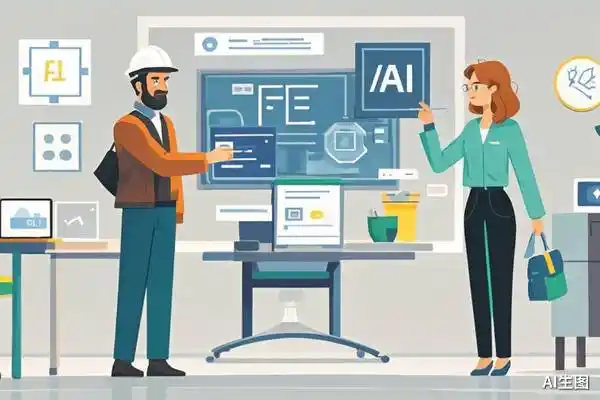
Wall Street research firm Citrini Research released a thought experiment report, "2028 Global Intelligence Crisis," predicting that AI agents will eliminate friction in human interactions, destroying traditional business models built on information asymmetry and intermediation. Meanwhile, Justin Sun, a prominent Web3 figure, declared 2026 as a "year of miracles" and urged people to embrace AI-driven futures, framing it as the dawn of Web4.0. The report argues that AI agents will enable near-zero-cost, instant service delivery and transaction execution, dismantling industries reliant on human cognitive limitations—such as finance, advertising, law, and consulting. This aligns with blockchain’s core mission of decentralization but takes it further by reducing the need for trust intermediaries altogether. Both AI and crypto are fundamentally rooted in physical resources: compute power and electricity. AI inference consumes computational energy, while blockchain transactions rely on energy-intensive mining or validation. Tokens, whether AI-generated or crypto-based, are digital representations of energy consumption. A critical challenge for AI agents is financial interoperability. Traditional payment systems are designed for humans, not machines. At Level 5 automation, AI agents will transact autonomously, requiring programmable, near-instant, low-cost settlement—conditions that blockchain networks like Solana or Ethereum L2s, with stablecoins, are uniquely suited to provide. Crypto wallets will become the native banks for AI agents. Sun’s strategic bet on Web4.0 is backed by Tron’s dominance in stablecoin transfers (especially USDT), which offers the high-speed, low-fee infrastructure needed for machine-to-machine payments. He aims to leverage AI’s growth to reinvigorate crypto markets, combining Tron, BitTorrent (decentralized storage), and Huobi’s user base to build a full-stack, decentralized Web4.0 infrastructure independent of centralized cloud providers. While Wall Street fears disruption, Sun sees opportunity—positioning crypto at the core of the next digital era.

marsbit03/04 10:11

Wall Street Is Calculating the 'AI Apocalypse', While Justin Sun Is Betting on Web4.0

marsbit03/04 10:11

Unlocking Unicorn Tickets: From Robinhood to MSX, An On-Chain Experiment in Pre-IPO Democratization

"Unicorn Ticket Opening: From Robinhood to MSX, A Chain-Based Pre-IPO Equality Experiment" The article explores the emerging trend of using tokenization to democratize access to Pre-IPO shares of high-value unicorn companies like SpaceX, OpenAI, and ByteDance. While RWA (Real World Asset) tokenization has already brought traditional assets like bonds and stocks on-chain, the primary market for pre-IPO equities remains largely inaccessible to retail investors. Two main approaches are emerging: 1. **Perpetual Contracts (exemplified by Hyperliquid):** Offers synthetic exposure to a company's valuation through derivatives, providing low barriers and high liquidity but lacking direct ownership of the underlying asset and carrying regulatory uncertainty. 2. **Tokenized Equity Mirrors (exemplified by Robinhood Europe and MSX):** Uses a compliant structure where a regulated third-party custodian (like Republic) holds the actual shares in an SPV (Special Purpose Vehicle). This SPV's equity is then tokenized and distributed to investors. This method, though more complex to implement, provides legally protected ownership rights and a direct claim on the equity. The collaboration between MSX and Republic to launch a Pre-IPO专区 (dedicated zone) in the Asia market, following Robinhood's earlier experiment, is highlighted as a key development. It aims to bridge the gap for Asian investors, offering access to tokenized shares of top unicorns with a low entry threshold (e.g., 10 USDT). The core narrative is that blockchain technology is creating a new "1.5-level market" between the closed primary market and the public secondary market. This democratizes access for users seeking pre-IPO growth红利 (dividends) while also providing private companies and early shareholders with access to a new, global pool of incremental capital and liquidity options. The conclusion notes that while the underlying technology is mature, the success of this model depends on clear regulatory paths, reliable risk mechanisms, and effective liquidity matching between institutions and retail users. The year 2026 is seen as a critical juncture to determine if this becomes a mainstream asset class or remains a conceptual experiment.

比推03/04 09:41

Unlocking Unicorn Tickets: From Robinhood to MSX, An On-Chain Experiment in Pre-IPO Democratization

比推03/04 09:41

活动图片