Автор: Клод, Deep Tide TechFlow
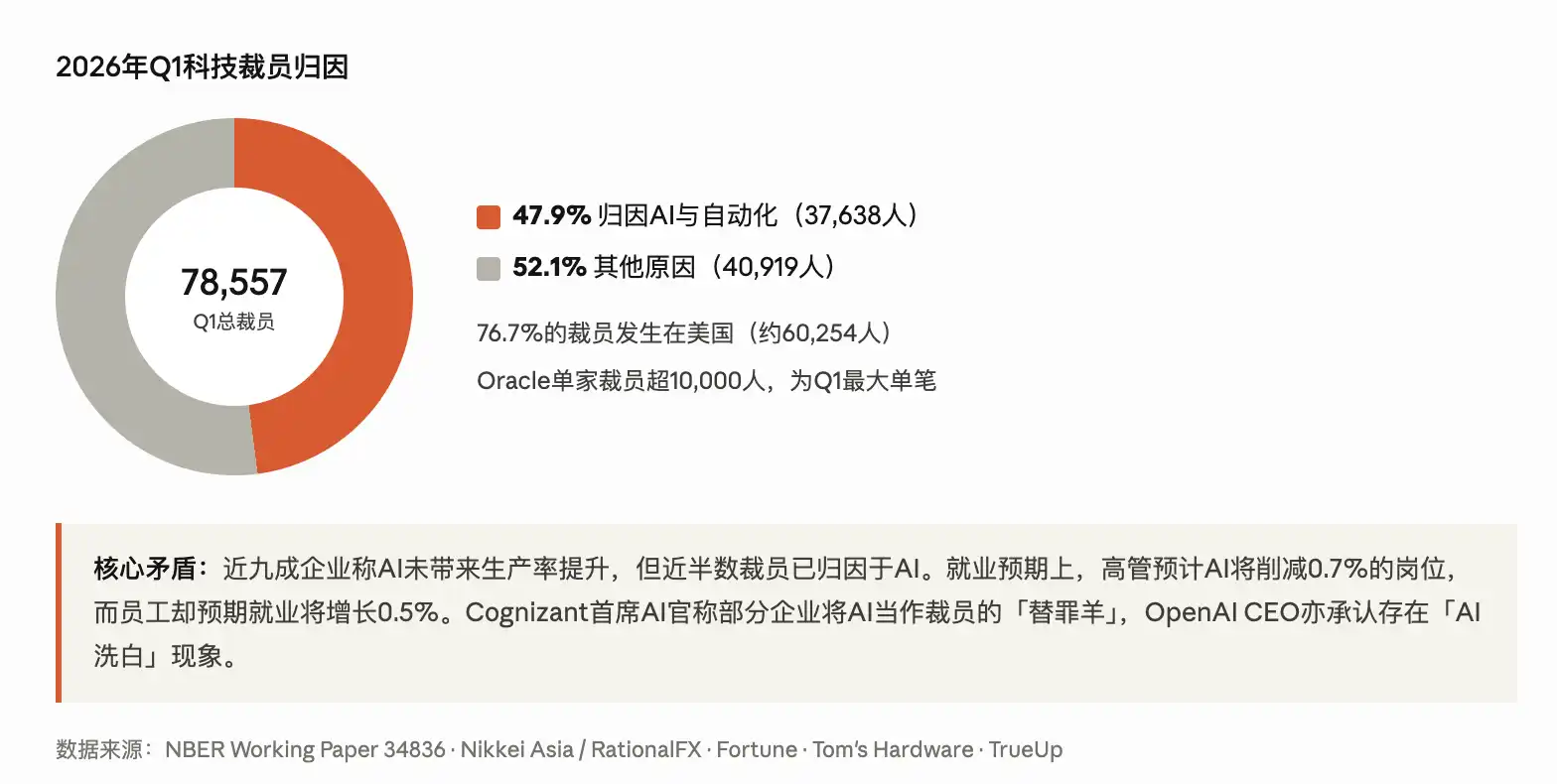
Введение Deep Tide: Исследование Национального бюро экономических исследований США (NBER) с участием 6000 руководителей из четырех стран показало, что почти 90% предприятий считают, что ИИ за последние три года «не оказал никакого влияния» на занятость и производительность. Однако в первом квартале 2026 года в технологической отрасли было уволено 78 557 человек, из которых 47,9% были отнесены на счет ИИ. Данные о производительности отсутствуют, а волна увольнений под именем ИИ нарастает. Экономисты сравнивают это противоречие с «парадоксом Солоу», предложенным лауреатом Нобелевской премии по экономике 1987 года, в версии для ИИ.
Вложено 250 миллиардов долларов, почти 90% предприятий заявляют, что ИИ не принес никакого повышения производительности. В то же время технологические компании проводят массовые увольнения под именем ИИ.
Это самая абсурдная сцена в индустрии ИИ на сегодняшний день.
Согласно отчету журнала Fortune от 19 апреля, исследование NBER, опубликованное в феврале этого года с участием 6000 руководителей предприятий из США, Великобритании, Германии и Австралии, показало, что почти 90% респондентов заявили, что ИИ за последние три года не оказал никакого измеримого влияния на их занятость и производительность. Хотя две трети руководителей используют ИИ, среднее еженедельное время его использования составляет всего 1,5 часа, а 25% респондентов заявили, что вообще не используют ИИ на работе.
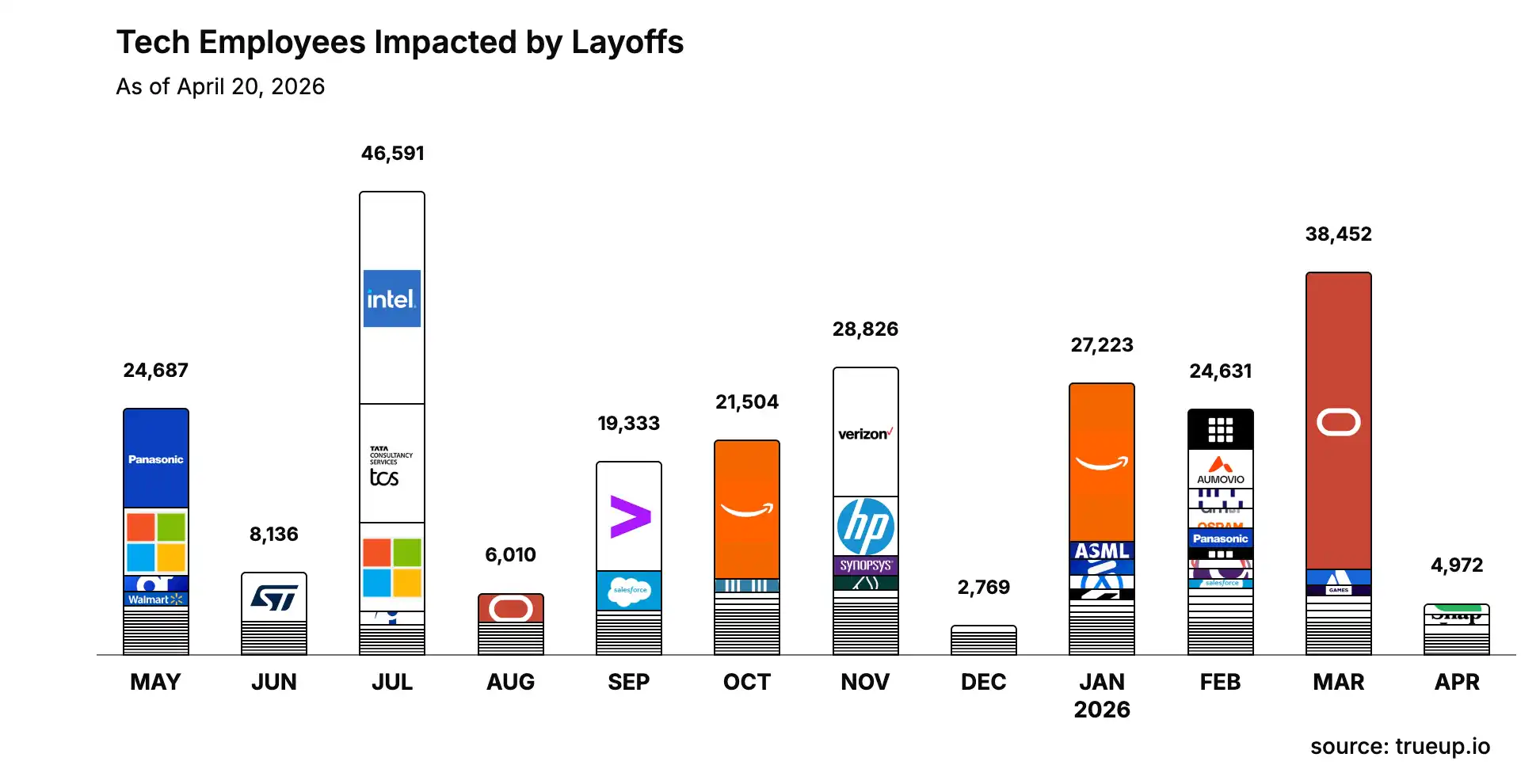
С другой стороны, по данным RationalFX, на которые ссылается Nikkei Asia, с 1 января 2026 года по начало апреля в технологической отрасли было уволено 78 557 человек, из которых 37 638 (47,9%) были напрямую отнесены на счет ИИ и автоматизации рабочих процессов. Более 76% увольнений произошли в США.
Главный экономист Apollo Торстен Слок прямо процитировал классическое утверждение лауреата Нобелевской премии 1987 года Роберта Солоу, охарактеризовав текущую ситуацию как версию «парадокса Солоу» для ИИ. Оригинальная фраза Солоу была: «Эпоха компьютеров повсюду, кроме статистики производительности.»
Суждение Слока почти дословно отражает сегодняшний день. ИИ не виден в данных о занятости, данных о производительности и данных об инфляции.
90% предприятий не видят эффекта от ИИ, окупаемость инвестиций в 250 миллиардов под вопросом
Данные этого исследования NBER довольно убедительны. В четырех странах 69% предприятий в той или иной степени используют ИИ, самый высокий показатель в США (78%), самый низкий в Германии (65%). Но использование — это одно, а эффект — другое: более 90% менеджеров заявили, что ИИ не повлиял на размер их предприятий, 89% заявили, что не повлиял на производительность труда (измеряемую как выручка на душу населения).
Согласно Индексу ИИ Стэнфордского университета за 2025 год, глобальные инвестиции в ИИ в 2024 году превысили 250 миллиардов долларов. Глобальное исследование CEO PwC за 2026 год показало, что только 12% генеральных директоров заявили, что ИИ привел как к снижению затрат, так и к росту доходов, 56% CEO не увидели каких-либо значительных финансовых выгод.
Слок в своей статье в блоге указал, что за исключением «великолепной семерки», ИИ не оказывает видимого влияния на норму прибыли и ожидания прибыли.
Это не единственное мнение. Исследование MIT 2024 года прогнозировало, что ИИ сможет повысить производительность всего на 0,5% в следующем десятилетии. Автор исследования, лауреат Нобелевской премии Дарон Асемоглу, тогда坦言: «0,5% лучше, чем ноль. Но по сравнению с обещаниями индустрии и технических СМИ это действительно разочаровывает.»
Исследование Boston Consulting Group (BCG), опубликованное в марте этого года, выявило еще более контр интуитивное явление: когда сотрудники используют до трех инструментов ИИ, производительность повышается; но при использовании четырех или более инструментов самооценка производительности значительно падает, сотрудники сообщают о «мозговом тумане» и большем количестве мелких ошибок. BCG назвала это «перегрузкой мозга от ИИ».
Глобальный барометр талантов ManpowerGroup за 2026 год показал, что среди почти 14 000 сотрудников в 19 странах регулярное использование ИИ в 2025 году выросло на 13%, но уверенность в полезности ИИ резко упала на 18%.
Почти 80 000 увольнений в первом квартале, ИИ — «козел отпущения» или реальный виновник?
В то время как данные о производительности отсутствуют, волна увольнений продвигается с тревожной скоростью.
Согласно отчету Nikkei Asia, в первом квартале 2026 года в технологической отрасли было уволено 78 557 человек, 47,9% из которых были отнесены на счет внедрения ИИ и автоматизации рабочих процессов. Oracle недавно тихо уволила более 10 000 человек, а сэкономленные средства были перенаправлены на строительство центров обработки данных. Генеральный директор Anthropic Дарио Амодеи и генеральный директор Ford Джим Фарли публично заявили, что ИИ уничтожит половину начальных белых воротничков в США в течение следующих пяти лет. Исследование Стэнфордского университета также показало, что начальные должности в программирования и обслуживания клиентов уже находятся под ударом, а количество соответствующих вакансий за три года снизилось на 13%.
Имитационное исследование MIT дало еще более шокирующие цифры: ИИ может заменить 11,7% рабочей силы США, что касается около 1,2 триллиона долларов общей заработной платы.
Но сколько из этих увольнений действительно вызвано ИИ?
Главный директор по ИИ Cognizant Бабак Ходжат прямо заявил Nikkei Asia: «Я не уверен, связаны ли эти увольнения напрямую с реальным повышением производительности. Иногда ИИ на финансовом уровне просто козел отпущения — компании наняли слишком много людей, хотят сократить штат и сваливают вину на ИИ.»
Генеральный директор OpenAI Сэм Альтман на саммите влияния ИИ в Индии также признал существование явления «озеленения ИИ» (AI washing): «Есть определенный процент «озеленения ИИ», люди винят ИИ в увольнениях, которые должны были произойти в любом случае, но есть и некоторые работы, которые действительно заменяются ИИ.»
Аналитики Deutsche Bank прямо назвали это явление «отмывкой избыточности ИИ» (AI redundancy washing), считая, что компании приписывают увольнения ИИ, потому что «это посылает инвесторам более позитивный сигнал, чем признание слабого спроса или предыдущего чрезмерного найма».
IBM увеличивает найм на начальном уровне, Cognizant отказывается от увольнений
Не все компании плывут по течению.
IBM в 2026 году утроила количество найма на начальном уровне. Логика главного директора по персоналу Никл ЛаМоро такова: хотя ИИ может выполнять много начальной работы, устранение этих должностей разрушит кадровый резерв для воспитания будущих менеджеров среднего звена, поставив под угрозу долгосрочные запасы лидерства компании.
Cognizant — гигант аутсорсинга бизнес-процессов, чей бизнес сильно зависит от человеческих ресурсов, — также заявила, что не будет увольнять из-за ИИ. Компания создала лаборатории ИИ в Сан-Франциско и Бангалоре для разработки пользовательских ИИ-агентов для клиентов (поскольку готовые универсальные продукты ИИ плохо работают в корпоративной среде, имеют проблемы с производительностью и безопасностью), но ее сотрудники будут обучены работе совместно с ИИ, а не заменены им.
Ходжат подчеркнул: «Будет много молодых выпускников, которые не смогут найти работу и будут lacking отраслевых знаний. Вы должны нанять их, позволить им учиться на работе тому, как использовать ИИ в различных областях.»
Данные Европейского центрального банка также подтверждают эту точку зрения с другой стороны: предприятия, которые массово внедряют и инвестируют в ИИ, с большей вероятностью расширяют найм.
J-кривая или мираж: когда наступит переломный момент производительности ИИ?
Исторический опыт дает некоторую надежду.
Инвестиции в ИТ в 1970-80-х годах также казались бесполезными, но в период с 1995 по 2005 год рост производительности, driven by ИТ, достиг 1,5%. Директор Стэнфордской лаборатории цифровой экономики Эрик Бриньолфссон написал в Financial Times, что переломный момент производительности ИИ, возможно, уже начал проявляться: рост производительности в США в прошлом году составил 2,7%, отслеживаемый рост ВВП в четвертом квартале — 3,7%, но за тот же период было создано всего 181 000 новых рабочих мест — это расхождение между ростом занятости и ростом ВВП может быть сигналом того, что ИИ начал работать. Бывший генеральный директор Pimco Мохамед Эль-Эриан также заметил такое же расхождение.
Исследование Стэнфордского института экономической политики с использованием данных о просмотрах веб-страниц 200 000 американских семей показало, что ИИ повысил эффективность выполнения онлайн-задач, таких как поиск работы, планирование поездок и покупки, на 76% до 176%. Но исследователи обнаружили, что пользователи тратят сэкономленное время на общение и просмотр телевизора, а не на работу или изучение новых навыков.
Слок из Apollo описал будущее влияние ИИ как «J-кривую»: сначала период снижения производительности, затем экспоненциальный скачок. Но он также указал, что в отличие от эпохи ИТ 80-х, тогдашние новаторы обладали монопольной定价овой властью, в то время как сегодняшние инструменты ИИ продолжают дешеветь из-за fierce конкуренции. Таким образом, создание стоимости ИИ заключается не в самом продукте, а в том, «как генеративный ИИ используется и внедряется в различные сектора экономики».
Суждение Ходжата, пожалуй, самое практичное: пройдет еще 6–12 месяцев, прежде чем предприятия начнут видеть реальное повышение производительности благодаря ИИ, и «этот переходный период будет болезненным для всех нас».



















