5 in a row! Here’s why monthly perp volumes have been falling since October

ambcryptoОпубликовано 2026-04-07Обновлено 2026-04-07

Введение

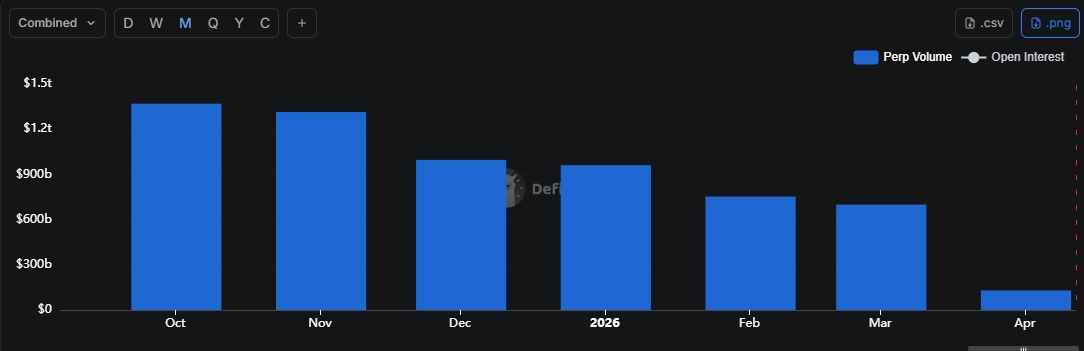
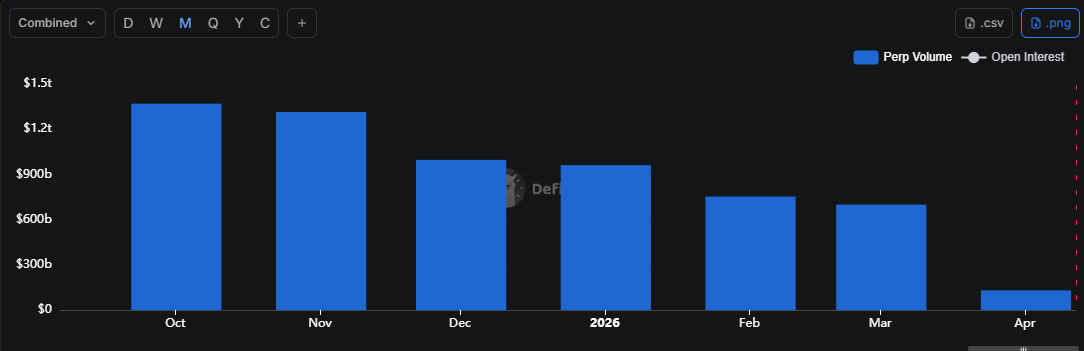
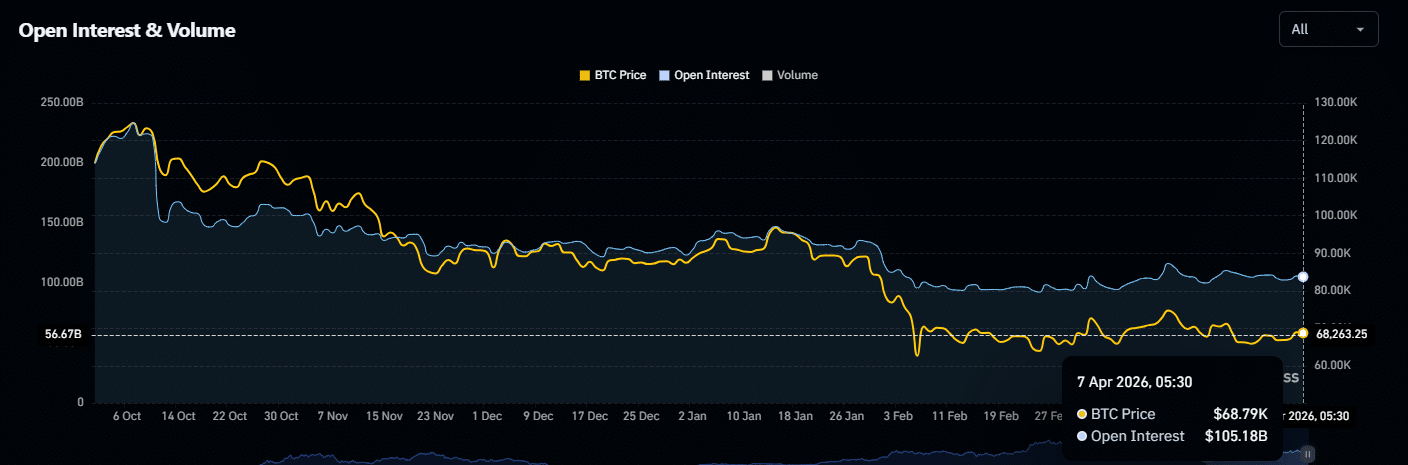
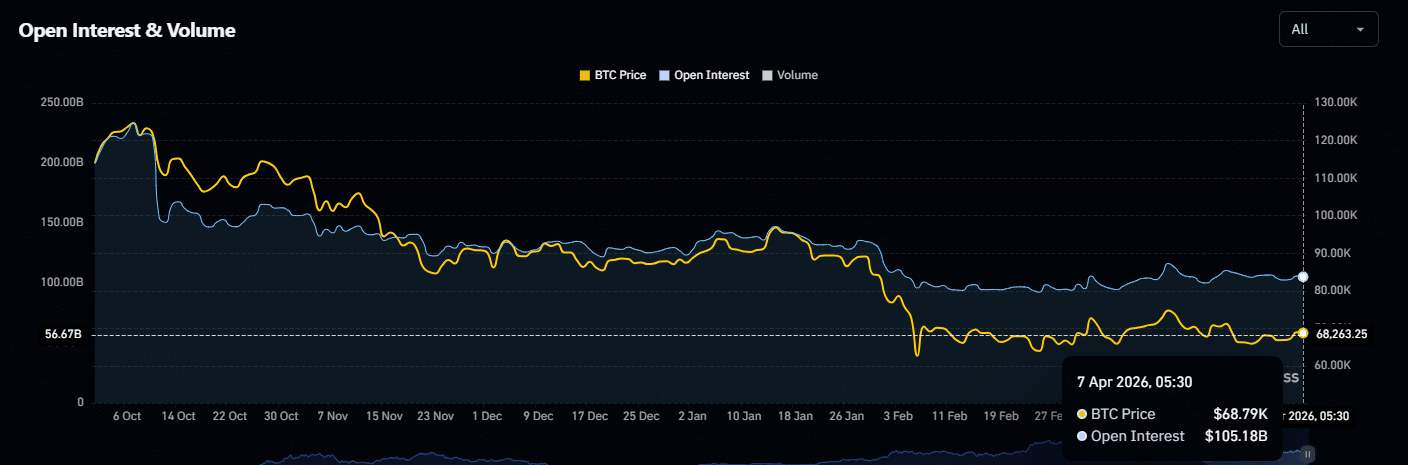
Perpetual trading volumes on decentralized exchanges have declined for five consecutive months, falling nearly 50% from a peak of $1.36 trillion in October 2025 to $699 billion by March 2026. This drop reflects ongoing bear market conditions and cautious trader sentiment following last year's market crash, which erased nearly $1 trillion in value. Open interest also declined by 50% from pre-October levels, indicating reduced speculative activity. While the decline highlights persistent bearish pressure, it also suggests traders are recalibrating risk more strategically. This measured behavior helps stabilize markets, reduce volatility, and may lay a stronger foundation for crypto's next rally.

In crypto trading, market crashes leave marks that investors don’t forget.

Looking back at Q4 last year, things were rough across the board; spot trading and even long-term HODLing all took a hit. Crypto markets lost nearly $1 trillion, triggering massive liquidity sweeps, forcing deleveraging, and sending shocks across the market, which left investors cautious and their sentiment fragile for months.

Fast forward to now, that wave of volatility hasn’t fully disappeared. Data from DeFiLlama shows that perpetual volumes across major DEX chains have been on a steady decline for five consecutive months. From a peak of $1.36 trillion in October 2025, volumes slid all the way down to $699 billion by March 2026.

Source: DeFiLlama

Technically speaking, traders wiped out nearly half of last quarter’s perp volume. For context, perp volume measures the total value of all perpetual contract trades happening on decentralized exchanges. It’s basically a snapshot of how actively traders are betting on short- and long-term price moves in crypto.

And let’s be real, anything involving “bets” is pure speculation. In a bull market, that speculative capital acts like rocket fuel, pushing rallies higher and giving momentum to the market. But since the October crash, crypto still sits about 40% below pre-crash levels, showing how much ground the market has yet to cover.

So what do we make of falling perp volume in a bear market? Could it be a healthy sign that traders are stepping back and markets are consolidating, or is it a warning that liquidity is drying up?

Falling perp volumes highlight lingering bear market pressure in crypto

Unlike spot trading, speculative trading is highly sensitive to macro conditions.

In other words, traders in perpetual markets don’t just react to crypto-specific news. Instead, they watch the broader financial landscape closely. Global market shifts, interest rate changes, and even geopolitical events can quickly influence their positions. In this context, that nearly 50% wipeout of perp volume really highlights the bearish setup the market is facing right now.

Adding to that, Coinglass data shows that open interest (OI) across all crypto assets combined has also dropped 50% from the $200 billion pre-October levels. For context, open interest is basically the total value of all “outstanding” contracts that haven’t been settled yet, showing how much capital traders have at risk.

Source: Coinglass

Taken together, the drop in perp volume and open interest tells a clear story: crypto traders are actively recalibrating risk and waiting for clearer signals before jumping back in. In a bear market, that’s actually a bullish sign. It indicates that traders aren’t blindly chasing moves. Instead, they’re letting the market settle, which helps reduce the risk of sudden swings and wild volatility.

At the same time, the scars from the October crash haven’t fully healed.

Still, traders are taking notes from past shocks, pulling back when risk is high, and redeploying capital more strategically. As a result, the market may look quiet on the surface, yet behind the scenes, this cautious behavior is quietly building a stronger foundation for crypto’s next move.


Final Summary

  • Perp volume and open interest are down nearly 50%, reflecting traders’ caution and a still-bearish market setup.
  • Measured trading behavior in a bear market helps stabilize liquidity, limit volatility, and lay the groundwork for the next crypto rally.

Связанные с этим вопросы

QWhat has been the trend in monthly perpetual trading volumes on major DEX chains since October 2025, according to DeFiLlama data?

APerpetual trading volumes have been on a steady decline for five consecutive months, falling from a peak of $1.36 trillion in October 2025 to $699 billion by March 2026.

QWhat does the combined drop in perp volume and open interest indicate about current trader behavior?

AThe drop indicates that crypto traders are actively recalibrating risk and waiting for clearer signals before jumping back in, showing caution and a more strategic deployment of capital.

QHow does speculative trading in perpetual markets differ from spot trading in terms of market sensitivity?

ASpeculative trading is highly sensitive to macro conditions, meaning traders react to global market shifts, interest rate changes, and geopolitical events, not just crypto-specific news.

QWhat is the significance of falling perp volume in a bear market, according to the article?

AIn a bear market, falling perp volume can be a bullish sign as it indicates traders are not blindly chasing moves, which helps reduce the risk of sudden swings and builds a stronger foundation for the next market move.

QBy what percentage did the crypto market drop from its pre-crash levels following the October crash?

AThe crypto market still sits about 40% below pre-crash levels.

Похожее

Vitalik's Vision for the Next Evolution of On-Chain Finance: How to Reconstruct DeFi with an 'Options Mindset'?

Vitalik Buterin recently proposed a conceptual shift for DeFi: replacing traditional Collateralized Debt Positions (CDPs) and forced liquidations with an options-based mechanism. This aims to address key vulnerabilities in current DeFi lending. The traditional CDP model, foundational to protocols like MakerDAO and Aave, allows users to borrow against collateral but relies on real-time oracles and triggers sudden, mandatory liquidations during price volatility. This can cause cascading sell-offs, oracle manipulation risks, and significant MEV extraction, exacerbating market stress. Vitalik's alternative envisions splitting an asset like 1 ETH into two complementary components: one offering stable/index-like exposure and the other absorbing the opposite risk/reward. Instead of a hard liquidation threshold, a user's exposure to the target asset would gradually and smoothly deviate (following a near-quadratic curve) as the collateral price moves. The system would primarily depend on "slow oracles" for periodic settlement rather than instant price feeds. Key potential benefits include: the elimination of abrupt, forced liquidations; drastically reduced reliance on vulnerable real-time oracles; and inherent resistance to certain MEV exploits centered on liquidation auctions. The article posits that for Ethereum DeFi to maintain its relevance amid competition from faster, cheaper chains, it must compete on sophisticated financial engineering and robustness—not just transaction speed or yields. The core value proposition should shift towards offering users clearer, more manageable risk structures, greater autonomy, and resilience in extreme scenarios, moving DeFi from high-risk experimentation towards becoming reliable financial infrastructure.

marsbit16 мин. назад

Vitalik's Vision for the Next Evolution of On-Chain Finance: How to Reconstruct DeFi with an 'Options Mindset'?

marsbit16 мин. назад

AI Agent Completely Transforms Web3 Gaming: From the Rugpull Bakery Bot Controversy to the New 2026 Agent Paradigm

This article explores how the AI Agent paradigm is fundamentally transforming Web3 gaming, moving from a disruptive force to a core, legitimized element. It begins with the controversy in the competitive baking game Rugpull Bakery, where automated scripts caused fairness issues. Instead of banning them, the developers integrated AI Agents into the official gameplay by providing technical documentation (skill.md, agent.json), marking a shift towards "Agentic Gaming." The piece outlines three primary implementation models for AI Agents in Web3 games by 2026: 1. **Autonomous Competitors & Economic Entities:** AI Agents act as independent players with unique strategies. Examples include TEN Protocol's poker agents, AI Arena's trainable NFT fighters, and Satoshi Strike Force's "Digital Athletes" trained on player data. The Somnia blockchain is highlighted as a dedicated "Agentic L1" infrastructure supporting this model at scale. 2. **Modular Infrastructure & Programmable Environments:** This model, exemplified by EVE Frontier, allows AI Agents to program game world logic itself. Using "Smart Assemblies" (e.g., Smart Turrets, Smart Gates), Agents can modify shared economic and physical rules on-chain, creating dynamic, player/AI-built worlds. The ERC-8183 standard further enables these automated entities to hire other AI services for complex tasks. 3. **Hybrid Companions & Dynamic Adaptation:** Here, AI serves as a collaborative partner. In Parallel Colony, highly autonomous AI Avatars work alongside human players who provide high-level guidance. Illuvium plans to use AI to make NPCs dynamic and responsive, creating personalized, emergent narratives for each player. The conclusion posits that Web3 gaming has reached a "post-human" inflection point. Blockchains' transparency and programmability, combined with new standards and infrastructure like Somnia, make integrating and governing AI Agents not just viable but essential. The future lies in a symbiotic digital order where players transition from manual laborers to commanders and partners of algorithmic intelligence.

marsbit1 ч. назад

AI Agent Completely Transforms Web3 Gaming: From the Rugpull Bakery Bot Controversy to the New 2026 Agent Paradigm

marsbit1 ч. назад

Торговля

Спот
Фьючерсы
活动图片