Looking Back at Information Hiding in the GenAI Era from Claude's Invisible Watermark: How Can Embedded Watermarks Ensure Losslessness?

marsbitОпубликовано 2026-08-17Обновлено 2026-08-17

Введение

On August 11, 2026, Anthropic announced that its new Claude models will embed invisible, machine-readable watermarks into generated text, allowing AI-generated content to be traced even after copying and redistribution, without affecting semantic quality or readability. This move follows global initiatives to watermark AI outputs, highlighted by the World Economic Forum and futurist Kevin Kelly. A core challenge is ensuring watermarking does not degrade model performance, leading to the key research goal of "provably lossless" generation. The theoretical foundation lies in provably secure steganography, which requires that watermarked data be indistinguishable from normal data in distribution. Early theoretical work was limited by the inability to precisely sample natural data distributions. The rise of generative AI models around 2018 provided a breakthrough, as these models learn and sample from explicit distributions. Pioneering work by a University of Science and Technology of China (USTC) team proposed frameworks for provably secure steganography using generative models, mapping encrypted messages to drive content generation. Subsequent research expanded the practicality of these techniques. Advancements include public-key steganography for asymmetric extraction, "box-less" extraction where the receiver doesn't need the original model, and "grey-box" scenarios for resource-constrained devices. A key innovation, SyncPool, resolved tokenization ambiguities in LLMs to ens...

On August 11, 2026, Anthropic announced that starting from August 2nd, the newly released version of the Claude model will directly embed invisible, machine-readable watermarks into generated text. This will enable AI-generated content to be identified and traced by software even after being copied and disseminated.

The official documentation states: "When a supported Claude model generates text, it embeds a subtle watermark directly into the text. You will not see it, and it does not change the semantics, quality, or readability of Claude's responses."

This mechanism covers Claude's web interface, API, Claude Code, and all product lines. It takes effect for global users and cannot be disabled. Generated images and other files will also include digital signature and traceability metadata compliant with the C2PA standard.

This is a landmark move by Anthropic following its signing of the EU's Artificial Intelligence Act, Article 50, Transparency Code of Conduct.

"Watermarking" AI-generated content is evolving from corporate initiatives to a global consensus. In June 2025, the World Economic Forum released the "Top 10 Emerging Technologies of 2025" at the Summer Davos in Tianjin, listing "Generative Watermarking" in second place. Futurist Kevin Kelly predicted in "2049: The Possible Next 10,000 Days" that the AI era necessitates "redefining reality" and "adding watermarks or similar markers to distinguish authenticity on AI-generated images and videos."
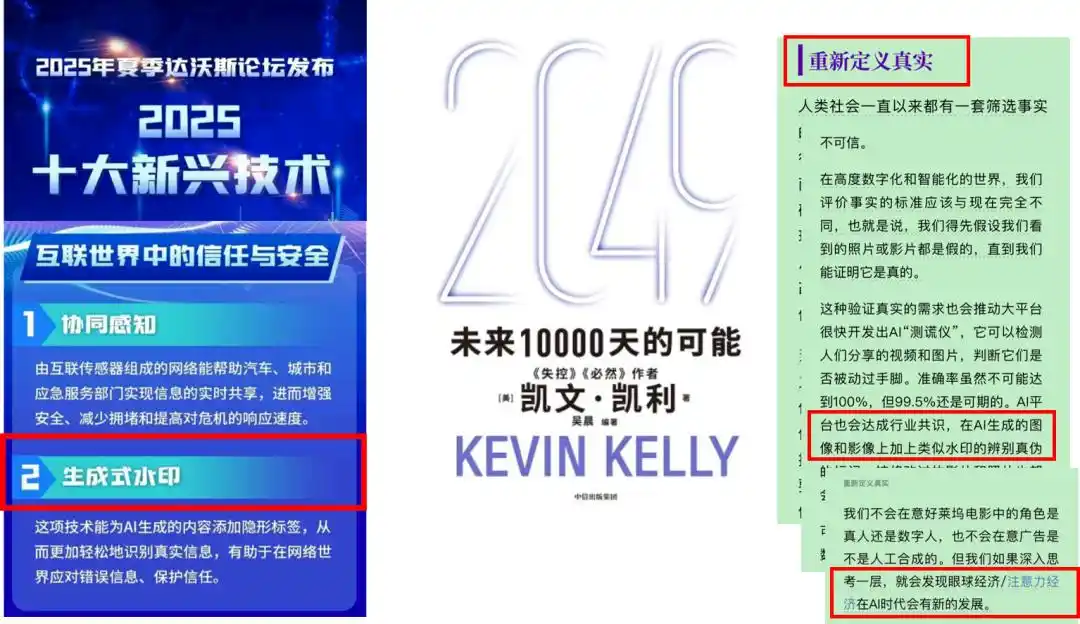
Figure 1: Summer Davos Forum and Kevin Kelly's Prediction

However, getting watermarks "right" is not easy.

On the day of Anthropic's announcement, users' most concentrated concern was precisely: will watermarking harm the model? Will it reduce generation quality?

"Provable performance losslessness" thus became the core proposition of information hiding research in the GenAI era. To understand this proposition, we must return to its theoretical origin—provably secure steganography.

Provably Secure Steganography: Twenty Years Waiting for Generative Models

Steganography and watermarking both belong to information hiding. Traditional steganography has long remained at the level of "empirical security": using steganalysis algorithms to test security strength, but unable to provide mathematical guarantees. Provably secure steganography requires strict proof: the distribution of data carrying secrets is indistinguishable from that of normal data.

This theoretical line has a long history.

In 1949, Shannon pointed out the difficulty of establishing a theory for covert communication; in 1998, Cachin introduced relative entropy, providing an information-theoretic security definition; in 2002, Turing Award winner Manuel Blum guided Hopper et al. in establishing the computational security steganography framework, further developing public-key steganography and covert key agreement in 2004.

However, all constructions of provably secure steganography rely on a stringent premise—the carrier distribution must be precisely sampleable. Natural data distributions are uncontrollable, causing the theory to lie dormant for years.
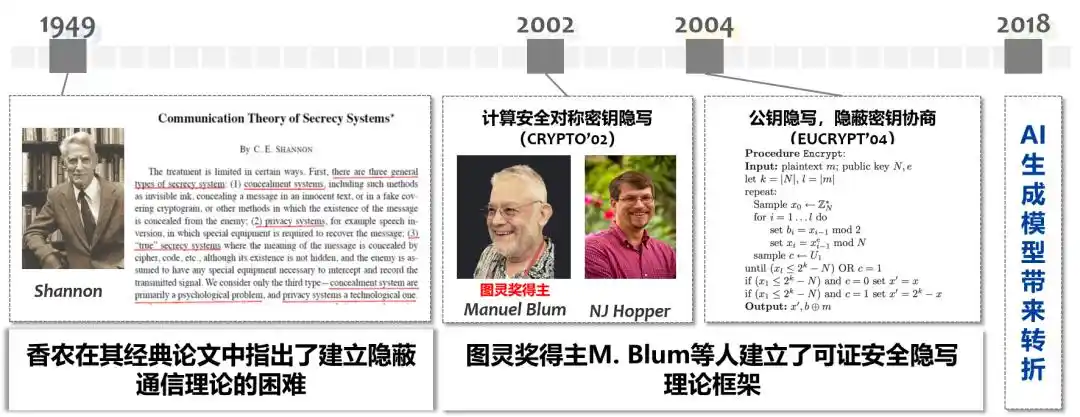
Figure 2: A Brief History of Provably Secure Steganography Development

In 2018, AI generative models brought a turning point: models first learn a distribution, then sample according to it, naturally providing an "explicit distribution or perfect sampler."

A team from the University of Science and Technology of China (USTC) pioneered the idea of generative provably secure steganography internationally. They proposed two frameworks: "black-box sampling" and "compression-reversible sampling" (IWDW 2018, arXiv 2018), reducing steganographic security to cryptographic algorithm security—encrypting a message into pseudo-random ciphertext, using the ciphertext to drive sampling for content generation, and allowing the receiver to recover the ciphertext via inverse sampling.

At that time, generative AI had not yet exploded, and this idea seemed "ahead of its time," initially finding it difficult to gain peer recognition. As the quality of generative models like text and audio improved rapidly, related achievements gradually gained acknowledgment. The International Workshop on Digital Forensics and Watermarking (IWDW) invited the USTC team to deliver a keynote report titled "When Provably Secure Steganography Meets Generative Models."
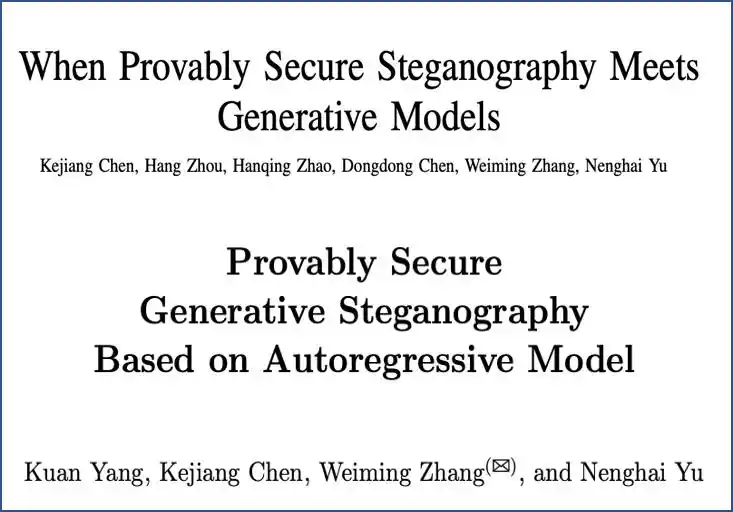
Figure 3: The Earliest Papers on Generative Provably Secure Steganography

Around 2021, AI-generated data gradually became a major form of online content. Provably secure steganography gained widespread attention globally: Tsinghua University proposed provably secure linguistic steganography based on sample grouping (Findings of ACL 2021); Boston University and Johns Hopkins University proposed the cryptographically secure steganography scheme Meteor for real distributions (ACM CCS 2021); Oxford University proposed perfectly secure steganography based on minimal entropy coupling (ICLR 2023).

The USTC team proposed the DisCop construction based on "distribution replicas" (IEEE S&P 2023), significantly improving embedding payload rate. In the same year, Quanta Magazine listed "perfectly hiding secret information in generated data" as one of the seven international breakthroughs in computer science for the year, heralding the entry of information hiding into the "provable" era.

From Symmetric to Asymmetric, from "Boxed" to "Box-less"

Early generative provably secure steganography schemes were all "symmetric key" systems, requiring the sender and receiver to pre-share a key and relying on white-box extraction, limiting their application scenarios.

Additionally, subword ambiguity could lead to extraction failure. The USTC team pushed the technical route towards public-key steganography, box-less/grey-box scenarios, and eliminated subword ambiguity, making generative hiding practical.

Public-key steganography (IEEE TIFS 2024): Proposed a provably secure public-key steganography scheme combining Elliptic Curve Cryptography (ECC) with generative models and introduced a steganographic key exchange protocol. Solved the problems of steganographic key agreement and "asymmetric" hidden information extraction.

Box-less steganography (IEEE TMM 2026): Traditional methods rely on "white-box" extraction, requiring the receiver to possess the exact same language model as the sender. The team proposed Disreo, achieving "box-less extraction" through token position randomization and output probability reorganization, enabling the receiver to recover the message without accessing the underlying model, providing greater convenience for practical deployment.

Grey-box steganography (ACM CCS 2026): Between white-box and box-less lies the "grey-box" scenario—unequal resources between sender and receiver; the receiver may only have the capability to run a small model (e.g., on mobile devices). SpecStega is based on speculative sampling: using a small model shared by both parties to embed and extract messages, then refining the output with the target large model. This ensures the final stego-text aligns with the large model's output distribution, maintaining high quality and security, while allowing efficient decoding at the receiver end using only the small model. The payload rate is improved over 20 times compared to existing black-box schemes—offering a third path between "boxed" and "box-less" for provably secure steganography.

Resolving subword ambiguity (IEEE TDSC): Steganography based on large language models commonly faces token decoding ambiguity—the same text segment can be tokenized into different subword sequences, causing extraction failure. The team proposed SyncPool, which groups tokens with prefix relationships before embedding, eliminating ambiguity in principle and achieving reliable extraction for provably secure steganography.

From Steganography to Watermarking: Bringing "Provable Losslessness" to Industry

First, AIGC large models learn the distribution of natural data, then sample according to that distribution to generate text, images, audio, video, etc. If one can: embed a watermark in the generated content without affecting the sampling distribution, it means the watermark embedding does not impact generation quality.

Provably secure steganography theoretically guarantees that the distribution of data carrying secrets is indistinguishable from that of normally generated data—meaning embedding information does not alter the model's sampling distribution. This is precisely the definition of "provably generation-quality-lossless watermarking." Watermarking does not require the large capacity of steganography, thus capacity can be traded for robustness.

In the text domain, the provably generation-quality-lossless watermarking system developed by the USTC team is plug-and-play, requiring no modification of model parameters. It supports single-bit robust discrimination and multi-bit model attribution, and has been applied to platforms like the Spark large model and Secure GPT, serving 13,000 developers.

Meanwhile, international research on provably lossless generative text watermarks is also advancing rapidly:

In 2024, teams from the University of Maryland and others' "Unbiased Watermark for Large Language Models" (ICLR 2024 Spotlight) defined unbiased watermarks and provided a general construction.

The same year, Stanford University proposed robust unbiased watermarks resistant to distortion (TMLR 2024).

In 2025, Multi-Channel Unbiased Watermark MCmark (ACL 2025) improved watermark extraction robustness while maintaining strict unbiasedness.

In the image domain, the USTC team proposed Gaussian Shading (CVPR 2024), mapping an encrypted, randomized watermark to Gaussian latent variables indistinguishable from normal generation, then acting on the entire latent space via the diffusion process—training-free, plug-and-play, and provably performance-lossless.

Gaussian Shading++ and T2SMark (NeurIPS 2025) further addressed robustness, generation parameter variation, and generation diversity issues in real-world deployment.

TAG-WM (ICCV 2025) introduced a dual mechanism of "template watermark + information watermark," achieving both tamper localization and ownership verification under the lossless premise.

SemBind (ICML 2026) binds the watermark to image semantics through a semantic masker, resisting black-box forgery attacks.
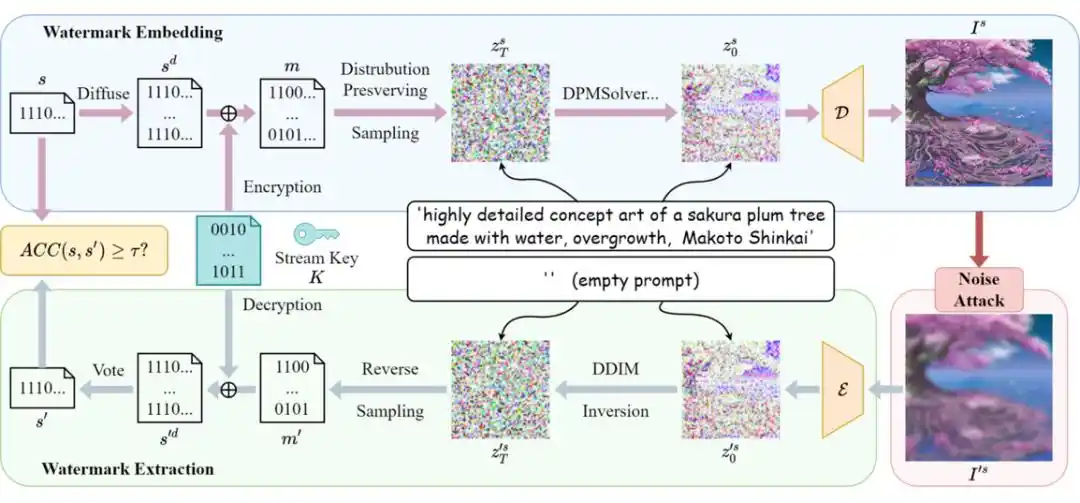
Figure 4: Provably Lossless Generative Image Watermark Gaussian Shading (CVPR 2024)

From content watermarking to model watermarking. Models themselves are important digital assets, also requiring reliable provenance. Model watermarking always faces one question: will it affect the model's normal use?

Drawing inspiration from the "provably undetectable backdoor" construction proposed by Turing Award winner Shafi Goldwasser et al. at FOCS 2022, the USTC team proposed a provably performance-lossless black-box model watermarking protocol (IEEE TDSC 2026): using unforgeable message authentication codes to construct branch indicators, making the probability of normal users triggering the watermark branch computationally negligible, thereby reducing performance losslessness to cryptographic security.

Thus, "provable losslessness" extends from generated content to the models themselves.

From "Empirical Security" to "Provable Security"

Anthropic's invisible watermark sparked controversy on its launch day: writers worried about attribution, developers worried "will the watermark reduce generation quality?" Industry pioneers chose "engineering fast runs," while the goals of "accurate marking, no harm, withstand rewriting and erasure, and provide definitive evidence" call for solid theoretical support.

From Shannon's conceptual challenge to Blum et al.'s theoretical frameworks, from the first generative provably secure steganography algorithm in 2018 to the Spark model watermark and Claude's watermark, information hiding has taken seventy-seven years to finally upgrade from "empirical security" to "provable security," turning "worrying that embedding watermarks harms the model" into "mathematically proven losslessness"—whether for generated content or the model itself—providing theoretically guaranteed technical support for AI content governance.

Watermarking: Attack and Defense

Designing watermarks is hard; erasing them is easy. Or perhaps not entirely. Designing watermarks requires pursuing both quality losslessness and robustness simultaneously, while attackers also need to erase watermarks under quality constraints.

Without constraints, watermarks are easily erased. Rewriting sentence by sentence to erase watermarks—does it still count as content generated by the original model? Perhaps it would be easier to just use another open-source model for generation.

Like other security fields, attackers and defenders engage in a game under their respective constraints. The existence of both attack and defense keeps a technology direction vibrant.

And "losslessness" is the constraint and pursuit for both sides.

Defenders do not want to sacrifice generation quality by embedding watermarks; attackers also do not want to degrade quality by erasing watermarks.

Absolute security never exists. The significance of defense is to create the greatest possible cost for attack. The essence of attack and defense is a game of cost, and the same holds for watermarking.

This article is from the WeChat public account "New Zhiyuan," author: New Zhiyuan.

Трендовые криптовалюты

Связанные с этим вопросы

QWhat is the core concept behind 'provably secure steganography' as discussed in the article?

AThe core concept of 'provably secure steganography' is to mathematically prove that the distribution of stego-data (data containing hidden information) is indistinguishable from the distribution of normal, cover data. This ensures that embedding information does not alter the statistical properties of the generated content, providing a theoretical guarantee of security and 'losslessness' in terms of generation quality.

QWhat key advantage do generative AI models provide for provably secure steganography, according to the article?

AGenerative AI models provide a key prerequisite that was historically difficult to achieve: an explicit or perfect sampler of a data distribution. Since these models learn a distribution and then sample from it to generate content, they naturally offer the 'perfect sampler' required for the theoretical constructions of provably secure steganography, enabling the shift from 'empirical security' to 'provable security'.

QName three practical challenges in steganography/watermarking that the research from USTC addressed, as mentioned in the article.

A1. Public Key Steganography: They proposed schemes combining Elliptic Curve Cryptography with generative models to solve asymmetric key management and extraction. 2. Boxless Extraction (Disreo): Enabling message recovery without the receiver needing access to the original generative model. 3. Subword Token Ambiguity (SyncPool): Solving extraction failures caused by the same text being tokenized into different subword sequences by grouping related tokens.

QHow does the concept of 'provable performance losslessness' apply to both generated content and AI models themselves?

AFor generated content (text, images), 'provable performance losslessness' means embedding a watermark does not change the model's sampling distribution, guaranteeing no degradation in generation quality. For AI models, it refers to model watermarking protocols where the probability of a normal user triggering the 'watermark branch' of the model is computationally negligible. This is achieved by using cryptographic constructs like unforgeable message authentication codes, thereby extending the guarantee of 'no performance impact' from the content to the model asset itself.

QAccording to the article, what is the fundamental nature of the battle between watermarking defense and attack?

AThe fundamental nature is a cost博弈 (game of cost/博弈). There is no absolute security. The goal of defense (watermarking) is to impose the highest possible cost on the attacker (e.g., significant quality degradation or computational effort required for removal). Conversely, attackers operate under the constraint of maintaining content quality while removing the watermark. 'Losslessness' is a shared constraint and pursuit for both sides in this ongoing博弈.

Похожее

Компания FalconX инвестирует 14 миллионов долларов в акции Гейтса на фоне растущих опасений по поводу продажи акций институциональными инвесторами

19 августа FalconX перевела на биржу Gate почти 200 тысяч токенов $HYPE на сумму около 14 миллионов долларов. По мнению аналитиков Onchain Lens, это указывает на подготовку к возможной продаже. Ситуация усугубляется тем, что другие институциональные инвесторы также проявляют активность: Multicoin Capital перевела крупный пакет $HYPE на Coinbase Prime, а ряд внебиржевых покупателей, накопивших токены летом, сейчас, по-видимому, фиксируют прибыль. Рынок $HYPE, будучи менее ликвидным, чем Bitcoin или Ethereum, более уязвим к давлению со стороны крупных продаж, что может привести к значительным колебаниям цены. Однако существуют и поддерживающие факторы: значительный приток средств в ETF $HYPE и токеномика протокола, направленная на постоянный выкуп и сжигание монет, обеспечивают некоторый баланс. Цена токена продемонстрировала рост более чем на 19% 20 августа. Ключевым моментом для понимания дальнейшей динамики станут данные о потоках, ожидаемые в начале сентября.

cryptonews.ru31 мин. назад

Компания FalconX инвестирует 14 миллионов долларов в акции Гейтса на фоне растущих опасений по поводу продажи акций институциональными инвесторами

cryptonews.ru31 мин. назад

Страховая компания из Шанхая с активами в 12 миллионов долларов получила 2380 Bitcoin в обмен на свои акции

Шанхайская страховая технологическая компания Zhibao Technology, чьи акции торгуются на Nasdaq, 17 августа завершила размещение акций на сумму 154,7 миллиона долларов, полностью оплаченное в биткоинах. Группа инвесторов, не являющихся гражданами США, перевела 2380 BTC на корпоративный кошелек компании из расчета 65 000 долларов за монету. Компания, рыночная капитализация которой этим летом составляла около 12-15 миллионов долларов, получила средства, значительно превышающие её собственную стоимость. Инвесторы приобрели 442 миллиона единиц ценных бумаг по цене 0,35 доллара каждая. Сделка предоставляет Zhibao ресурсы для преодоления финансовых трудностей и расширения продуктовой линейки с использованием опыта новых акционеров в криптовалютной сфере. Ранее Nasdaq направила Zhibao уведомление о несоблюдении требований к минимальной цене акций, которая торговалась ниже 1 доллара. Компании предоставлен срок до января 2027 года для исправления ситуации. До этой сделки Zhibao выражала сомнения в своей способности продолжать деятельность как действующее предприятие.

cryptonews.ru32 мин. назад

Страховая компания из Шанхая с активами в 12 миллионов долларов получила 2380 Bitcoin в обмен на свои акции

cryptonews.ru32 мин. назад

Трамп принимает в Белом доме руководителей ведущих криптовалютных компаний на фоне обсуждения в США возможности покупки биткоинов

19 августа президент США Дональд Трамп провёл в Белом доме встречу с руководителями ведущих криптовалютных и финансовых компаний, включая Coinbase, Ripple, Robinhood, Kraken, Nasdaq и другие. В ходе встречи обсуждались вопросы регулирования цифровых активов. Трамп раскритиковал предыдущую администрацию за «войну с криптовалютами», заявив, что его подход положил ей конец, и сослался на указ, запрещающий федеральным агентствам создавать цифровую валюту ЦБ. Отвечая на вопрос о возможности государственной покупки биткоина, Трамп отметил, что предложение находится на рассмотрении, и он будет полагаться на рекомендации главы SEC Пола Аткинса и других экспертов. Регуляторы, включая председателя CFTC Майка Селига и главу SEC Пола Аткинса, подчеркнули важность чётких правил для привлечения инвестиций и инноваций. Были обсуждены новые регуляторные инициативы, такие как «Правило о криптоактивах», упрощающее привлечение капитала. Генеральный директор Coinbase Брайан Армстронг призвал Сенат проголосовать за законопроект о прозрачности рынка цифровых активов (CLARITY Act) 15 сентября. Встреча также затронула спорные вопросы президентской этики в отношении деятельности с цифровыми активами.

cryptonews.ru34 мин. назад

Трамп принимает в Белом доме руководителей ведущих криптовалютных компаний на фоне обсуждения в США возможности покупки биткоинов

cryptonews.ru34 мин. назад

Компания WinkLevoss Capital продает свои инвестиционные платформы Zcash компании, которую она поддерживает, и приобретает акции этой компании

Winklevoss Capital приобрела варрант на покупку около 43,3 млн акций компании Cypherpunk Technologies в рамках сделки, по которой Cypherpunk выкупает новый майнинговый бизнес по добыче Zcash. Это приводит к размытию доли существующих акционеров и увеличивает долю основателей Gemini в инвестициях в Zcash. Cypherpunk заплатила $33,33 млн, выпустив варрант на 43 290 042 акции по цене $0,001 за акцию (подразумеваемая цена $0,77). Акции CYPH в тот день выросли на 15,85%. Майнинговый флот компании, работающий на устройствах Z15 Pro, обеспечивает около 18% хешрейта сети Zcash, размещен в США и позиционируется как крупнейший в мире. Компания уже владеет 1,92% от общего объема ZEC и намерена увеличить эту долю до 5%. Кэмерон Уинклвосс описал сделку как возможность усилить присутствие майнинга Zcash в США, поскольку ранее он был сосредоточен за рубежом. Cypherpunk, ранее известная как биотехнологическая компания Leap Therapeutics, была реорганизована после инвестиций Winklevoss Capital. В 2026 году Zcash столкнулась с уязвимостью безопасности, которая привела к резкому падению цены как монеты, так и акций Cypherpunk, но проблема была устранена обновлениями.

cryptonews.ru34 мин. назад

Компания WinkLevoss Capital продает свои инвестиционные платформы Zcash компании, которую она поддерживает, и приобретает акции этой компании

cryptonews.ru34 мин. назад

Деньги от крипто-политических комитетов (Crypto PAC) одержали победу на четырех предварительных выборах, а затем застопорились в Майами

Криптовалютный суперкомитет Fairshake, через свои связанные комитеты Protect Progress (для демократов) и Defend American Jobs (для республиканцев), одержал победы на праймериз в четырёх из пяти ключевых гонок в Конгресс США на выборах во Флориде, Вайоминге и Аляске. Однако в 24-м округе Флориды кандидат-демократ Оливер Гилберт, несмотря на негативную рекламную кампанию против него стоимостью более 2 млн долларов, финансируемую Fairshake, выиграл предварительные выборы. Fairshake, располагающий бюджетом около 193 млн долларов в основном от Coinbase, Ripple и Andreessen Horowitz, активно инвестирует в избирательные кампании, чтобы поддержать дружественных к криптоиндустрии политиков и противостоять её критикам. Группа заявляет, что работает над созданием "крупнейшего в истории прокриптовалютного конгресса". Политическая активность комитетов происходит на фоне ожиданий рассмотрения Сенатом США в сентябре закона CLARITY, который должен установить всеобъемлющие правила для цифровых активов. Этот законопроект уже был принят Палатой представителей в июле 2025 года.

cryptonews.ru39 мин. назад

Деньги от крипто-политических комитетов (Crypto PAC) одержали победу на четырех предварительных выборах, а затем застопорились в Майами

cryptonews.ru39 мин. назад

Торговля

Спот

Популярные статьи

Как купить S

Добро пожаловать на HTX.com! Мы сделали приобретение Sonic (S) простым и удобным. Следуйте нашему пошаговому руководству и отправляйтесь в свое крипто-путешествие.Шаг 1: Создайте аккаунт на HTXИспользуйте свой адрес электронной почты или номер телефона, чтобы зарегистрироваться и бесплатно создать аккаунт на HTX. Пройдите удобную регистрацию и откройте для себя весь функционал.Создать аккаунтШаг 2: Перейдите в Купить криптовалюту и выберите свой способ оплатыКредитная/Дебетовая Карта: Используйте свою карту Visa или Mastercard для мгновенной покупки Sonic (S).Баланс: Используйте средства с баланса вашего аккаунта HTX для простой торговли.Третьи Лица: Мы добавили популярные способы оплаты, такие как Google Pay и Apple Pay, для повышения удобства.P2P: Торгуйте напрямую с другими пользователями на HTX.Внебиржевая Торговля (OTC): Мы предлагаем индивидуальные услуги и конкурентоспособные обменные курсы для трейдеров.Шаг 3: Хранение Sonic (S)После приобретения вами Sonic (S) храните их в своем аккаунте на HTX. В качестве альтернативы вы можете отправить их куда-либо с помощью перевода в блокчейне или использовать для торговли с другими криптовалютами.Шаг 4: Торговля Sonic (S)С легкостью торгуйте Sonic (S) на спотовом рынке HTX. Просто зайдите в свой аккаунт, выберите торговую пару, совершайте сделки и следите за ними в режиме реального времени. Мы предлагаем удобный интерфейс как для начинающих, так и для опытных трейдеров.

2.0k просмотров всегоОпубликовано 2025.01.15Обновлено 2026.06.02

Как купить S

Sonic: Обновления под руководством Андре Кронье – новая звезда Layer-1 на фоне спада рынка

Он решает проблемы масштабируемости, совместимости между блокчейнами и стимулов для разработчиков с помощью технологических инноваций.

2.5k просмотров всегоОпубликовано 2025.04.09Обновлено 2025.04.09

Sonic: Обновления под руководством Андре Кронье – новая звезда Layer-1 на фоне спада рынка

HTX Learn: Пройдите обучение по "Sonic" и разделите 1000 USDT

HTX Learn — ваш проводник в мир перспективных проектов, и мы запускаем специальное мероприятие "Учитесь и Зарабатывайте", посвящённое этим проектам. Наше новое направление .

2.0k просмотров всегоОпубликовано 2025.04.10Обновлено 2025.04.10

HTX Learn: Пройдите обучение по "Sonic" и разделите 1000 USDT

Обсуждения

Добро пожаловать в Сообщество HTX. Здесь вы сможете быть в курсе последних новостей о развитии платформы и получить доступ к профессиональной аналитической информации о рынке. Мнения пользователей о цене на S (S) представлены ниже.

活动图片