Did DeepSeek Intentionally Make an Unfriendly Agent?

marsbitОпубликовано 2026-08-15Обновлено 2026-08-15

Введение

DeepSeek is shifting its strategy from being a low-cost model provider to building a foundational ecosystem for AI agents. This pivot is marked by two recent moves: increasing the price of its flagship V4 Pro model and launching the DeepSeek Harness agent framework. Previously, DeepSeek's success was built on creating powerful, affordable models and open-sourcing them to drive adoption. Now, the focus is moving "beyond the model" to the runtime environment where agents operate. Harness is key to this new approach. Unlike integrated agent products from competitors, Harness deconstructs the agent stack—separating the model, tools, skills, workflows, and UI into modular, replaceable components. Its core innovation is the Cordis kernel, which enables dynamic loading, unloading, and management of plugins, allowing agents to modify their own capabilities during execution. Significantly, Harness does not lock users into DeepSeek's models; it allows integration with third-party models. This suggests DeepSeek's ambition is not to control the model layer but to establish the standard runtime environment for future agents—akin to an operating system for the agent era. The V4 Pro price increase aligns with this shift: the model transitions from a loss-leading acquisition tool to a core revenue engine within a broader ecosystem. Harness is currently complex and developer-focused, prioritizing ecosystem builders over end-users. Its success will be measured not by immediate user numbers,...

Written by | Beyond the Layout, Author | Painting

One thing DeepSeek has excelled at in the past is making complex things cheap.

The stronger the model, the lower the price. While others burn cash, it drives prices to the floor. After V3 and R1, the industry's impression of it was consistent: a top-tier model doesn't have to be expensive.

But two recent moves have suddenly shifted this narrative.

First, V4 Pro raised its price. Immediately after, the agent framework DeepSeek Harness was launched.

One starts to bring models back into the commercial world, the other simply lays out all that complex stuff beyond the model in front of developers.

Two seemingly unrelated events, when viewed together, instead seem to be answering the same question: What exactly does DeepSeek want to compete for next?

I. DeepSeek Begins to Change Its Strategy

Looking back over the past two years, DeepSeek has actually been answering three questions.

V3 and R1 proved that a Chinese team can build world-class foundation models, and can push inference and training efficiency to a very high level with limited resources.

With the model proven, the next question is whether it's cheap enough. This is where it shook the industry most, continuously driving prices down.

Then, whether these capabilities can be taken by more people. DeepSeek chose open source, extending from model weights to API, to the developer ecosystem.

The logic of DeepSeek in the past was complete: build a strong model, lower the price, open up capabilities, let more people use it.

With V4 Pro, the model continues to upgrade, but the price is no longer pushed down. The price increase alone is not surprising. What's really worth watching is its almost simultaneous appearance with Harness.

DeepSeek may have started calculating a different account.

In the past, it was competing for model call volume; now, it's beginning to compete for *where* the calls happen. These are two completely different battles.

For a model to truly generate value, it must pass through another layer of runtime environment: calling tools, reading files, managing permissions, running tasks. In the past, this layer was encapsulated inside products; users didn't even know it existed.

Harness is the first time DeepSeek has taken this layer out separately.

V4 Pro and Harness are actually two hands. One brings the model itself back to the commercial ledger, the other reaches towards the infrastructure beyond the model.

II. Dismantling the Agent

To understand DeepSeek Harness, the best reference is Apple.

Apple has a very important product philosophy: bear complexity for the user. You don't need to know how the CPU schedules, how memory is managed, how the file system runs. Open a Mac, an iPhone, and just use it.

This logic later entered the Agent world. Claude Code, Codex, WorkBuddy all packaged up the complex capabilities needed for an Agent to run. Tools, Skills, sandbox, permissions, workflows, all there, but the user doesn't need to know. You just say 'help me get this done,' and the product decides the rest for you.

This has been the direction of AI product efforts in recent years. Models become more complex, products become simpler. DeepSeek Harness does the opposite, breaking these things out one by one.

Model, tools, Skills, workflows, UI, all become components that can be individually replaced. Even plugins during runtime can be dynamically loaded, unloaded, and recombined.

What's most noteworthy about Harness is that it redefines the boundary of encapsulation. Apple's logic is: I encapsulate complexity for you into a product. Harness breaks complexity into modules, then hands you the right to modify.

This also explains why it's called Harness, not DeepSeek Code. Code refers to purpose, Harness refers to the runtime environment.

Breaking down an Agent, it's Agent = Model + Harness. The model is responsible for thinking, Harness is responsible for turning thought into action. In the past, this entire set was hidden behind the product.

What DeepSeek did was make this layer of encapsulation itself the object of openness.

III. Enabling Software to Evolve During Runtime

If you only view Harness as an Agent product, it's even a bit abnormal. Why would a model company proactively allow you to use other companies' models?

The answer may lie outside Agent products.

Here we must mention Cordis behind the plugins.

Cordis is the underlying kernel of Harness, specifically managing how plugins are installed, uninstalled, and how they cooperate with each other. It is very restrained, not touching the model, tools, or specific Agent capabilities, only managing this one thing:

Enabling plugins to be dynamically loaded, unloaded, managed, and maintain system stability during the process of change.

Just by doing this, it touches upon two hardcore technical concepts.

One is called temporal composability. After a plugin is uninstalled, can the effects it previously caused be completely undone? The other is spatial composability: if one plugin depends on another, and the latter suddenly disappears or changes, can the former reconnect its dependencies on its own?

It sounds technical, but they're actually answering a big question: Can an Agent change itself while it's running?

Traditional software doesn't do this. Once a program starts, its capabilities are basically set. You can upgrade the version, but you don't suddenly say mid-run, "I'm missing a capability, let me add one now."

Cordis aims to provide this possibility. The Creation Mode in Harness is the most direct demonstration of this concept. The Agent can inspect the environment it's running in, discover what's missing, create it on the spot, hook it back, and continue working.

You can have it make a security audit Agent that only reads code and cannot modify files, or have it make an enterprise research Agent that connects to internal search, uses a fixed model, and is equipped with three proprietary Skills.

Traditional Agents need to be configured first by people. Harness explores another path: people only set the goal, the Agent adjusts its own runtime environment.

This is like a machine that, while running, discovers it's missing a part, and on the spot manufactures one and installs it.

And today it is changing the way software is created.

In the past, people wrote software, and the software executed tasks. In the future, it might be: people propose goals, the Agent generates capabilities, installs them, and then completes the goal.

If this path truly works, the very meaning of the word "Agent" will change. It becomes less like pre-programmed software, and more like a runtime environment that can modify its own capability boundaries at any time.

IV. The Real Battlefield is Beyond the Model

There's a detail here with significant commercial meaning.

Harness does not restrict users to DeepSeek's own models.

The most natural move for a model company making an Agent is to tie it to its own model. OpenAI has GPT, Anthropic has Claude, Google has Gemini. Agents are the last mile for models to reach users; the tighter the binding, the more calls for its own model. Model companies naturally want to fuse model and Agent together.

DeepSeek precisely did not do this. It allows you to customize the model, protocol, Base URL, even connect to other companies' models.

Theoretically, you could completely use a competitor's model inside DeepSeek Harness.

From the perspective of an Agent product, this is strange. But from an infrastructure perspective, it makes sense. What it really wants to control might not be the model, but the layer beneath the model, the runtime environment of the Agent.

This is like an operating system. Windows doesn't make all the software itself, nor does Android. The truly valuable part of an OS is making others willing to develop on it. More developers mean more software, more software means more users, and the platform's weight naturally increases.

This is the logic Harness wants to replicate.

Its real competitors may not be Claude Code and Codex, but rather the runtime for the Agent era. Whoever controls the runtime environment has the chance to dictate how future Agents run.

V. Starting to Calculate the Ecosystem's Account

Reaching this point, another explanation emerges for why V4 Pro raised its price.

In the past, DeepSeek relied on low-priced models to attract more users, more users brought more calls, more calls brought more developers and influence, ultimately nurturing a stronger model.

After Harness appeared, a new ecosystem cycle is taking shape.
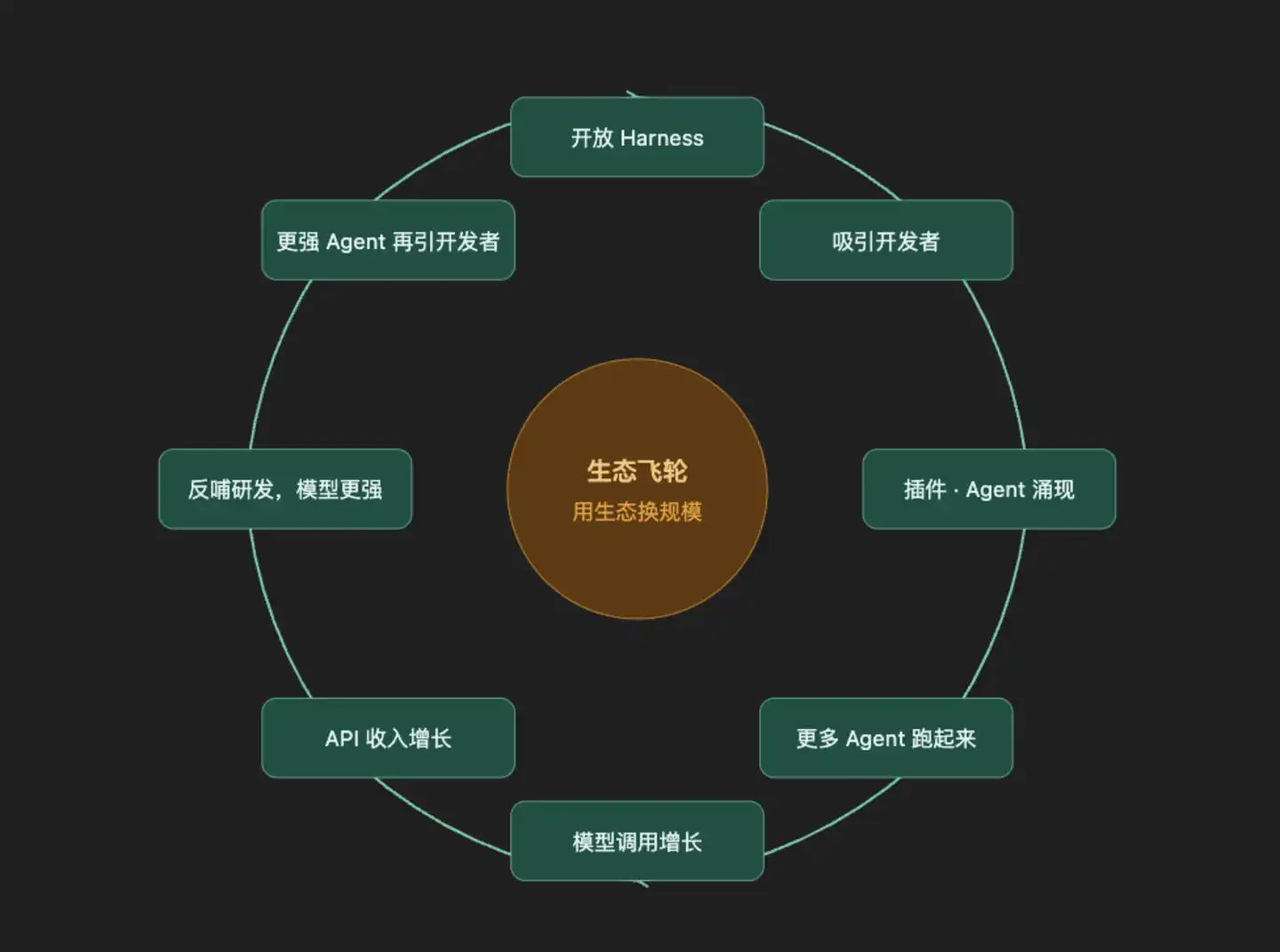
The biggest difference between this model and the past is the changed position of the model; it moves from the endpoint to the engine.

In the past, DeepSeek relied on low prices to get more people to use the model. Now, it's beginning to try to have the entire Agent ecosystem continuously consume the model.

This is also why Harness doesn't need to forcefully lock users into DeepSeek's model.

What it truly wants is for all Agents to run on the runtime it defines; as for which model is used at the bottom, it's less concerned.

As long as the runtime becomes an ecosystem, model calls will naturally occur.

Behind the price increase, the reason lies here. It no longer needs to forever play the role of price slasher; the model is starting to become a machine that can continuously generate cash flow.

VI. Being Unfriendly Might Precisely Be Its Answer

Frankly, when I opened DeepSeek Harness, I didn't know how to use it.

The UI is very engineer-like, the documentation is full of terminology. An ordinary user opening it for the first time would most likely ask: Who exactly is this for?

The issue might be right there. It probably didn't target ordinary users as its first batch of users at all.

But looking at it now, I actually think it's not that important.

The earliest need of a platform is its first batch of builders; consumers come later. Windows, Linux, Android — which one started by relying on developers?

So, judging whether Harness is successful shouldn't even start by looking at downloads.

Look at plugins, look at Agents, look at who is building things on it.

If people start making various Agents around it, even someone uses Harness to build their own Harness, that's when the platform truly begins to grow.

Today, we view an Agent as a product.

If one day, Agents could also be continuously built, modified, combined, and even built upon by Agents themselves?

Then the Agent we understand today might just be its earliest form.

A word from [Beyond the Layout]:

A company's ambition is sometimes hidden in what it releases, sometimes in what it doesn't do for you.

DeepSeek Harness did not make Agent into a finished product.

It placed something unfinished into the hands of developers.

But for a company wanting to be infrastructure, being unfinished sometimes precisely means there's still enough space.

This space, DeepSeek has placed it in the hands of developers and users.

Трендовые криптовалюты

Связанные с этим вопросы

QAccording to the article, what are the two key recent moves by DeepSeek that signal a shift in its strategy?

AThe two key recent moves are: 1) The price increase of the V4 Pro model, and 2) The release of the DeepSeek Harness agent framework.

QHow does the article describe DeepSeek Harness's approach to complexity, compared to companies like Apple?

AThe article states that while companies like Apple follow a philosophy of encapsulating complexity for the user, DeepSeek Harness reverses this by breaking complexity into modules and handing the modification rights to the user. It redefines the boundaries of encapsulation.

QWhat is Cordis, and what fundamental concept about Agent behavior does it enable according to the article?

ACordis is the underlying kernel of Harness that manages how plugins are installed, uninstalled, and coordinate with each other. It enables the concept of Agents being able to evolve or change themselves during runtime, such as creating and adding new capabilities on the fly to complete a task.

QWhat does the article suggest is DeepSeek's potential 'real battlefield' with the launch of Harness, and what is the strategic reasoning given?

AThe article suggests the real battlefield is not just the model, but the runtime environment for Agents. The strategic reasoning is that by controlling the runtime (like an operating system), DeepSeek can build an ecosystem. Once the runtime becomes the standard ecosystem, model calls will naturally occur, regardless of which underlying model is used.

QWhy does the article argue that DeepSeek Harness might seem 'difficult to use,' and why might this be intentional?

AThe article argues Harness seems difficult because its UI is very engineering-focused and its documentation is full of technical terms, which can be confusing for ordinary users. This might be intentional because its first target audience is likely developers and builders, not general consumers. A platform's earliest need is for builders who will create on top of it, consumers come later.

Похожее

Недельная разблокировка токенов: KAITO разблокирует 7,6% токенов от объема в обращении

**Недельный обзор разблокировки токенов: KAITO и LayerZero** **KAITO (KAITO)** * **Проект:** AI-платформа для агрегации информации в Web3. * **Объем разблокировки:** 32.59 млн токенов (около 7.6% от текущего объема в обращении). * **Стоимость:** ~12.71 млн долларов США. * **Суть:** Проект использует искусственный интеллект для анализа данных из социальных сетей, форумов управления и других источников, предоставляя поиск в реальном времени, анализ настроений и отслеживание трендов в криптоиндустрии. График предстоящих выпусков токенов прилагается. **LayerZero (ZRO)** * **Проект:** Протокол межсетевого взаимодействия для передачи легковесных сообщений между блокчейнами. * **Объем разблокировки:** 25.72 млн токенов. * **Стоимость:** ~20.19 млн долларов США. * **Суть:** LayerZero обеспечивает надежную и гарантированную передачу сообщений с настраиваемым уровнем безопасности. График предстоящих выпусков токенов прилагается.

marsbit6 мин. назад

Недельная разблокировка токенов: KAITO разблокирует 7,6% токенов от объема в обращении

marsbit6 мин. назад

«Это математически невозможно»: Маркус Тилен о прогнозе стоимости биткоина в $1 млн к 2030 году

По словам Маркуса Тилена, главы исследовательского отдела 10x Research, прогноз о том, что биткоин достигнет отметки в 1 миллион долларов к 2030 году, является «математически невозможным». Он утверждает, что исторический приток капитала в биткоин за последние 15 лет значительно меньше суммы, необходимой для достижения такой цены в следующие четыре года. В настоящее время рыночная капитализация биткоина составляет около 1,28 триллиона долларов при цене 63 868 долларов. Для достижения цели в 1 миллион долларов за биткоин потребуется привлечь дополнительные 15 триллионов долларов, что эквивалентно примерно 25% общей стоимости фондового рынка США. Тилен отмечает, что по мере роста цены интерес розничных инвесторов ослабевает, поскольку многие предпочитают владеть целыми единицами актива, а не долями. Он также предупреждает, что не стоит ожидать быстрого повторения предыдущих циклов роста, и даже достижение 100 000 долларов будет большим достижением. Хотя прогноз в 1 миллион долларов поддерживают такие известные личности, как Брайан Армстронг и Кэти Вуд, Тилен считает, что эти заявления часто делаются для привлечения внимания СМИ и могут вводить в заблуждение мелких инвесторов, создавая нереалистичные ожидания. По его мнению, для реализации такого сценария потребуется «крупное кредитное событие, крах всего».

cointelegraph1 ч. назад

«Это математически невозможно»: Маркус Тилен о прогнозе стоимости биткоина в $1 млн к 2030 году

cointelegraph1 ч. назад

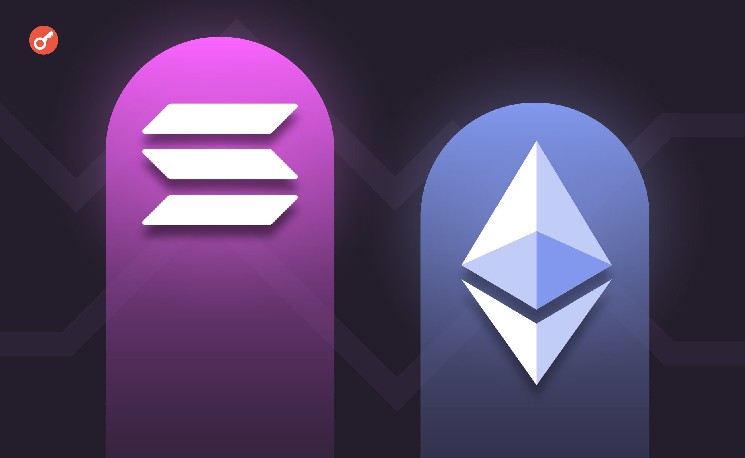
Grayscale спрогнозировала рост дефицитности Ethereum и Solana

Grayscale прогнозирует, что обсуждение изменений в токеномике Ethereum и Solana может сделать их нативные монеты более дефицитными. Согласно анализу Зака Пендла, рассматриваемые изменения протоколов способны значительно сократить годовую инфляцию предложения $ETH и $SOL. К концу 2031 года инфляция Ethereum может составить около 0,4% в год, а Solana — около 1,1%, что ниже роста предложения золота (1,8%) и инфляции потребительских цен в США (3,3%). Снижение эмиссии напрямую повлияет на стейкеров, поскольку их вознаграждения выплачиваются из новых монет. При уменьшении выпуска вознаграждения станут меньше, однако потенциальный дефицит активов может поддержать их рыночную стоимость. Таким образом, держатели, не участвующие в стейкинге, могут получить выгоду от уменьшения предложения, а для стейкеров итог будет зависеть от баланса между снижением выплат и возможным ростом цены актива. В экосистеме Ethereum дефицитность уже стала отдельной темой обсуждения, например, в предложении EIP-8363, которое предусматривает сжигание части вознаграждений за стейкинг. В Solana аналогичные изменения имеют, по оценке Пендла, более высокие шансы на реализацию. Параллельно сеть Solana развивает инфраструктуру, например, с обновлением Alpenglow для ускорения транзакций, и демонстрирует рост объёма токенизированных активов.

cryptonews.ru2 ч. назад

Grayscale спрогнозировала рост дефицитности Ethereum и Solana

cryptonews.ru2 ч. назад

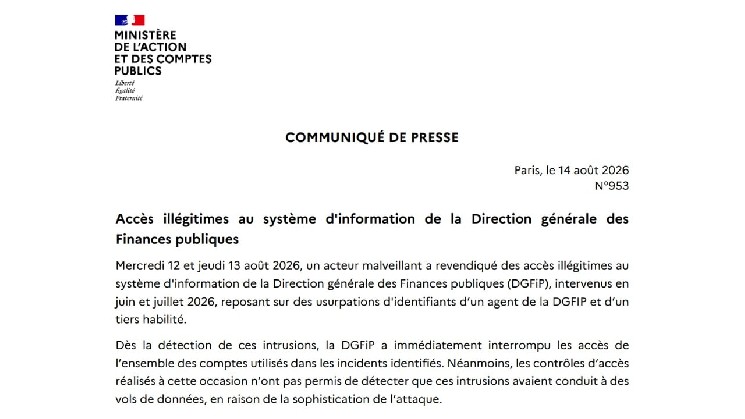
Французское налоговое агентство признало утечку данных: хакер похитил 678 тысяч записей

Французское налоговое агентство (DGFiP) подтвердило утечку данных, в результате которой хакер под псевдонимом Zerobytes похитил 678 438 записей налогоплательщиков. Инцидент произошел 12 июня; злоумышленник получил доступ через VPN, используя инструмент внутреннего поиска. DGFiP заблокировало скомпрометированные учетные записи, но из-за сложности атаки кража данных не была сразу обнаружена. Агентство заявило, что данные для входа на сайт не пострадали, и пообещало уведомить каждого пострадавшего на следующей неделе, указав, какая информация могла быть просмотрена или извлечена. Тем временем украденный файл, как сообщается, продается за несколько тысяч евро. Владельцы криптовалют во Франции выразили обеспокоенность, опасаясь новых целевых атак. Эксперт Александр Стахтченко призвал ввести мораторий на сбор персональных данных государством, пока не будут обеспечены надлежащие меры защиты. К апрелю во Франции уже было возбуждено 12 дел о похищениях, связанных с криптовалютами.

cryptonews.ru2 ч. назад

Французское налоговое агентство признало утечку данных: хакер похитил 678 тысяч записей

cryptonews.ru2 ч. назад

Торговля

Спот

Популярные статьи

Как купить ONE

Добро пожаловать на HTX.com! Мы сделали приобретение Harmony (ONE) простым и удобным. Следуйте нашему пошаговому руководству и отправляйтесь в свое крипто-путешествие.Шаг 1: Создайте аккаунт на HTXИспользуйте свой адрес электронной почты или номер телефона, чтобы зарегистрироваться и бесплатно создать аккаунт на HTX. Пройдите удобную регистрацию и откройте для себя весь функционал.Создать аккаунтШаг 2: Перейдите в Купить криптовалюту и выберите свой способ оплатыКредитная/Дебетовая Карта: Используйте свою карту Visa или Mastercard для мгновенной покупки Harmony (ONE).Баланс: Используйте средства с баланса вашего аккаунта HTX для простой торговли.Третьи Лица: Мы добавили популярные способы оплаты, такие как Google Pay и Apple Pay, для повышения удобства.P2P: Торгуйте напрямую с другими пользователями на HTX.Внебиржевая Торговля (OTC): Мы предлагаем индивидуальные услуги и конкурентоспособные обменные курсы для трейдеров.Шаг 3: Хранение Harmony (ONE)После приобретения вами Harmony (ONE) храните их в своем аккаунте на HTX. В качестве альтернативы вы можете отправить их куда-либо с помощью перевода в блокчейне или использовать для торговли с другими криптовалютами.Шаг 4: Торговля Harmony (ONE)С легкостью торгуйте Harmony (ONE) на спотовом рынке HTX. Просто зайдите в свой аккаунт, выберите торговую пару, совершайте сделки и следите за ними в режиме реального времени. Мы предлагаем удобный интерфейс как для начинающих, так и для опытных трейдеров.

990 просмотров всегоОпубликовано 2024.04.12Обновлено 2026.06.02

Как купить ONE

Обсуждения

Добро пожаловать в Сообщество HTX. Здесь вы сможете быть в курсе последних новостей о развитии платформы и получить доступ к профессиональной аналитической информации о рынке. Мнения пользователей о цене на ONE (ONE) представлены ниже.

活动图片