Finding the Next Wang Tao

marsbitОпубликовано 2026-07-07Обновлено 2026-07-07

Введение

Hong Kong's deep-tech startups are crossing the Shenzhen River to scale up. On July 2nd, six university spin-off teams presented at the "X-Day" Xili Lake Roadshow in Nanshan, Shenzhen. Their projects spanned next-gen battery materials, quantum dot displays, robotics AI, digital sports, smart airports, and AI-powered fall prevention for the elderly. This reflects a growing trend: Hong Kong's academic research is increasingly seeking industrial application and commercialization within the Greater Bay Area, with Shenzhen being a primary destination. These startups exemplify the "fusion+" model—leveraging Hong Kong's strengths in fundamental, globally-connected research ("0 to 1") and Shenzhen's robust manufacturing ecosystem and market access for scaling ("1 to 100"). Examples include SuFang New Energy (high-energy-density battery materials), PuLang Quantum (quantum dot films in high-end displays and vehicles), and BuGu Health (AI-based fall risk screening). Platforms like the HKU Youth Innovation Academy and HKUST BlueBay are establishing physical bridges for this cross-border innovation. The discussion highlights a clear division of labor: Hong Kong provides the seeding ground for cutting-edge technology, while Shenzhen offers the pathway to产业化. As these connections strengthen through initiatives like the Xili Lake Roadshow, the region aims to foster the next generation of global tech leaders like DJI's Wang Tao.

A group of Hong Kong tech startup teams cross the Shenzhen River.

July 1st marked the 29th anniversary of Hong Kong's return. The next afternoon, six startup teams with backgrounds from Hong Kong universities appeared in Nanshan, Shenzhen. At the "X-Day" Xili Lake Roadshow Hong Kong Tech Special Event, they presented projects in lithium battery materials, quantum dot displays, robot intelligent control, digital sports, smart airports, and healthcare.

In fact, scenes like this have become increasingly common in recent years. Research achievements from Hong Kong universities continue to enter the Greater Bay Area, searching for the next stop for industrialization. So, they come to Shenzhen.

The journey from the laboratory to the industry unfolds from here, a much longer path.

A Group of Hong Kong University Entrepreneurs Gather in Shenzhen

Starting from a Roadshow

The first to take the stage was Sufang New Energy, founded in October 2023 and led by City University of Hong Kong Tenured Professor Liu Qi. Headquartered in Shenzhen, the company focuses on the R&D and industrialization of lithium-rich manganese-based cathode materials.

Voltage decay is a hurdle that lithium-rich manganese-based materials have struggled to overcome for years in industrialization. The team disclosed that Sufang New Energy is the only enterprise globally capable of synthesizing ultra-low voltage decay lithium-rich manganese-based materials. A production line with an annual capacity of 300 tons has been built in Shenzhen's Pingshan district, and samples have been sent to leading battery manufacturers for testing. "Driving 1000 kilometers on a single charge is no problem," stated Sufang New Energy's R&D Vice President Wang Bo.

Coincidentally, an existing investor was sitting in the audience. ZStone Partners had previously invested in this team. Founding Partner Zhong Qiankai noted that Sufang New Energy's progress was even faster than anticipated.

Next up was Pulang Quantum. Founder Zhang Zhikuan holds a PhD from the Hong Kong University of Science and Technology, with bachelor's and master's degrees from Peking University. He previously served as CTO of Refond Optoelectronics before co-founding the company with Professor Sun Xiaowei, Chair Professor at Southern University of Science and Technology and Foreign Academician of the Russian Academy of Sciences. The company provides full-process integrated supply of high-end quantum dot materials.

Products from this company have actually already appeared in many people's daily lives - the screens of Lenovo Legion 9000K and ASUS ROG series laptops contain Pulang's quantum dot films. In the most demanding automotive field, Pulang is the first company globally to achieve mass production of front-installed automotive quantum dot films, starting with the Zeekr 7X and gradually entering models from NIO, Audi, and others, holding over 70% of the global market share for automotive quantum dot films.
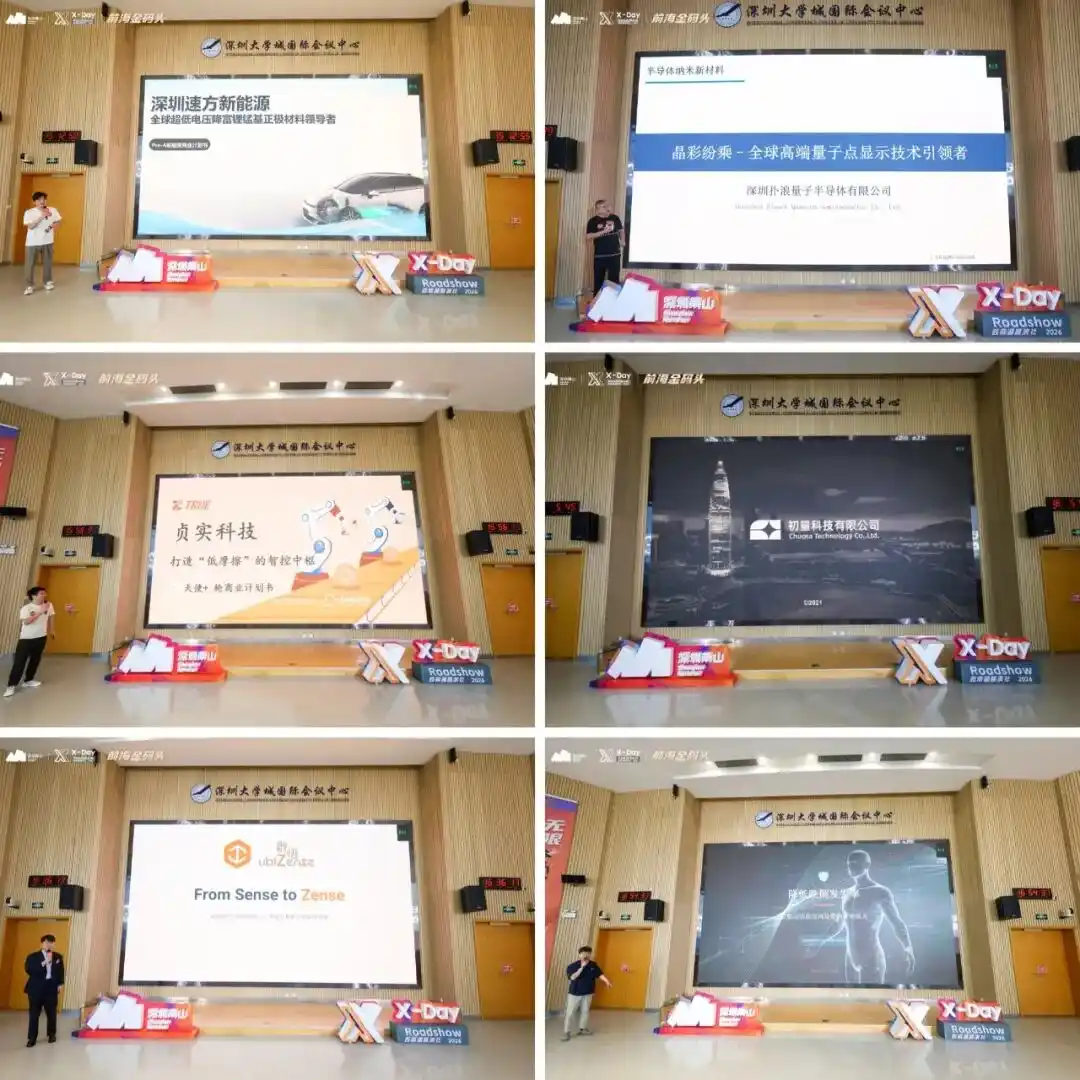
Zhenshi Technology followed, presenting a "ready-to-use" robotic embodied intelligent control system, emphasizing "vision, control, and AI integration," targeting non-standard industrial scenarios with small batches and multiple varieties. The founders are a pair of brothers: CEO Gui Kai handles the market and "cerebellum" control, while his younger brother Gui Shun, a PhD from The Hong Kong Polytechnic University, is responsible for the AI "brain." The company is headquartered in Nanjing and just established a research center this year in Shenzhen's Qianhai, joining The Hong Kong Polytechnic University Qianhai Advanced Technology Research Centre.

From there, the technology began to enter more specific life and industry scenarios.

Chuliang Technology has built the digital sports brand PARTYDAY, using self-developed hardware-software integrated devices like skiing simulators and miniature racing cars to create indoor sports and entertainment spaces. It has currently opened 7 stores in Xi'an, Shenzhen, Wuhan, Hangzhou, and Shanghai, serving over 3 million cumulative visitors. The company has settled in the University of Hong Kong Youth Science and Innovation Institute located in Qianhai, leveraging cross-border incubation platforms from Hong Kong universities to foster bidirectional development of technology and innovation between Shenzhen and Hong Kong.

Inspired by the Asian Institute of Supply Chain and Logistics at The Chinese University of Hong Kong, Qiwu Technology (Ubizense) brings AI and IoT into airports. Its apron collaborative decision-making system has been deployed and running at Hong Kong International Airport for 8 years.

Now, the team is migrating this system from the two-dimensional apron to three-dimensional airspace, developing a drone collaborative decision management system targeting the low-altitude economy. The first stop in their landing plan is Shenzhen. Co-founder Xu Shenghao stated they aim to establish roots in Shenzhen first, striving to launch a pilot at Bao'an Airport.

The final presentation was from Bugoo Health, focusing on an easily overlooked issue: falls among the elderly. According to General Manager Xu Hongyuan, the annual incidence of falls among those aged 60 and above is about 30%, while most existing solutions focus on post-fall alerts and protection.

The company originates from Hong Kong Baptist University and was incubated at the Hong Kong Science Park. It uses wearable sensors combined with AI movement analysis to screen for fall risks in advance from balance, strength, and gait data, followed by exercise interventions. Currently, nearly 20 large public hospitals and over half of community health centers in Hong Kong are its users. The product has obtained U.S. FDA certification and is preparing to enter the mainland Chinese market.

Six teams with backgrounds from Hong Kong universities came to Xili Lake in Shenzhen. With technology stepping out of the lab, the next question to answer is how to truly integrate into the industry.

From Hong Kong to Shenzhen, Searching for the Next Wang Tao

An unavoidable question is: Why are Hong Kong tech startups flocking to Shenzhen? Before the roadshow began, four investors long involved in Hong Kong tech investments discussed this matter.
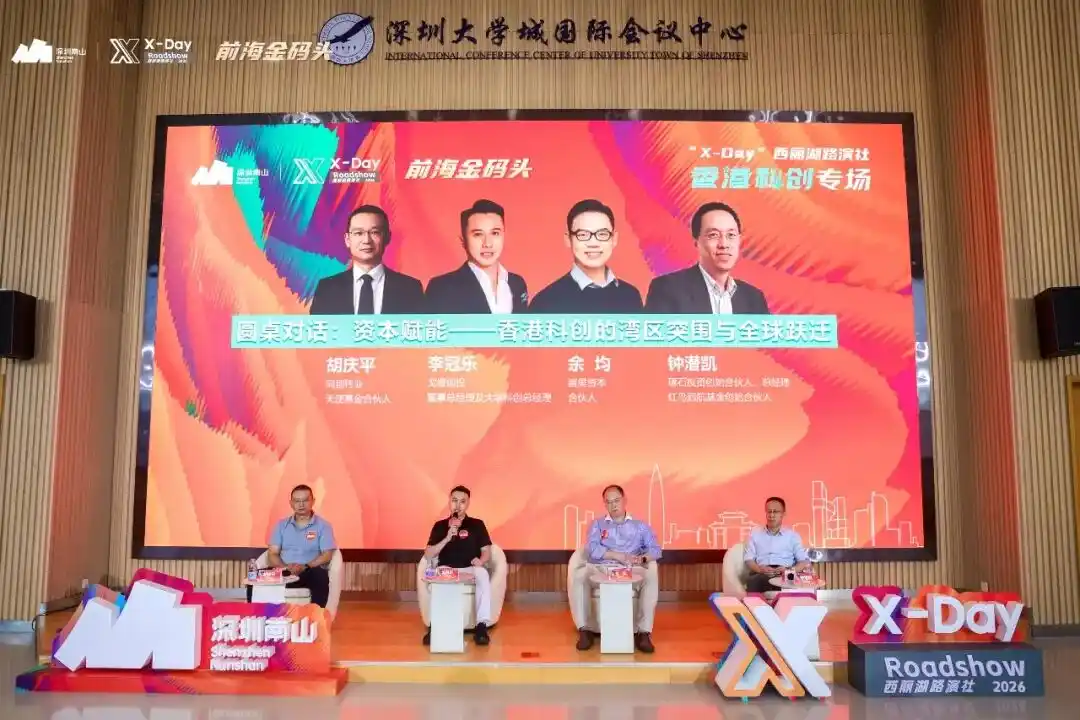
Junhao Capital Partner Yu Jun mentioned a detail: On roughly 1100 square kilometers of land in Hong Kong, there is a high-density concentration of universities and research resources, which is itself a scarce advantage.

For a technology to leave the lab, it must cross pilot-scale testing, find customers, and undergo real market validation. Yu Jun repeatedly mentioned "real demand": No matter how cutting-edge the technology, it must ultimately land on a business model.

Gobi Partners Managing Director Li Guanle feels this more deeply. Having long invested in university tech projects, he observed that many overseas scientists returning to China often choose Hong Kong as their first stop. The English-speaking environment, global academic networks, and dense university resources give Hong Kong teams a natural international perspective.

"Hong Kong teams excel at going from 0 to 1, while the Greater Bay Area can provide the engineering and industrial support to go from 1 to 100," Li Guanle stated.

ZStone Partners Founding Partner Zhong Qiankai calls it "Fusion+". Over the years, he has encountered many semiconductor, AI, and materials projects from HKUST. The technology often stands at the threshold of industrialization; the next step is to truly connect Hong Kong's research with the mainland's industry.

Shenzhen happens to be at this stage.

In fact, a Shenzhen-Hong Kong tech channel is gradually becoming clear. Platforms like the City University of Hong Kong Shenzhen Research Institute, the University of Hong Kong Youth Science and Innovation Institute, and the Hong Kong University of Science and Technology Blue Bay Qianhai Innovation Port have successively landed in Shenzhen. Beyond university labs, industry and markets are getting closer.

The six roadshow projects that day also reflected this trajectory. Separated by a river, the two cities are each taking on the parts they excel at. As Tongchuang Weiye Angel Fund Partner Hu Qingping said, from the angel stage onwards, entrepreneurial interaction between Shenzhen and Hong Kong has become increasingly close, and what's needed in the future is "two-way" collaboration.

The Xili Lake Roadshow makes this connection more concrete. Since its launch, "X-Day" has held 18 themed roadshows, attracting over 520 project applications. 53 companies have received equity investments totaling over 2.096 billion yuan, and 32 companies have obtained new bank credit lines exceeding 1.145 billion yuan. Additionally, 8 non-local roadshow projects have established entities in Nanshan.

Hong Kong has the source innovation; Shenzhen receives the next stage of industrialization. The Shenzhen River is narrow, and the distance in tech and innovation between Shenzhen and Hong Kong is getting shorter.

Perhaps the next entrepreneur like DJI's Wang Tao, who takes a product global, is setting out from here.

This article is from the WeChat public account "Investment Community" (ID: pedaily2012), by Wang Lu


Трендовые криптовалюты

Связанные с этим вопросы

QWhat is the main theme of the article 'Finding the Next Wang Tao'?

AThe main theme is the increasing trend of Hong Kong's university-based scientific research and entrepreneurial teams crossing into Shenzhen, within the Greater Bay Area, to industrialize their technological innovations. It highlights the complementary strengths of Hong Kong's academic research and Shenzhen's industrial ecosystem.

QWho is Wang Tao, and why is he referenced in the article's title?

AWang Tao (Frank Wang) is the founder of DJI, the world's leading consumer drone company. He is a prominent example of a successful entrepreneur who leveraged Hong Kong's academic resources (he studied at Hong Kong University of Science and Technology) and the manufacturing/industrial ecosystem of Shenzhen to build a global product. The article uses him as a benchmark, suggesting the search for the next major innovator emerging from this Hong Kong-Shenzhen collaboration model.

QWhat are some specific challenges that Hong Kong's tech startups face in moving from the lab to the market, as mentioned in the article?

AThe challenges include bridging the gap from laboratory research to pilot-scale production (pilot testing), finding initial customers, and validating their technology in the real market. The article emphasizes that even cutting-edge technology must eventually establish a viable business model based on genuine market demand.

QHow does the X-Day Xili Lake Roadshow Club event, described in the article, facilitate Hong Kong-Shenzhen collaboration?

AThe X-Day Xili Lake Roadshow Club provides a platform for Hong Kong university-based tech startups to pitch their projects to investors and the industry in Shenzhen (Nanshan District). It acts as a concrete connector, helping projects gain funding, bank credit, and facilitating the establishment of business entities in Shenzhen. The event specifically mentioned has attracted over 520 projects and helped secure significant investment and credit.

QWhat are some of the key advantages Shenzhen offers to Hong Kong's tech entrepreneurs, according to the investors cited in the article?

AAccording to the investors, Shenzhen offers critical advantages for the '1 to 100' phase of growth. These include robust engineering capabilities, complete industrial supply chains, and proximity to a vast market for pilot testing and commercialization. While Hong Kong excels at foundational '0 to 1' research with international perspective, Shenzhen provides the manufacturing, scaling, and deep market integration necessary for产业化 (industrialization).

Похожее

Ethereum сохраняет квартальные достижения на фоне сжигания Tether на $2.5 млрд – Но этот катализатор сохраняется

Ethereum (ETH) сохранил рост, достигнутый в третьем квартале, несмотря на сжигание Tether $2,5 млрд USDT в сети Ethereum, что сократило общий объем стейблкоинов на платформе. Основное внимание уделяется предстоящему масштабному обновлению Glamsterdam, запланированному на вторую половину 2026 года, которое сейчас находится на заключительной стадии тестирования. Оно направлено на значительное повышение пропускной способности сети за счет внедрения параллельной обработки транзакций и поэтапного увеличения лимита газа. Однако этому позитивному инфраструктурному нарративу противостоят сложные ончейн-условия. Ликвидность в DeFi ослабевает: общая рыночная капитализация стейблкоинов снизилась, а TVL крупнейшего кредитного протокола Aave на Ethereum значительно упал с начала года. Недавний перевод 63 000 ETH на Coinbase крупным институциональным кошельком на фоне сжатия ликвидности указывает на то, что недавний рост цены ETH может быть краткосрочной коррекцией. Таким образом, ключевой вопрос для второй половины года заключается в том, смогут ли фундаментальные улучшения от Glamsterdam перевесить макроэкономическую неопределенность и слабую ончейн-активность для поддержания устойчивого бычьего тренда.

ambcrypto12 мин. назад

Ethereum сохраняет квартальные достижения на фоне сжигания Tether на $2.5 млрд – Но этот катализатор сохраняется

ambcrypto12 мин. назад

«Экзамен» на эмбиентный интеллект сводит с ума: человек — 100 баллов, лучшая модель — 12.8

Новый эталонный тест RoboDojo, разработанный командой из Гонконгского университета и Пекинского университета, оценивает способности современных моделей искусственного интеллекта для роботов в симуляции и реальном мире. Тест включает 42 симуляционные и 18 реальных задач, проверяющих пять ключевых способностей: обобщение, память, точность, долгосрочное планирование и понимание открытых семантических инструкций. Результаты оказались отрезвляющими: лучшая модель показала средний успех только в 8,80% симуляционных и 12,8% реальных задач, в то время как человек-эксперт достигает 76,03% и 100% соответственно. Бенчмарк выявил серьёзный разрыв между демонстрационными видео и надёжным выполнением задач в стандартизированных условиях, особенно в операциях, требующих высокой точности, длинных последовательностей действий или понимания новых семантических команд. RoboDojo — это не просто набор задач, а комплексная инфраструктура с публичным рейтингом, системой параллельной симуляции (XPolicyLab) и стандартизированной процедурой тестирования на реальных роботах ARX X5, Piper и Piper X. Проект, управляемый академическим сообществом, призван стать объективным «высотомером» для прогресса в области воплощённого ИИ, показывая, что до создания по-настоящему универсальных и надёжных роботов-манипуляторов ещё далеко.

marsbit24 мин. назад

«Экзамен» на эмбиентный интеллект сводит с ума: человек — 100 баллов, лучшая модель — 12.8

marsbit24 мин. назад

За кулисами роста ANSEM на 300% за неделю: возрождение и ловушки Solana Meme

Мем-токен ANSEM вырос на 299% за неделю, способствуя оживлению рынка мем-токенов на Solana. Платформа Pump.fun достигла недельного объема транзакций в 53.3 млрд долларов, а мем-токены снова составили более 20% еженедельного объема транзакций в сети Solana — впервые с середины мая. Это сигнализирует о восстановлении интереса. Однако всплеск активности сопровождается серьезными рисками. Исследования показывают, что большинство популярных мем-токенов подвержены манипуляциям: торговые боты часто скупают токены в первые моменты листинга, а скоординированные группы контролируют значительную часть ликвидности. Среднее время удержания мем-токена сократилось до 100 секунд, создавая неравные условия для обычных пользователей, которые часто становятся жертвами схем «забега и выхода» (pump-and-dump). Будущее развития рынка зависит от того, сможет ли рост перейти от единичных случаев, подобных ANSEM, к устойчивому тренду с увеличением числа успешных проектов и высокими общими объемами. Если же активность снизится, а доля мем-токенов в общем объеме Solana упадет, текущий всплеск может оказаться кратковременным. Ключевой вопрос для отрасли: сможет ли этот сегмент преодолеть цикл манипуляций и стать более здоровой экосистемой для привлечения новых пользователей.

Foresight News1 ч. назад

За кулисами роста ANSEM на 300% за неделю: возрождение и ловушки Solana Meme

Foresight News1 ч. назад

Маленький Зах «Манго» генерирует изображения лишь немного уступая GPT Image 2: ему не учили редактировать — он научился сам

Meta AI представила свою самую передовую модель генерации изображений Muse Image под кодовым названием «Манго». Она заняла второе место на платформе Arena, уступая только GPT Image 2 от OpenAI. Ключевой особенностью «Манго» является способность действовать как интеллектуальный агент: модель сама ищет информацию в интернете для работы с фактами, пишет и запускает код для создания точных диаграмм и QR-кодов, а главное — самостоятельно корректирует результат, если он её не устраивает. Это поведение не было запрограммировано явно, а «проявилось» в ходе обучения с подкреплением. Модель интегрирована с языковой моделью Muse Spark («Авокадо»), что позволяет им совместно планировать и выполнять сложные задачи. Например, в демо-версии они создали серию изображений кошки от детства до старости и упаковали их в веб-игру. Кроме того, Muse Image обладает уникальной функцией, использующей социальный граф Meta: пользователи могут @упоминать публичные аккаунты Instagram в подсказках, чтобы создавать изображения с людьми из их открытых фотографий. Эта функция включена по умолчанию, что уже вызвало вопросы о конфиденциальности. Muse Image уже доступна в Meta AI, Instagram и WhatsApp, а вскоре появится в других приложениях компании, охватывающих миллиарды пользователей. Все созданные изображения имеют невидимый водяной знак Content Seal для идентификации ИИ-контента, а Meta также выпустила публичный инструмент для проверки происхождения изображений. Одновременно был анонсирован превью-релиз видео-модели Muse Video, которая генерирует видео с синхронным звуком и заняла третье место в соответствующем рейтинге Arena.

marsbit1 ч. назад

Маленький Зах «Манго» генерирует изображения лишь немного уступая GPT Image 2: ему не учили редактировать — он научился сам

marsbit1 ч. назад

В новом блоге Вэн Ли предлагает «Самосовершенствование следует начинать с Harness», Цуй Тяньи из DeepSeek распространяет и поддерживает

Бывший вице-президент OpenAI по безопасности и соучредитель Thinking Machines Lab Лилия Вэн предложила новый взгляд на саморазвитие ИИ (RSI). Она утверждает, что наиболее реалистичный путь начинается не с прямой модификации весов модели, а с эволюции **Harness** — внешней системы управления, которая отвечает за вызов инструментов, управление контекстом, планирование задач и верификацию результатов. Исследователь DeepSeek Цуй Тяньи поддержал эту идею, отметив, что самосовершенствование на уровне Harness, как и на уровне модели, — многообещающее направление. Вэн выделяет прогресс от инженерии контекста (ACE, MCE) и дизайна рабочих процессов (AI Scientist, ADAS, AFlow) до **Self-Improving Harness**. Последнее включает в себя цикл: поиск слабых мест, предложение модификаций кода Harness и их валидацию. Такие системы, как DGM, показали, что эволюция Harness способна значительно повысить производительность агентов в задачах кодирования без изменения весов модели. Однако путь к полноценному RSI сталкивается с проблемами: слабые или нечеткие оценочные функции, риск взлома системы вознаграждений (reward hacking), коллапс разнообразия решений и противоречие между краткосрочным успехом и долгосрочной устойчивостью системы. Роль человека, по мнению Вэн, смещается в сторону надзора на более высоком уровне абстракции. Вывод: Harness становится критически важным фактором, определяющим конечные возможности ИИ-систем, и представляет собой практическую точку входа для исследований в области саморазвития искусственного интеллекта.

marsbit1 ч. назад

В новом блоге Вэн Ли предлагает «Самосовершенствование следует начинать с Harness», Цуй Тяньи из DeepSeek распространяет и поддерживает

marsbit1 ч. назад

Торговля

Спот

Популярные статьи

Как купить RIVER

Добро пожаловать на HTX.com! Мы сделали приобретение River (RIVER) простым и удобным. Следуйте нашему пошаговому руководству и отправляйтесь в свое крипто-путешествие.Шаг 1: Создайте аккаунт на HTXИспользуйте свой адрес электронной почты или номер телефона, чтобы зарегистрироваться и бесплатно создать аккаунт на HTX. Пройдите удобную регистрацию и откройте для себя весь функционал.Создать аккаунтШаг 2: Перейдите в Купить криптовалюту и выберите свой способ оплатыКредитная/Дебетовая Карта: Используйте свою карту Visa или Mastercard для мгновенной покупки River (RIVER).Баланс: Используйте средства с баланса вашего аккаунта HTX для простой торговли.Третьи Лица: Мы добавили популярные способы оплаты, такие как Google Pay и Apple Pay, для повышения удобства.P2P: Торгуйте напрямую с другими пользователями на HTX.Внебиржевая Торговля (OTC): Мы предлагаем индивидуальные услуги и конкурентоспособные обменные курсы для трейдеров.Шаг 3: Хранение River (RIVER)После приобретения вами River (RIVER) храните их в своем аккаунте на HTX. В качестве альтернативы вы можете отправить их куда-либо с помощью перевода в блокчейне или использовать для торговли с другими криптовалютами.Шаг 4: Торговля River (RIVER)С легкостью торгуйте River (RIVER) на спотовом рынке HTX. Просто зайдите в свой аккаунт, выберите торговую пару, совершайте сделки и следите за ними в режиме реального времени. Мы предлагаем удобный интерфейс как для начинающих, так и для опытных трейдеров.

1.0k просмотров всегоОпубликовано 2026.01.16Обновлено 2026.06.02

Как купить RIVER

Неделя обучения по популярным токенам 7: Ротационный рост анонимных криптовалют, RIVER в начале 2026 года стал одним из самых быстрорастущих активов на рынке.

Нарратив "конфиденциальность + платежи" выступает в качестве основного катализатора, вызывая ротационный рост анонимных криптовалют, таких как DASH и XMR.

1.5k просмотров всегоОпубликовано 2026.01.20Обновлено 2026.01.20

Неделя обучения по популярным токенам 7: Ротационный рост анонимных криптовалют, RIVER в начале 2026 года стал одним из самых быстрорастущих активов на рынке.

Обсуждения

Добро пожаловать в Сообщество HTX. Здесь вы сможете быть в курсе последних новостей о развитии платформы и получить доступ к профессиональной аналитической информации о рынке. Мнения пользователей о цене на RIVER (RIVER) представлены ниже.

活动图片