Tether's New Business: Helping Small Countries Issue Stablecoins

marsbitОпубликовано 2026-05-26Обновлено 2026-05-26

Введение

Tether has announced a partnership with the Georgian government to issue GEL₮, a Lari-pegged stablecoin, aiming to reduce costs, accelerate settlements, and promote cross-border payments. This move is part of Tether's broader strategy to establish a replicable, standardized business of issuing sovereign currency-backed stablecoins for smaller nations, alongside its flagship USDT and other regional offerings like MXNT (Mexican Peso) and CNHT (Offshore Yuan). Georgia represents an ideal test case due to its high reliance on remittances (~15% of GDP), established digital asset regulatory framework aligned with U.S. standards, and prior engagement with Tether. The country gains accelerated internationalization of its currency by accessing Tether's global distribution network and liquidity pools, where GEL₮ can be swapped directly with assets like USDT. For Tether, the immediate financial gain from Georgia's small market is minimal. The true value lies in creating a template. Successfully navigating the compliance, reserve, and redemption processes for GEL₮ allows Tether to replicate this model swiftly for other nations with similar profiles, such as Azerbaijan or Nigeria. The deeper strategy involves subtly integrating these national currencies into an informal USDT-anchored dollar system, positioning Tether as the essential routing infrastructure. This partnership highlights a potential new model: the outsourcing of sovereign currency globalization to private stablecoin issue...

Author: Xiaobing, Deep Chao TechFlow

On May 25th, stablecoin issuer Tether announced a collaboration with the Georgian government to issue GEL₮, a stablecoin pegged to the Lari.

The press release is written conventionally: reducing costs, accelerating settlement, promoting cross-border payments. CEO Ardoino reiterated that phrase again, stablecoins are becoming the infrastructure of global finance.

Looking at this announcement within the context of Tether's actions over the past 24 months, what Tether is doing is gradually connecting the issuance interfaces and global distribution channels for the on-chain currencies of small nations, one by one, into its own hands.

Tether's Product Line is Essentially a Business Map for Issuing Currencies on Behalf of Others

Let's lay out Tether's cards: USDT, $189 billion market cap, number one globally, but not usable by US users; USAT, a US dollar stablecoin launched earlier this year for the GENIUS Act-compliant market, essentially a "US version" of USDT; EURT, a Euro stablecoin, forced to retreat by MiCA, will cease redemptions in November 2025; MXNT is for the Mexican Peso; CNHT is for offshore Chinese Yuan, its scale has remained small; GEL₮, the upcoming Lari stablecoin.

Viewed by currency, it seems messy, but the strategic intent is clear. Tether is testing one thing: Outside the main channel of the US dollar, can "issuing national currency stablecoins on behalf of sovereign states" become a replicable, standardized business?

USDT is responsible for holding the position of the global dollar shadow currency. USAT and EURT are attempts at compliance in heavily regulated markets. The common denominators for the rest—MXNT, CNHT, GEL₮—are clear: weak internationalization of the local currency, expensive cross-border payments, high reliance on remittances, but not so severe as to face outright sanctions like Iran or North Korea.

Georgia is the latest blueprint for this strategy.

Why Was Georgia Willing to Sign?

A population of 3.7 million, GDP around $35 billion, smaller than Kunming, but it has three conditions that make it particularly suitable.

It has a pain point. IMF data shows that over the past decade, remittances have accounted for about 15% of Georgia's GDP. For 40-45% of recipient households, monthly income comes from remittances, mainly from Russia, Greece, and the US. The cost and time delay per traditional wire transfer represent real money lost for these families. If an on-chain Lari can work, it's a true benefit for the common people.

The compliance framework is ready. The National Bank of Georgia spent years building a digital asset regulatory framework covering reserves, redemption rights, issuer supervision, AML, and proactively aligning with the US GENIUS Act. This step was intentional, aiming to position itself as a digital asset hub in the Caucasus region.

Preliminary groundwork was laid. Georgia signed an MOU with Tether in 2023, conducted a digital Lari pilot with Ripple the same year, and also signed a collaboration with Hedera. GEL₮ did not appear out of thin air.

The logic is clear: Use Tether's global distribution network in exchange for accelerated internationalization of its own currency.

Georgia could also issue a CBDC itself, but even a fast CBDC only circulates within its own system. By plugging into Tether's network, the Lari can, for the first time, be directly swapped with USDT and USDC in the same liquidity pool, and be held in any crypto wallet. This is equivalent to Georgia using its compliance framework as a bargaining chip to rent Tether's already-established global pipeline.

What Did Tether Gain?

Georgia is too small. The annual remittance market is less than $5 billion. Adding domestic payments, the stablecoin circulation would be at most a few tens of billions, a drop in the bucket compared to USDT's $189 billion.

So Tether's goal is not Georgia itself, but thetemplate.

Each additional country makes the solution of "issuing national currency stablecoins on behalf of sovereign states" more mature. Once the compliance architecture, reserve mechanism, and redemption process for GEL₮ are proven, the next interested country—Azerbaijan, Armenia, Uzbekistan, Kenya, Nigeria—can directly apply the template, compressing the timeline from years to months.

The real moat lies even deeper. When a country's national stablecoin is swapped within the same liquidity network as USDT, that country's currency is quietly connected to an informal dollar system anchored by USDT. Tether doesn't need to fight for decision-making power in these countries' central banks; it only needs to ensure it is the middle router.

The logic resembles London's financial export in the 19th century. London's banks didn't become central banks in colonies; they just layered their clearing, discount, and exchange systems abroad, and then everyone had to use London's rails. The difference is that was one-way colonialism, whereas now it's two-way voluntary.Small countries are happy to sign, unable to wait for SWIFT's transformation; Tether is happy to do it, locking in a key position in the next generation of financial infrastructure.

Outsourcing Sovereign Currency

The digital Euro has been tangled in public consultations for five years by MiCA, ECB, and various national central banks.

Georgia, a country with a GDP smaller than Kunming, bypassed the entire process of "a country issuing its own CBDC" with a contract with a private company, sending its national currency directly onto a global circulation track on par with USDT.

If this happens in ten or twenty small countries over the next three years, it will be the embryo of a new international financial order: the outsourcing of sovereign currency globalization to private stablecoin issuers.

But this path is not without cost.

First is monetary sovereignty risk. If the liquidity, wallet access, and transaction routing of a national stablecoin all depend on Tether, what happens to the visibility and control over currency circulation by the local central bank? There is no clear answer yet.

In the future, if half of Georgian households use GEL₮ to receive remittances, then any reserve crisis Tether faces will not only pressure Tether's balance sheet but also Georgia's social stability.

Second, if all small countries' national stablecoins ultimately enter and exit via swaps through USDT, then superficially it's national currencies going on-chain, but in reality, it might be these countries further connecting to an on-chain dollar system centered on USDT. For countries doing this in a de-dollarization context, this is a paradox worth considering in advance.

The BIS has repeatedly warned about the impact of private stablecoins on monetary sovereignty and financial stability over the past two years, not without reason.

Details of GEL₮'s issuance structure, reserve custodian, and technical chain selection have not been disclosed. These details determine whether it is a true "sovereign-backed stablecoin" or a "regular Tether product with a government name attached."

But there is an observation point more important than details: In the next 12 months, will a second or third country sign a similar template collaboration with Tether?

If so, Tether will transform from a stablecoin issuance company into a cross-sovereign financial infrastructure service provider that issues national currency stablecoins on behalf of sovereign states.

This is a species we haven't had a word for before. It's not a bank, not a central bank, not a payments company, nor an ordinary stablecoin issuer. It's a cross-sovereign, on-chain currency-issuing organization pieced together by regulatory arbitrage, network effects, and technical standardization.

Looking back in three years, the contract signed on May 25, 2026, might be more important than any other crypto news from that week.


Связанные с этим вопросы

QWhat is Tether's new business model with small countries like Georgia, as described in the article?

AThe article describes Tether's new business model as partnering with small sovereign nations to issue and distribute local currency stablecoins on their behalf. Tether provides the technological infrastructure, global distribution network, and operational template. In exchange, countries like Georgia gain access to a faster, cheaper system for cross-border payments and remittances, accelerating their currency's digital and international presence without building a Central Bank Digital Currency (CBDC) from scratch.

QWhy did Georgia agree to partner with Tether to issue the GEL₮ stablecoin?

AGeorgia agreed to partner with Tether due to a combination of three key factors: 1) A clear economic pain point, with remittances making up about 15% of its GDP, where high traditional wire transfer costs hurt citizens. 2) A pre-existing and compliant regulatory framework for digital assets that aligns with standards like the U.S. GENIUS Act, making it a safe jurisdiction. 3) Prior groundwork, including a 2023 Memorandum of Understanding (MOU) with Tether and other digital currency pilots. The deal allows Georgia to leverage Tether's global network for its currency's internationalization.

QWhat does the article suggest is Tether's main strategic goal in these partnerships, beyond the local market size?

AThe article suggests Tether's primary strategic goal is not the immediate market size of a small country's currency but the creation of a replicable 'template' or standardized service for issuing sovereign stablecoins. Each successful partnership refines this model. The deeper goal is to position Tether as the central 'router' in a new financial network, where various local stablecoins are interoperable with USDT. This subtly integrates these countries' currencies into a USDT-anchored, informal dollar system, cementing Tether's role as critical cross-sovereign financial infrastructure.

QWhat are the potential risks for a country that outsources its sovereign currency stablecoin to Tether?

AThe article highlights two main risks for countries: 1) **Monetary Sovereignty Risk**: Outsourcing the issuance and network for its digital currency could reduce the central bank's visibility and control over money flows, making monetary policy and financial stability management more complex. 2) **Systemic Dependency Risk**: If the local economy becomes reliant on the Tether-issued stablecoin (e.g., for remittances), any operational, reserve, or legal crisis at Tether could directly threaten the country's financial stability and social welfare. Additionally, using USDT as the primary swap pair may further embed the country into a dollar-centric system, which could be paradoxical for nations seeking de-dollarization.

QHow does the article characterize the potential long-term significance of Tether's Georgia deal?

AThe article characterizes the Georgia deal as a potential landmark event that could signify the emergence of a new type of financial entity and a shift in the international financial order. If replicated, Tether could evolve from a stablecoin issuer into a 'cross-sovereign chain money minting organization'—a unique hybrid that is not a bank, central bank, or payment company, but a private entity providing sovereign currency globalization as a service through regulatory arbitrage, network effects, and technical standardization. This could represent a form of 'sovereign currency outsourcing' on a global scale.

Похожее

TechFlow Разведслужба: Шансы на IPO Anthropic превышают 80%, Иран вновь перекрывает Ормузский пролив, вызывая волатильность цен на нефть

Технологические новости: ожидается IPO Anthropic в 2026 году, рынок обсуждает сосуществование её заявленной ценности в области безопасности ИИ с потенциальной триллионной оценкой. Набирают популярность виртуальные инфлюенсеры, созданные ИИ. Маск заявляет о необходимости астрономических инвестиций в антиматерию для межзвёздных путешествий. Крипто/Web3: Иран объявил о закрытии Ормузского пролива, вызвав волатильность на нефтяном рынке, однако данные о движении судов показывают неоднозначную картину. Одновременно Иран возобновил погрузку нефти на острове Харг, что может увеличить предложение. На рынке чипов: Goldman Sachs предупреждает о возможном приближении к пределу кредитования масштабных расходов на ИИ-инфраструктуру. Корпоративные новости: Cloudflare представил функцию временных аккаунтов для ИИ-агентов. Google сообщает, что более 50% его трафика теперь использует IPv6. Hyundai Motor Group планирует полный выкуп Boston Dynamics. Рынок акций: частные инвесторы активно вкладываются в акции SpaceX. В Европе зафиксирован первый с 2008 года дефолт по акциям CLO. Макроэкономика: Украина атаковала нефтяные объекты в Крыму и Краснодарском крае. Nomura предупреждает о возможном резком ужесточении политики ФРС. Общая тенденция: глобальная ликвидность сокращается на фоне роста предельных издержек в энергетике, кредитовании и технологиях, в то время как капитал продолжает искать новые масштабные возможности для роста.

marsbit36 мин. назад

TechFlow Разведслужба: Шансы на IPO Anthropic превышают 80%, Иран вновь перекрывает Ормузский пролив, вызывая волатильность цен на нефть

marsbit36 мин. назад

Соотношение ETH/BTC упало до уровней начала 2023 года на фоне дебатов о стоимости Ethereum

Курс ETH/BTC упал до уровня начала 2023 года, достигнув отметки 0.027. По сравнению с пиком 2021 года в 0.088 это означает, что Ethereum сейчас выглядит исторически дешевым по отношению к Bitcoin. Аналитик Woetoe задается вопросом, является ли это возможностью для контрарианских инвестиций или признаком структурного снижения. Одновременно с этим график ETH/USDT указывает на риск коррекции. По данным SwallowAcademy, после агрессивного недельного открытия цена может откатиться, при этом была нарушена структура рынка. План предполагает возможную продажу при повторном тестировании зоны $1723 с целью коррекции до $1660. Таким образом, сложилась противоречивая ситуация: Ethereum кажется недооцененным относительно Bitcoin, но при этом испытывает давление на долларовой паре. Для быков ETH первоочередной задачей является не обсуждение оценки, а восстановление технической силы и возобновление роста относительно BTC.

bitcoinist42 мин. назад

Соотношение ETH/BTC упало до уровней начала 2023 года на фоне дебатов о стоимости Ethereum

bitcoinist42 мин. назад

Охотник сам становится добычей: самый прибыльный MEV-бот был взломан

**Взлом высокодоходного MEV-бота Jaredfromsubway.eth: убыток составил $7.5 млн** Знаменитый и печально известный MEV-бот Jaredfromsubway.eth, один из самых активных и прибыльных на сети Ethereum, стал жертвой сложной цепной атаки, потеряв более 7.5 миллионов долларов. Атака, произошедшая в субботу, не была традиционным фишингом или эксплуатацией уязвимости смарт-контракта. Вместо этого злоумышленники применили целенаправленную «контр-MEV-атаку с помощью ловушки» (counter-MEV honeypot attack). В течение нескольких недель атакующие развернули 66 поддельных контрактов токенов и фальшивых пулов ликвидности, искусно замаскированных под популярные активы, такие как WETH, USDC и USDT. Они создали иллюзию прибыльных арбитражных возможностей. Автоматизированная система бота, обнаружив эти «возможности», выполнила транзакции, в процессе чего предоставила разрешения (approve) контролируемым атакующими вспомогательным контрактам. Не отозвав эти разрешения вовремя, бот оставил свои средства уязвимыми. В итоге атакующие в одной транзакции воспользовались «бэкдором» и вывели ETH, USDC и USDT с адреса бота. Jaredfromsubway.eth был ключевым исполнителем «сэндвич-атак» (Sandwich Attack) в Ethereum, систематически извлекая прибыль из мемпула. По некоторым данным, он был связан с примерно 70% таких атак в сети за последний год и заработал десятки миллионов долларов. Этот инцидент демонстрирует, что даже самые изощренные цепочки атак в криптопространстве теперь сами могут стать мишенью для еще более сложных стратегий. После взлома в X появился фейковый аккаунт, выдав себя за команду бота, что побудило экспертов призвать пользователей к бдительности.

Odaily星球日报2 ч. назад

Охотник сам становится добычей: самый прибыльный MEV-бот был взломан

Odaily星球日报2 ч. назад

Платежная реальность Латинской Америки совсем не такая, как вы думаете

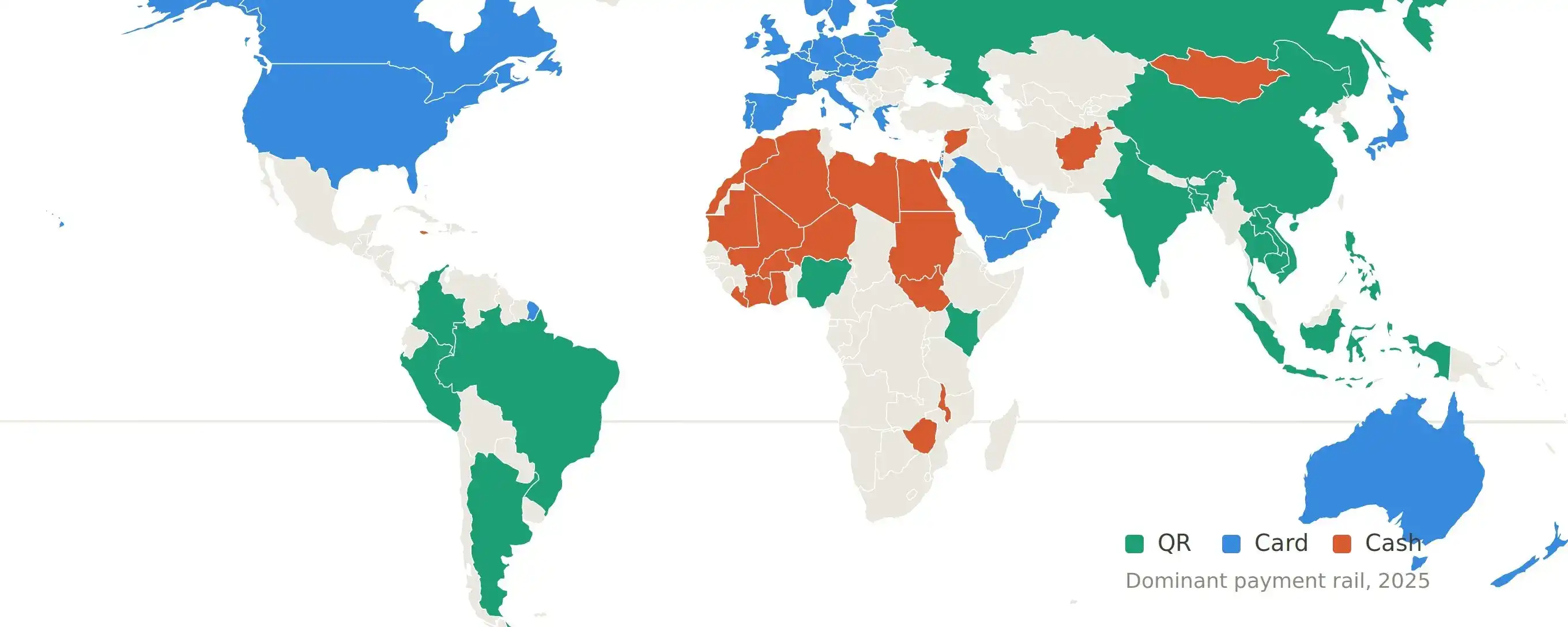
Автор провела почти месяц в Латинской Америке, проведя более 500 часов полевых исследований и пообщавшись с более чем 100 местными пользователями, разработчиками и регуляторами. Ее выводы противоречат распространенным представлениям. 1. Основной объем операций с криптокартами приходится на состоятельных клиентов, которые получают зарплату в долларах или USDT и конвертируют их в местную валюту через Pix, а не на розничные покупки. 2. QR-платежи доминируют в большинстве развивающихся стран (Бразилия, Китай, Индия и др.), тогда как рынки США и Европы все еще ориентированы на карты. Pix в Бразилии обрабатывает больше транзакций, чем кредитные и дебетовые карты вместе взятые. 3. Ключевая нерешенная проблема — отсутствие международной совместимости между системами мгновенных платежей (Pix, UPI, CoDi и др.), что затрудняет платежи иностранцев. 4. Конкуренция смещается от привлечения клиентов к контролю над расчетной инфраструктурой; ведущие компании приобретают банки для ускорения расчетов и снижения затрат. 5. Латиноамериканский рынок крайне неоднороден: Бразилия, Мексика, Аргентина и другие страны имеют разные валютные режимы и модели поведения пользователей. 6. Маржа на конвертацию стабильных монет стремительно сокращается, приближаясь к нулю. Будущие победители создадут ценность поверх дешевых конвертационных услуг. 7. Новые платежные компании должны с самого начала создавать узнаваемый международный бренд и кросс-граничную технологическую платформу. 8. Бразилия и Мексика — перенасыщенные рынки. Перспективными являются менее конкурентные коридоры, такие как "забытая пятерка" стран (Доминикана, Гватемала, Гондурас, Никарагуа, Сальвадор) или маршруты Колумбия-Европа. 9. Маркетинг должен быть точно сегментирован. Например, в Бразилии минимум 5 различных групп пользователей с уникальными денежными потоками и потребностями. 10. Регуляторы Латинской Америки (Бразилия, Мексика, Колумбия) часто опережают США в создании четких рамок для криптовалют и цифровых платежей, стремясь не запрещать, а сделать их безопаснее. Главный вывод: победа в платежной сфере Латинской Америки зависит не от копирования западных моделей, а от понимания локальных реалий, адаптации к доминированию QR-платежей и построения инфраструктуры для международной совместимости.

marsbit2 ч. назад

Платежная реальность Латинской Америки совсем не такая, как вы думаете

marsbit2 ч. назад

Делать музыку в медвежьем рынке: выживающий эксперимент биткоин-группы

В условиях медвежьего рынка криптовалют группа Orange Pill Jam продолжает записывать музыку, сосредоточенную на темах финансового суверенитета, приватности и критики современных систем. Их стиль варьируется от гипси-регги до афро-латинских и хип-хоп ритмов. Несмотря на скромное присутствие на YouTube и Spotify, группа находит отклик в определённых кругах, стремясь создавать музыку, доступную как понимающим, так и не знакомым с биткоином. История началась с импровизированного выступления на конференции Plan B Forum в Лугано в 2022 году. Вокалистка Mermaid, вдохновлённая подкастом Макса Кейзера, написала песню "Dollar Apocalypse". Это событие привело к формированию коллектива с продюсером и мультиинструменталистом Michi, который отвечает за аранжировки и ритм, и менеджером Martino. В песнях, таких как "Cypherpunks' Manifesto" и "Fire of Freedom", группа исследует идеи приватности, опасности "бесплатных" продуктов и личной свободы, находя вдохновение в принятии биткоина Сальвадором. Отношение группы к искусственному интеллекту в музыке философское: они видят в нём инструмент для рутинных задач, но не для подлинного творчества, которое рождается из человеческого намерения и инстинкта. Практические вызовы включают монетизацию по модели copyleft с добровольными взносами в биткоинах, сложности с продвижением в эпоху алгоритмов и поиск подходящих концертных площадок. Их проект представляет собой эксперимент по сохранению человеческого, не поддающегося оптимизации творческого процесса — в медвежьем рынке и эпоху ИИ именно такая аутентичность становится самой ценной валютой.

marsbit2 ч. назад

Делать музыку в медвежьем рынке: выживающий эксперимент биткоин-группы

marsbit2 ч. назад

Торговля

Спот
Фьючерсы
活动图片