Investing $5 Billion: Cerebras Uses a 'Redemption Bond' to Enter Sam Altman's Hall of Gods

marsbitОпубликовано 2026-05-14Обновлено 2026-05-14

Введение

Cerebras Systems, the chipmaker known for its massive wafer-scale WSE-3 processor, is making a dramatic IPO push with a $48 billion valuation. This move follows a crucial deal with OpenAI, where Cerebras will provide 750 megawatts of computing power over three years. In exchange, OpenAI receives warrants for a 10% stake in Cerebras, valued at around $5 billion. This agreement, termed a "computing ransom note," secures Cerebras a place within Sam Altman's influential network while sacrificing a significant portion of its potential profits from the deal. The partnership has supercharged Cerebras's market prospects, granting it a premium valuation and positioning it as a core OpenAI partner. The article frames this as part of "Altman Economics," where OpenAI leverages its model sovereignty to extract concessions from hardware suppliers, reshaping the AI hardware landscape into a hierarchy of sovereigns and vassals.

On Wall Street's monitors, the flames of the digital oracle burn ever brighter.

This week, the chip industry's 'maverick', Cerebras Systems, charged towards an IPO with a valuation of $48 billion

This is the largest listing of 2026, a commercial ritual imbued with both sanctity and brutality.
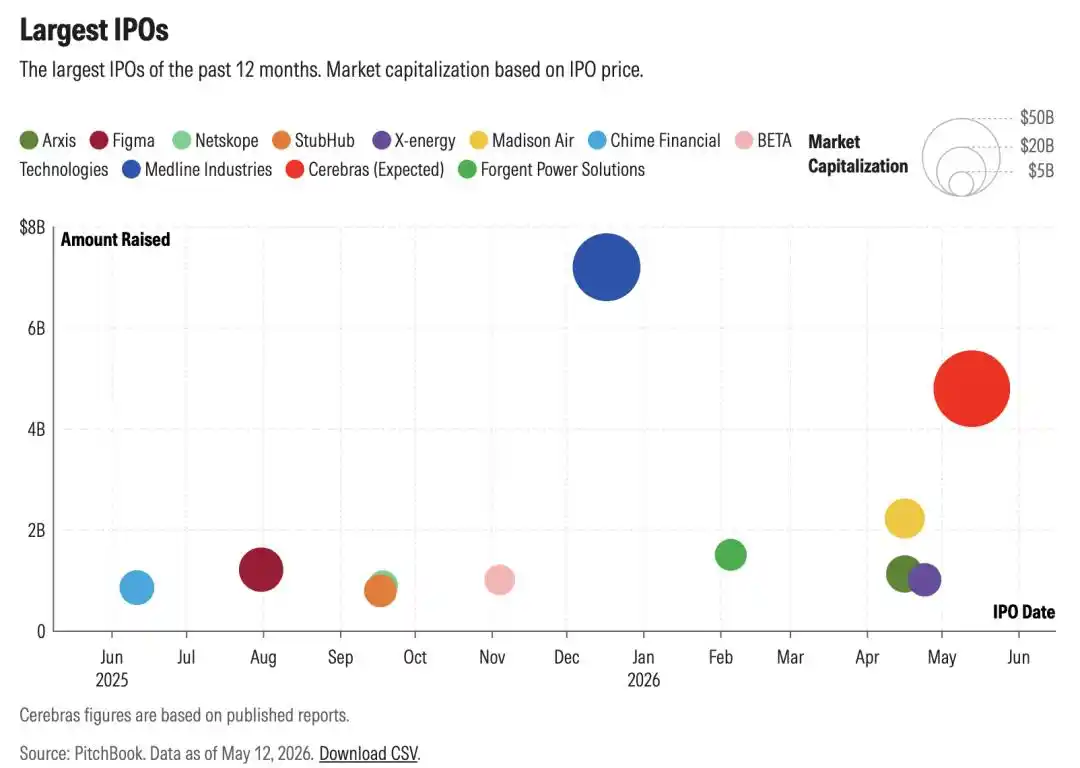
To squeeze into Sam Altman's 'Hall of Gods', Cerebras personally cut away 10% of its own 'flesh and blood'—stock warrants worth approximately $5 billion.

This is no longer a simple IPO. It is a tribute from underlying hardware to model sovereignty, paid in the twilight of an era.

And standing behind all this prosperity is the man known as the 'new lord of Silicon Valley'.

The Return of Brutalist Aesthetics

It Forged a 'Silicon-based Leviathan'

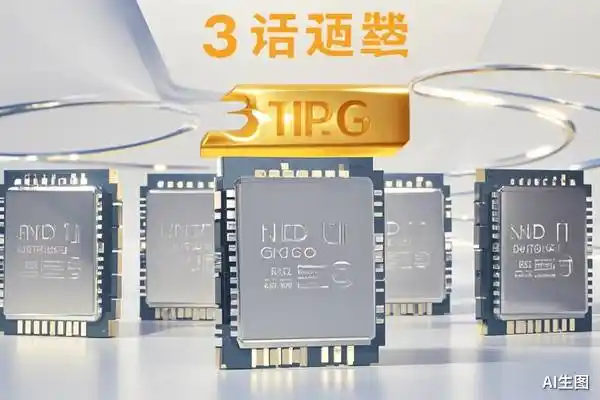
If Nvidia proudly calls its B200 chip an exquisite postage stamp, then Cerebras's flagship product, WSE-3, is a massive dinner plate.
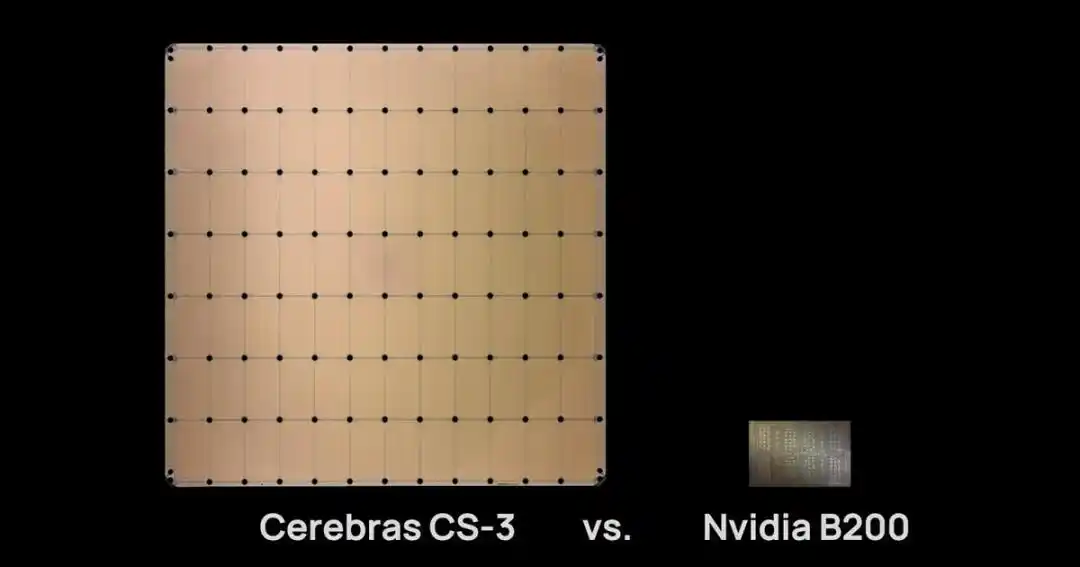
For the past three decades, the semiconductor industry's creed has been 'miniaturization'—dancing on a pinhead, stacking transistors at the nanoscale.

But Cerebras took a counterintuitive path: Since memory bandwidth is the Achilles' heel of AI inference, why not just make the entire wafer into a single chip.

This 'silicon-based leviathan' is nearly half a square foot in size, featuring over 4 trillion transistors (19 times that of Nvidia's B200), 900,000 AI-optimized cores, and 125 petaflops of AI compute—making its total computing power 28 times that of the B200.

Its design is fundamentally about 'trading space for time': etching cores directly onto a single 12-inch wafer, flattening the 'memory wall' where data shuttles between the chip and external storage.

This brutalist aesthetic shows terrifying dominance in the 'Age of Inference':

When running top-tier models from OpenAI, Cognition, Meta, etc., it can achieve a throughput speed of up to 3000 tokens per second, outpacing traditional GPUs by 70 times.
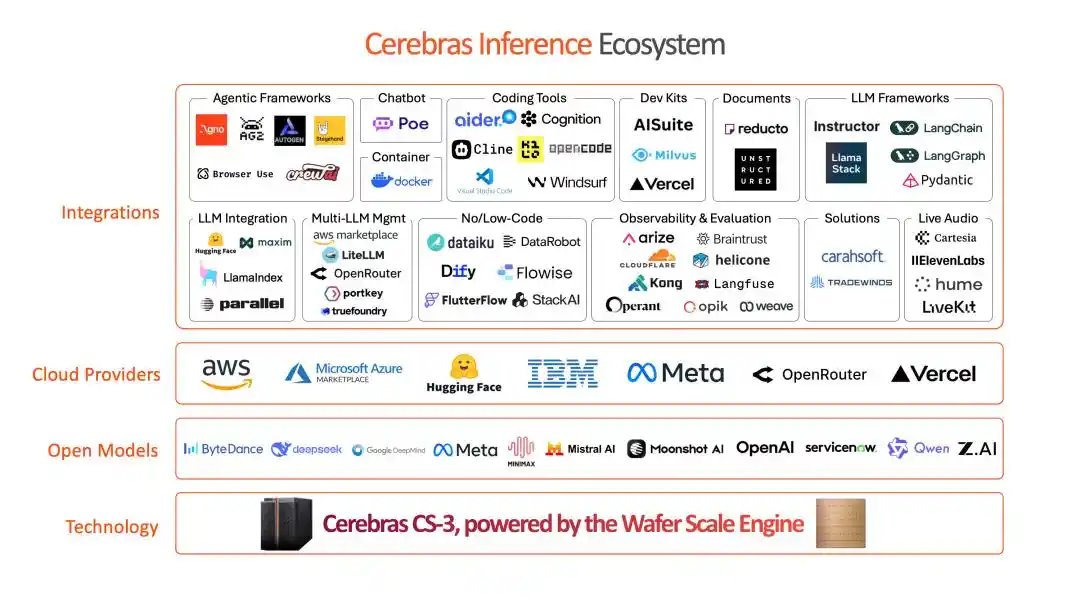
However, in 2026, the hardest technology, if it can't be converted into the fastest Tokens, is just expensive sand.

Eighteen months ago, Cerebras was a forlorn geek.

In 2025, its revenue was only $510 million, almost entirely from a single customer, the UAE's G42. It operated at a loss of $145.9 million, forcing the postponement of its IPO plans.
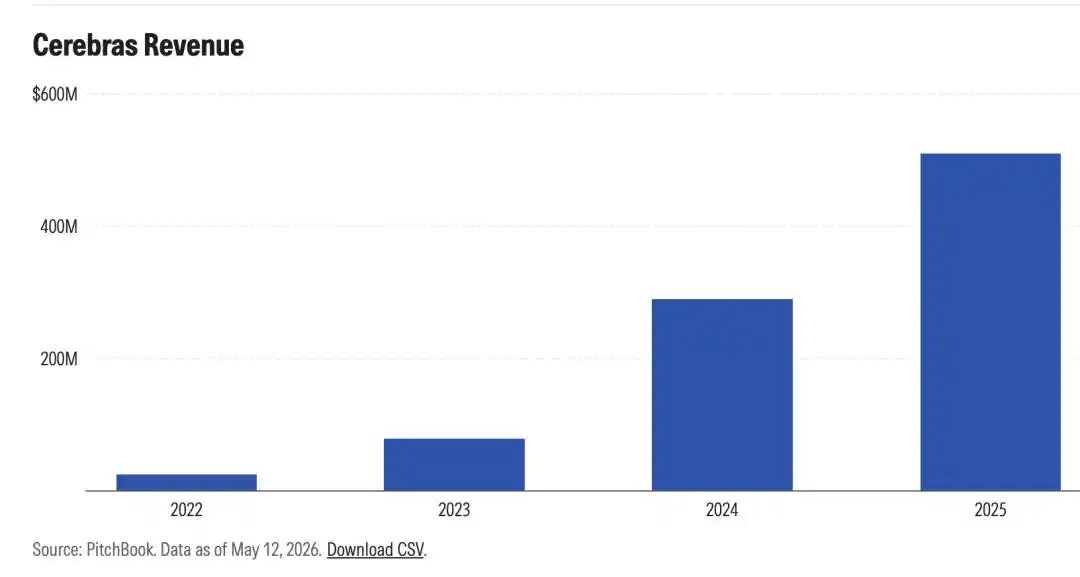
Despite possessing performance surpassing Nvidia's, its fate hung on the checkbook of a single client, like an orphan at constant risk of drowning.

Until it knocked on the door leading to Sam Altman's inner circle.

The $5 Billion 'Redemption Bond'

The Golden Ticket to the Future

In the world of AI, Moore's Law is giving way to the 'Law of the Circle'.

In exchange for survival and explosive growth, Cerebras signed an agreement that left outsiders dumbfounded: providing OpenAI with 750 megawatts of computing capacity over the next three years.

Calculated at current market prices (750 MW is roughly worth $9 billion annually), this deal could bring about $27 billion in revenue and $10 billion in gross profit.

For a company still in the red last year, this was a lifeline.

More tellingly, these 750 megawatts constitute just one-fortieth of the total computing power OpenAI believes it will need by 2030. This leftover order is enough to catapult Cerebras from a 'marginal player' to a market focal point.

But there is no free lunch, only expensive endorsements.

In exchange, Cerebras must gradually grant stock warrants to OpenAI. Upon exercise, OpenAI would hold 10% of Cerebras's shares—worth about $5 billion at the offering price midpoint of $155.

This means Cerebras generously offered up half the potential future profits from this mega-deal as a 'tribute' directly to OpenAI.

This is not an equal exchange. This is the AI era's 'computing power redemption bond'.

OpenAI is the 'lord' holding the power to allocate traffic and demand, while Cerebras is a heavily armored knight providing advanced tools of production—to enter the lord's domain, the knight must pay homage and share half his spoils.
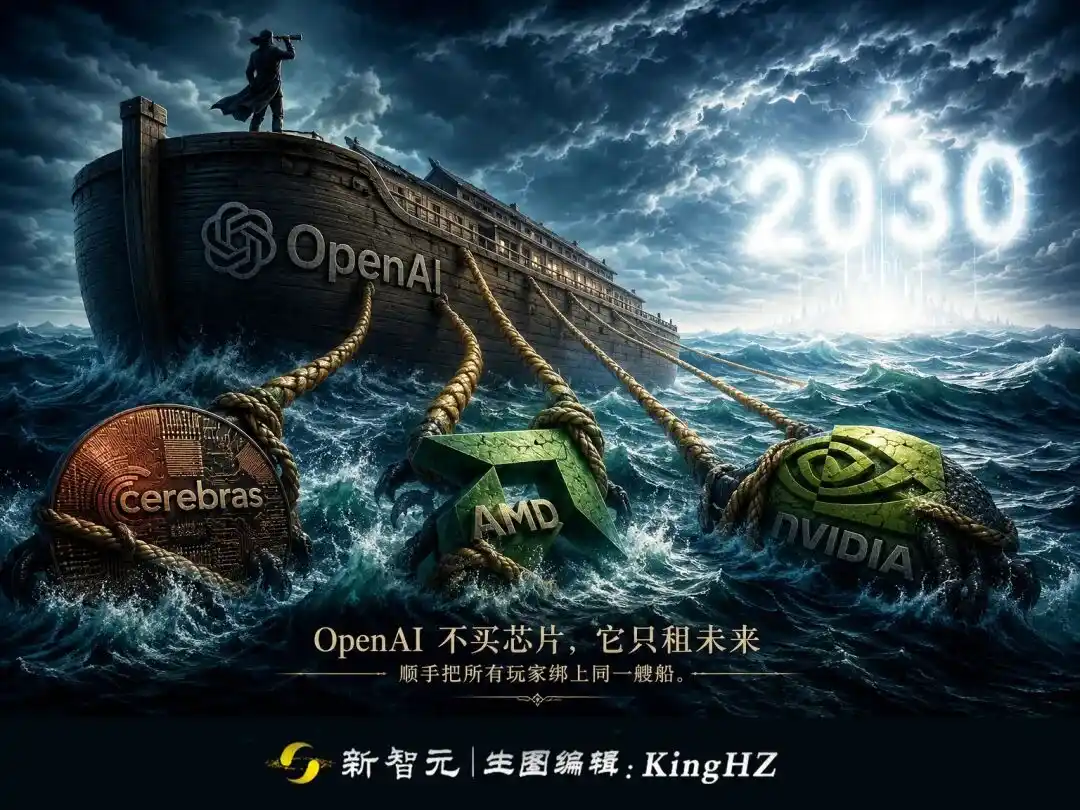
Once branded as OpenAI's core blood ally, Cerebras's price-to-sales (P/S) ratio instantly skyrocketed to 15 times, a level even Nvidia must respectfully acknowledge.

'Altmanomics'

He Is Cashing Out the Hardware Giants

Cerebras is not the only computing power enterprise bowing to Sam Altman.

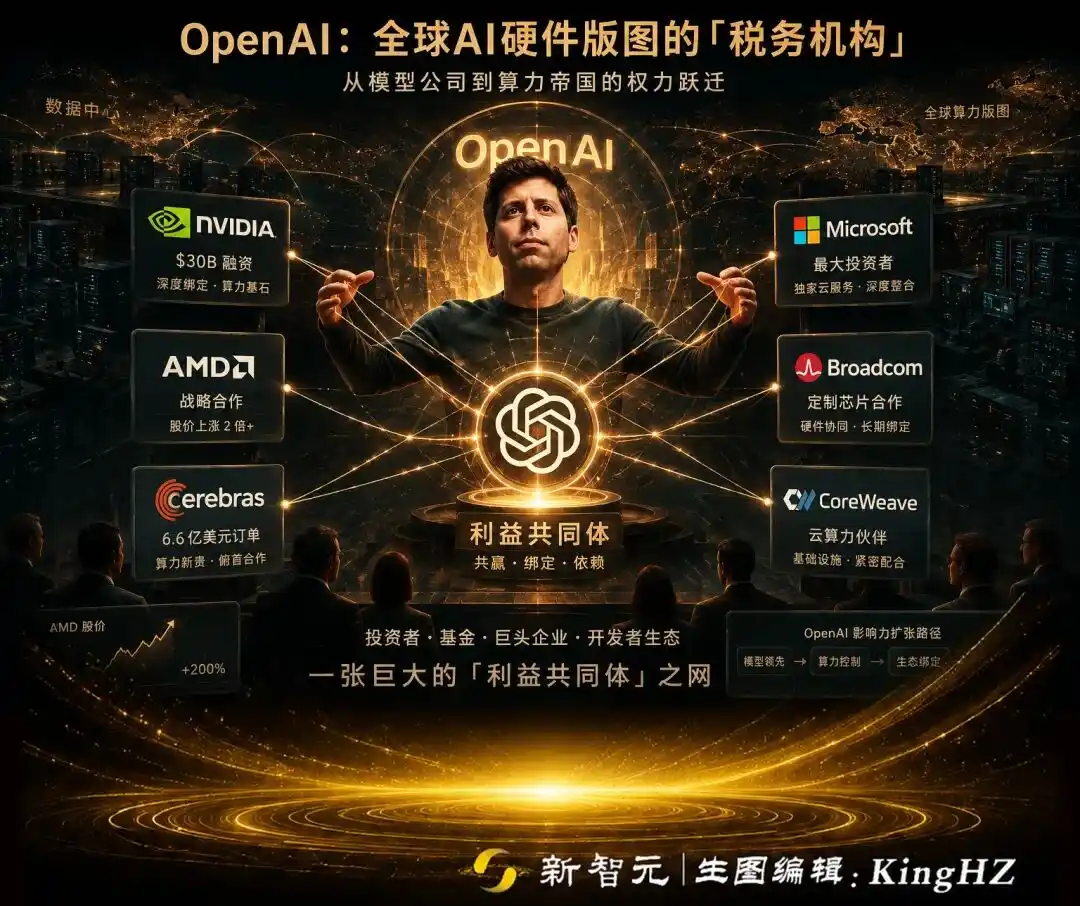
Last October, AMD's stock doubled after reaching a similar agreement with OpenAI; earlier, Nvidia was rumored to have deepened its ties with OpenAI through a $30 billion financing round.

A clear map of power is emerging: OpenAI is evolving from a software company into a global 'tax authority' over the AI hardware landscape.

Sam Altman's true ambition is not merely to acquire data centers for training and running its models, but to quietly expand the group of companies and investors who have a 'vested interest in OpenAI's success.'

He is weaving a vast web of an 'interest community'.
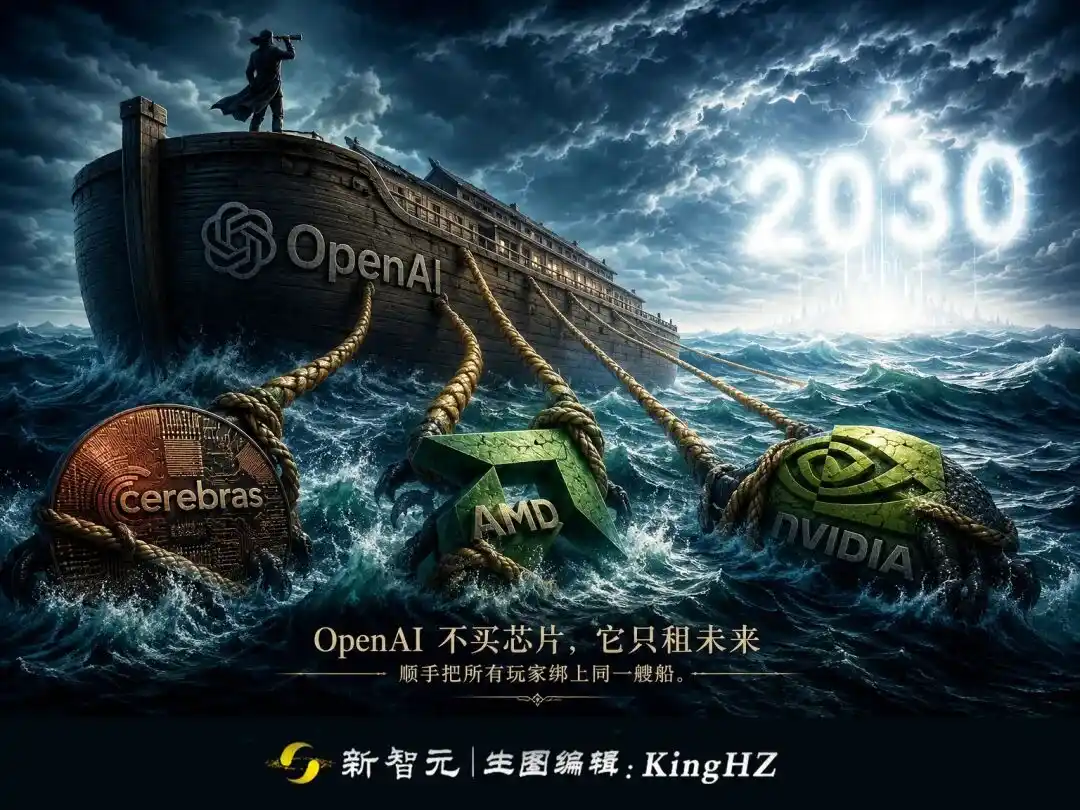
OpenAI doesn't buy chips; it only rents the future—and in the process, binds all players to the same ship.

For hardware vendors: Even with profits halved, obtaining the 'OpenAI certification' and a 15x P/S valuation is a worthwhile deal.

For Sam Altman: He not only secures the computational foundation for the next decade but also becomes a shareholder in all potential competitors.
This is the essence of 'Altmanomics': In the second half of the AI race, whoever defines the demand for models holds the 'power to tax' the underlying supply chain.

Can $48 Billion Buy a Seat at the Power Table?

This Thursday, Cerebras's IPO received 20 times oversubscription. The pricing range was raised to $150-$160 per share, implying a valuation of $48 billion, coinciding with semiconductor stocks rising 53% cumulatively from their March lows.
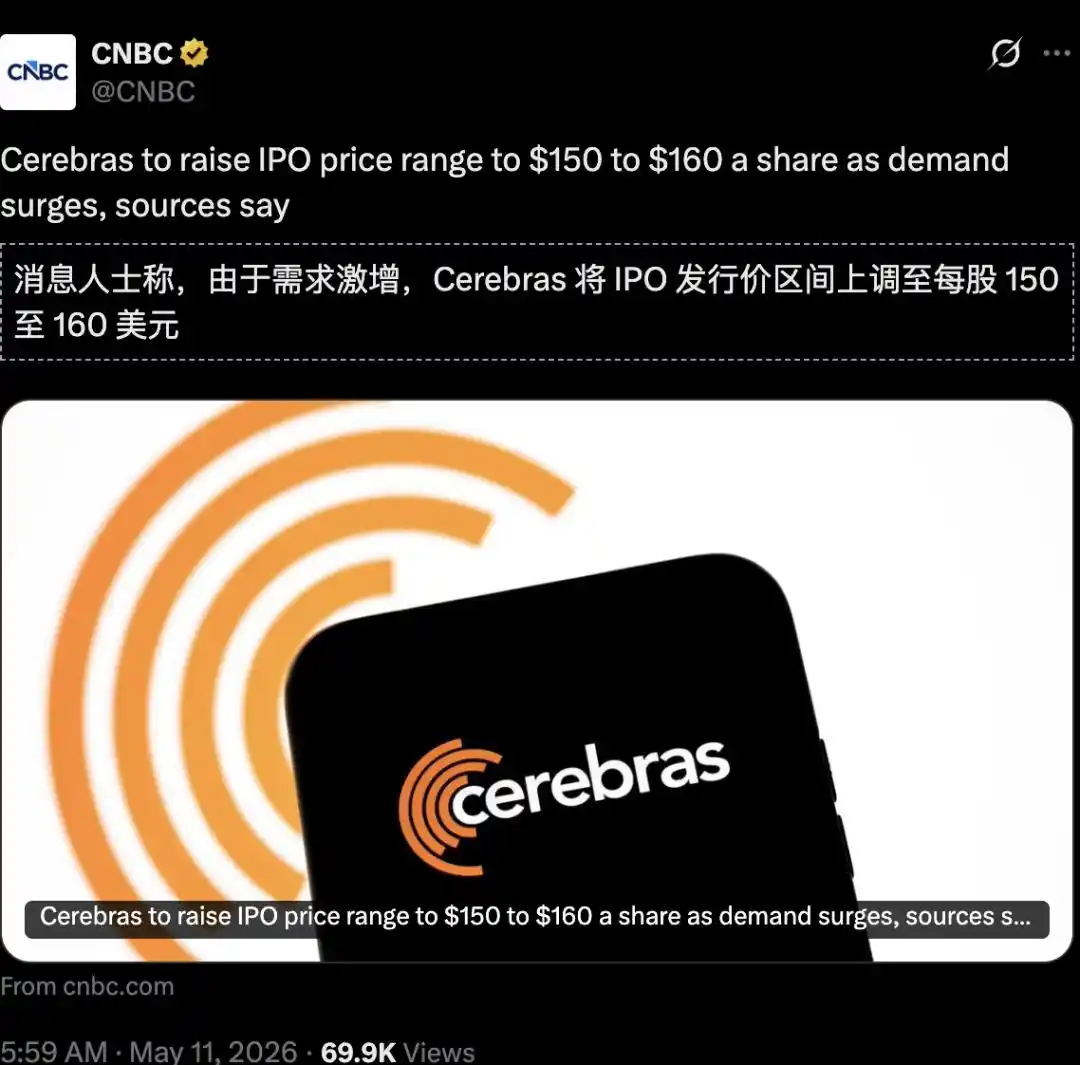
The capital market's frenzy is almost blind. They no longer care whether Cerebras lost $140 million last year or if its P/S ratio has already surpassed Nvidia's.

They are buying a kind of 'certainty'.

In the uncertain landscape of 2026, what identity tag is more certain than being a 'Core Partner of OpenAI'?

This is precisely the most intriguing aspect of this IPO. Cerebras's high valuation is essentially a market premium for the 'Altman endorsement'.

Conclusion: Sovereignty or Vassalage?

This 2026 listing marks the semiconductor industry's entry into a brutal era of stratification.

Future chip companies have only two paths:

Either, like Nvidia, rely on first-mover advantage to build their own ecological empire and become the rule-maker; or, like Cerebras, offer up half their soul in a high-stakes gamble for a ticket into the core circle.

If you cannot become a god, then become the most expensive offering.

This is not just a technological battle; it's a battle for sovereignty.

In every megawatt of electricity flows the 'tribute' from chipmakers to Silicon Valley's new overlord.

References:

https://x.com/FT/status/2054141078710768006

https://www.ft.com/content/3f77f8ad-16b8-4f97-ae55-0bd2e31122fa?syn-25a6b1a6=1

https://www.theinformation.com/newsletters/ai-agenda/startup-helping-openai-optimize-ai-cerebras-chips

https://www.morningstar.com/stocks/why-ai-chip-designer-cerebras-is-2026s-hottest-ipo-yet

This article is from the WeChat public account "Xin Zhi Yuan," author: Xin Zhi Yuan, editor: KingHZ

Трендовые криптовалюты

Связанные с этим вопросы

QWhat is the core technology and design philosophy behind Cerebras Systems' WSE-3 chip, and how does it differ from traditional chip designs?

ACerebras Systems' WSE-3 chip employs a radical design philosophy that contrasts with the traditional industry focus on miniaturization. Instead of shrinking components, it uses an entire 12-inch silicon wafer to create a single, massive chip. This 'brute-force' approach, described as 'trading space for time,' is aimed at eliminating the 'memory wall' bottleneck by providing immense on-chip memory bandwidth. It contains over 4 trillion transistors (19x more than NVIDIA's B200), 900,000 AI-optimized cores, and delivers 125 petaflops of AI computing power. Its key difference is its monolithic wafer-scale design versus the traditional multi-chiplet or discrete GPU designs, prioritizing high-speed data access for AI inference.

QWhat was the crucial strategic deal Cerebras made with OpenAI to enable its 2026 IPO, and what were the key terms?

AThe crucial deal was a multi-year agreement where Cerebras committed to supply 750 megawatts of computing capacity to OpenAI. In exchange for this massive, revenue-guaranteeing contract—valued at approximately $27 billion in revenue and $10 billion in gross profit over three years—Cerebras granted OpenAI warrants. Upon exercise, these warrants would give OpenAI a 10% equity stake in Cerebras, valued at around $5 billion based on the IPO's mid-range share price. This deal, framed as a 'ransom note' or 'tribute,' provided Cerebras with the financial credibility and market validation needed for a successful high-valuation IPO.

QHow does the article characterize the evolving power dynamic in the AI industry, particularly regarding OpenAI's role?

AThe article characterizes the power dynamic as a shift where OpenAI is evolving from a software company into a dominant 'tax authority' or 'feudal lord' over the global AI hardware landscape. By securing large, long-term compute capacity deals from hardware makers like Cerebras, AMD, and NVIDIA—often in exchange for equity or favorable terms—OpenAI is locking in its future compute foundation. More importantly, it is weaving a vast 'community of interest,' binding these suppliers to its success. This grants OpenAI 'taxation rights' over the hardware supply chain, as it defines model demand and controls access to the most lucrative market segments.

QWhat does the term 'Altmanomics' (Altman Economics) refer to in the context of this article?

AIn this article, 'Altmanomics' refers to the strategic and economic model pioneered by OpenAI's Sam Altman. Its essence is that in the later stages of the AI race, the entity that defines the demand for AI models gains the power to 'tax' the underlying hardware supply chain. Instead of merely purchasing chips, OpenAI 'rents the future' by making long-term capacity deals that often include equity stakes. This strategy allows OpenAI to secure its computational base at favorable rates while simultaneously making shareholders and partners out of potential hardware competitors, thereby consolidating its ecosystem power and ensuring alignment of interests.

QAccording to the article's conclusion, what two paths are available for semiconductor companies in the new AI era, as exemplified by NVIDIA and Cerebras?

AThe article concludes that semiconductor companies now face two distinct paths: 1) Become a rule-maker like NVIDIA, which uses first-mover advantage and ecosystem strength to establish its own empire and dictate distribution rules. 2) Become a vassal or 'high-value offering' like Cerebras, which trades a significant portion of its potential sovereignty and profits (through equity and deals) to a dominant AI platform (OpenAI) in exchange for a guaranteed, high-value ticket into the core industry circle. The choice is between maintaining sovereign control or becoming a strategically important, yet subordinate, partner to the new 'lords' of silicon.

Похожее

Треугольник невозможного — это вообще псевдопроблема

Автор Билли Гао утверждает, что основное ограничение для массового внедрения блокчейн-технологий не в классической «трилемме» (масштабируемость, децентрализация, безопасность), а в двух фундаментальных недостатках: отсутствии легитимности и конфиденциальности. Несмотря на создание мощнейшей криптографической системы, все транзакции и балансы по умолчанию прозрачны для всех, что аналогично постоянному налогу из-за MEV (максимально извлекаемой стоимости) и препятствует входу институционального капитала. Блокчейн — это медленный, дорогой, но беспристрастный компьютер общего пользования, идеально подходящий для учета активов, которыми и является сам этот учет (например, деньги). Однако его реальное использование ограничивается узкой прослойкой пользователей, тогда как крупные фонды и обычные люди не могут его применять из-за юридических рисков и полной публичности финансовой деятельности. Первый недостаток — легитимность — начинает решаться через регулирование (например, закон GENIUS). Второй и главный — «прозрачность как налог» — требует внедрения конфиденциальности по умолчанию с помощью современных криптографических инструментов, таких как доказательства с нулевым разглашением. Это позволит доказывать соответствие правилам (например, платежеспособность или KYC), не раскрывая самих данных. Таким образом, добавление проверяемой конфиденциальности к децентрализованному консенсусу — это чистое улучшение, которое откроет блокчейн для триллионов долларов институциональных и частных капиталов, для которых он изначально и был предназначен.

marsbit10 ч. назад

Треугольник невозможного — это вообще псевдопроблема

marsbit10 ч. назад

Трилемма невозможности — это искусственная проблема

**Резюме: "Невозможный треугольник" — это псевдопроблема** Криптоиндустрия построила мощнейшую криптографическую систему, но она не обеспечивает приватности финансовых операций по умолчанию. Все транзакции и балансы публичны. Основная причина, по которой триллионы долларов не переходят на блокчейн — не в масштабируемости (старая "трилемма" решена), а в двух других, более фундаментальных недостатках: **легитимности и конфиденциальности**. **Легитимность**: Безграничный доступ (permissionless) создаёт правовую неопределённость для крупного капитала. Однако с появлением регуляторных рамок (например, закона GENIUS) этот барьер начинает снижаться. **Конфиденциальность (Приватность)**: Прозрачность блокчейна — это не преимущество, а **налог**. Публичность каждой позиции и транзакции приводит к потерям от MEV, фронтраннинга и слежки, что неприемлемо для институциональных инвесторов, фондов и обычных пользователей. Парадокс в том, что система, построенная на криптографии, не шифрует основную деятельность пользователей — их финансы. Однако современные криптографические примитивы (например, доказательства с нулевым разглашением — zk-SNARKs) позволяют решить эту проблему, не жертвуя проверяемостью (аудитом) или соблюдением норм (compliance). Можно доказать платёжеспособность, пройденный KYC или соответствие лимитам, не раскрывая самих данных. **Вывод**: Добавление **доказуемой приватности с возможностью контролируемого раскрытия информации** — это чистое улучшение текущей модели. Оно закрывает главные барьеры для институционального капитала, превращая блокчейн из "публичной таблицы" в конфиденциальный и легитимный расчётный слой, для которого он, по сути, и был предназначен. Только тогда наступит переход к массовому использованию.

链捕手10 ч. назад

Трилемма невозможности — это искусственная проблема

链捕手10 ч. назад

Оптические чипы: коллективное расширение производства

Рост спроса на оптические чипы для ИИ-инфраструктуры стимулирует глобальную волну расширения производственных мощностей. В США Coherent получает государственное финансирование для расширения завода по производству 6-дюймовых InP-пластин, а также заключает стратегические сделки с NVIDIA. Nokia наращивает мощности по тестированию и упаковке фотонных чипов. В Японии JX Advanced Metals инвестирует в увеличение производства InP-подложек в 7–10 раз. Европейские компании, такие как Tower Semiconductor и ST, активно расширяют производство кремниевой фотоники, заключая долгосрочные соглашения. Китай демонстрирует агрессивный рост: Soarse расширяет производство чипов и модулей, Sanan Photonics наращивает выпуск InP-чипов, а Yunnan Germanium увеличивает мощности по производству пластин. Основной движущей силой является растущая потребность ИИ-центров обработки данных в пропускной способности, что требует большего количества оптических компонентов независимо от того, будут ли использоваться традиционные съемные модули или перспективные технологии, такие как CPO, NPO или гибридные архитектуры. Гонка за лидерство в эпоху фотоники набирает обороты, поскольку США, Япония, Европа и Китай стремятся укрепить свои позиции в цепочке поставок.

marsbit12 ч. назад

Оптические чипы: коллективное расширение производства

marsbit12 ч. назад

1996 или 1999? Первым испытанием Уолша стало «Как смотреть на ИИ»

Назначенный председателем ФРС Вош столкнулся с ключевой дилеммой: как оценить текущий бум искусственного интеллекта? Экономисты разделились на два лагеря. Одни считают, что рост производительности благодаря ИИ скоро подавит инфляцию, позволяя ФРС бездействовать. Другие предупреждают, что спрос опережает предложение, и промедление с повышением ставок приведёт к необходимости более резких мер в будущем. Вош, судя по заявлениям, склоняется к подходу 1996 года, когда Алан Гринспен не стал повышать ставки во время бума производительности, что оказалось верным решением. Однако нынешняя ситуация отличается: растущие тарифы, большой дефицит бюджета и снижение выгод глобализации создают дополнительное инфляционное давление. Критики, такие как глава Чикагского ФРС Гулсби, утверждают, что ожидаемый всеми рост производительности от ИИ уже сейчас вызывает перегрев экономики, так как люди и компании увеличивают расходы в ожидании будущих выгод. Это требует более жёсткой денежно-кредитной политики. Оппоненты отмечают, что многие домохозяйства не могут брать кредиты под будущий рост доходов, что ослабляет этот эффект. Вош также сталкивается с парадоксом: он хочет отказаться от практики «прогнозирующего руководства» (forward guidance), установленной как раз в 1999 году для предупреждения рынков о ужесточении политики. Если экономика пойдёт по сценарию 1999 года, ему придётся либо использовать эту практику, либо рисковать вызвать рыночные потрясения молчанием. Таким образом, первый серьёзный вызов для Воша — определить, повторяет ли экономика оптимистичный сценарий 1996 года или ведёт к необходимости жёстких мер по образцу 1999 года. От этого выбора зависит не только ближайшая политика ФРС, но и его историческая репутация.

marsbit14 ч. назад

1996 или 1999? Первым испытанием Уолша стало «Как смотреть на ИИ»

marsbit14 ч. назад

Отчет по Ethereum за первый квартал 2026 года: снижение комиссий, рекордное количество пользователей и транзакций

В первом квартале 2026 года сеть Ethereum продемонстрировала парадоксальную динамику: количество активных пользователей, транзакций и пропускная способность достигли исторических максимумов, в то время как комиссии за транзакции, общая заблокированная стоимость (TVL), объем торгов и рыночная капитализация ETH снизились. Этот феномен объясняется стратегическим переходом к этапу «низких комиссий для роста масштаба» после обновления Fusaka, которое удешевило блок-пространство. Парадокс Джевонса проявляется в том, что снижение стоимости использования высвобождает новый спрос. Ключевой тренд — смещение нарратива от DeFi-платформы к глобальному расчетному слою для институциональных финансов. Ethereum сохраняет доминирующую позицию в сегментах стейблкоинов (61,8% среди топ-5 сетей), токенизированных фондов (73%) и товаров (84%), привлекающих таких гигантов, как BlackRock и JPMorgan. Инвестиции в масштабирование и снижение комиссий нацелены на укрепление сетевых эффектов и долгосрочную ценность ETH как базового актива для расчетов в цифровой экономике.

marsbit16 ч. назад

Отчет по Ethereum за первый квартал 2026 года: снижение комиссий, рекордное количество пользователей и транзакций

marsbit16 ч. назад

Торговля

Спот
Фьючерсы

Популярные статьи

Как купить GODS

Добро пожаловать на HTX.com! Мы сделали приобретение Gods Unchained (GODS) простым и удобным. Следуйте нашему пошаговому руководству и отправляйтесь в свое крипто-путешествие.Шаг 1: Создайте аккаунт на HTXИспользуйте свой адрес электронной почты или номер телефона, чтобы зарегистрироваться и бесплатно создать аккаунт на HTX. Пройдите удобную регистрацию и откройте для себя весь функционал.Создать аккаунтШаг 2: Перейдите в Купить криптовалюту и выберите свой способ оплатыКредитная/Дебетовая Карта: Используйте свою карту Visa или Mastercard для мгновенной покупки Gods Unchained (GODS).Баланс: Используйте средства с баланса вашего аккаунта HTX для простой торговли.Третьи Лица: Мы добавили популярные способы оплаты, такие как Google Pay и Apple Pay, для повышения удобства.P2P: Торгуйте напрямую с другими пользователями на HTX.Внебиржевая Торговля (OTC): Мы предлагаем индивидуальные услуги и конкурентоспособные обменные курсы для трейдеров.Шаг 3: Хранение Gods Unchained (GODS)После приобретения вами Gods Unchained (GODS) храните их в своем аккаунте на HTX. В качестве альтернативы вы можете отправить их куда-либо с помощью перевода в блокчейне или использовать для торговли с другими криптовалютами.Шаг 4: Торговля Gods Unchained (GODS)С легкостью торгуйте Gods Unchained (GODS) на спотовом рынке HTX. Просто зайдите в свой аккаунт, выберите торговую пару, совершайте сделки и следите за ними в режиме реального времени. Мы предлагаем удобный интерфейс как для начинающих, так и для опытных трейдеров.

305 просмотров всегоОпубликовано 2024.05.09Обновлено 2026.06.02

Как купить GODS

Обсуждения

Добро пожаловать в Сообщество HTX. Здесь вы сможете быть в курсе последних новостей о развитии платформы и получить доступ к профессиональной аналитической информации о рынке. Мнения пользователей о цене на GODS (GODS) представлены ниже.

活动图片