Author: Alex Xu
BTC has been my largest total asset position for most of the past few years (though it is not currently).
During this BTC bull market cycle:
-
At $70,000, I unwound the small leverage added during the deep bear market (around 1.1-1.2x, achieved through BTC collateralized loans);
-
At $100,000-120,000, I reduced my BTC position from full allocation to around 30%.
There were also some minor operations during this period, such as adding a small position when BTC corrected to $50,000+ in '24, and adding a small position when BTC dipped to $60,000 in February this year. These operations were based on a long-term bullish view on BTC.
According to the usual cyclical logic, now is a good time to accumulate more BTC and wait for the next bull market cycle. However, during the recent BTC rebound, I further reduced my already low 30% BTC position at the $78,000-79,000 level.
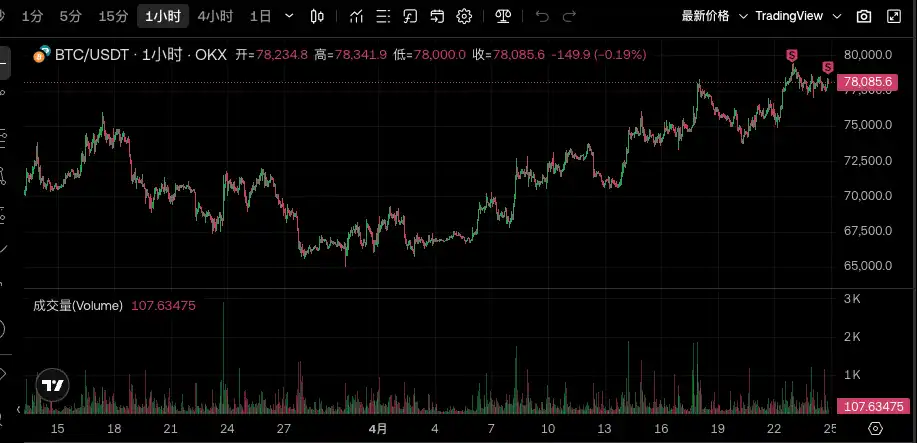
One must continuously track the assets one holds, conduct regular fundamental check-ups. The reduction in BTC was also an action taken after continuous check-ups and deliberation. The conclusion is that I will lower my expectations for the peak market capitalization of BTC in the next bull market.
Reasons summarized:
First, the potential energy driving BTC's continued significant rise in the next cycle is not as ample as in previous cycles.
In previous cycles, BTC had the expectation of exponential expansion of its investor base, from a niche financial experiment for geeks to a配置 asset for the masses and even institutions. This narrative has been gradually realized in the past.
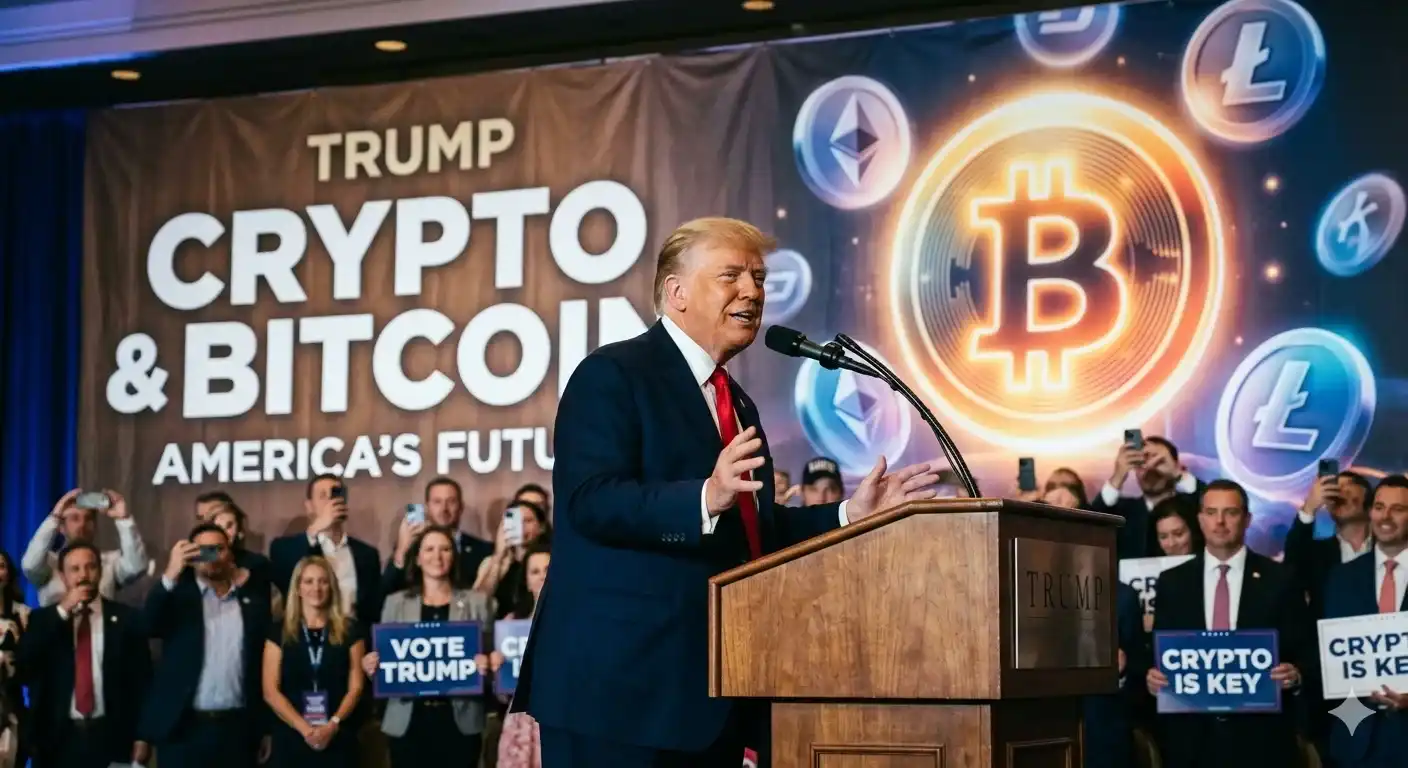
Like in the 23-25 cycle, it entered the holdings of mainstream financial institutions through the listing of ETF compliant products and was warmly embraced by Trafi financial institutions represented by BlackRock + vocal support from the president of the world's largest country. If we want to elevate the narrative another level, it would need to enter the balance sheets of leading sovereign countries in the next cycle, for example:
-
More sovereign funds (currently mainly Abu Dhabi)
<极li>
Central bank reserves
单纯政府的财政储备(比如美国的各州财政)可能是不够的,这部分能够提供的购买力比较小,远比不上传统金融机构。 (Simply government fiscal reserves (e.g., U.S. state finances) might not be enough; the purchasing power this part can provide is relatively small, far less than traditional financial institutions.)
But in my opinion, achieving this leap in the next 2-3 years is still quite difficult. Originally, in this bull market, there was an expectation that Bitcoin would enter the U.S. Federal Reserve, but this hope was largely disproven last year.
Currently, even the number of U.S. states that have passed Bitcoin reserve bills is very small. At the peak in early '25, there were over 20 U.S. states推进 Bitcoin reserve bills, but now only a single-digit number have最终 passed, and some bills are "half-baked" reserve bills where the purchase budget requires separate提案 approval.
Currently, central banks of mainstream countries still show no significant interest in BTC. Its short consensus history, high volatility, and the existence of gold as a competitor all make it very difficult for BTC to enter central bank balance sheets.
Second, the increase in my personal opportunity cost.
In the past six months or so, I have gradually discovered many good companies whose current prices are quite attractive. These will be the main direction of the portfolio adjustment (another part is increasing some cash reserves).
Third, the negative impact of the overall萧条 (depression/slump) in the crypto industry on Bitcoin demand and consensus.
Currently, it seems that there are very few viable business models in the crypto industry. Most Web3 models (socialfi, gamefi, depin, distributed storage/computing power...) are gradually being disproven over time. In reality, the only one that can generate positive cash flow and create profits is DeFi. But DeFi's overall development in the latter half of this cycle has also been relatively mediocre, mainly due to the萎缩 (shrinkage/atrophy) of native high-quality assets in the industry, leading to a萎缩 in DeFi business (still mainly lending and Dex trading).
The萎缩 of the entire crypto industry's basic盘 (fundamentals/base), the decrease in practitioners and investors, will also cause the growth of BTC's basic holder base to slow down or even lead to流失 (loss/outflow).
Hypeliquid, as an on-chain exchange, is an outlier growing against the trend. But its success largely comes from瓜分 (carving up/sharing) the存量 (existing) cake of Cex + incorporating asset classes outside of crypto (commodities, U.S. stocks, pre-IPO assets) for全天候 (24/7) trading in the latter stage, providing little value transfer to BTC. Hypeliquid, which relies on regulatory arbitrage and stands out alone, is难以对冲 (difficult to hedge against) the industry-wide trend of萎缩 (predictive markets have a similar impact).
Fourth, the financing cost of BTC's largest buyer, [Strategy assumed, likely MicroStrategy denoted by STRAT? But text says Strategy and STRC, so keeping original terms], is still rising.
Its main financing method currently is through issuing perpetual preferred shares (STRC), with the financing rate already rising to 11.5%, and it's about to change from monthly interest payments to bi-weekly payments, otherwise it can't stabilize the market price of STRC. This gives me a rather bad feeling, although Strategy's current financial situation is still very far from所谓的暴雷 (so-called blowing up/ default).
Additionally, we can see: in this cycle, the once very active BTC DAT concept stocks have basically all died out except for Strategy, leaving it孤零零一个 (all alone). Strategy doesn't need to actually blow up to put pressure on the BTC price; as the largest listed holder and net buyer of BTC, a decrease in its buying speed and a drying up of its financing ability will cause significant marginal selling pressure.
Fifth, Bitcoin's main competitor in the non-sovereign asset领域 (field) (value proposition: resistance to fiat inflation) — gold — has closed the product gap with Bitcoin.
We previously said that "digital gold" Bitcoin is superior to gold because it has better divisibility, portability, and verifiability + decentralization.
But this cycle saw the emergence of the "tokenized gold" product, which has no difference from Bitcoin in terms of verifiability, portability, and divisibility, and its scale is growing rapidly.
(Reference: rwa.xyz's statistics on the scale of tokenized commodity assets, most of which are tokenized gold)
Of course, many people will say that tokenized gold relies on centralized credit, but in my opinion, whether it relies on centralized credit is not actually a necessary condition in the crypto industry, because one of the core infrastructures of the entire crypto industry — stablecoins —大部分都是基于完全的中心化信用的 (mostly based on completely centralized credit).
Sixth, with each halving, Bitcoin's security budget insufficiency problem becomes increasingly severe.
(Exploration of new fee sources like inscriptions, BTC L2, etc., has basically failed). This is rather commonplace, but it remains an issue.反而量子计算我认为不是太大的威胁 (On the contrary, quantum computing I don't think is a major threat), the community already has solutions.
Summary and Q&A
Of course, after reducing the position, I am still optimistic about BTC, otherwise I would have sold out. It remains one of my larger holding assets, and I hope it will still rise.
Other questions might include:
-
Why reduce now?
Because it has rebounded quite a bit recently, so reducing some.
-
What if it rises after reducing?
If the reasons for not being看好 (optimistic) mentioned above become松动 (loosened)/invalidated with changes in the external and internal environment, or if more previously unforeseen positive factors appear, and the price at that time is not expensive, I will buy back.
If the price at that time is already too high to buy back appropriately, then it means my cognition does not配不上 (match/deserve) this asset, and I will accept the outcome.
一家之言,仅供参考。 (Just my personal opinion, for reference only.)