Brazilian Voting Authority Might Include Blockchain Tech in Future Elections

newsbtcОпубликовано 2022-08-09Обновлено 2022-08-09

Введение

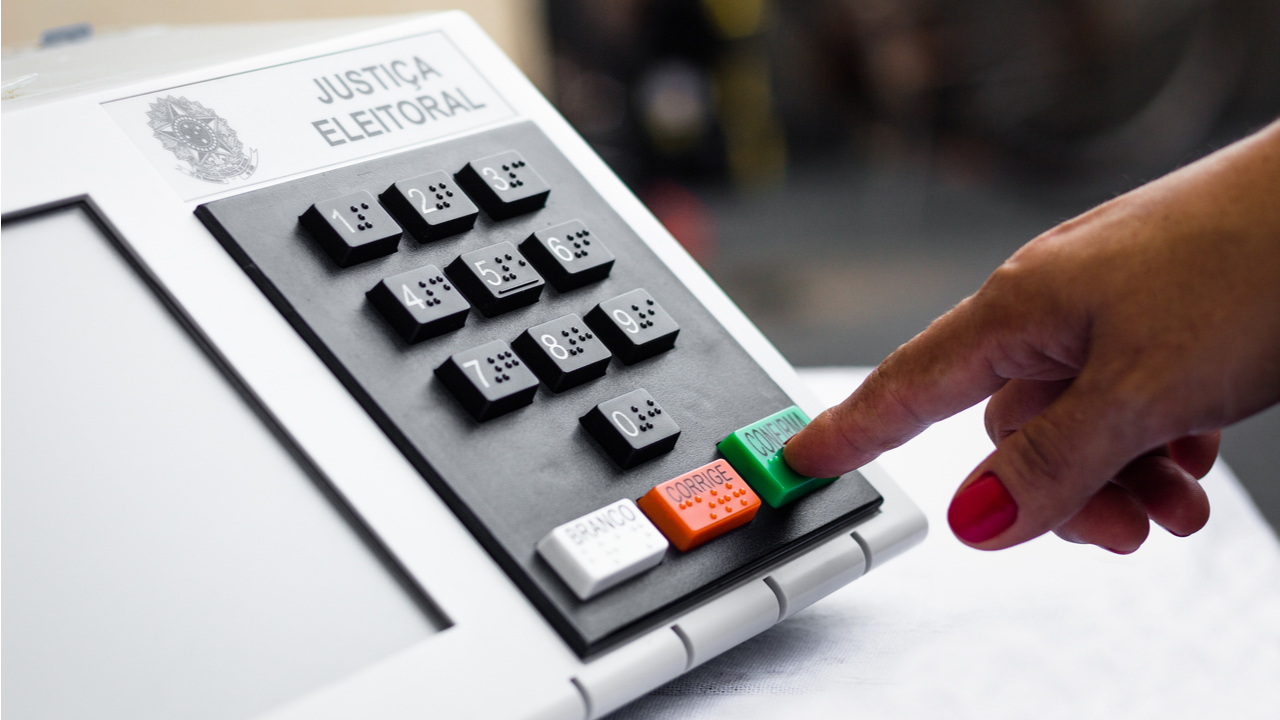
The Brazilian voting authority (TSE), has publicly declared it is studying blockchain as a technology that might help the organization in its task of organizing ballots. Celio Castro Wermerlinger, coordinator of modernization of the institution, stated that this decentralized ledger tech was included in a research program called “Elections of the Future.”

Brazilian

The Brazilian voting authority (TSE), has publicly declared it is studying blockchain as a technology that might help the organization in its task of organizing ballots. Celio Castro Wermerlinger, coordinator of modernization of the institution, stated that this decentralized ledger tech was included in a research program called “Elections of the Future.”

Brazilian TSE Is Researching Blockchain Tech

Blockchain tech is being included in several solutions designed for various applications, including ballot and voting technologies. The Brazilian voting authority announced last month that they were researching blockchain tech and the different ways it might be included in ballots.

Celio Castro Wermerlinger, who is the coordinator of modernization at the Brazilian voting authority, stated that end-to-end voting protocol, post-quantum cryptography, shared keys, and blockchain were part of the technologies being studied. This investigation is part of a program called “Elections of the Future,” that seeks more efficient and more economically viable solutions to be implemented in the electronic voting system.

However, Wermerlinger did not offer a timeline for the application of these solutions and argued that the Brazilian voting system, which is now 100% national, was safe due to the electronic solutions that are implemented in every ballot.

Blockchain and Voting

While voting is listed as one of the possible applications of blockchain systems due to the trust and security it might bring, it has not been widely adopted apart from several pilot tests conducted in the U.S., and events in other countries.

Voatz, a blockchain-based voting company, is one of the pioneers in this field, having helped residents of West Virginia outside of the state to vote using their mobile phones during the 2018 ballot. However, this pilot was criticized due to the security issues it might bring to the results of the election. Authorities in the state suspended its use citing security concerns in 2020.

Even after that, the platform was used to organize a mock election in Chandler, Arizona with the intention of testing the platform and the reaction of the citizens while using this kind of app on a ballot. The pilot was recently deemed positive by the city clerk.

Voatz has also been involved in elections in other countries, including Venezuela. The application was used to organize an unofficial referendum against Nicolas Maduro, president of the country, with millions using it in 2020.




Похожее

Bitcoin Trading Strategy Breakdown: Celebrity Predictions and Classic Models All Fail, Only These Four Indicators Remain

Analysis of Bitcoin Trading Strategies: Why Celebrity Forecasts and Classic Models Fail, Leaving Only These Four Reliable Indicators This analysis examines the failure of common Bitcoin prediction methods and identifies four reliable indicators for constructing a trading strategy. The author reviewed all major BTC prediction approaches from 2017-2025, categorizing them into three groups: celebrity price targets (consistently over-optimistic), analytical models like Stock-to-Flow (broken post-2022), and on-chain signals. The key finding is that more data often creates confusion, not clarity. The strategy discards unreliable elements: celebrity predictions (incentivized to be extreme), pure models (invalidated by post-ETF market changes), and the Fear & Greed Index used alone (too many false signals). Four reliable indicators were selected: 1. **MVRV Z-Score:** Accurately identifies cycle bottoms when entering its green zone (e.g., 2018, 2020, 2022). Note: Its ability to call tops is now ineffective post-2024. 2. **SOPR (28-day MA):** Consistently signals bottoms when below 1.0, indicating holders are selling at a loss. 3. **ETF Net Flow:** A crucial post-2024 metric showing institutional momentum (e.g., sustained inflows = buying). 4. **Macro Liquidity (Fed policy & M2):** Sets the overall directional bias (e.g., bullish during easing cycles). The core strategy involves waiting for a multi-signal共振 (resonance). For example, a bottom signal requires MVRV in the green zone + SOPR < 1.0. A top signal requires overheated on-chain data + sustained ETF outflows. Macro policy sets the overall direction. The Fear & Greed Index is only used as a weighted confirmatory signal, never alone. Action is only taken when three or more indicators align. The author automated this into a monitoring system that sends Telegram alerts only when signals trigger. As of the article's date (April 15, 2026), the system showed a strong bottom signal: extreme fear (F&G=12), MVRV in the buy zone, and SOPR < 1.0. The only contrary signal was weak ETF flows. Historically, such triple on-chain共振 has preceded 100%+ returns. The conclusion emphasizes building a personal framework over relying on external predictions, allowing for iterative improvement and customization based on individual risk tolerance.

marsbit1 ч. назад

Bitcoin Trading Strategy Breakdown: Celebrity Predictions and Classic Models All Fail, Only These Four Indicators Remain

marsbit1 ч. назад

Торговля

Спот
Фьючерсы
活动图片