Minnesota Pushes Crypto ATM Ban In Crackdown On Digital Asset Fraud

bitcoinistОпубликовано 2026-02-28Обновлено 2026-02-28

Введение

Minnesota lawmakers are considering a bill, HF 3642, to ban cryptocurrency ATMs statewide due to their prevalent use in financial scams. Law enforcement officials testified that these kiosks are an effective tool for criminals to quickly steal and move funds overseas, often targeting elderly and vulnerable residents. While the state's Department of Commerce supports the ban, crypto kiosk operator CoinFlip argues the machines are a vital bridge between cash and digital assets for consumers and advocates for clear, consistent rules instead of an outright prohibition.

Minnesota lawmakers are weighing a proposal that would prohibit Bitcoin (BTC) and other cryptocurrency kiosks across the state, as concerns mount over the role the machines play in financial scams.

According to a CBS report, members of the Minnesota House Commerce Finance and Policy Committee took up the issue Thursday after DFL Rep. Erin Koegel, the committee’s co-chair, introduced House File 3642. The legislation would ban crypto kiosks commonly referred to as Bitcoin ATMs.

Crypto ATMs As ‘Effective Tools’ For Scammers

The proposal was formally presented and debated with input from lawmakers and law enforcement officials. Representatives from both sides of the aisle indicated they share concerns about the growing number of scams linked to the machines and expressed interest in curbing their use.

Koegel said authorities have repeatedly warned that the kiosks are being exploited to target vulnerable residents. “We have heard from our law enforcement officials that they are a prime target who are looking to take advantage of our loved ones,” she said.

Local investigators echoed those concerns. Detective Lynn Lawrence of the Woodbury Public Safety Department told lawmakers that scammers routinely rely on crypto kiosks to move stolen funds. “These machines remain one of the most effective tools that scammers are continuing to use to steal money,” Lawrence said.

Sgt. Jake Lanz of the St. Cloud Police Department described a recent case in which an elderly woman was manipulated into handing over $80,000 through such a machine. He noted that older residents are frequently targeted.

“It’s definitely a target of our aging population,” Lanz said, adding that these investigations are especially challenging because once funds are deposited into a crypto ATM, they are often transferred rapidly and routed overseas, making recovery difficult.

CoinFlip Urges Balanced Rules

The Minnesota Department of Commerce has also voiced support for the measure. Sam Smith, speaking on behalf of the department, said officials back HF 3642 and plan to introduce a broader consumer protection package in the coming days that would include the proposed ban.

“The department strongly supports HF 3642. In the coming days, the department will also present a broader protection proposal that includes this ban,” Smith said.

Not everyone in the industry agrees with eliminating the machines. In a statement provided to WCCO, a spokesperson for CoinFlip defended the role of crypto kiosks in the financial system.

The company argued that, much like traditional banks operate physical branches and ATMs, cryptocurrency also requires a physical access point to serve consumers who want to participate in the digital economy.

The spokesperson described kiosks as a practical bridge between physical cash and digital assets, using a familiar interface that allows hundreds of thousands of people worldwide to engage with cryptocurrencies.

CoinFlip said it takes consumer protection seriously and maintains high standards for compliance and transparency. The company pointed to its public support of Minnesota’s existing regulatory framework and said it favors clear rules and disclosures applied consistently across the industry.

The spokesperson added that CoinFlip is prepared to work with state lawmakers and other stakeholders to strengthen protections against bad actors while preserving residents’ ability to purchase cryptocurrency in the manner they prefer.

The daily chart shows the total crypto market cap at $2.24 trillion. Source: TOTAL on TradingView.com

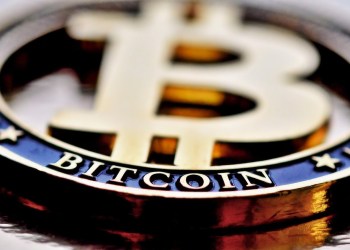
Featured image from OpenArt, chart from TradingView.com

Связанные с этим вопросы

QWhat is the main purpose of the proposed legislation, House File 3642, in Minnesota?

AThe main purpose of House File 3642 is to prohibit Bitcoin and other cryptocurrency kiosks, commonly referred to as Bitcoin ATMs, across the state of Minnesota.

QAccording to law enforcement officials, why are cryptocurrency kiosks considered a problem?

ALaw enforcement officials state that cryptocurrency kiosks are a prime tool for scammers to steal money from vulnerable residents, particularly the elderly, and that stolen funds moved through these machines are often quickly transferred overseas, making recovery difficult.

QWhich company defended the use of crypto kiosks and what was their argument?

ACoinFlip defended the use of crypto kiosks, arguing that they serve as a practical bridge between physical cash and digital assets, providing a necessary physical access point for consumers to participate in the digital economy, much like traditional bank branches and ATMs.

QWhat stance did the Minnesota Department of Commerce take on the proposed ban?

AThe Minnesota Department of Commerce strongly supports the proposed ban (HF 3642) and plans to introduce a broader consumer protection package that will include this ban.

QWhat was the specific example of fraud cited by Sgt. Jake Lanz from the St. Cloud Police Department?

ASgt. Jake Lanz described a recent case in which an elderly woman was manipulated into handing over $80,000 through a cryptocurrency kiosk.

Похожее

From 5 Cents per kWh Chinese Electricity to $45 API Export Packages: Token is Becoming the New Currency Unit

The article explores the concept of "Token出海" (Token Outbound), arguing that tokens are evolving from a technical term into a new monetary unit in the machine-driven economy. It begins by drawing a parallel between historical control over information flow (like transatlantic cables) and today's control over AI API calls and value transfer. Tokens now serve a dual role: as a unit of computation in AI and a means of payment in crypto. A key driver is the rise of AI Agents, like OpenClaw, which shift tokens from being a simple "conversation cost" to a "production fuel" for executing complex tasks. This massive consumption creates a competitive advantage for Chinese AI models, which are often priced lower. The article posits that this isn't just about cheap models, but about China leveraging its vast domestic electricity and computing power to export value globally via token-denominated AI services. The convergence of AI and crypto is facilitated by protocols like x402, which enables machines to natively pay for API calls, and ERC-8183, which allows them to enter into complex escrow-based contracts. This creates a machine-native economic layer where tokens act as the fundamental unit of permission, settlement, and value measurement. The conclusion is that while traditional fiat won't disappear, tokens are becoming the foundational monetary unit for the new agentic economy. The future "power to mint currency" may belong to those who can most efficiently compress real-world resources (like electricity and compute) into tradable tokenized services.

Odaily星球日报4 мин. назад

From 5 Cents per kWh Chinese Electricity to $45 API Export Packages: Token is Becoming the New Currency Unit

Odaily星球日报4 мин. назад

a16z: AI Makes Everyone 10x More Efficient, But No Company Becomes 10x More Valuable

a16z investor George Sivulka argues that while AI has dramatically increased individual productivity by 10x, it hasn’t translated into a 10x increase in company value. The core issue is not the technology itself, but the failure to redesign organizations around it—much like factories in the 1890s initially replaced steam engines with electric motors but didn’t see real gains until they fully redesigned assembly lines decades later. Sivulka distinguishes between “Personal AI” (e.g., ChatGPT) and “Organizational AI,” outlining seven key dimensions where they differ: 1. **Coordination:** Personal AI creates chaos; Organizational AI coordinates teams and agents toward unified goals. 2. **Signal:** Personal AI generates noise and low-quality output; Organizational AI filters noise to find valuable signals. 3. **Bias:** Personal AI reinforces user bias; Organizational AI introduces objectivity and challenges assumptions. 4. **Edge Advantage:** Personal AI optimizes for general usage; Organizational AI leverages domain-specific expertise for competitive advantage. 5. **Outcome:** Personal AI saves time; Organizational AI drives revenue growth. 6. **Enablement:** Personal AI gives a tool; Organizational AI embeds processes and enables organizational change. 7. **Promptless:** Personal AI requires human prompts; Organizational AI acts autonomously without human intervention. True value, Sivulka concludes, will come from rebuilding organizations and processes around AI—not just adopting the technology. The future belongs to companies that build “Organizational AI” systems that integrate deeply with institutional workflows.

marsbit5 мин. назад

a16z: AI Makes Everyone 10x More Efficient, But No Company Becomes 10x More Valuable

marsbit5 мин. назад

How Much Money Has Kalshi Actually Made? Deconstructing the Prediction Market Business Behind 200 Million Trades

In this analysis of Kalshi, a leading prediction market platform, the author examines its business model, transaction data, and regulatory landscape. By accessing Kalshi’s public API, the study reveals that the platform has processed over 203 million transactions with a total volume exceeding $41.7 billion. More than 82% of this volume comes from sports betting, positioning Kalshi as a de facto sports gambling platform accessible to users as young as 18. The platform operates a central limit order book (CLOB) where users trade binary contracts that settle at either $1 (if the event occurs) or $0 (if it does not). Kalshi generates revenue through a variable fee structure: Takers pay a fee based on the formula 0.07 × C × P × (1-P), where C is the number of contracts and P is the price, while Makers pay a quarter of that rate. Total fee income amounts to $545.6 million. Kalshi ecosystem includes markets, events, and series, with major volumes driven by events like the 2024 U.S. presidential election and Super Bowl outcomes. The platform’s fee model is compared to traditional sportsbooks, highlighting how its variable structure adapts to implied probability. Regulatory oversight falls under the CFTC, though enforcement remains limited, creating a grey area that allows Kalshi to operate with fewer restrictions than conventional gambling platforms. The analysis also touches on market结算 practices, liquidity incentives, and the broader context of prediction markets, including competitors like Polymarket and regulatory cases such as PredictIt’s legal battle with the CFTC.

marsbit14 мин. назад

How Much Money Has Kalshi Actually Made? Deconstructing the Prediction Market Business Behind 200 Million Trades

marsbit14 мин. назад

Торговля

Спот
Фьючерсы

Популярные статьи

Как купить BAN

Добро пожаловать на HTX.com! Мы сделали приобретение Comedian (BAN) простым и удобным. Следуйте нашему пошаговому руководству и отправляйтесь в свое крипто-путешествие.Шаг 1: Создайте аккаунт на HTXИспользуйте свой адрес электронной почты или номер телефона, чтобы зарегистрироваться и бесплатно создать аккаунт на HTX. Пройдите удобную регистрацию и откройте для себя весь функционал.Создать аккаунтШаг 2: Перейдите в Купить криптовалюту и выберите свой способ оплатыКредитная/Дебетовая Карта: Используйте свою карту Visa или Mastercard для мгновенной покупки Comedian (BAN).Баланс: Используйте средства с баланса вашего аккаунта HTX для простой торговли.Третьи Лица: Мы добавили популярные способы оплаты, такие как Google Pay и Apple Pay, для повышения удобства.P2P: Торгуйте напрямую с другими пользователями на HTX.Внебиржевая Торговля (OTC): Мы предлагаем индивидуальные услуги и конкурентоспособные обменные курсы для трейдеров.Шаг 3: Хранение Comedian (BAN)После приобретения вами Comedian (BAN) храните их в своем аккаунте на HTX. В качестве альтернативы вы можете отправить их куда-либо с помощью перевода в блокчейне или использовать для торговли с другими криптовалютами.Шаг 4: Торговля Comedian (BAN)С легкостью торгуйте Comedian (BAN) на спотовом рынке HTX. Просто зайдите в свой аккаунт, выберите торговую пару, совершайте сделки и следите за ними в режиме реального времени. Мы предлагаем удобный интерфейс как для начинающих, так и для опытных трейдеров.

435 просмотров всегоОпубликовано 2024.10.27Обновлено 2025.03.21

Как купить BAN

Обсуждения

Добро пожаловать в Сообщество HTX. Здесь вы сможете быть в курсе последних новостей о развитии платформы и получить доступ к профессиональной аналитической информации о рынке. Мнения пользователей о цене на BAN (BAN) представлены ниже.

活动图片