How crypto is used in 2025: YouTube, Pokémon cards and more

cointelegraphОпубликовано 2025-12-15Обновлено 2025-12-15

Введение

In 2025, cryptocurrency is increasingly used in specific digital workflows, though not yet as everyday money. A major use case is for payments: freelancers, YouTubers, and creators receive income in stablecoins like USDC and USDT, bypassing traditional payment delays and fees. Platforms like YouTube now allow payouts via PayPal’s PYUSD. Crypto is also used for purchasing digital goods and services, such as domain registrations, VPNs, and hosting, with companies like Namecheap and Mullvad accepting it. Additionally, crypto supports the digitization of physical collectibles, with tokenized versions of items like Pokémon cards gaining popularity. In DeFi and GameFi, users engage in token swaps, yield farming, and play-to-earn games, though these remain niche. Decentralized autonomous organizations (DAOs) use crypto for onchain governance, though participation is limited to crypto-native users. While challenges like banking restrictions and bot cheating persist, crypto is growing by reducing friction in global digital transactions.

For years, one of the simplest and most effective criticisms of cryptocurrency was the same question repeated over and over: “Where can you actually use it?”

Bitcoin (BTC) was pitched as money, but outside a handful of novelty merchants, it rarely behaved like one. The question lingered through bull markets and crashes, reinforcing the idea that crypto was something to hold, trade or argue about rather than something to use.

That looks different in 2025. Crypto is still not everyday money at the checkout counter, but it is used across specific digital workflows, where speed or direct settlement are prioritized over familiarity.

Here are the places where people are actually using crypto today.

YouTubers and freelancers get paid in crypto

One of the most common ways people use crypto today is to pay for work and receive income online. Freelancers, contractors and creators use stablecoins like USDC (USDC) or Tether’s USDt (USDT) to settle payments directly between wallets, without relying on traditional payment processors.

A recent example comes from YouTube. The world’s largest video-sharing platform reportedly enabled US-based content creators to cash out using PayPal’s stablecoin, PayPal USD (PYUSD).
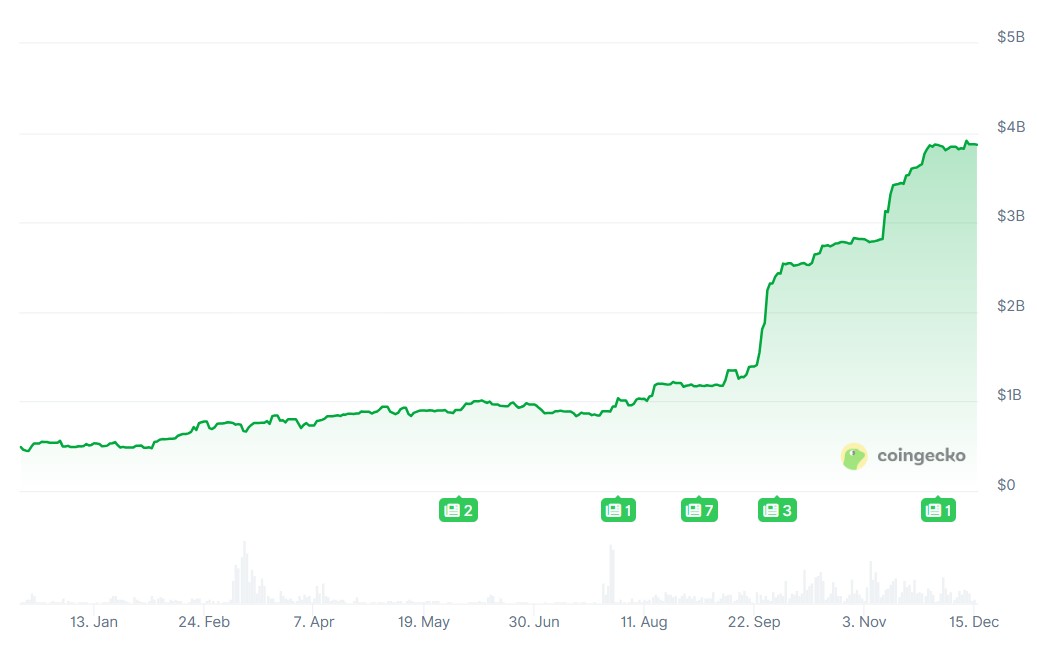
PayPal’s stablecoin is closing in on a $4-billion market capitalization. Source: CoinGecko

For clients and employers, this removes delays, fees and transfer limits that often come with international payments. This model is especially common in remote work and creator economies.

However, those who opt for crypto payments may still face difficulties when converting crypto into fiat. Industry participants have said banks continue to close or restrict the accounts of crypto firms with little explanation despite a more crypto-friendly stance taken by the current US administration.

Use crypto to purchase digital goods

Beyond paying individuals, crypto is also used to settle payments with businesses. This is most common among online services with global customers, where traditional payment systems introduce friction through fees, delays or regional restrictions.

Domain registrars, hosting providers and privacy-focused software companies are among the most visible adopters. Providers like Mullvad VPN allow customers to pay using cryptocurrency, while Namecheap and Porkbun accept crypto for domain registrations and hosting services. On Sept. 9, Namecheap CEO Richard Kirkendall said the company received a $2-million BTC payment for a domain sale.
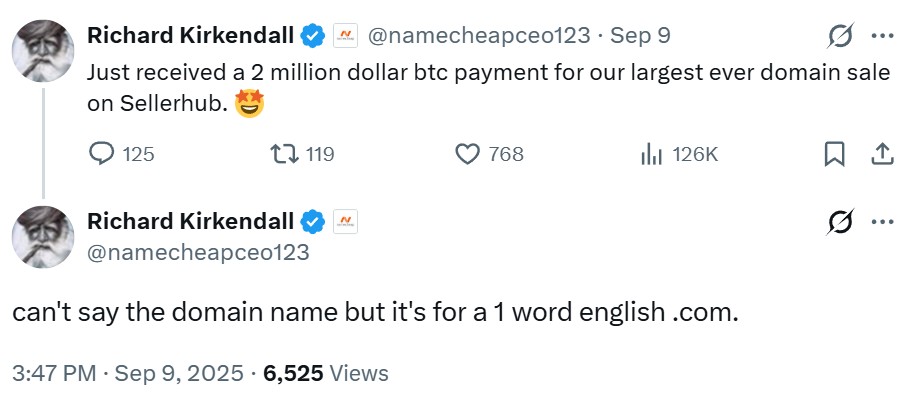
Namesake received Bitcoin for one of its largest sales ever. Source: Richard Kirkendall

More recently, mainstream payments and commerce platforms have started integrating stablecoin payments. Stripe has enabled businesses to accept USDC payments and launched the public testnet of its own stablecoin blockchain, Tempo. Shopify has piloted stablecoin-based checkout options for merchants selling internationally.

Related: Bitcoin decouples from stocks in second half of 2025

Clearer regulatory treatment of stablecoins in the US, driven by the signing of the GENIUS Act into law, has reduced uncertainty for some merchants considering these pilots.

Digitizing and extending physical collectible cultures

Crypto has also found use in the digitization of collectible cultures that were already thriving offline. In 2025, interest in physical collectibles surged again, driven by renewed demand for Pokémon cards, Labubu figures and other toys.

Alongside that revival, digital and tokenized versions of collectibles gained traction as an extension rather than a replacement of physical collecting.

Tokenized Pokémon-style cards and digital gachas — popular randomized item vending machines — became popular ways for collectors to participate in familiar formats online, especially as marketplaces and communities shifted from binders and display cases to apps and web platforms.
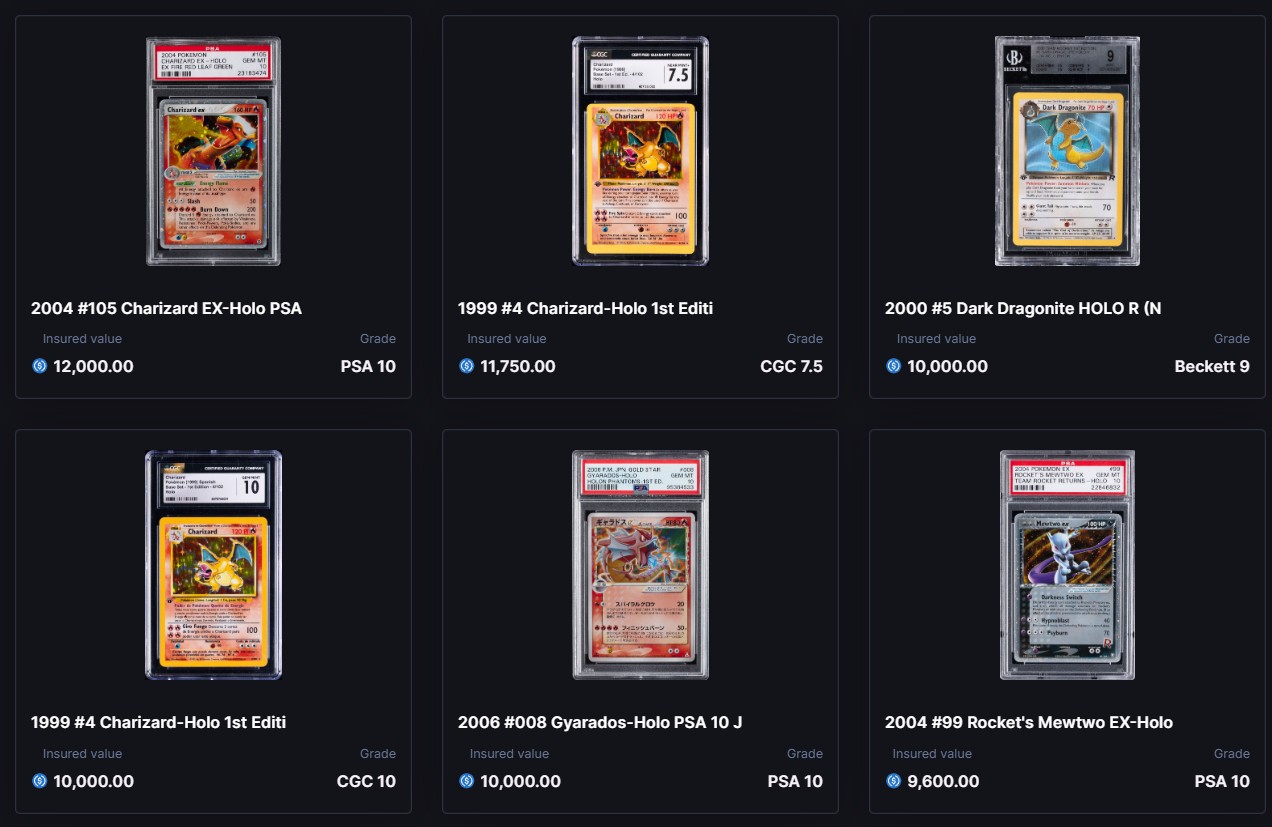
Collectors can spend between $50 and $250 to test their luck on tokenized versions of legendary Pokémon cards. Source: Collector Crypt

Crypto’s niche inside DeFi and GameFi

In decentralized finance (DeFi), users swap tokens, provide liquidity to farm yield, lend assets or borrow against collateral through smart contracts.

Blockchain-based games operate in a similar way. Often, blockchain and crypto add economic layers to games running on Web2 infrastructure. Players use crypto to buy or trade in-game items and move assets between marketplaces.

Related: How prediction markets raise insider trading and credit risks

A popular model is play-to-earn gaming, where players earn crypto through gameplay. A well-known example is Axie Infinity, which became a primary source of income for some communities in the Philippines during the pandemic. In 2025, play-to-earn games are more likely to provide extra income rather than a primary livelihood. Developers also face persistent challenges, including cheaters using bots to farm rewards, which takes value away from fair players.

According to DappRadar, World of Dypians, which operates across multiple chains, including Ethereum and BNB Chain, leads blockchain games with more than 1 million unique active wallets interacting with the game. Treasure-collecting game Pixudi Runs, which also operates across multiple chains, such as Sei and Polygon, ranks second with nearly 570,000 active wallets.
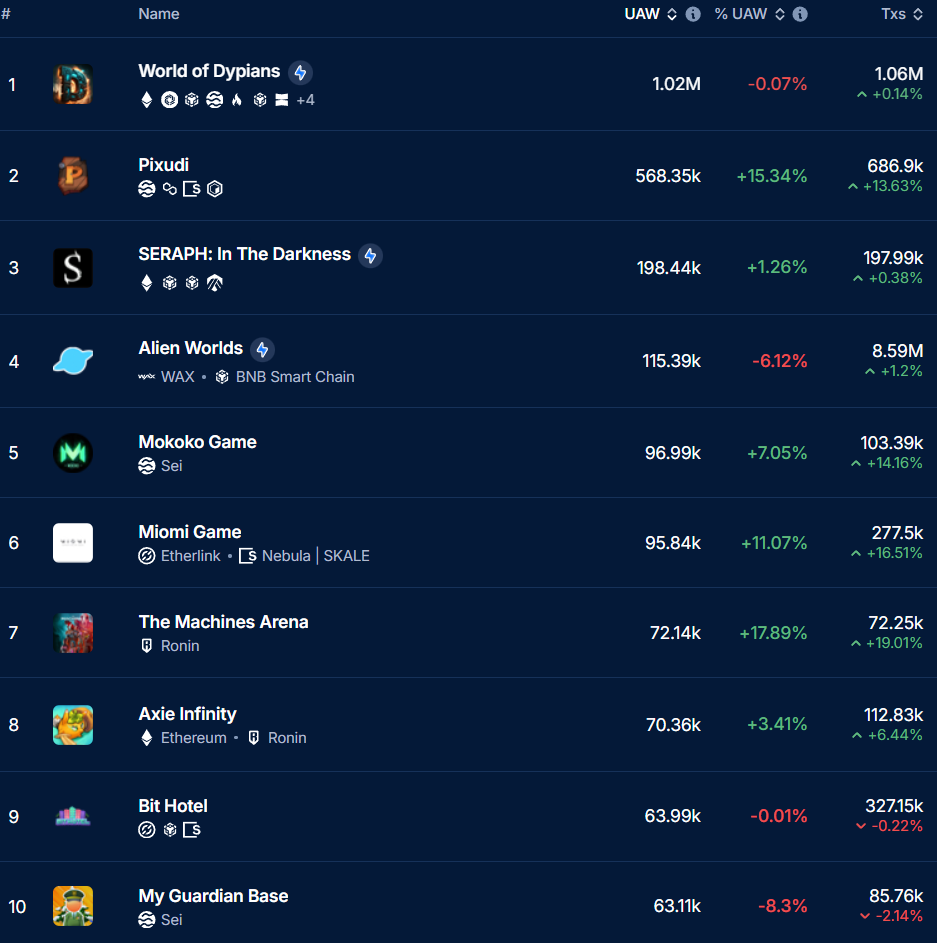
Blockchain games remain niche but attract thousands of active wallets daily. Source: DappRadar

Running organizations with crypto onchain

Deeper in DeFi, crypto is used to coordinate decentralized autonomous organizations (DAOs). In these groups, tokenholders are the members. They use their tokens to vote on proposals, approve spending and decide how the organization is run. Votes are recorded onchain, and once a proposal passes, actions such as payments or rule changes are carried out automatically through smart contracts.
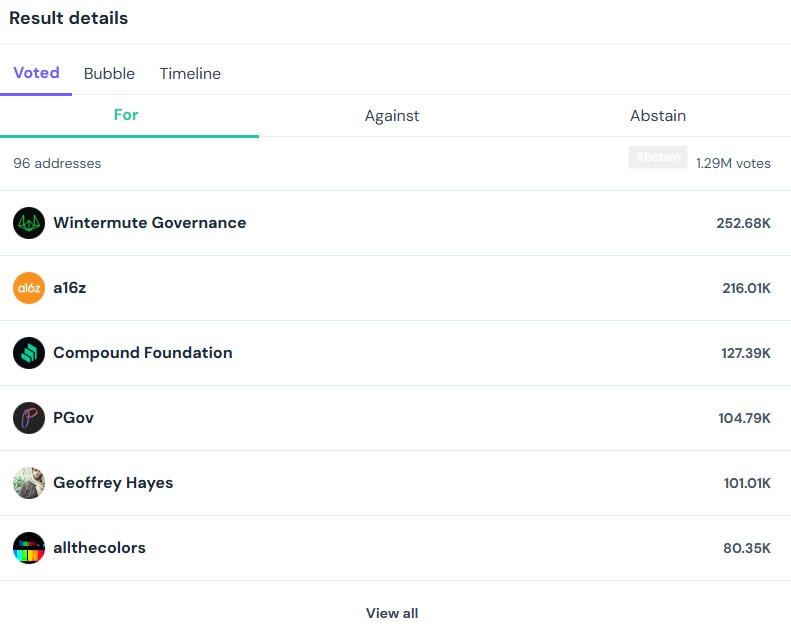
Voting power is concentrated among large tokenholders, many of whom often abstain from governance votes. Source: Tally

DAOs are mostly used to manage crypto-native projects. Taking part usually means holding governance tokens, navigating onchain voting proposals and managing a wallet. These requirements make DAO governance impractical for most casual users.

As a result, DAOs remain largely the domain of people already active in the crypto ecosystem.

Crypto’s current uses are broader than its early ambitions, and development continues. Financial companies are using blockchains to tokenize real-world assets, settle transactions with stablecoins and test onchain versions of traditional financial products.

Other experiments, such as wallet-based identity systems and Bitcoin-backed lending, remain in early stages. But they follow familiar patterns, with crypto most likely to integrate into existing services and remove frictions created by intermediaries.

Magazine: Big questions: Would Bitcoin survive a 10-year power outage?
Похожее

Германия отправляет больше биткоинов на Kraken и Coinbase на фоне сохраняющихся опасений распродажи

Немецкие правительственные кошельки перевели очередную порцию биткоинов на биржи Kraken и Coinbase, что усиливает опасения инвесторов по поводу продаж со стороны государства. Эти переводы, отслеживаемые через Arkham Intelligence, рассматриваются как сигнал о потенциальном давлении продавцов, особенно учитывая их регулярный характер и направленность на крупные ликвидные площадки. В отличие от обычных переводов крупных держателей, которые могут иметь различные причины, перемещения средств с государственных кошельков, как правило, указывают на планы по их реализации. Устойчивость рынка биткоина теперь зависит от способности поглотить этот потенциальный объем продаж за счет спроса со стороны ETF и других покупателей. Пока переводы продолжаются, каждый новый транш будет проверкой для стабильности рынка.

bitcoinist9 мин. назад

Германия отправляет больше биткоинов на Kraken и Coinbase на фоне сохраняющихся опасений распродажи

bitcoinist9 мин. назад

Четырехлетняя перспектива: сможет ли Ethereum захватить нишу расчетов для институциональных инвесторов?

Витерик Бутерик опубликовал «Lean Ethereum» — трёх-четырёхлетний план основных обновлений сети, направленный на превращение Ethereum в инфраструктурный базис для институциональных финансов. План включает ключевые цели: секундная финальность транзакций, пропускная способность в 1 млрд газа в секунду на первом уровне, триллион газа на втором уровне, постквантовая безопасность и встроенная приватность. Эти обновления призваны удовлетворить потребности банков, управляющих активами и корпораций в надёжном, масштабируемом и безопасном расчётном слое. Однако реализация сопряжена с рисками: необходима синхронная модернизация всего стека (приложения, кошельки, клиенты), а сложные изменения, такие как реструктуризация хранения данных, могут нарушить компоновку и замедлить адаптацию. Успех «Lean Ethereum» определит, сможет ли Ethereum сохранить нейтральность и открытость, одновременно предлагая стабильность, необходимую институциональным игрокам. Реализация плана укрепит позиции ETH как базового актива, в то время как задержки могут привести к оттоку институционального капитала на более предсказуемые платформы.

Foresight News17 мин. назад

Четырехлетняя перспектива: сможет ли Ethereum захватить нишу расчетов для институциональных инвесторов?

Foresight News17 мин. назад

Биткоин отскочил до $64 тысяч на фоне снижения ожиданий повышения ставок ФРС?

Биткоин восстановился до 64 000 долларов на фоне снижения ожиданий повышения ставки ФРС. Криптовалюта продемонстрировала резкий отскок после недавних минимумов, достигнутых в период политической неопределенности в США. Ключевым фактором стало публикация слабого отчета о занятости в США за июнь, который показал создание лишь 57 000 новых рабочих мест, что значительно ниже прогнозов. Несмотря на снижение уровня безработицы, замедление роста занятости и падение участия в рабочей силе ослабили опасения по поводу агрессивной монетарной политики ФРС. Рост средних почасовых заработков до 3,5% в годовом выражении остается проблемой для инфляции. Аналитики отмечают, что слабые данные по рынку труда снизили вероятность дополнительного повышения ставок в этом году. Внимание рынков теперь приковано к данным по инфляции (ИПЦ) за июнь, публикация которых станет следующим важным ориентиром. Ожидается, что снижение цен на бензин может способствовать замедлению инфляции. Смягчение риторики нового председателя ФРС Кевина Уорша на недавней встрече центральных банков также поддержало настроения. Он отметил снижение инфляционных ожиданий, что уменьшило ставки на ужесточение политики. Рынки в настоящее время оценивают вероятность сохранения ставок на следующем заседании в 82%. Таким образом, краткосрочная динамика биткоина будет сильно зависеть от дальнейших макроэкономических данных из США, ожиданий политики ФРС, а также от потоков средств в биткоин-ETF и геополитической обстановки. Снижение давления со стороны ФРС может создать поддержку для восстановления крипторынка.

marsbit21 мин. назад

Биткоин отскочил до $64 тысяч на фоне снижения ожиданий повышения ставок ФРС?

marsbit21 мин. назад

Лицензия Circle MiCA дает USDC европейское регуляторное преимущество

Криптофинансовая компания Circle получила первую в Европе лицензию электронных денежных институтов (EMI) во Франции в соответствии с Регламентом о рынках криптоактивов (MiCA). Это разрешение позволяет Circle осуществлять регулируемый выпуск стейблкоинов USDC и EURC на европейском рынке. Получение лицензии дает Circle значительное конкурентное преимущество, поскольку выпуск стейблкоинов без авторизации MiCA может столкнуться с ограничениями на регулируемых платформах в ЕС. Компания позиционирует свои стейблкоины как регулируемые и безопасные для институциональных клиентов, и данная лицензия подтверждает этот статус. В то время как привычки пользователей, ликвидность и интеграции по-прежнему важны, регуляторная определенность становится ключевым фактором на рынке. Для EURC, евроденоминированного стейблкоина, новый регулируемый режим может создать более благоприятные условия для роста, чем в предыдущие циклы. Таким образом, MiCA начинает формировать ландшафт европейского рынка стейблкоинов, разделяя игроков на соответствующих требованиям и всех остальных.

bitcoinist25 мин. назад

Лицензия Circle MiCA дает USDC европейское регуляторное преимущество

bitcoinist25 мин. назад

Coinbase добавляет Bittensor, так как токены децентрализованного ИИ сохраняют привлекательность на рынке

Coinbase объявила о поддержке торговли токеном Bittensor (TAO) на своей платформе, что открывает ведущему децентрализованному AI-активу доступ к более широкой аудитории розничных и институциональных инвесторов в США. Это повышает ликвидность и видимость токена, хотя Coinbase помечает его как «экспериментальный», предупреждая о потенциально высокой волатильности и рисках. Листинг на Coinbase укрепляет доверие к TAO, но не снимает фундаментальных вопросов о проекте Bittensor, который представляет собой сеть стимулирования развития машинного интеллекта. В текущих рыночных условиях, где интерес к крипто-нарративу искусственного интеллекта сохраняется, но инвесторы стали более избирательными, эта поддержка со стороны крупной биржи подтверждает, что децентрализованный AI остаётся востребованной темой. Ключевой задачей для TAO теперь является превращение возросшего внимания в устойчивую ценность сети, а не только в краткосрочный торговый интерес.

bitcoinist42 мин. назад

Coinbase добавляет Bittensor, так как токены децентрализованного ИИ сохраняют привлекательность на рынке

bitcoinist42 мин. назад

Торговля

Спот
活动图片