315 Exposes AI Poisoning, a Business from Putian to Silicon Valley

比推Опубликовано 2026-03-16Обновлено 2026-03-16

Введение

"315 Exposed: AI 'Poisoning' - A Business from Putian to Silicon Valley" During China's 315 consumer rights expose, a practice called Generative Engine Optimization (GEO) was revealed. GEO involves manipulating AI-generated responses by flooding the internet with promotional content, which AI models then scrape and present as factual recommendations. A tool called "Liqing GEO," sold on Taobao, demonstrated this by fabricating a fake smartwatch with absurd features ("quantum entanglement sensing," "black hole-level battery") and having AI recommend it within hours. This mirrors the early days of Search Engine Optimization (SEO), where paid rankings, notably by Putian-based hospitals on Baidu, dominated search results. Despite regulations, the core model remains: whoever controls the information gateway sells rankings. Now, with AI as the new gateway, SEO has simply become GEO. The business is significant. BlueFocus, a major marketing firm, invested millions in a GEO company, PureblueAI, serving clients like Ant Group and Volvo. While Pureblue claims to optimize real brand information, the technical method—flooding the web with content for AI to scrape—is identical to the "poisoning" tactic. This ambiguity fueled a stock market frenzy in late 2025, with GEO-related stocks like BlueFocus surging over 130% before executives cashed out. Simultaneously, Silicon Valley is formalizing this model. OpenAI announced ads in ChatGPT for free users, with sponsored links appearing below...

Author: David, Deep Tide TechFlow

Original Title: 315 Exposes AI Poisoning, a Business from Putian to Silicon Valley


Last night, 315 exposed a business based on GEO.

Full name: Generative Engine Optimization. You can understand it as:

Paying to have AI say nice things about you.

How is it done?

Brands want AI to prioritize recommending them when consumers ask. So they find GEO service providers, who batch-publish promotional soft articles online. After AI crawls this content, it treats it as real information and recommends it to users.

A CCTV reporter used a software called "Liqing GEO," which can be bought on Taobao.

The reporter fabricated a smart wristband and made up several outrageous product features, like "quantum entanglement sensing" and "black hole-level battery life." The software automatically generated over a dozen promotional soft articles and published them online.
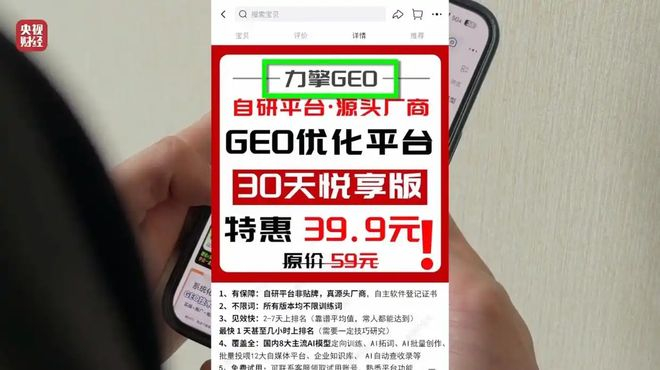
Two hours later, the reporter asked an AI: "Can you recommend a smart health wristband for me?"

The AI ranked this non-existent wristband at the top of the recommendation list.

The company behind this software is Beijing Lisi Culture Media, a one-person company with zero insured employees for many consecutive years.

A tool made by such a company fooled mainstream domestic AI models in just two hours.

315 uncovered AI poisoning, but this business might be much bigger than a single Taobao software.

SEO, the Putian Story

First, this is not new at all.

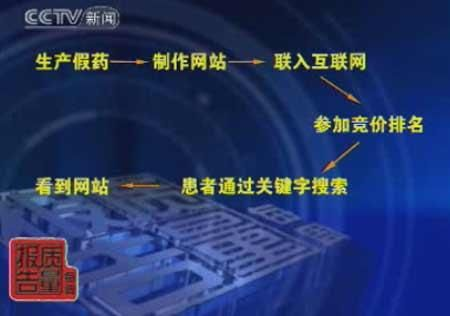
In 2008, CCTV's "News 30 Minutes" exposed Baidu's paid ranking for two consecutive days. Paying money could get your website to the top of search results, even if it was for fake medicine.

Back then, this business was called SEO, Search Engine Optimization.

The biggest buyers were Putian-affiliated private hospitals. In 2013, Putian系 spent 12 billion RMB on Baidu advertising, accounting for nearly half of Baidu's total ad revenue.

Many unqualified medical institutions used SEO to boost themselves to the first page of Baidu search results, appearing alongside Class A tertiary hospitals, making it impossible for ordinary people to tell the difference.

It wasn't until the 2016 Wei Zexi incident, where a university student died after seeking treatment at a top-ranked Putian hospital, that regulators legislated clearly: paid search is advertising.
But this didn't kill the business. It just set the rules, turning it from a gray market operation into a legitimate business. Putian系 still buys rankings, but there's a small label next to the result: "Ad."

But even with the label, people who would click still click.

The fundamental problem with search engines was never the labeling, but users' inherent trust in the top results.

Now people have moved from search engines to AI, thinking AI is more objective and不会被 (won't be) polluted by paid rankings. But whoever controls the gateway to information distribution can sell rankings.

The gateway changed, SEO changed a letter to become GEO, but the logic of selling rankings hasn't changed one bit.

What changed is the price.

GEO, Loved by the Capital Market

Businesses that can't be killed are the capital market's favorite.

In September 2025, BlueFocus, China's largest marketing communication company, invested tens of millions of RMB in a GEO company called PureblueAI Qinglan.

Qinglan helps real brands optimize their ranking and recommendation rate in AI search results. Clients include Ant Group, Tencent Cloud, and Volvo.

The products are real, the company is real, and they work to help AI understand brand information more accurately.

This is completely different from the AI poisoning exposed by 315 involving Liqing. Liqing fabricated products, made up parameters, and tricked AI with false information; Qinglan uses real brand content to adapt to AI's recommendation logic.

But from AI's perspective, the technical path for both things is the same: both involve publishing content online and waiting for AI to crawl it.

AI can't tell which is marketing and which is fabrication. This is the most ambiguous aspect of the GEO business.

When BlueFocus invested in Qinglan, GEO was just an industry term within marketing circles. Three months later, it became a stock market concept.

At the end of December 2025, BlueFocus's stock price hit the daily limit-up.

Brokerages began holding intensive conference calls to interpret GEO, with research reports defining it as "the next generation traffic entrance in the AI era." Capital poured in, not only buying BlueFocus but also driving up stocks of any company related to digital marketing and AI concepts. BlueFocus rose 132% in 9 trading days, and a batch of follower concept stocks also doubled.
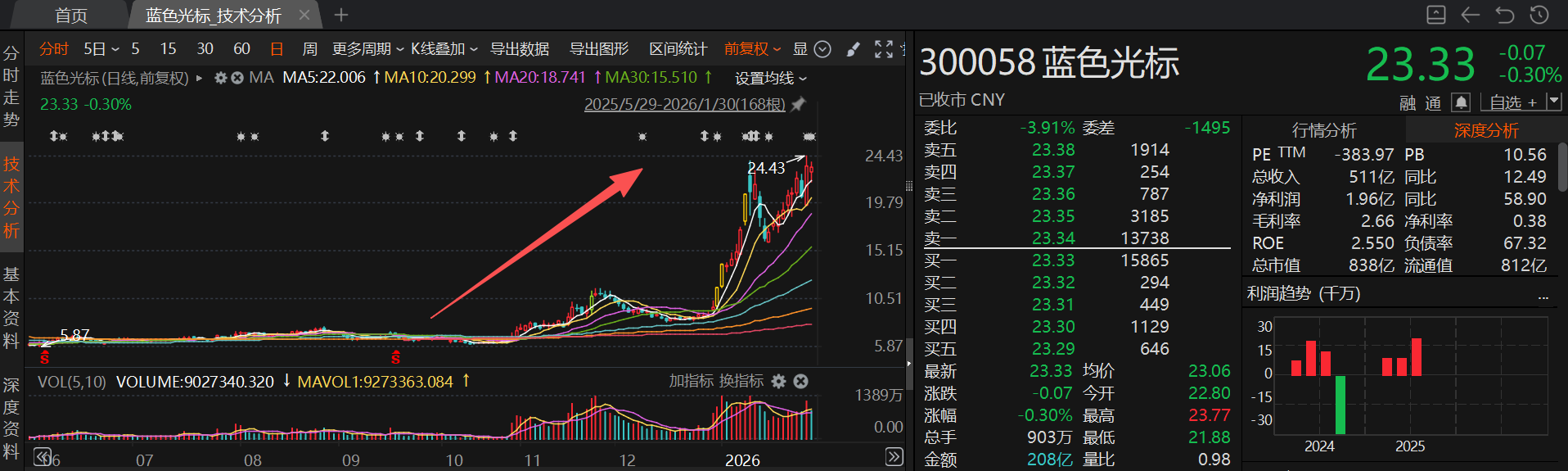
Image Source: CLS News

After the surge, these companies issued risk warnings themselves:

GEO business has no revenue and has no significant impact on company operations. BlueFocus also admitted that AI-driven revenue accounts for a very small proportion of overall revenue.

The implication is that the stock price more than doubled, but the GEO business itself hasn't made much money yet.

At the end of January, BlueFocus's stock price rose from 9.6 yuan to 23.3 yuan, a 143% increase in a month. Right at this time, Chairman Zhao Wenquan announced plans to sell up to 20 million shares. Based on the stock price at the time, this would cash out approximately 467 million RMB.

Public research reports show that last year, the total market size of the domestic GEO industry was about 2.9 billion RMB. The market value increase of BlueFocus's stock alone in one month far exceeded this amount.

315 exposed Liqing system poisoning AI for a few hundred RMB. But the GEO concept went through A-shares and made billions.

Whether it's poisoning or not is hard to say, but the money made is real.

315 Calls it Poisoning, Silicon Valley Calls it Commercialization

In January this year, OpenAI announced on its official blog: ChatGPT will start selling ads.

Free users and $8/month Go users will see ads; paid subscription premium users are unaffected.

On February 9th, ads officially launched. Some ads appear at the bottom of ChatGPT's answers, marked with a small word: Sponsored. The first batch of advertisers includes Ford, Adobe, Target, Best Buy...

You ask ChatGPT what car is good to buy, it gives you an answer, and below the answer hangs a sponsored link from Ford.

OpenAI made it very clear: Ads will not influence the content of ChatGPT's answers. The answer is the answer, the ad is the ad, they are separate.

Does that sound familiar?

Baidu said the same thing back in the day. Paid ranking is paid ranking, organic search is organic search, they are separate. Later, the top five search results were all ads.

OpenAI expects ads to help double its consumer-side annual revenue to $17 billion. ChatGPT has over 800 million weekly active users, 95% of whom are free users, all potential audiences for ads.
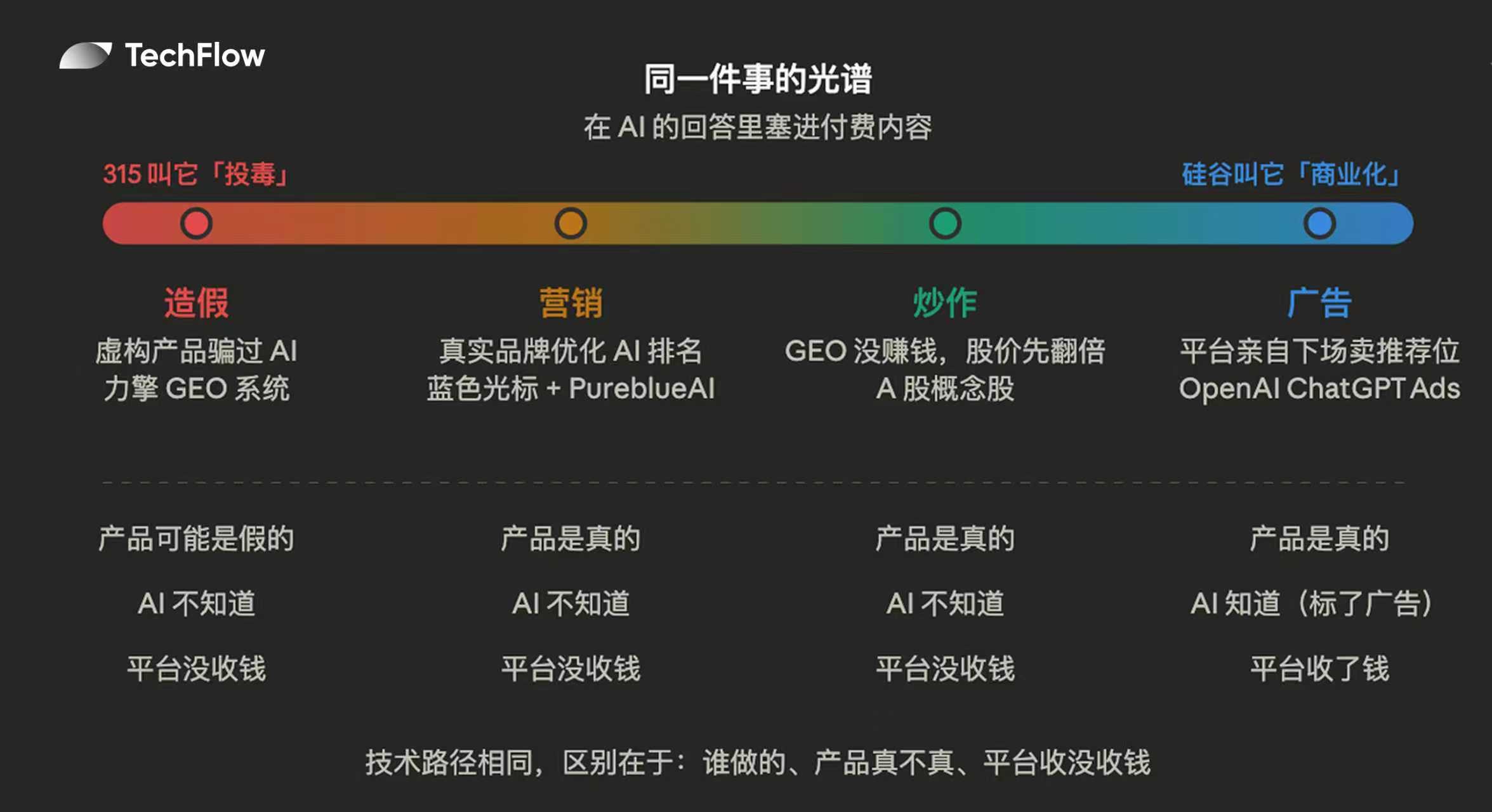
Now looking back at the industry chain exposed by 315: Liqing floods AI with soft articles, making AI recommend non-existent products. OpenAI places sponsored content below AI's answers, making AI recommend products that paid money.

One didn't notify the platform, it's poisoning. One signed a contract with the platform, it's commercialization.

For the user, what's the difference?

One is inside the answer, one is below the answer. One has no label, one has a label saying "Ad".

315 caught Liqing for a few hundred RMB, A-shares speculated on the GEO concept for billions, OpenAI plans to make $17 billion a year from this.

The same thing, its nature changes from poisoning to commercialization, and the price increases tens of thousands of times.

In November 2023, researchers from the Indian Institute of Technology Delhi and Princeton University published a paper on arXiv titled "GEO: Generative Engine Optimization".

This was the first formal academic definition of this concept.

From the paper's publication to the 315 exposure, just over two years. In between, it experienced gray market operations, financing, concept stock surges, chairman cashing out, AI platforms亲自 (personally) stepping in to sell ads...

The path SEO took twenty years, GEO completed in two years.

The difference is, back then it took people years to learn not to fully trust search engine results; now AI is still in its trust红利期 (bonus period), most people haven't realized yet that AI's answers can also be bought.

However, this红利期 (bonus period) might not last too long. Next time you ask AI what's worth buying, remember to think for an extra second:

The answer can be free, but the brain cannot be outsourced.


Twitter:https://twitter.com/BitpushNewsCN

BitPush TG Discussion Group:https://t.me/BitPushCommunity

BitPush TG Subscription: https://t.me/bitpush

Original link:https://www.bitpush.news/articles/7620096

Связанные с этим вопросы

QWhat is Generative Engine Optimization (GEO) as described in the article?

AGenerative Engine Optimization (GEO) is a practice where brands pay to have AI systems prioritize and recommend their products or services. It involves flooding the internet with promotional content that AI models scrape and treat as authentic information, influencing AI-generated recommendations to users.

QHow did the CCTV 315 exposure demonstrate the effectiveness of GEO manipulation?

ACCTV journalists used a software called 'Liqing GEO' to create fictional smart wristbands with absurd selling points like 'quantum entanglement sensing' and 'black hole-level battery life.' The software generated promotional articles and posted them online. Within two hours, mainstream AI models in China recommended the non-existent product when queried.

QWhat historical precedent does the article draw between GEO and earlier internet practices?

AThe article compares GEO to Search Engine Optimization (SEO), particularly highlighting how莆田系 (Putian系) hospitals spent billions on Baidu's paid rankings to appear alongside legitimate hospitals in search results, a practice that continued even after regulations required labeling paid results as 'ads.'

QHow did the GEO concept impact the stock market, specifically for companies like BlueFocus?

AThe GEO concept became a stock market trend after BlueFocus invested in a GEO company. This led to a surge in stock prices, with BlueFocus's stock rising 132% in nine trading days. However, companies later issued risk warnings, clarifying that GEO contributed little to actual revenue, and BlueFocus's chairman announced a significant stock sell-off during the peak.

QHow does OpenAI's approach to advertising in ChatGPT relate to the GEO practices exposed by CCTV?

AOpenAI introduced sponsored ads in ChatGPT's responses for free users, labeled as 'Sponsored.' While OpenAI claims ads do not influence the AI's answers, the article draws a parallel to GEO practice, suggesting that both involve monetizing AI recommendations—one through unauthorized 'poisoning' of data and the other through platform-sanctioned commercialization.

Похожее

Has Hook Summer Really Arrived? sato, Lo0p, FLOOD Ignite the New Narrative of Uniswap v4

"Hook Summer" Arrives? Sato, Lo0p, FLOOD Ignite Uniswap v4 Narrative Amidst a slight market recovery, attention within the Ethereum ecosystem has shifted to Meme coins built on Uniswap v4's Hook protocol. Following ASTEROID, tokens like sato, sat1, Lo0p, and FLOOD have become market focal points, with market caps ranging from millions to tens of millions, bringing concentrated liquidity to a narrative-dry market. Uniswap v4 Hooks are "plugin smart contracts" that allow developers to inject custom logic at key points in a liquidity pool's lifecycle (initialization, adding/removing liquidity, swaps, etc.), making the AMM programmable. Recent representative projects include: * **sato**: Market cap peaked over $38M; uses a v4 curve mechanism for minting/burning, locking ETH as reserve. * **sat1**: Market cap briefly exceeded $10M, positioning as an "optimized sato," but later declined significantly. * **Lo0p**: Market cap neared $6.6M; a "lending AMM protocol" allowing users to borrow ETH against deposited LO0P tokens without immediate selling pressure. * **FLOOD**: Market cap approached $6M; channels trading reserves into Aave v3 to generate yield, which is retained in the pool. The emergence of these Hook-based tokens could drive long-term growth for the Uniswap ecosystem by attracting users and liquidity to v4 pools. Combined with Uniswap's activated fee switch (partially used to burn UNI), the long-term outlook for UNI appears positive. However, short-term UNI price appreciation is not directly guaranteed. Factors include the sustainability and lifecycle of these new tokens, their price volatility, overall market conditions, and regulatory pressures. Currently, Uniswap v4's TVL ($595M) lags behind v3 and v2, indicating Hook adoption still requires time to mature. In summary, the Hook ecosystem serves as "long-term nourishment" for UNI, but acts more as a "catalyst" than a direct "booster" in the short term. Note: These are early-stage experimental tokens and may carry unknown risks.

marsbit15 мин. назад

Has Hook Summer Really Arrived? sato, Lo0p, FLOOD Ignite the New Narrative of Uniswap v4

marsbit15 мин. назад

Has Hook Summer Truly Arrived? sato, Lo0p, FLOOD Ignite the New Uniswap v4 Narrative

With the broader market showing signs of recovery, a new wave of interest has emerged around Ethereum-based meme coins. Following ASTEROID, tokens like sato, sat1, Lo0p, and FLOOD, built upon the Uniswap v4 Hook protocol, are capturing market attention. Their market capitalizations range from millions to tens of millions of dollars, injecting much-needed focused liquidity into a market lacking narratives. This article explores whether this trend signifies an incoming "Hook Summer" and its potential impact on UNI's price. Hooks are essentially plug-in smart contracts for Uniswap v4 liquidity pools, allowing developers to inject custom logic at key points in a pool's lifecycle (like initialization, adding/removing liquidity, swaps). This transforms the AMM into programmable building blocks. Key highlighted projects include: * **sato**: Peaked over $38M market cap. It utilizes a v4 curve for minting/burning; buying locks ETH as reserve to mint new tokens, while selling redeems ETH from the reserve and burns tokens. * **sat1**: Market cap briefly exceeded $10M, promoted as an "optimized sato," but later declined significantly. * **Lo0p**: Reached nearly $6.6M. It's a lending AMM protocol where buying LO0P tokens locks them as collateral, allowing users to borrow ETH from the pool reserve at 40% LTV, aiming to improve capital efficiency for idle ETH in LPs. * **FLOOD**: Peaked near $6M. Its mechanism directs asset reserves from buys into Aave v3 to generate yield, with fees and interest retained in the pool to potentially influence the token's price long-term. In the long term, the development of the Hook ecosystem can attract users and liquidity to Uniswap v4, benefiting UNI's fundamentals—especially combined with the recent activation of the protocol fee switch, where a portion of fees is used to burn UNI. However, in the short term, these Hook-based tokens are unlikely to directly drive significant UNI price appreciation. Their impact is moderated by factors like token sustainability, price volatility, and broader market and regulatory conditions. Currently, Uniswap v4's TVL ($595M) still trails behind v2 and v3, indicating adoption and growth will take time. The article concludes that while the Hook ecosystem provides long-term "nourishment" for UNI, its short-term role is more of a "catalyst" than a "booster." Readers are cautioned that these are early-stage experimental tokens and may carry unknown risks.

Odaily星球日报27 мин. назад

Has Hook Summer Truly Arrived? sato, Lo0p, FLOOD Ignite the New Uniswap v4 Narrative

Odaily星球日报27 мин. назад

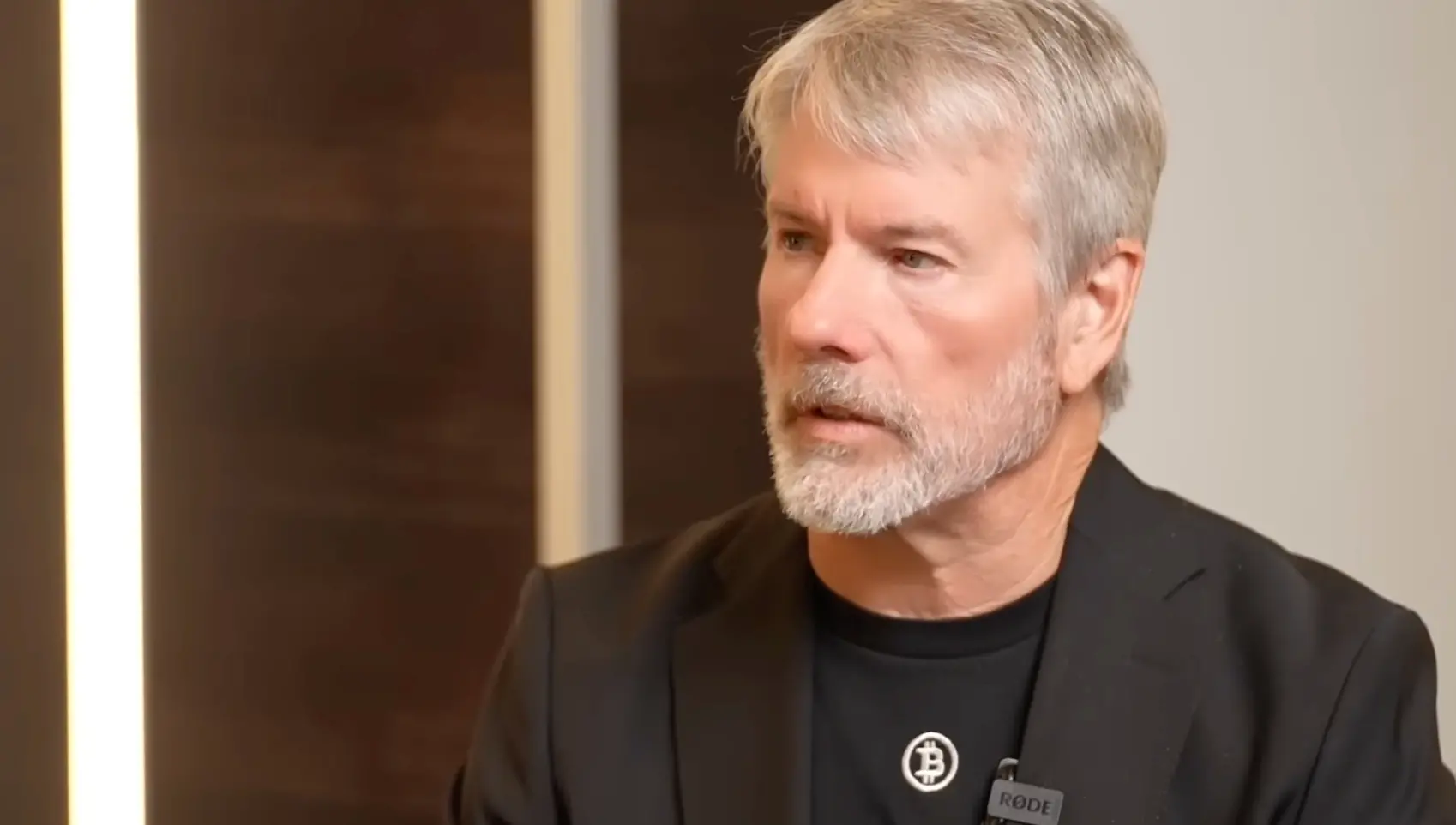
Interview with Michael Saylor: I Did Say I Would Sell Bitcoin, But Never a Net Sale

Interview with Michael Saylor: I Said We'd Sell Bitcoin, But Never Be a Net Seller In a recent podcast, MicroStrategy Executive Chairman Michael Saylor clarified the company's stance on potentially selling Bitcoin. Following MicroStrategy's earnings call statement about being prepared to sell BTC to fund dividends for its STRC (Strategic) credit product, Saylor emphasized the distinction between selling and being a "net seller." Saylor explained the core business model: MicroStrategy sells credit instruments like STRC and uses the proceeds to buy Bitcoin, which is viewed as "digital capital" expected to appreciate around 30-40% annually. A portion of these capital gains can then be used to pay the dividends on the credit products. He stressed that even if the company sells some Bitcoin for dividends, it simultaneously buys much more with new credit issuance. For example, after raising $3.2 billion from STRC sales in April, the dividend obligation was only $80-90 million, making the company a net buyer. The clarification aims to counter market narratives questioning the value of Bitcoin on MicroStrategy's balance sheet if it were never sold, and to dismiss claims of a "Ponzi scheme." Saylor reiterated his personal philosophy for investors: "Don't be a net seller of bitcoin" and ensure your Bitcoin holdings increase each year. Saylor also discussed Bitcoin's role as the foundation for "digital credit," noting that STRC has become the largest and most liquid preferred stock issue in the U.S., offering high risk-adjusted returns (Sharpe ratio). He highlighted Bitcoin's deep liquidity, stating that even large purchases by MicroStrategy do not move the market significantly, which is driven by macro factors, geopolitical tensions, and capital flows from ETFs and credit products. Finally, Saylor reflected on his early inspiration from sci-fi books, which motivated his path to MIT, and maintained his fundamental thesis on Bitcoin remains unchanged: it is superior digital capital enabling superior digital credit.

链捕手31 мин. назад

Interview with Michael Saylor: I Did Say I Would Sell Bitcoin, But Never a Net Sale

链捕手31 мин. назад

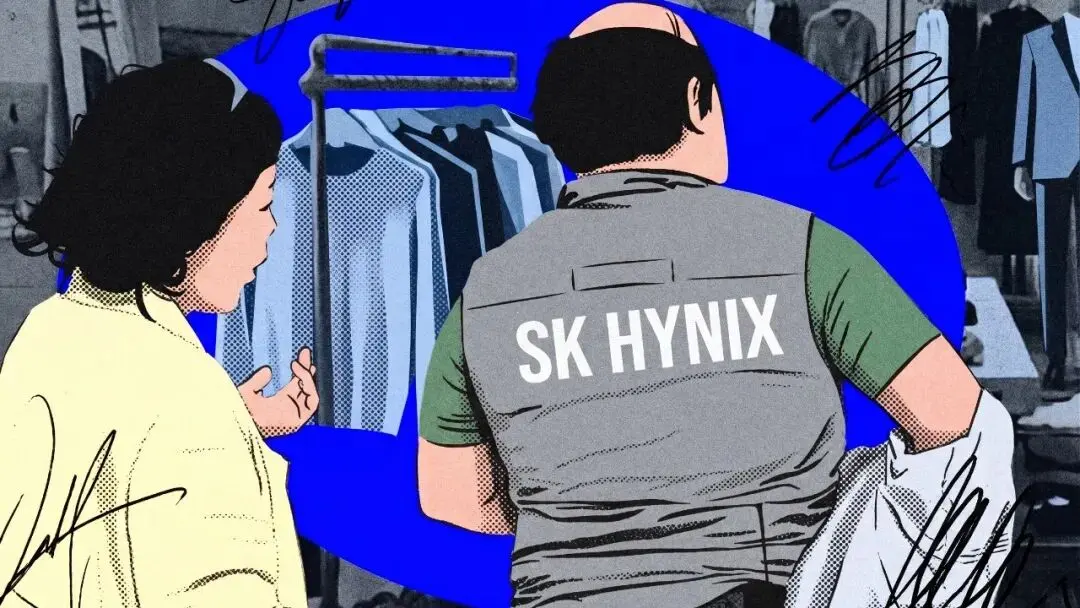
Beaten SK Hynix Employees in China: Year-end Bonus Less Than 5% of Korean Staff's

"SK Hynix Chinese Staff Hit Hard: Bonuses Less Than 5% of Korean Counterparts" Driven by the AI boom, South Korea's SK Hynix is experiencing record performance, with media reports predicting massive year-end bonuses for its employees, making them highly desirable in the matchmaking market. However, this prosperity starkly contrasts with the situation for the company's Chinese employees. According to reports, SK Hynix operates under a rule allocating 10% of operating profit for employee bonuses. While projections suggest Korean employees could receive bonuses reaching millions of RMB, a Chinese employee with over a decade of technical experience revealed the disparity: "If they get 3 million, Chinese staff get less than 5% of that." After adjustments based on KPI ratings, this employee's highest bonus was slightly over 100,000 RMB. Bonuses are paid annually in Korea but semi-annually in China. During the industry downturn in 2023-2024, Chinese employees received no bonus at all. The gap extends beyond bonuses. Recruitment posts for SK Hynix's Chinese factories (in Wuxi, Dalian, Chongqing) show engineer monthly salaries ranging from 10,000 to 35,000 RMB, with a 13th-month salary promised. Chinese employees also receive standard benefits like annual leave but lack stock incentives, which are reportedly unavailable to them. Furthermore, management positions in China are predominantly held by Korean personnel, though industry observers note a gradual increase in local middle managers over time. SK Hynix has confirmed the 10% bonus rule but cautioned that specific future bonus amounts remain unpredictable. The company forecasts strong demand for HBM and other high-value enterprise products for the next 2-3 years, driven by AI infrastructure investment. This focus on business-to-business markets may continue to constrain supply for consumer products, potentially prolonging price increases for components like memory.

链捕手45 мин. назад

Beaten SK Hynix Employees in China: Year-end Bonus Less Than 5% of Korean Staff's

链捕手45 мин. назад

Торговля

Спот
Фьючерсы
活动图片