美联储降息,对链上借贷意味着什么?

深潮Опубликовано 2025-09-21Обновлено 2025-09-22

流动性增强并不意味着加密货币市场看涨。

作者:Ethan Chan & Hannah Zhang

编译:深潮TechFlow

美联储本周降息,并暗示未来将进一步放松政策。几乎所有主流加密新闻的标题都在传递同一个信息:

资本成本降低 → 流动性增加 → 加密货币看涨。

但现实情况更为复杂。市场早已对降息预期进行了定价,而资金流入 BTC 和 ETH 的规模并未出现立刻的激增。

因此,我们不要停留在表面层面,而是来研究一下降息如何影响 DeFi 的一部分——借贷。

像 Aave 和 Morpho 这样的链上借贷市场,动态定价风险,而非依赖监管机构的指令。然而,美联储的政策为这一背景提供了重要参考。

当美联储降息时,有两种相反的力量在发挥作用:

1)反向效应:美联储利率下降→链上收益率上升,因为人们寻求非相关的资产

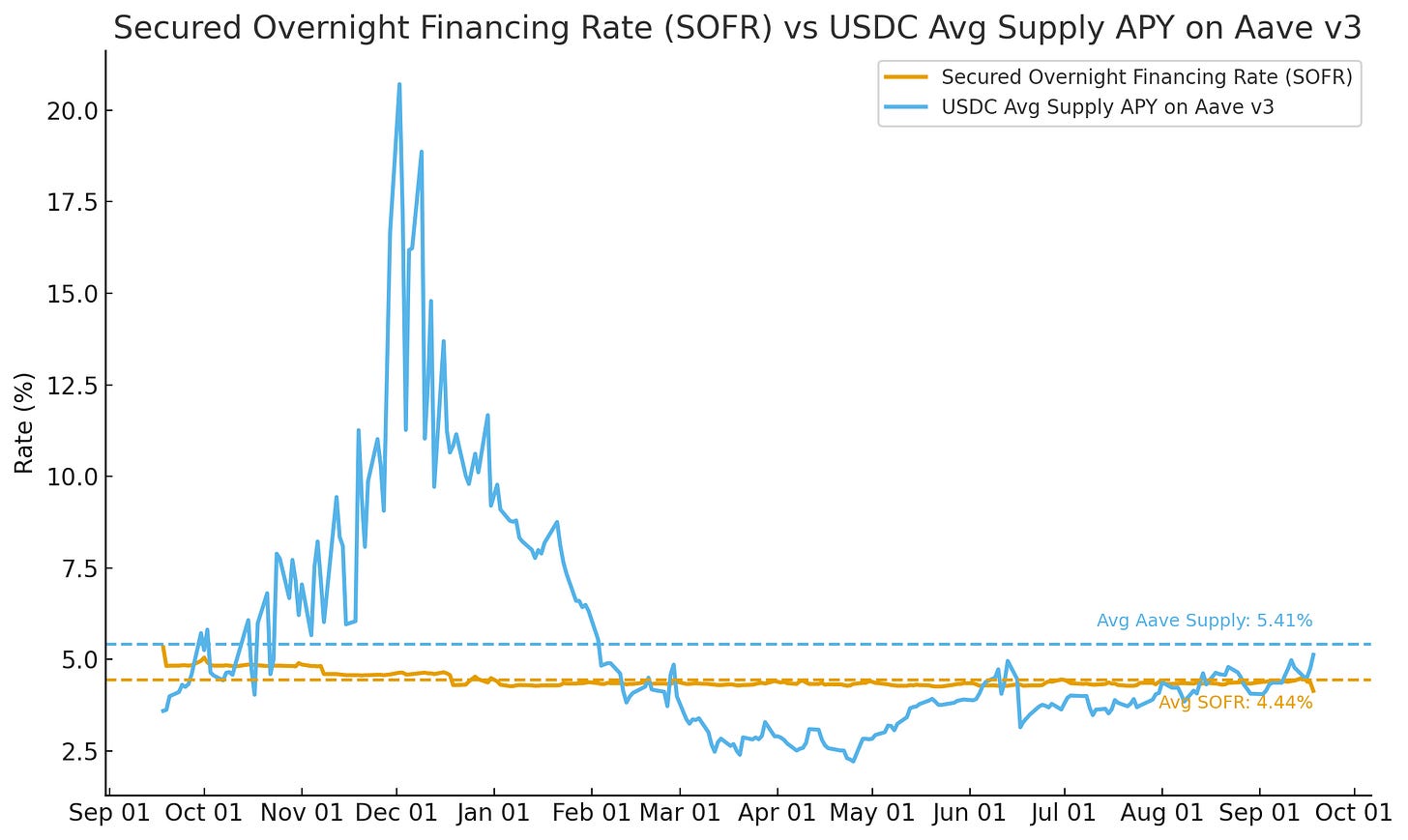
资本在寻找传统国债和货币市场基金之外的收益时,可能流入 DeFi,从而推动利用率提高并使链上利率上升。如果我们对比 Aave 上 USDC 的供应年化收益率(Supply APY)与 SOFR(担保隔夜融资利率),就能看到这一趋势在美联储9月降息前逐步显现。
来源:Allium

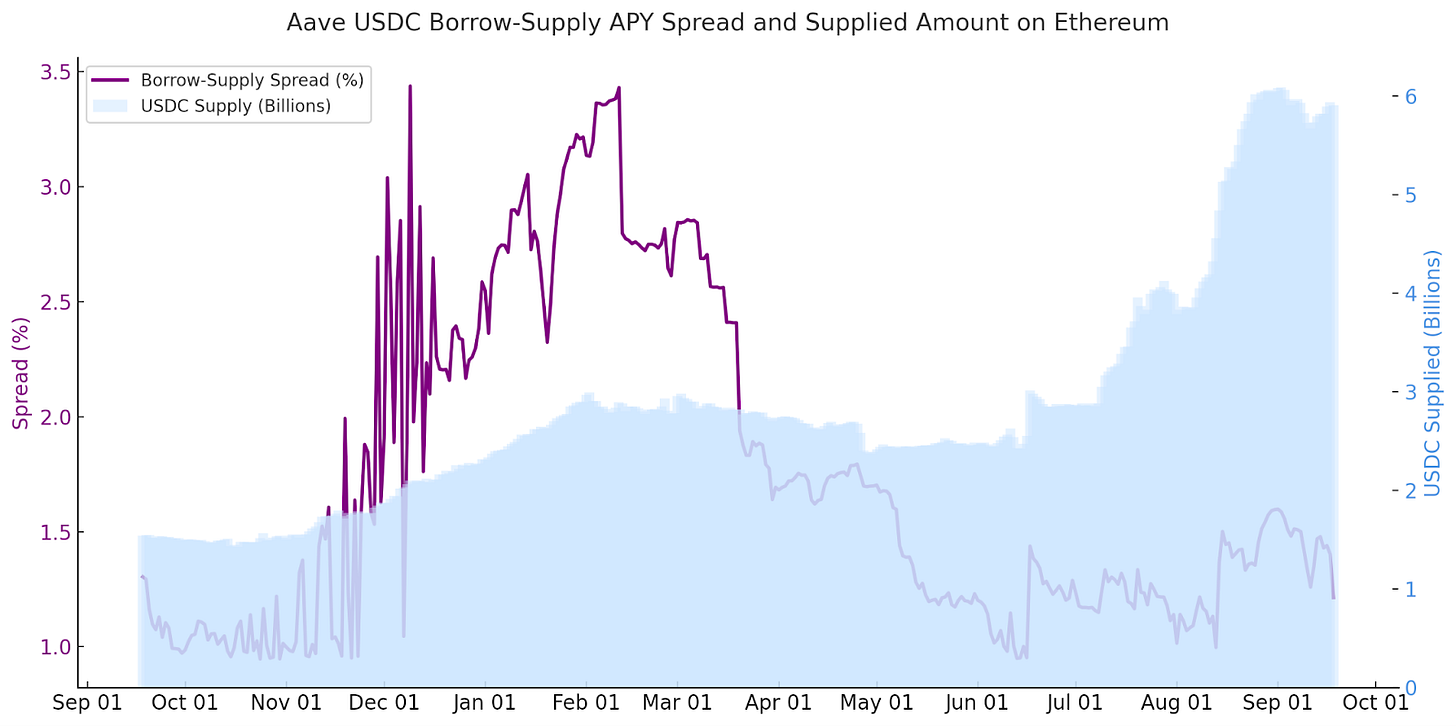
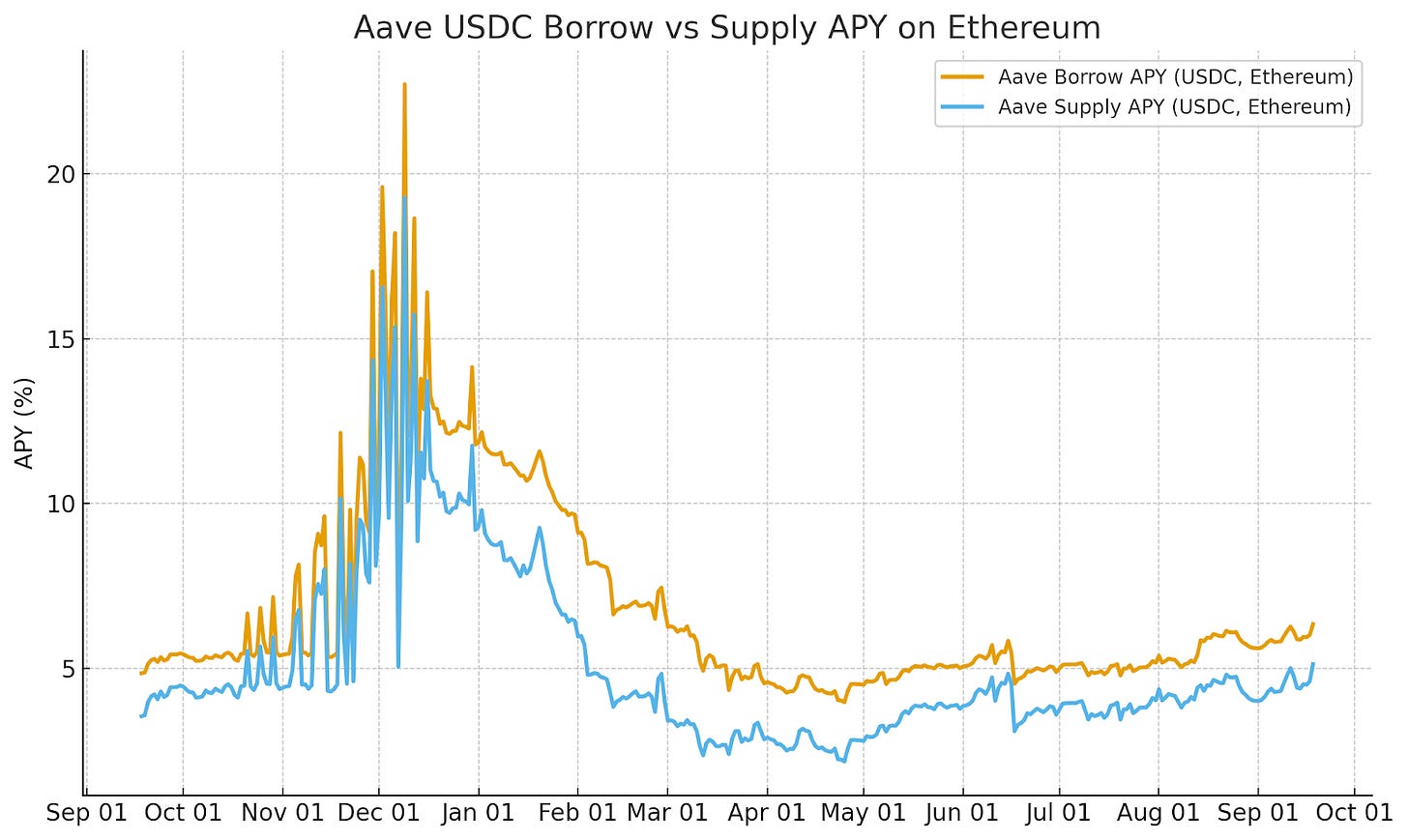
我们也看到这种情况随着 DeFi 借贷-供应收益率差下降而发生。

以 Aave 在以太坊上的 USDC 借贷情况为例,在美联储降息公告前几天,借贷-供应收益率差逐渐缩小。这主要是由于更多资金追逐收益率,支持了短期的反向效应。
来源:Allium

2)直接关联:美联储利率下降 → 链上收益率也下降,因为替代流动性来源变得更便宜

随着无风险利率下降,诸如加密货币等替代流动性来源的成本也随之降低。借款人可以通过再融资或以更低成本加杠杆,从而推动链上和链下的借贷利率下降。这种动态通常会在中长期内持续下去。

我们会在远期收益率市场数据中看到这一点的迹象。

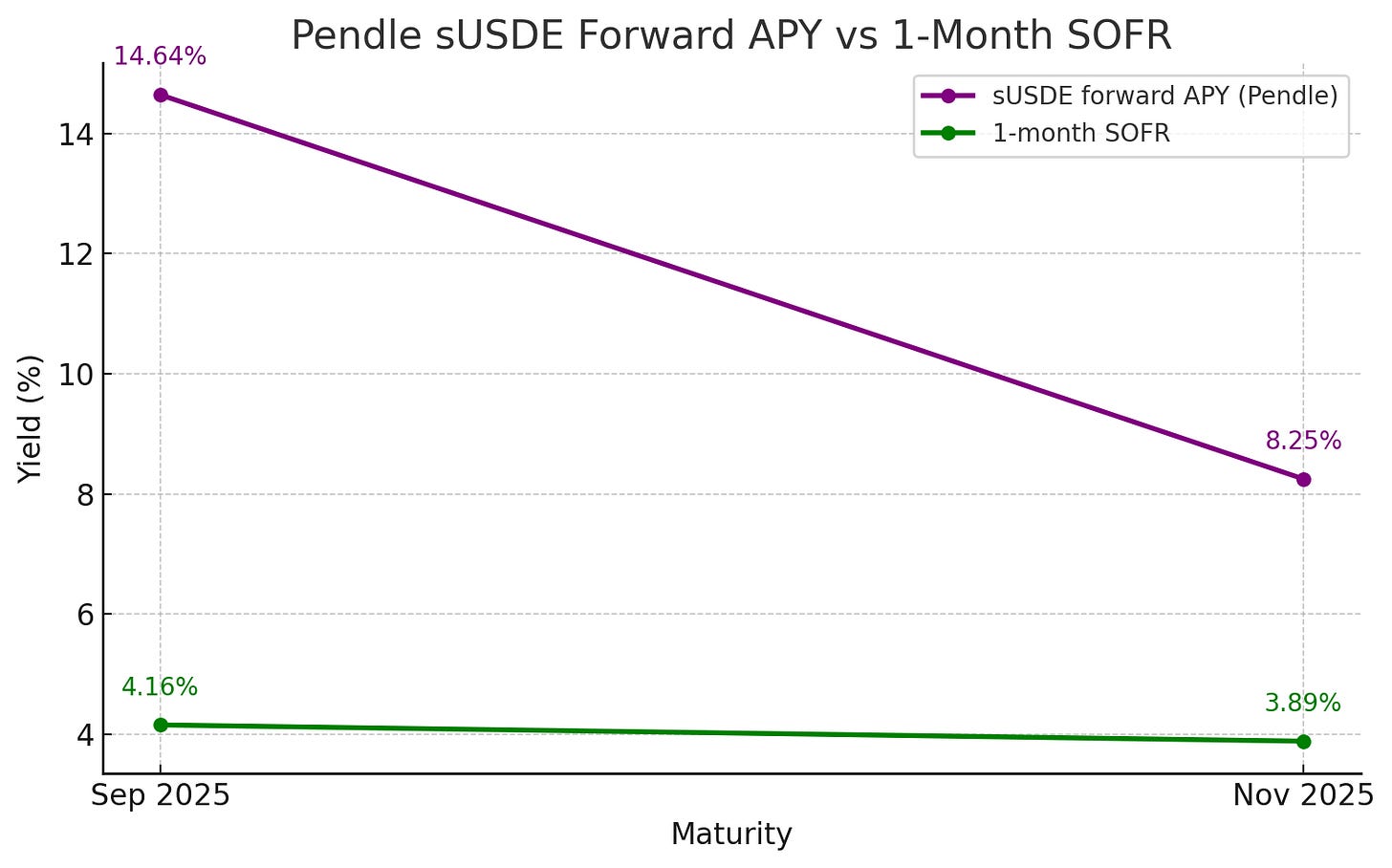
Pendle 是 DeFi 的远期收益率市场,交易者可以锁定或投机未来的 DeFi 年利率 (APY)。虽然 Pendle 的到期日与传统基准利率并非完全匹配,但其到期日与 SOFR 非常接近,因此可以进行有价值的比较——例如,9 月下旬和11 月下旬的情况。

在这些日期,1 个月期 SOFR 利率约为 4.2%(9月)和 3.9%(11月)。Pendle类似期限的隐含 sUSDe 收益率绝对值要高得多(分别为 14.6%和 8.3%)。但收益率曲线形状说明了一切。与SOFR一样,随着美联储进一步宽松政策的预期被消化,Pendle的远期收益率也在走低。
来源:Allium

关键点:Pendle 的走势与传统利率市场方向一致,但基准更高。交易员预计,随着宏观政策的变化,链上收益率将下降。

结论:美联储降息对加密市场的影响并非如标题所言那么简单

降息并非只是对加密货币市场产生影响(就像传统资本市场中,降息通常会对股票市场产生影响一样)。降息还会带来各种影响——链上收益率下降、利率差收窄以及远期收益曲线的变化——这些最终塑造了流动性条件。

除了借贷之外,我们还可以进一步了解美联储降息对加密货币市场的影响,例如随着发行人收益率下降或实际收益率下降导致 ETH 质押流入增加,稳定币的流通量将如何变化。

通过结合真实的链上数据,我们可以超越新闻标题,真正看清宏观政策如何渗透到加密市场中。

Похожее

The Revived Codex, Carrying OpenAI's Hopes for IPO

This article analyzes the intense recent development of OpenAI's Codex, positioning it as a crucial component for OpenAI's impending IPO. Over the past two months, Codex has seen a rapid series of major updates focused on integrating into real enterprise workflows. Key new features include enhanced context capture (Appshots, file previews, built-in browser), long-running task execution ("Goal Mode"), remote operation (phone control, lock-screen access), and enterprise management tools (plugin sharing, access tokens, automated risk review). These updates aim to make Codex a comprehensive AI workbench that can "see the scene, push tasks, and manage risks." The author argues that while ChatGPT proves OpenAI's massive user base and API provides foundational revenue, Codex represents OpenAI's clearest path to demonstrating tangible, high-value commercial viability. It targets developers and engineering teams—a segment already accustomed to paying for efficiency gains in costly software development cycles. This is critical because, despite higher overall revenue, OpenAI's adjusted operating margins remain deeply negative, highlighting the challenge of outrunning immense compute costs. The pressure is amplified by competitor Anthropic's success with Claude Code, which has shown that a focused approach on high-value enterprise and developer workflows can lead to a path toward profitability. Codex's aggressive evolution is thus seen as OpenAI's strategic move to capture a similar enterprise-ready, revenue-generating narrative essential for its market debut. In essence, "ChatGPT proved OpenAI has users. Codex needs to prove OpenAI is a business that can make money."

marsbit50 мин. назад

The Revived Codex, Carrying OpenAI's Hopes for IPO

marsbit50 мин. назад

a16z: 7 Charts to Understand How Tokenization Is Changing the Nature of Assets

a16z: 7 Charts on How Tokenization is Transforming the Nature of Assets Tokenized Assets, often referred to as "real-world assets" (RWA), are altering the form, flow, and structure of the financial system. The market recently surpassed $30 billion (excluding stablecoins), driven largely by tokenized U.S. Treasuries. These offer investors digital, yield-bearing assets with efficient settlement. Growth varies significantly by asset class. Asset-backed credit leads in speed, followed by niche financial assets, while venture capital and active strategies took longer to scale. U.S. Treasuries and commodities dominate, holding about two-thirds of the current market share. Within commodities, gold tokenization dominates entirely due to its standardization and historical appeal in crypto. The ecosystem is spread across multiple blockchains. Ethereum holds over half the market, with others like BNB Chain, Solana, and Stellar holding significant shares. However, a key insight is that most tokenized assets currently lack "composability." While the total market is large, only a small fraction (e.g., 5% of tokenized bonds) is used within DeFi protocols. Many tokens are simply digital records of off-chain assets, not natively programmable financial building blocks. In contrast, smaller categories like reinsurance tokens see very high on-chain usage. Looking ahead, forecasts for the tokenized asset market by 2030 range from $2 trillion to over $30 trillion, representing immense potential growth from today's ~$340 billion base. Yet, relative to global markets (e.g., $140T+ in bonds), tokenization's penetration remains minuscule (<0.02%). The current phase focuses on digitizing straightforward assets for efficiency. The next major challenge is bringing more complex financial instruments on-chain and integrating tokenized assets into truly composable, internet-native financial infrastructure.

marsbit1 ч. назад

a16z: 7 Charts to Understand How Tokenization Is Changing the Nature of Assets

marsbit1 ч. назад

Data Theft at Will! Major Vulnerability Exposed in This Popular AI Programming Tool

A critical vulnerability in Anthropic's Claude Code AI programming tool allowed attackers to bypass its network sandbox for over five months, enabling potential data exfiltration. Independent researcher Aonan Guan discovered a second complete bypass exploiting a null-byte injection in the SOCKS5 proxy. This flaw, present since the sandbox's launch in October 2025, let processes inside the sandbox access any host, contrary to user-configured domain whitelists. The attack chain involved manipulating hostnames (e.g., `attacker.com\x00.google.com`). JavaScript's `endsWith()` check would pass `.google.com`, while the underlying C `getaddrinfo()` function would only parse `attacker.com` due to the null byte, creating a parser discrepancy. Combined with a previously disclosed prompt injection method, this could leak API keys, credentials, and internal data. Anthropic silently fixed the issue in April 2026 without a security advisory, CVE, or user notification. The researcher noted that Claude Code itself confirmed the vulnerability's severity when tested. This incident highlights broader industry issues, as similar vulnerabilities found in Google's Gemini CLI and GitHub's Copilot Agent also lacked public disclosures. The report criticizes the false sense of security created by a broken sandbox and emphasizes the need for defense-in-depth and transparency in AI tool security.

marsbit4 ч. назад

Data Theft at Will! Major Vulnerability Exposed in This Popular AI Programming Tool

marsbit4 ч. назад

Торговля

Спот
Фьючерсы
活动图片