Messari 研报:预测市场离真正的爆发,还差些什么?

深潮Опубликовано 2025-09-21Обновлено 2025-09-22

从选举到万物可押,预测市场将迎来爆发。

作者:Dylan Bane

编译:深潮TechFlow

预测市场的应用已超越选举领域,展现了市场契合度(PMF)。

投注量正在激增,投资者蜂拥而至,从信息永续合约(information perps)到 Telegram 机器人等新方法正在进入市场。

那么,究竟哪些方法能够真正奏效,并最大化交易量的增长呢?
2024 年选举使得 Polymarket 的交易量从 5 月的 6200 万美元飙升至 10 月的 21 亿美元,增长了 3268%。

主流媒体如 CNN 和 Bloomberg 在直播中引用了 Polymarket 的赔率,与传统民意调查数据一同呈现。

事实上,预测市场最终在预测选举结果方面打败了民意调查。
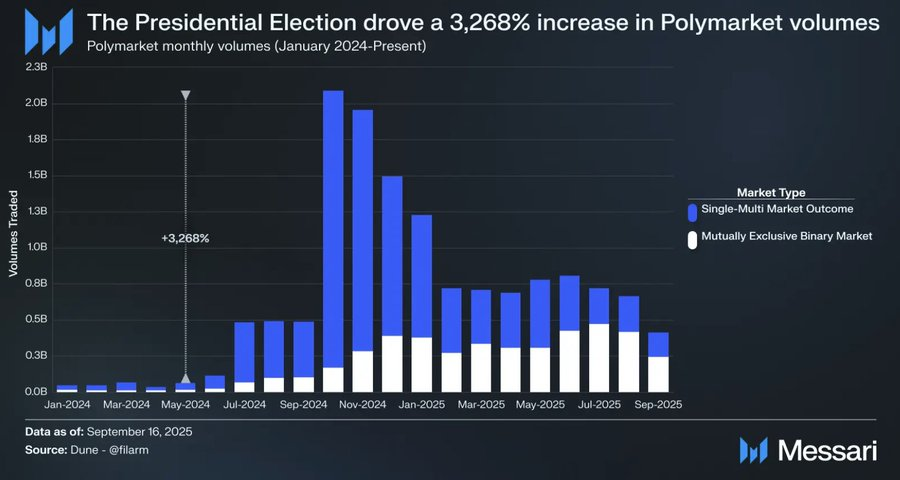
选举结束后,预测市场的交易量虽有所下降,但仍稳定在每月超过10亿美元的水平。

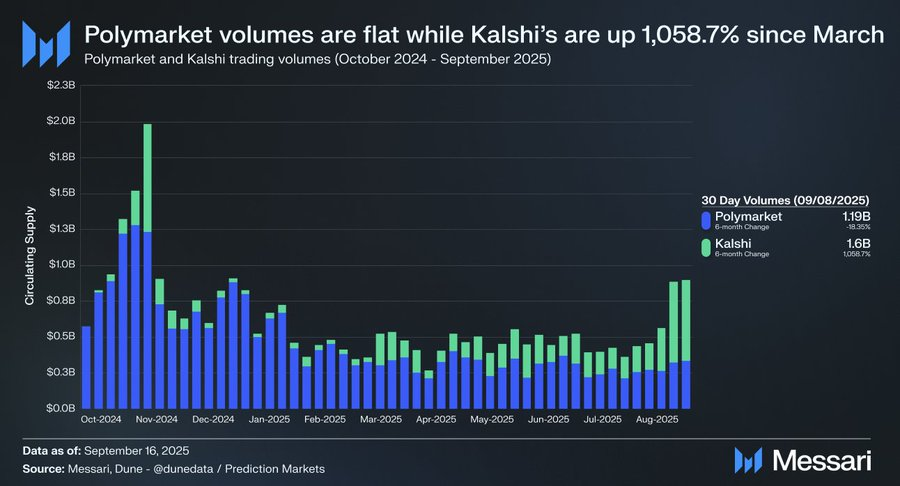
结合 Kalshi 最近交易量的激增,投资者认为预测市场已经验证了需求,并为进一步增长做好了准备。
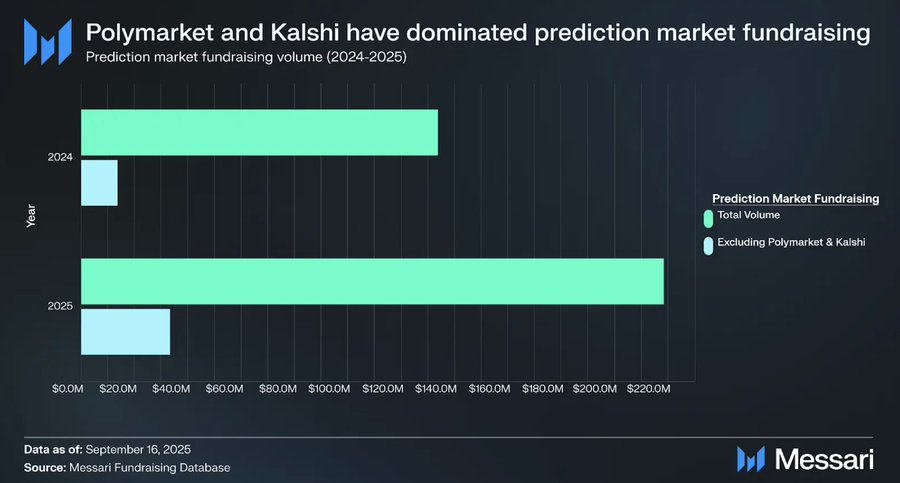
约90%的资金集中在 Polymarket 和 Kalshi 两个平台,估值已接近十位数(即数十亿美元)。

这些行业领先者已经建立了流动性,现在正专注于扩大交易量和增强市场防御能力,因为像 Hyperliquid 和 Coinbase 这样的大型交易所正在关注这一领域。
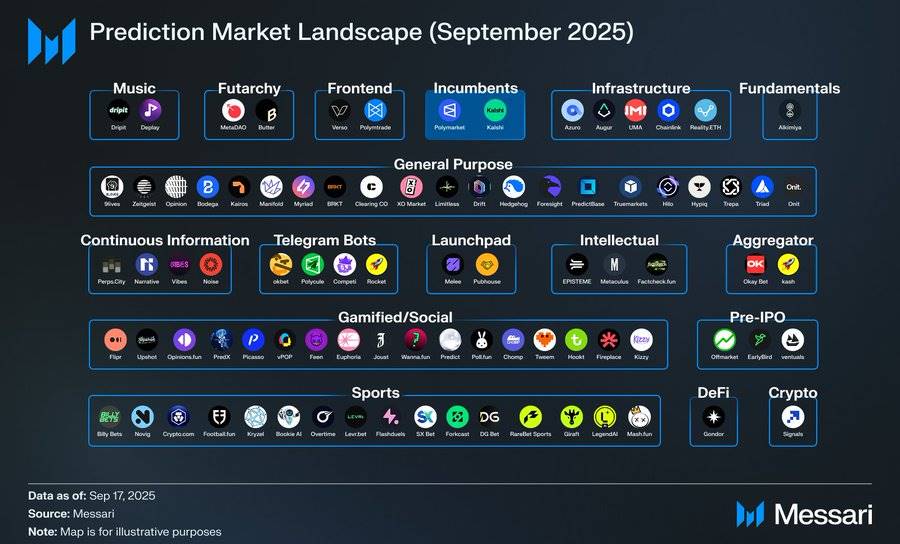
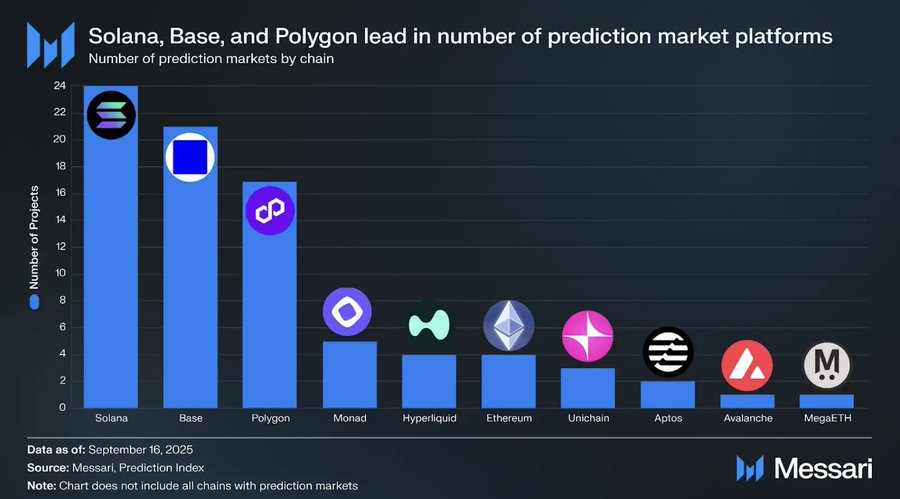
然而,预测市场项目数量超过 100 个,且还在不断增加,其中蕴藏着大量机会。

问题在于,投资者应该如何在这个日益复杂和嘈杂的领域中寻找最佳机会?
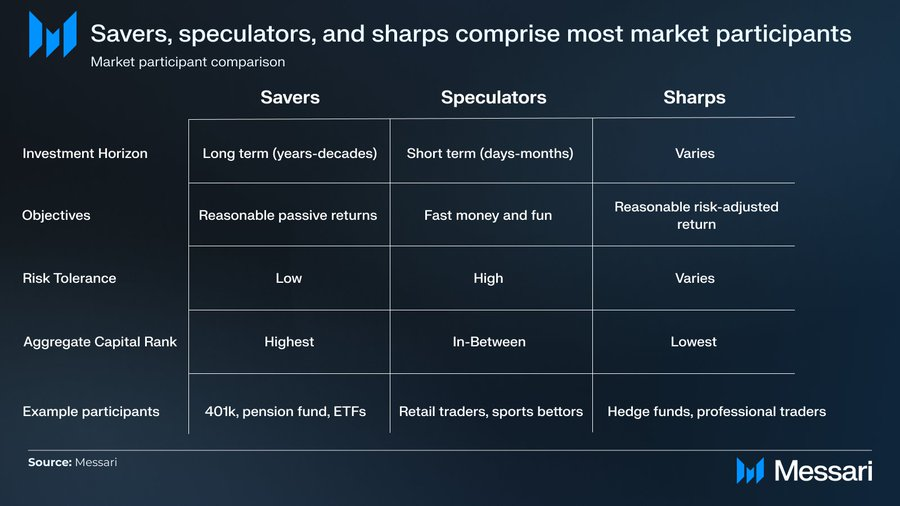
我们认为,解决流动性问题和增加交易量的最佳方法是吸引散户投机者。

预测市场可以通过关注可访问性、趣味性、用户体验和高潜在财务收益来吸引这一细分市场。
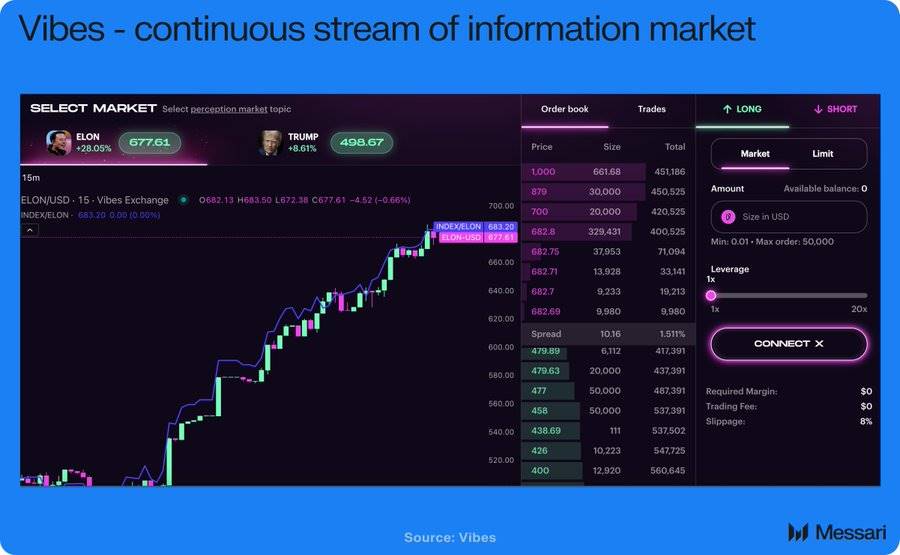
信息永续合约的持续流动

由于永续合约不断波动,它们克服了二元结果市场(binary outcome markets)中因结算速度慢而阻碍投机者的问题。

此类永续合约还可以追踪有趣且易于理解的主题,而这些主题目前尚无现有市场。
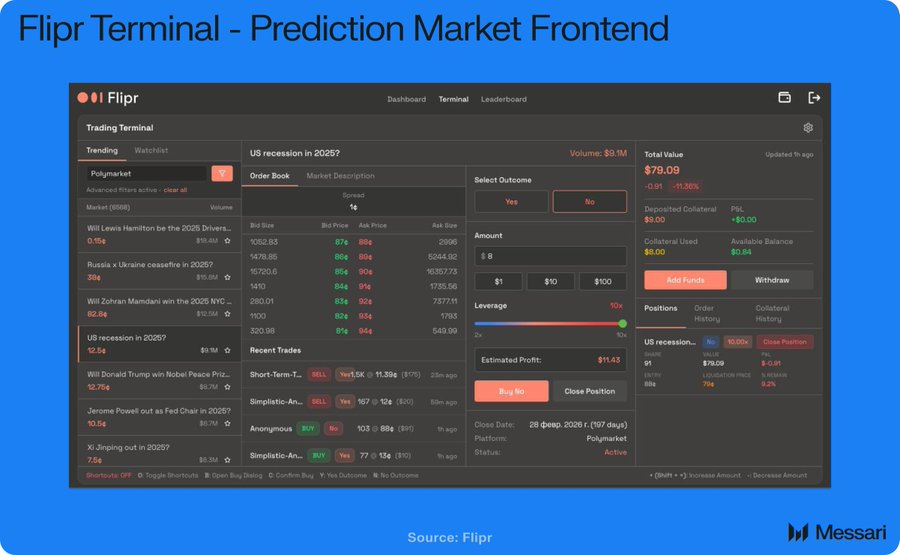
前端平台

与其构建原生流动性,初创公司可以从现有行业领导者处获取供应,并为用户提供更高质量的交易体验。

例如,Flipr 提供一个交易终端、X 平台上的交易机器人,以及利用现有流动性实现高达10倍杠杆。
社交应用

游戏化的应用或社交体验可以让预测变得更加有趣。

就像体育博彩本质上是一种社交体验一样,预测市场也可以培养类似的互动体验。
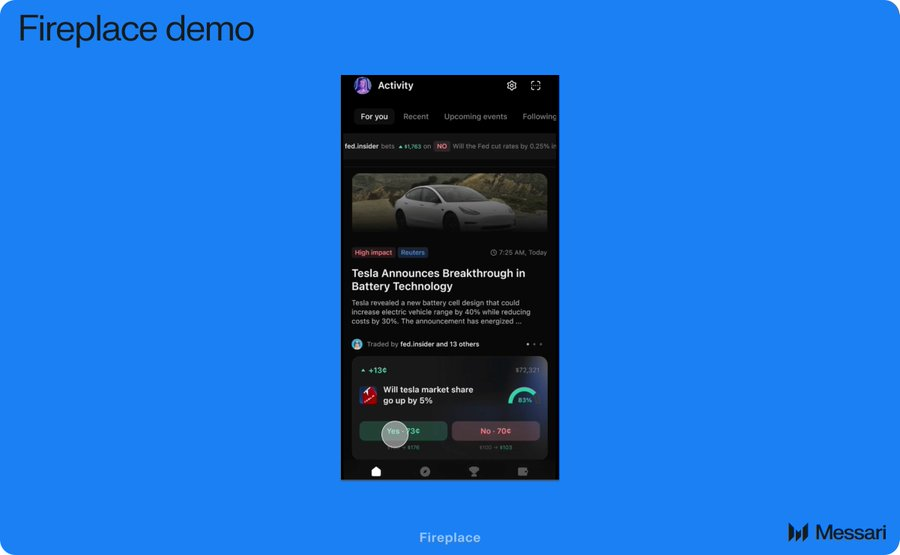
在预测市场采用的早期阶段,设计空间非常广阔。

篮子交易、管理型指数、名人跟单交易、复式投注(parlays)以及更多创新形式都值得探索。

 

Похожее

a16z: 7 Charts to Understand How Tokenization Is Changing the Nature of Assets

a16z: 7 Charts on How Tokenization is Transforming the Nature of Assets Tokenized Assets, often referred to as "real-world assets" (RWA), are altering the form, flow, and structure of the financial system. The market recently surpassed $30 billion (excluding stablecoins), driven largely by tokenized U.S. Treasuries. These offer investors digital, yield-bearing assets with efficient settlement. Growth varies significantly by asset class. Asset-backed credit leads in speed, followed by niche financial assets, while venture capital and active strategies took longer to scale. U.S. Treasuries and commodities dominate, holding about two-thirds of the current market share. Within commodities, gold tokenization dominates entirely due to its standardization and historical appeal in crypto. The ecosystem is spread across multiple blockchains. Ethereum holds over half the market, with others like BNB Chain, Solana, and Stellar holding significant shares. However, a key insight is that most tokenized assets currently lack "composability." While the total market is large, only a small fraction (e.g., 5% of tokenized bonds) is used within DeFi protocols. Many tokens are simply digital records of off-chain assets, not natively programmable financial building blocks. In contrast, smaller categories like reinsurance tokens see very high on-chain usage. Looking ahead, forecasts for the tokenized asset market by 2030 range from $2 trillion to over $30 trillion, representing immense potential growth from today's ~$340 billion base. Yet, relative to global markets (e.g., $140T+ in bonds), tokenization's penetration remains minuscule (<0.02%). The current phase focuses on digitizing straightforward assets for efficiency. The next major challenge is bringing more complex financial instruments on-chain and integrating tokenized assets into truly composable, internet-native financial infrastructure.

marsbit12 мин. назад

a16z: 7 Charts to Understand How Tokenization Is Changing the Nature of Assets

marsbit12 мин. назад

Data Theft at Will! Major Vulnerability Exposed in This Popular AI Programming Tool

A critical vulnerability in Anthropic's Claude Code AI programming tool allowed attackers to bypass its network sandbox for over five months, enabling potential data exfiltration. Independent researcher Aonan Guan discovered a second complete bypass exploiting a null-byte injection in the SOCKS5 proxy. This flaw, present since the sandbox's launch in October 2025, let processes inside the sandbox access any host, contrary to user-configured domain whitelists. The attack chain involved manipulating hostnames (e.g., `attacker.com\x00.google.com`). JavaScript's `endsWith()` check would pass `.google.com`, while the underlying C `getaddrinfo()` function would only parse `attacker.com` due to the null byte, creating a parser discrepancy. Combined with a previously disclosed prompt injection method, this could leak API keys, credentials, and internal data. Anthropic silently fixed the issue in April 2026 without a security advisory, CVE, or user notification. The researcher noted that Claude Code itself confirmed the vulnerability's severity when tested. This incident highlights broader industry issues, as similar vulnerabilities found in Google's Gemini CLI and GitHub's Copilot Agent also lacked public disclosures. The report criticizes the false sense of security created by a broken sandbox and emphasizes the need for defense-in-depth and transparency in AI tool security.

marsbit3 ч. назад

Data Theft at Will! Major Vulnerability Exposed in This Popular AI Programming Tool

marsbit3 ч. назад

Under the squeeze between giants Tether and Circle, how can foreign exchange stablecoins break through?

In the face of dominance by Tether (USDT) and Circle (USDC), new entrants in the stablecoin space face significant challenges competing directly, especially in the foreign exchange (FX) market. A more viable and efficient path forward is the adoption of synthetic foreign exchange (Forex) built atop existing USD stablecoin rails. The rise of stablecoin neo-banks represents the next major growth area for mass crypto adoption, with FX becoming a core component. However, replicating the vast liquidity, distribution channels, and network effects of USDT/USDC is extremely difficult for new FX stablecoin issuers. The total market cap of all FX stablecoins is a fraction (roughly 1/700th) of USD stablecoins, leading to issues like poor liquidity, peg instability, limited acceptance, and complex compliance hurdles. Instead of issuing spot FX stablecoins, the article advocates for a model inspired by traditional finance's non-deliverable forwards (NDFs). Users would continue to hold underlying USDT/USDC, while their account balances are displayed and economically settled in their preferred local currency through MtM (Mark-to-Market) NDF structures. This approach leverages the deep liquidity and infrastructure of USD stablecoins while providing synthetic forex exposure. Key advantages include strong peg stability via oracles, retained access to USD stablecoin yields and liquidity, high capital efficiency, and easy scalability to new currencies. Primary use cases for this on-chain NDF forex include: 1. Neo-banks, custodians, and wallets offering multi-currency accounts to attract international users and increase deposits. 2. Forex carry trade strategies, potentially offering more stable and scalable yields compared to crypto-native products like Ethena. 3. Global corporate payments, allowing businesses to receive payments in local currencies while hedging forex risk on-chain, similar to services offered by Stripe in traditional finance. This synthetic forex model presents a pragmatic solution to overcome the network effects of incumbents and unlock the next wave of stablecoin utility for global consumers and businesses.

marsbit4 ч. назад

Under the squeeze between giants Tether and Circle, how can foreign exchange stablecoins break through?

marsbit4 ч. назад

Торговля

Спот
Фьючерсы
活动图片