Could Trump pocket 75% of WLFI’s revenue? – A $400M question

AmbcryptoОпубликовано 2025-04-01Обновлено 2025-04-01

Введение

Trump’s family could earn $400 million from a token sale, raising the question — Is it ever about using the crypto market for good?

In a headline-grabbing twist, a bombshell Reuters report has exposed a potentially explosive financial connection between the Trump family and the crypto market.

With whispers of a $400 million payout from a recent token sale and a claim that the Trumps could pocket up to 75% of World Liberty Financial’s revenue, the stakes are high… and the implications are even higher.

As Trump sets his sights on reshaping the future of money with stablecoins like USD1, the key question is: How much of this financial revolution is driven by profit — and how much by power?

Unpacking the $400 million token sale payout

“This milestone proves that those who truly understand crypto and finance recognize what we’re building — and that WLFI is on track to supercharge DeFi as it transforms global finance in the coming years.”

This is what WLFI’s Co-founder Zach Witkoff stated about the successful $550 million token sale. But is that all there is to it?

Reuters reported that President Donald Trump and his family could receive up to 75% of WLFI’s token sale revenues, totaling $400 million from a recent sale. They are also entitled to 60% of the company’s ongoing profits.

However, only 5% of the token sale proceeds will reportedly fund WLFI’s platform, with the majority going to other co-founders.

Buyers face restrictions, including an inability to resell tokens and unclear governance rights, raising concerns about value for retail investors.

If accurate, these figures suggest a significant conflict of interest and potential risks to the U.S. economy.

Vitalik Buterin has cautioned against political memecoins like TRUMP, warning that Trump’s financial gains from WLFI token sales could lead to misuse. WLFI’s stablecoin USD1, part of Trump’s push for dollar dominance, ties his financial interests to the firm’s success.

This raises concerns about financial stability, especially as Trump’s influence over regulators increases.

USD1 and the dollar dominance agenda

WLFI’s USD1 stablecoin aims to reinforce dollar dominance in digital finance. However, the centralized control WLFI holds over USD1 raises concerns about transparency and governance.

WLFI’s ability to freeze accounts and blacklist transactions sets it apart from decentralized cryptocurrencies, raising concerns about financial autonomy.

The firm’s sustainability is under scrutiny due to recent financial setbacks. Its crypto portfolio has suffered significant losses, including a $51 million decline as of February 2025. This instability casts doubt on USD1’s backing and WLFI’s long-term viability.

For retail investors, these issues are alarming. USD1’s centralized nature limits decision-making influence and complicates liquidating holdings during market downturns. This lack of transparency risks eroding trust and deterring investment.

Evaluating oversight in the wake of presidential influence

The Trump family’s involvement in WLFI and USD1 has raised concerns about the impartiality of financial regulators. With Trump exerting significant influence over agencies overseeing the crypto sector, doubts have emerged about the strength of current oversight mechanisms.

In February 2025, President Trump issued an executive order increasing presidential control over independent regulatory agencies, including financial watchdogs.

This move has sparked fears of potential conflicts of interest, particularly regarding WLFI’s plans for USD1. Critics warn that consolidating power could weaken agencies tasked with ensuring financial stability and protecting consumers.

Democratic lawmakers, led by Senator Elizabeth Warren, have urged financial regulators to detail their strategies for monitoring WLFI and addressing associated risks.

The proposed GENIUS Act seeks to establish a comprehensive regulatory framework for stablecoins, granting oversight to the Federal Reserve and the Office of the Comptroller of the Currency. However, its effectiveness remains uncertain given the current political climate.

Adding to the complexity, Paul Atkins, a pro-cryptocurrency advocate, has been appointed as Chair of the SEC. Known for his support of digital assets, Atkins may push for more lenient oversight, raising concerns about balancing innovation with market integrity.

Where should regulators draw the line?

The intersection of politics and finance presents significant challenges for regulators. Balancing innovation with accountability becomes increasingly difficult when political figures hold substantial financial stakes in emerging crypto projects.

As President Trump advances the dollar dominance agenda through USD1, financial watchdogs face the delicate task of safeguarding market integrity without hindering innovation.

Proposals like the GENIUS Act emphasize the need for clear regulations to prevent conflicts of interest while encouraging growth.

However, as political influence permeates regulatory frameworks, maintaining impartiality becomes critical. Striking the right balance will determine whether the U.S. financial system remains resilient or succumbs to political and economic entanglements.

Похожее

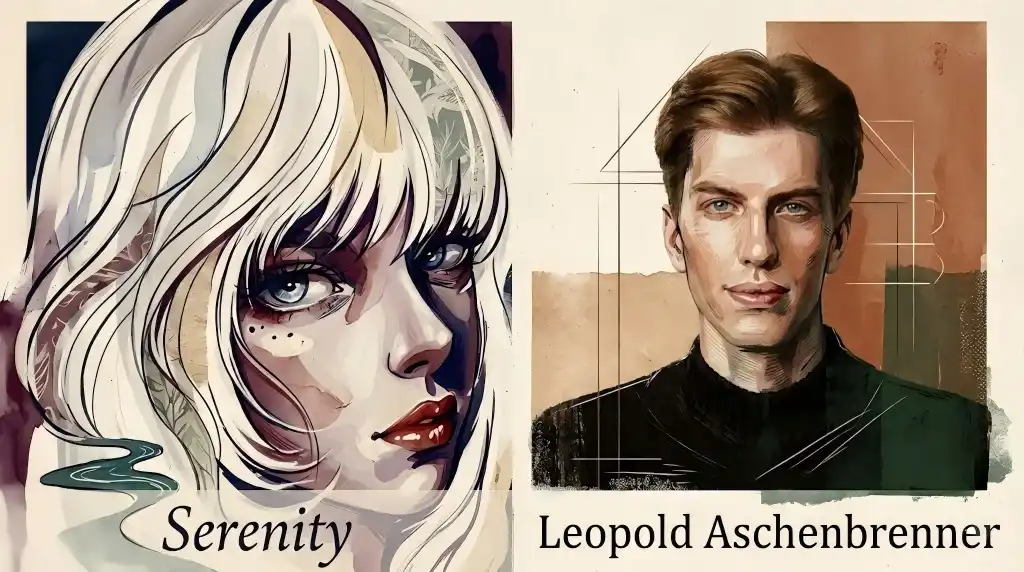
Retail Investors' 'Lead Brother' Serenity vs. Newly Minted Stock God Leopold: How Are the Two Top Hunters Mining AI's 'Physical Limits'?

The article profiles two prominent figures, Serenity and Leopold Aschenbrenner, who are gaining attention for their unconventional investment strategies focused on the physical constraints of the AI boom, moving beyond mainstream software narratives. Serenity, an anonymous online trader, advocates a "shiso leaf" theory. He targets small-cap companies with monopolies on critical, overlooked components in the AI hardware supply chain, such as specific semiconductor materials. His deep, technical analysis of bottlenecks in areas like co-packaged optics (CPO) has reportedly yielded massive returns, though his anonymity and focus on illiquid micro-cap stocks pose significant risks for followers. Leopold Aschenbrenner, a former OpenAI researcher, founded a multi-billion dollar hedge fund. His macro thesis argues that physical infrastructure—power grids, land, data centers—is the true bottleneck for AI growth, lagging far behind chip production. Consequently, his fund employs an infrastructure arbitrage strategy: heavily investing in storage and compute infrastructure companies while placing massive bearish bets (put options) against major semiconductor stocks, betting their valuations will correct as physical constraints become apparent. While their methods differ—Serenity drills into microscopic supply chain details, while Leopold takes a macroscopic, infrastructure-focused view—both share a core belief: the real power and investment alpha in the AI era lie in controlling scarce physical resources, not just software. The article concludes by noting the inherent risks in both approaches, such as liquidity issues for micro-caps and timing risks for macro bets, but suggests they signal a broader market re-evaluation of AI's foundational assets.

marsbit2 ч. назад

Retail Investors' 'Lead Brother' Serenity vs. Newly Minted Stock God Leopold: How Are the Two Top Hunters Mining AI's 'Physical Limits'?

marsbit2 ч. назад

Who Will Make Money in the Age of Agents?

In the Agents era of blockchain, traditional value capture theories face challenges. The "Fat Protocol" theory, dominant since 2016, suggested protocols capture most value as their tokens are essential for network use. However, the proliferation of interchangeable L1s, L2s, and modular layers has eroded protocol scarcity and pricing power. Conversely, the "Fat App" theory posits that applications capturing user relationships (like wallets and exchanges) become the primary value layer by controlling distribution and transaction flows. This aligns with the current "Great Repricing" cycle. Agents disrupt this logic. As software users, they lack brand loyalty, prioritize cost and efficiency, and switch between platforms seamlessly. This undermines the front-end UX moats that "Fat Apps" rely on. The article explores several potential futures: 1. **Headless Applications:** Current leading apps could strip their front-ends and become backend API infrastructure for Agents, preserving their role. 2. **Protocol Resurgence:** If integration becomes trivial, Agents might bypass aggregators and interact directly with protocols, reviving "Fat Protocol" dynamics. 3. **Pricing Power Collapse:** Agents' rational, frictionless routing could commoditize the entire stack, compressing margins toward cost and leaving little profit for intermediaries. 4. **Unprecedented Activity:** Agents may enable new, high-frequency, machine-to-machine economic activities, expanding the total value pie even if margins are thin. 5. **A New, Unnamed Model:** Historically, major tech shifts (like the internet's attention economy) create unforeseen business models. The Agents era may spawn entirely new ways to capture value. The most likely outcome is a coexistence where "Fat Apps" continue to serve human users valuing UX, while a separate, Agent-driven economy emerges governed by different rules—where loyalty is based on factors like liquidity, latency, and settlement guarantees rather than brand.

marsbit3 ч. назад

Who Will Make Money in the Age of Agents?

marsbit3 ч. назад

Торговля

Спот
Фьючерсы

Популярные статьи

Что такое TRUMP CAT

Семья Котов Трампа, $Кот Трамп: Разгаданная Тайна Введение В постоянно развивающемся мире криптопроектов и инноваций web3 возникло любопытное явление — такое, которое, похоже, балансирует на грани между криптовалютой и культурой интернет-мемов. Это загадочная “Семья Котов Трампа”, также известная как “$Кот Трамп”. Хотя это может вызвать интерес среди криптоэнтузиастов, реальность, похоже, далека от стандартного определения криптопроекта. Эта статья стремится исследовать концепцию Семьи Котов Трампа, освещая контекст, окружающий её, и уточняя её статус в криптомире. Что такое Семья Котов Трампа, $Кот Трамп? На первый взгляд, можно подумать, что “Семья Котов Трампа” относится к законному криптовалютному или web3 проекту. Однако при более глубоком исследовании становится очевидно, что этот термин лишен атрибутов традиционного криптовентуры. Вместо этого “Кот Трамп” кажется в основном связанным с вирусной культурой мемов, которая вспыхнула после спорных заявлений бывшего президента США Дональда Трампа о гаитянских иммигрантах. Медийное освещение вызвало множество мемов, юмористических интерпретаций и волну социального комментария. Эти мемы изображают различные формы сатиры, сосредоточенные на диалогах Трампа, часто используя котов в комических и иногда абсурдных сценариях. Вместо структурированного проекта, направленного на решение технологических задач или финансовых транзакций, концепция “Семьи Котов Трампа” существует в основном в сфере интернет-юмора. Кто является создателем Семьи Котов Трампа, $Кот Трамп? В ходе расследования того, кто стоит за “Семьей Котов Трампа”, становится очевидно, что не существует идентифицируемого создателя или основателя. Явление, похоже, возникло из коллективного интернет-выражения, а не от единого визионера с четкой целью проекта. Эта анонимность еще больше подчеркивает его статус как мема, а не структурированной инициативы, подобной большинству известных криптопроектов. Кто являются инвесторами Семьи Котов Трампа, $Кот Трамп? Учитывая, что “Семья Котов Трампа” не соответствует характеристикам респектабельного криптопроекта, вопрос о инвестициях становится неактуальным. Не было создано никаких оснований или организаций, выражающих поддержку проекту с таким названием. Вместо этого существуют отдельные участники мем-культуры — любители, художники и пользователи социальных сетей, которые коллективно заполняют интернет своими интерпретациями и юмором, связанными с термином “Кот Трамп”. Этот органический рост в рамках цифрового человеческого общения отражает скорее социальный комментарий, чем финансовый инвестиционный ландшафт. Как работает Семья Котов Трампа, $Кот Трамп? Если кто-то хочет установить, как “Семья Котов Трампа” функционирует, ответ будет значительно отличаться от того, что можно было бы ожидать от стандартных криптопроектов. Здесь нет операционных механизмов, технологических инноваций или уникальных особенностей, присущих этому явлению. Вместо этого оно существует благодаря вирусному распространению в интернете, полагаясь на платформы социальных сетей для распространения. “Как” лежит в области культуры и коммуникации — его суть происходит от динамики социального взаимодействия, а не от установленных криптопротоколов или функциональностей блокчейна. Что делает “Кота Трампа” уникальным, если это вообще можно назвать уникальным, так это то, как он драматизирует политический диалог через юмор. Люди используют увлекательные визуальные образы, внутренние шутки и изобретательное повествование, чтобы передать чувства по поводу политических фигур и социальных проблем. Сила мемов превосходит традиционную коммуникацию, заключая сложные мысли в форму, которая широко резонирует, но остается неуловимой с точки зрения количественного успеха или структурированных целей. Хронология Семьи Котов Трампа, $Кот Трамп Сентябрь 2024: Дискуссия вокруг комментариев Дональда Трампа о гаитянских иммигрантах, якобы потребляющих домашних животных, набирает популярность в интернете, что приводит к расцвету мемов и пародийных интерпретаций на различных платформах. Продолжающееся влияние: После этого периода феномен “Кота Трампа” продолжает жить, поскольку пользователи социальных сетей используют юмор, чтобы обсуждать, критиковать или просто отмечать абсурдность политических разговоров и событий. Важно отметить, что поскольку “Семья Котов Трампа” не имеет формальной структуры традиционного проекта, хронология состоит в основном из анекдотических наблюдений, а не из замечательных вех, обычно встречающихся в признанных криптовенчурах. Ключевые моменты Культура мемов: Вместо структурированной криптоинициативы “Кот Трамп” больше соответствует развивающемуся ландшафту интернет-мемов. Происхождение термина: Генезис “Кота Трампа” напрямую связан с комментариями президента Трампа о гаитянских иммигрантах, что вызвало широкое юмористическое представление. Отсутствие проектной структуры: Термин не соответствует каким-либо определенным целям проекта, создателям или инвесторам, что делает его новым культурным опытом, а не криптопроектом. Заключение В заключение, исследование “Семьи Котов Трампа, $Кот Трамп” выявляет явление, укоренившееся в культуре интернет-мемов, а не в признанном проекте в секторах криптовалюты или web3. Вирусность, окружающая этот термин, возникает из коллективного взаимодействия пользователей, отражающего современный цифровой дискурс, а не формализованную инициативу с структурой или стратегическим видением. Несмотря на все любопытство, которое оно может вызвать среди тех, кто ищет следующий крупный криптопроект, “Семья Котов Трампа” служит свидетельством человеческой креативности, юмора и часто абсурдных отношений с политикой в цифровую эпоху.

290 просмотров всегоОпубликовано 2025.01.22Обновлено 2025.01.22

Что такое TRUMP CAT

HTX Learn: Пройдите обучение по "TRUMP" и разделите 1500 USDT

HTX Learn — ваш проводник в мир перспективных проектов, и мы запускаем специальное мероприятие "Учитесь и Зарабатывайте", посвящённое этим проектам. Наше новое направление - "TRUMP".

3.0k просмотров всегоОпубликовано 2025.04.24Обновлено 2025.04.29

HTX Learn: Пройдите обучение по "TRUMP" и разделите 1500 USDT

Обсуждения

Добро пожаловать в Сообщество HTX. Здесь вы сможете быть в курсе последних новостей о развитии платформы и получить доступ к профессиональной аналитической информации о рынке. Мнения пользователей о цене на TRUMP (TRUMP) представлены ниже.

活动图片