Trump Pushes DOGE Redistribution—20% Back To Americans

bitcoinistОпубликовано 2025-02-21Обновлено 2025-02-21

Введение

Donald Trump, the President of the United States, is thinking of a bold idea that might directly put money in...

Donald Trump, the President of the United States, is thinking of a bold idea that might directly put money in the pockets of American people.

According to multiple reports, under the concept referred to as the “DOGE Dividend,” 20% of government savings from efficiency cuts is being considered to be returned to taxpayers. This unusual strategy has generated an equal measure of enthusiasm and doubt.
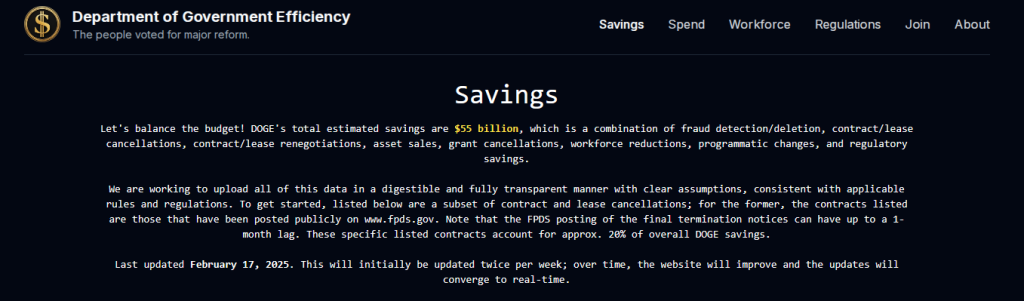
Source: Department of Government Efficiency 

The $55 Billion Savings Claim

At the heart of this proposal is the Department of Government Efficiency (DOGE), an initiative backed by billionaire Elon Musk. By cutting unnecessary expenditure, renegotiating contracts, and streamlining bureaucracy, the agency has reportedly saved the government about $55 billion.

If the dividend plan moves forward, a fifth of these savings—approximately $11 billion—would be distributed to citizens.

However, these figures remain under scrutiny. While proponents of the plan champion it as a taxpayer-friendly move, critics argue that verifying the true extent of these savings is difficult. Questions also remain about how the government would handle payouts and who would be eligible to receive them.

A Plan With Political And Legal Hurdles

Though Trump seems receptive to the concept, applying the DOGE Dividend would not be easy. Congress owns the purse, hence legislators would have to authorize any such payment. Given Washington’s political divide, implementing a new financial plan on this kind of magnitude would not be a walk in the park.

DOGE market cap currently at $37 billion. Chart: TradingView.com

Legal professionals also point up possible difficulties. The DOGE Dividend is linked to government cost-cutting policies unlike stimulus cheques, which are distributed during economic crises or downturns. This difference can generate constitutional and policy questions, thereby making the passage of the proposal more difficult.

Cutting The National Debt—But At What Cost?

Beyond distributing money to citizens, the plan includes another key component—using an additional 20% of DOGE savings to reduce the national debt. That would amount to another $11 billion set aside for debt payments.

Trump and Musk with the Dogecoin logo. Image: Illustration: Andrés Tapia; Source: Shutterstock

Although lowering national debt is generally considered to be advantageous, some contend that $11 billion is little compared to the US debt, which right now stands at $34 trillion. Others fear that excessive cost-cutting could affect government services, therefore compromising the same efficiency improvements DOGE promises to bring about.

The Road Ahead For The DOGE Dividend

Despite the challenges, the idea of a taxpayer dividend is gaining traction in political and economic circles. Businessman James Fishback, who initially proposed the concept, compared it to private-sector customer rebates, where companies return savings to their clients.

For now, the DOGE Dividend remains a discussion rather than a concrete policy. But with Trump signaling interest, it could become a major talking point in the coming months.

Whether it turns into actual financial relief or fades into political rhetoric is a question that only time—and Congress—can answer.

Featured image from ABG Australia, chart from TradingView

Christian Encila

Christian Encila

Christian, a journalist and editor with leadership roles in Philippine and Canadian media, is fueled by his love for writing and cryptocurrency. Off-screen, he's a cook and cinephile who's constantly intrigued by the size of the universe.

Похожее

Huawei's "Tao Law": A Comprehensive Overview of Core Companies

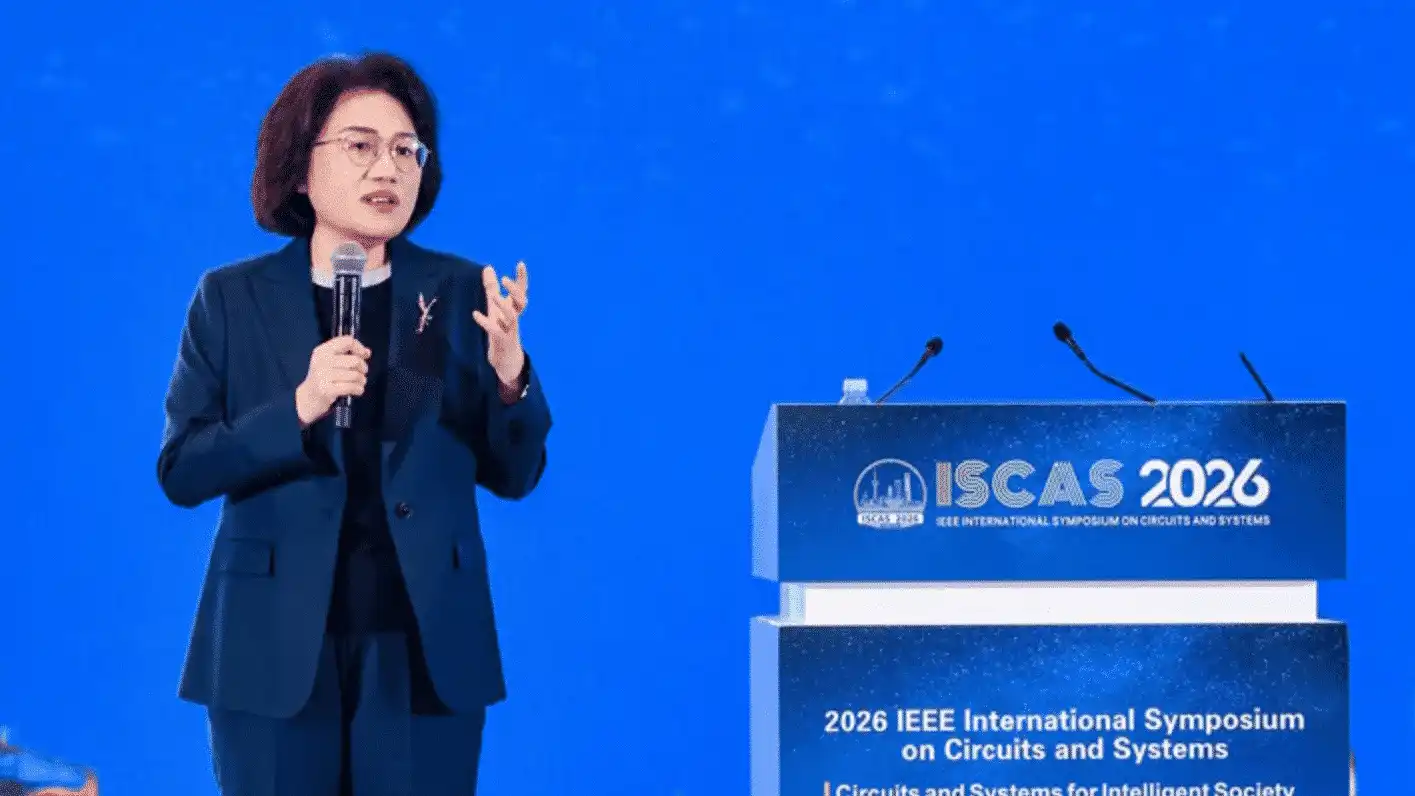
Huawei's "Tau Law": Core Companies Overview On May 25, 2026, Huawei's Director and President of the Semiconductor Business Division, He Tingbo, formally introduced the "Tau (τ) Law" at ISCAS 2026, marking a significant principle guiding industry development in the global semiconductor field from China. The Tau Law shifts focus from traditional Moore's Law, which pursues geometric transistor scaling, to "time scaling"—continuously compressing signal propagation delay (time constant τ) without solely relying on extreme feature size reduction. The core implementation path is "logic folding." This technique transforms circuit layouts from two-dimensional planes to multi-layer 3D stacks, using short vertical interconnects to replace long horizontal wiring, thereby drastically reducing τ. Huawei has already designed and mass-produced 381 chips following this principle over the past six years, with plans to launch a Kirin chip utilizing logic folding in Fall 2026. By 2031, high-end chips based on the Tau Law are expected to achieve performance levels equivalent to a 1.4nm process node. This development impacts several key industry segments, with related Chinese companies poised to benefit: 1. **EDA Design Software**: Essential for circuit-level optimization. Key players include: * **Empyrean Technology** (Huada Jiutian): China's largest full-flow EDA provider. * **Primarius Technologies** (Gailun Dianzi): Specializes in device modeling and verification. * **Semitronix** (Guangliwei): Focuses on yield enhancement and test chip EDA. 2. **Chiplet & Advanced Packaging**: Logic folding's 3D stacking necessitates advanced packaging (e.g., TSV, hybrid bonding). Core participants are: * **Tongfu Microelectronics**: A leader in advanced packaging and a key partner for AMD's Chiplet products. * **JCET Group** (Changdian Keji) & **Tianshui Huatian Technology**: Major OSATs with advanced packaging capabilities. * **VeriSilicon** (Xinyuan Gufen): Provides Chiplet-based design platforms and IP. 3. **Foundry Manufacturing**: Optimization must be implemented in transistor structures and process parameters. Potential foundries for Huawei's future chips include: * **SMIC**: China's leading foundry with advanced FinFET capabilities, the most likely candidate for next-gen Kirin chips. * **Hua Hong Semiconductor** (Huahong Gongsi): A leader in specialty processes (power, embedded memory). * **Nexchip Semiconductor** (Jinghe Jicheng): Major foundry for display driver ICs and MCUs. The Tau Law represents a strategic move towards architectural innovation and design-process co-optimization, driving demand across the domestic semiconductor supply chain.

marsbit1 ч. назад

Huawei's "Tao Law": A Comprehensive Overview of Core Companies

marsbit1 ч. назад

TechFlow Intelligence Report: Huawei Unveils "Tao" Law, Semiconductor Sector Surges; Meta Cuts 10% of Workforce

"TechFlow Intelligence Brief": Huawei's new "Tau Law" in semiconductors and Meta's 10% layoffs headline today's tech landscape. In AI, breakthroughs include an AI solving 9 high-difficulty pure math problems for just a few hundred dollars each, and DeepSeek's new Reasonix programming agent challenging commercial models. However, research highlights a "constraint decay" issue in LLM-generated backend code. Open-source model Qwen 3.6 27B achieves high speeds on older GPUs, sparking debate on NVIDIA's future dominance. In Crypto/Web3, Ethereum Foundation plans to downsize, possibly reducing ETH selling pressure. Fake news about CZ ignited a meme coin frenzy, showing the market's sensitivity to celebrity narratives. DeFi sees a new trend in HELOC-backed Real World Asset (RWA) pools. The chip sector is stirred by Huawei's proposed "Tau (τ) Law," aiming for 1.4nm-equivalent performance by 2031 through architectural innovation, causing related stocks to surge. A report notes memory now constitutes nearly two-thirds of AI chip cost. Meanwhile, executives at 7 Chinese semiconductor firms sold shares after price peaks. Meta announces 10% layoffs as it pivots to AI. Google's CEO faced student protests over AI ethics during a speech, and the company controversially published a Chromium exploit before patching was complete. Xiaomi permanently banned installers for AC installation fraud. In US stocks, AMD is seen as a potential challenger to NVIDIA, while a survey reveals 99% of CEOs expect AI-driven layoffs within two years. Palantir secured a government contract for employee monitoring, raising privacy concerns. Macro developments include a 6% drop in WTI crude oil on hopes for reopened Hormuz Strait, and silver prices rising over 4%. Global oil inventories are nearing critical lows. New trends highlight a "audio prompt injection" attack targeting AI voice assistants via hidden commands, and CBS pausing takedowns of pirated Stephen Colbert episodes after public pushback. The underlying narrative connects AI's cost-effective problem-solving, widespread planned job displacement, and Huawei's challenge to Western tech hegemony, framing the AI and chip race as a broader contest over employment, geopolitics, and the very definition of intelligence.

marsbit2 ч. назад

TechFlow Intelligence Report: Huawei Unveils "Tao" Law, Semiconductor Sector Surges; Meta Cuts 10% of Workforce

marsbit2 ч. назад

Торговля

Спот
Фьючерсы
活动图片