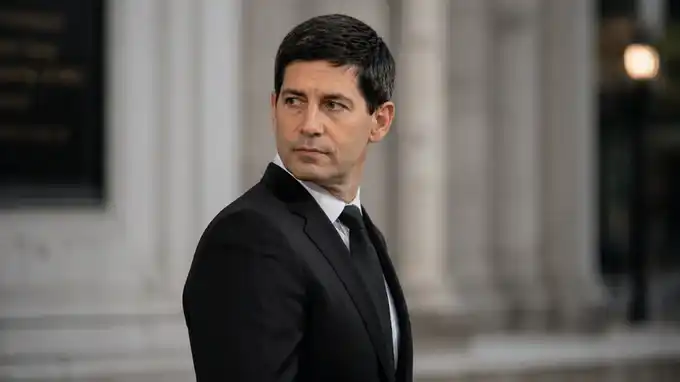
Crypto Regulation Takes Center Stage: Senator Tim Scott Outlines Priorities For 119th Congress

bitcoinistОпубликовано 2025-01-16Обновлено 2025-01-16

Введение

As President-elect Donald Trump prepares to assume office, the focus on crypto regulation is intensifying among lawmakers, signaling a marked...

As President-elect Donald Trump prepares to assume office, the focus on crypto regulation is intensifying among lawmakers, signaling a marked departure from the previous administration’s approach to digital assets

Crypto Regulation In New Congressional Agenda

In a recent announcement, Chairman Tim Scott (R-S.C.) unveiled the legislative and oversight priorities for the US Senate Committee on Banking, Housing, and Urban Affairs, with a clear emphasis on developing a robust regulatory framework for digital assets.

“My goal for this Congress is simple: make America work for Americans,” Scott stated. He stressed the need for comprehensive solutions to the pressing issues facing the nation, from addressing federal housing policies to enhancing economic security. 

As the 119th Congress begins, Scott expressed his eagerness to collaborate with the Trump administration and his colleagues to foster financial inclusion and create opportunities nationwide. “The American people gave Congress a mandate – let’s get to work,” he concluded.

Central to Scott’s priorities is the establishment of a regulatory framework for crypto assets. Under the leadership of former Securities and Exchange Commission (SEC) Chair Gary Gensler, the Senator said that the agency was criticized for its lack of clarity regarding cryptocurrency regulations, which many believe has driven innovation and projects overseas. 

Moving forward, the Banking Committee aims to create a tailored pathway for the trading and custody of digital assets that promotes consumer choice, education, and protection while ensuring compliance with relevant Bank Secrecy Act requirements.

Digital Assets Subcommittee Under Tim Scott

In a significant move, the Senate Banking Committee also announced last week the creation of its first-ever subcommittee dedicated to digital assets. 

This initiative underscores the commitment of Senate Republicans to prioritize cryptocurrency legislation and fulfill Trump’s campaign promise of positioning America as the epicenter of the global crypto market. 

The establishment of this subcommittee is one of Scott’s initial actions as Chairman, reflecting a proactive stance toward financial innovation. Scott is looking to replicate the success of the digital assets subcommittee formed in the House of Representatives by former Congressman Patrick McHenry in 2023. 

That committee made history by passing the “FIT21” bill, which aimed to establish a regulatory framework for digital assets. With the bill still pending a debate and vote in the full House, its advancement to the Senate could pave the way for comprehensive regulatory measures.

To lead the new subcommittee, Scott has tentatively selected Senator Cynthia Lummis from Wyoming, a vocal advocate for Bitcoin, pending an approval vote in the coming days. 

Lummis’s selection signifies a commitment to fostering an open-minded environment for innovative financial technologies and digital asset products, including stablecoins, aimed at enhancing financial inclusivity.

Crypto
The 1D chart shows BTC’s price trending upwards. Source: BTCUSDT on TradingView.com

At the time of writing, the market’s leading cryptocurrency, Bitcoin, is trading at $99,200, up 3.3% in the 24-hour time frame. 

Featured image from DALL-E, chart from TradingView.com 

Ronaldo Marquez

Ronaldo Marquez

Ronaldo is a seasoned crypto enthusiast with over four years of experience in the field. He is passionate about exploring the vast and dynamic world of decentralized finance (DeFi) and its practical applications for achieving economic sovereignty. Ronaldo is constantly seeking to expand his knowledge and expertise in the DeFi space, as he believes it holds tremendous potential for transforming the traditional financial landscape.

Похожее

Warsh's First Day in Office, Markets Deliver a 'Wake-up Call': Rate Hike Expected This Year

On his first day in office, newly inaugurated Federal Reserve Chairman Warsh received a stark market warning, with expectations now fully pricing in a 25-basis-point interest rate hike this year. The shift was triggered by hawkish remarks from Fed Governor Waller, who stated that inflation is now the key policy "driver" and that the odds of a hike or cut are evenly split. This sent short-term Treasury yields higher. Waller signaled a significant pivot in his stance, citing disappointing inflation and labor data. He suggested removing "easing bias" language from Fed statements and did not rule out future rate increases if inflation fails to recede, though he noted immediate action isn't warranted without signs of unanchored inflation expectations. Chairman Warsh faces immediate pressure at his first FOMC meeting in June. With the preferred inflation gauge at a three-year high, analysts warn that failing to hike could be interpreted as an implicit easing of policy. The geopolitical situation in the Middle East is adding to existing price pressures. The market's expectation for a hike contrasts sharply with earlier forecasts for multiple cuts. While long-term Treasury yields have been contained by lower energy prices recently, analysts note they remain under structural upward pressure. Warsh's swearing-in at the White House highlights political scrutiny over Fed independence. However, the market has made it clear that inflation is the most urgent challenge, leaving the new chairman little time to settle in.

marsbit8 ч. назад

Warsh's First Day in Office, Markets Deliver a 'Wake-up Call': Rate Hike Expected This Year

marsbit8 ч. назад

Has Microsoft Lost Its Way in the AI Race, and Can Copilot Bring It Back on Track?

Microsoft, once seen as an early AI frontrunner due to its investment in OpenAI, is navigating a strategic shift amid increased competition. Its initial reliance on OpenAI’s GPT models has been complicated by OpenAI’s growing ambitions as a direct competitor, rapid advancements from rivals like Claude and Gemini, and the disruptive rise of AI agents, which challenge its traditional SaaS business model. These factors contributed to stock declines and slower-than-expected adoption of its flagship Copilot products. In response, CEO Satya Nadella has taken a hands-on role in product development, signaling the urgency of change. Microsoft is pivoting from a model-centric strategy to a "model-agnostic" enterprise platform approach. It aims to become the foundational layer connecting various AI models—from OpenAI, Anthropic, or its own new "Superintelligence" team—with enterprise workflows, data, security, and cloud services. Recent organizational changes merged consumer and enterprise Copilot teams to accelerate innovation, exemplified by new products like Copilot Tasks and Copilot Cowork. However, this transformation comes at a high cost. Microsoft faces massive capital expenditures, potentially reaching ~$190 billion by 2026, to support AI infrastructure. While its platform strategy shows early signs of traction with growing Azure AI revenue, it must balance startup-like agility with the reliability expected by enterprise clients. The core challenge is no longer being the sole AI winner but defending its position as the essential enterprise software entry point amidst rapid technological commoditization and the shift towards always-on AI agents.

marsbit9 ч. назад

Has Microsoft Lost Its Way in the AI Race, and Can Copilot Bring It Back on Track?

marsbit9 ч. назад

Торговля

Спот
Фьючерсы
活动图片